Преглед в реален мащаб
 Сподели
 Сподели
 Подробности
 Ръководство

 Изтегляне
 Подобни артикули
 Рентгенова снимка
 Слайдшоу
 Статистика
Self Portrait
 Acrylic On Canvas
- WallArt
- Neoclassical Painting
 1774
1774 562.0 x 735.0 cm
 Walker Art Gallery
 Разгърни целия текст
Ръчно изработена маслена репродукция
Ръчно рисувана маслена картина върху платно във вашия размер и рамка, изработена по поръчка от нашите художници. ( Избор на принт Превключване към дигитално изображение)




P118B €10

P118H €10

P118W €10

P438Z €10

P508JH €12

P508YH €12

P805H €10

P805Z €10

P919BZ €10

P919G €10

P919XJ €10

P959ZH €10

P968JZ €12

W106C €8

W218G €10

W218JH €8

W218Y €10

W307PJ €10

W316G €10

W316PJ €8

W316Y €10

W398PJ €8

W4111J €10

W500HY €15

W500JH €15

W692G €12

W849H €8

W940BG €15

W953PJ €8




Изберете от нашите предварително зададени размери, които съответстват на оригиналните пропорции на произведението.

Въведете необходимата ширина и височина, за да паснат на вашата рамка или стена. Тъй като това е ръчна работа, при избор на размер с различен формат, художникът може да нарисува малко повече около картината или да отреже малко от периферията — вие избирате. Преди да започне рисуването, ще ви изпратим дигитален мок업 за одобрение. Картината, показана на тази страница, не е реалният резултат — само мок업ът го показва.
След получаване на поръчка, екипът на OriginalUniqueArt.com ще изпрати имейл до клиента с инструкции и ще предостави примерен макет за преглед.
Доставка по целия свят () в рамките на 3-4 седмици вместо стандартните 5 седмици. (23 Октомври). Без компромис с качеството.

Безплатна експресна доставка по целия свят

Висококачествено ленено платно

Пълно застраховане на доставката

Гаранция за възстановяване на митнически такси

Гаранция за пълно съответствие на цветовете

Политика за връщане в рамките на 100 дни (само при дефекти)

100% Гаранция за връщане на сумата

Отстъпка при поръчка на повече произведения
 Опцията със стъкло е налична само за размери под 110 см

Self Portrait
Техника на репродукция
Размер на репродукцията
-


Крайна цена
€ 264
The Enigmatic Gaze: Unpacking Anton Raphael Mengs’ “Self Portrait”
Anton Raphael Mengs' "Self Portrait," painted in 1774, isn’t merely a likeness; it’s a carefully constructed tableau of intellectual ambition and introspective melancholy. Captured with the precision characteristic of the Neoclassical movement, this painting offers a rare glimpse into the mind of an artist grappling with his burgeoning fame and the weighty expectations placed upon him. The image immediately draws the eye to the subject's face – a man in his mid-forties, rendered with a remarkable sensitivity that belies the formality of the attire. His mouth is slightly open, a subtle gesture hinting at contemplation or perhaps even a quiet sadness; it’s an expression that invites prolonged observation and fuels speculation about the thoughts swirling within him.
The composition itself speaks volumes. Mengs sits three-quarters to his right, a pose favored by portrait painters of the era, suggesting both dignity and engagement with the viewer. The rich brown coat, meticulously detailed, anchors him in a world of established artistic circles, while the scarf draped loosely around his neck adds a touch of understated elegance. Yet, it’s the lighting – masterful chiaroscuro reminiscent of Rembrandt – that truly elevates the piece. Dark shadows pool beneath his eyes and across his shoulders, creating a sense of depth and drawing attention to the delicate lines of his face. The light catches the texture of his clothing and highlights the subtle nuances of his expression, transforming a simple portrait into a study in mood and atmosphere.
A Bridge Between Worlds: Mengs’ Artistic Genesis
Mengs' journey to this moment was profoundly shaped by his lineage and the intellectual currents of the Enlightenment. Born in 1728 in Ústí nad Labem, Bohemia – a region now part of the Czech Republic – he inherited a legacy of artistic talent from his father, Ismael Mengs, a Danish painter who found patronage at the Dresden court. This early exposure to the refined tastes and exacting standards of the German aristocracy instilled within young Anton a deep appreciation for classical ideals and meticulous technique. Crucially, in 1741, he was sent to Rome – a pivotal decision that irrevocably shaped his artistic development.
Immersed in the heart of the Roman art world, Mengs spent years studying the masterpieces of Raphael, Michelangelo, and other Renaissance giants. He meticulously copied their works, absorbing not just their technical skill but also their profound understanding of human anatomy, perspective, and composition. This immersion in classical antiquity would become the bedrock of his artistic style – a commitment to clarity, balance, and idealized beauty that defined Neoclassicism. The influence is immediately apparent in “Self Portrait,” where Mengs consciously adopts a pose reminiscent of ancient Roman portraiture, signaling his ambition to emulate the masters and establish himself as a leading figure in the revival of classical art.
Symbolism and Context: The Weight of Ambition
Beyond its technical brilliance, “Self Portrait” is laden with symbolic meaning. The open mouth, as previously noted, suggests introspection – perhaps a moment of self-doubt amidst the pressures of his career. The carefully chosen attire—the brown coat, the scarf—reflects his position within European artistic circles, signaling both his status and his adherence to established conventions. However, there’s also an underlying sense of weariness in Mengs' gaze, hinting at the sacrifices required to achieve success and the loneliness inherent in a life devoted to art.
Painted just three years before his untimely death at the age of 51, the portrait captures a man on the cusp of greatness but also burdened by mortality. Mengs was a celebrated artist throughout Europe, a key figure in the creation of Neoclassicism, yet he faced constant challenges – financial difficulties, professional rivalries, and the relentless demands of his patrons. “Self Portrait” offers a poignant glimpse into the inner life of an artist grappling with these complexities, reminding us that even the most accomplished figures are subject to human vulnerability and uncertainty.
A Timeless Reflection: Reproduction and Artistic Legacy
Reproductions of Mengs’ “Self Portrait” continue to resonate today, offering a window into the artistic sensibilities of the 18th century. The painting's masterful use of light and shadow, combined with its psychologically astute portrayal of the subject, ensures its enduring appeal. Whether displayed in a grand salon or a contemporary art space, this work serves as a powerful reminder of the transformative power of art – its ability to capture not just likeness but also essence, emotion, and the complexities of the human experience. Consider commissioning a hand-painted reproduction to bring this captivating piece into your own home, preserving Mengs’ legacy for generations to come.
Въпроси и отговори
Налична ли е версия за изтегляне с висока резолюция на "Self Portrait"?
За да получите цифров файл на „Self Portrait“ на Антон Рафаел Мѫнґс, поръчайте дигитално изтегляне на изображение с висока резолюция на неговата страница Дигитален образ.
Кой цвят доминира в композицията на „Self Portrait“ на Антон Рафаел Мѫнґс?
Espresso (#372623) е водещият цвят на „Self Portrait“ на Антон Рафаел Мѫнґс.
С каква техника е изпълнено „Self Portrait“ на Антон Рафаел Мѫнґс?
Антон Рафаел Мѫнґс е използвал/а техниката Acrylic On Canvas за „Self Portrait“. Тази техника определя материалната природа на оригиналното произведение.
Биография на художника
Мост между световете: Животът и изкуството на Антон Рафаел Мънгс
Антон Рафаел Мънгс се появява по време на един завладяващ период в европейското изкуство – епоха, в която пищните украси на рококо започват да отстъпване пред новото преоткриване на класическите идеали. Роден през 1728 г. в Усти над Лабем, Бохемия – регион, който днес е част от Чехия – неговият творчески път е дълбоко оформен както от неговата наследственост, така и от интелектуалните течения на Просвещението. Баща му, Исмаел Мънгс, датски художник, намерил покровителство при двора в Дрезден, разпознава изключителния талант на младия Антон още в ранна възраст. Това признание води до решаващото преместване през 1741 г.: релокация в Рим, където младият творец се потапя в изучаването на античните шедьоври и творбите на ренесансовите майстори като Рафаел. Именно това излагане оставя незаличим отпечатък върху неговите естетически сетива, вдъхвайки му дълбоко преклонение пред класическата форма, яснотата и композицията – качества, които по-късно стават белези на неговия зрял стил. Ранните му години са посветени на прецизно копиране, което не е просто упражнение по техника, а дълбок акт на художествено паломничество, усвоявайки същността на гения на Рафаел.От Дрезден до Мадрид: Кариера през европейските дворове
Кариерата на Мънгс се разгръща в няколко видни европейски двора, като всеки оставя своя уникален отпечатък върху неговото артистично развитие. През 1749 г. той заема престижна позиция като придворнорисувач на Фридрих Август, Електор на Саксония – роля, която му осигурява както финансова стабилност, така и свободата да поддържа база в Рим, епицентъра на неговото художествено вдъхновение. Въпреки това, именно неговите фрески утвърждават истинската му репутация. „Парнас“ във Вила Албани в Рим, завършен около 1761 г., се превръща в моментален сенсационен успех, възхваляван за своята хармонична композиция, елегантни фигури и фино, но мощно препращане към класичешката митология. Тази творба не е просто декоративен елемент; тя е манифест – съзнателна опит за синтез на бароковата грандиозност с възникващите неокласически принципи. Последват нови поръчки, включително зашеметяващата фреска, украсяваща купола на църквата Свети Евсевий в Рим, демонстрираща неговото майсторство в монументалната декорация и пространствената илюзия. Може би най-амбициозното му начинание идва с покана от испанския двор през 1761 г. Той пътува до Мадрид, където е поверен с украсяването на няколко кралски двореца, което кулминира в великолепния таван на Зал за банкети в Кралския дворец – произведение, считано за едно от най-големите му постижения, демонстриращо забележителната способност да съчетава италианската елегантност с испанското чувство за красота.Връзката с Винкелман: Оформяне на неокласическата мисъл
Еволюцията на Мънгс не се движи само от визуално изучаване; тя е дълбоко преплетена с интелектуалния дискурс. Решаваща повратна точка идва с неговото близко приятелство и сътрудничество с Йохан Йоахим Винкелман – пионерният историк на изкуството, чиито писания се превръщат в основа на неокласическото движение. Винкелман защитава завръщането към възприеманата чистота и простота на древногръцката изкуство, настоявайки за естетика, базирана на разума, реда и идеализираните форми. Мънгс не просто илюстрира теориите на Винкелман; той активно участва в тяхното оформяне, превръщайки абстрактните концепции в осезаеми художествени изрази. Заедно те вярват, че истинската красота не се крие в повърхностната орнаментация, а в основните принципи на хармония и пропорция, открити в античността. Това партньорство надхвърля теоретичните дискусии; то се проявява в самите картини на Мънгс, които все по-силно отразяват акцента на Винкелман върху благородната простота и сдържаната емоция. Влиянието е взаимно: писанията на Винкелман предоставят философска рамка за художените усилия на Мънгс, докато изкуството на Мъмунгс служи като визуално доказателство за жизнеспособността – и красотата – на неокласическите идеали.Наследство и влияние: Пионер на своето време
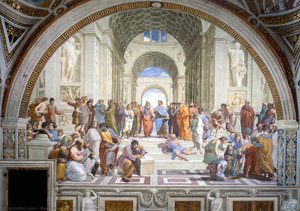
Антон Рафаел Мънгс умира в Рим през 1779 г., оставяйки след себе си наследство, което се простира далеч отвъд неговия впечатляващ творчески корпус. Той е бил нещо повече от просто художник; той е ключова фигура в прехода от една артистична епоха към друга. Въпреки че корени в бароковата традиция – което е видно в драматичната му употреба на светлина и сянка и майсторството му в илюзионните техники – Мънгс смело приема възникващите принципи на неокласицизма, проправяйки път на художници като Жаке-Луи Давид и Антонио Канова. Неговият акцент върху класическите идеали, съчетан с неговата техническа виртуозност, го утвърждава като водеща сила в оформянето на изкуството през XVIII век. Афинската школа, нарисувана за херцога на Нортамбърленд, стои като свидетелство за способността му да синтезира исторически прецедент с съвременни художествени сетива. Освен неговите картини и фрески, влиянието на Мънгс се простира и до образованието; той служи като директор на Ватиканското рисуване училище, възпитавайки ново поколение художници, пропити с класически принципи. Той е сложна фигура – вярващ католянин, който също така се ангажира с идеите на Просвещението, художник, който балансира между традицията и иновацията. Неговият живот и творчество представляват завладяващо пресичане на артистична умелост, интелектуално любопитство и исторически обстоятелства, затвърждавайки неговото място като истински пионер на неокласическото изкуство. Неговият отпечатък резонира и днес, напомняйки ни за непреходната сила на класическите идеали да вдъхновяват и трансформират художественото изразяване.
Антон Рафаел Мѫнґс
1728 - 1779 , Чехия
Бързи факти
- Artistic Movement Or Style: Неокласицизъм
- Artists Or Movements Influenced By This Artist: ['Хинкелмън']
- Artists Who Influenced This Artist: ['Рафаел']
- Date Of Birth: 12 март 1728 г.
- Date Of Death: 29 юни 1779 г.
- Full Name: Anton Raphael Mengs
- Nationality: Германец
- Notable Artworks:
- Светата Атина
- Магдалена
- Place Of Birth: Úстí nad Labem, Чехия
Свързани статии

Рембранд ван Рейн: Топ 25 шедьовъра за вашия дом – галерия от OriginalUniqueArt.com
Открийте 25 шедьовъра на Рембранд ван Рейн в галерията на OriginalUniqueArt.com! Разгледайте историите зад известните му картини, барокови портрети и библейски сцени. Луксозни репродукции за вашия дом – изкуство с качество от музей. Explore the full collection online!
Reflecting the Self: A History of Portraiture & Psychological Insight
Explore the fascinating history of self-portraiture from Renaissance masters like Dürer & Rembrandt to modern interpretations. Discover the psychological insights and artistic techniques behind these iconic works. Expert analysis for art enthusiasts.
Adriaen van Ostade: A Master of Dutch Genre Painting & Social Commentary
Explore the life & work of Adriaen van Ostade, a leading Dutch Golden Age painter. Discover his realistic genre scenes, social commentary, and lasting influence on art history. Learn more at OriginalUniqueArt.
Decoding Van Gogh's Turmoil: OriginalUniqueArt’s Masterful Reproductions of Emotional Depth
Discover exquisite Van Gogh reproductions from OriginalUniqueArt – expert art specialists offering museum-quality prints & custom paintings. Trust our authentic process and elevate your collection today.

Топ 10 шедьоври на постимпресионизма: Изкуство за вашия дом от OriginalUniqueArt.com
Разгледайте топ 10 шедьоври на постимпресионизма – Ван Гог, Сезан, Моне и други! Открийте историите зад картините, техниките и емоциите. Репродукции с музейно качество от OriginalUniqueArt.com. Разгледайте пълната колекция онлайн!