
 Изпрати
 Сподели
 Детайли
 Ръководство

 Изтегляне
 Подобни артикули
 Слайдшоу
 Въпроси и отговори
 Статистика
St Mark


 Прочети повече
Получете файл, готов за печат, който предлага много по-високо качество от уеб прегледа. Всяко дигитално изображение, което предлагаме, е извлечено от висококачествен оригинал в нашата база данни — обикновено с ширина между 5 000 и 15 000 пиксела — така че със сигурност да можете да принтирате в голям формат, да кадрирате тесно или да възпроизведете фините детайли.
Нито един файл не напуска нашето студио без внимание. Дигитален експерт проверява цветовете спрямо оригиналната картина и ги коригира при необходимост, след което подобрява яснотата и детайлите с професионални инструменти за ретуш — винаги оставайки верен на мазките и стила на художника. Резултатът е изображение, което изглежда като самата картина, а не като сканиран образ с филтър.
Одобрявате преди финализиране: нашият експерт ще изпрати изображението по имейл в рамките на 72 часа за ваш преглед. Не сте доволни? Можете да поискате подобрения или корекции, или пълно възстановяване на сумата, ако качеството не отговаря на очакванията ви.
Това е качеството, на което разчитат издателства, дизайн студиа, галерии и печатници.
Дигитално изображение
Изтеглете файл с висока резолюция за лично съхранение, принтиране и творчески проекти. ( Превключване към принт Купете ръчно рисувана картина)
Включено във всяка поръчка за дигитални изображения
Гарантирана експертна дигитална доставка
Избирайки OriginalUniqueArt.com, вие не получавате просто изображение – вие придобивате професионално обработена дигитална творба, създадена с прецизност и подкрепена от гаранция за удовлетворение. Ето какво автоматично е включено във вашата поръчка:

Бърза доставка по имейл
Вашето дигитално изображение с висока резолюция ще бъде изпратено по имейл в рамките на 72 часа от поръчката – готово за незабавно използване.

Дигитален файл с подобрено качество чрез ИИ
Вашата картина е професионално оптимизирана чрез усъвършенствани инструменти с изкуствен интелект и ръчна редакция, което гарантира максимална детайлност, яснота и точност на цветовете.

Безплатна доживотна повторна доставка
Изгубили сте или сте изтрили файла си по погрешка? Не се притеснявайте – ще го изпратим отново на Вас по всяко време, безплатно.

Без митнически такси – завинаги
Насладете се на вашето произведение незабавно, без мита, такси или разходи за доставка – дигиталните изтегляния винаги са освободени от данъци.

Гаранция за цветово съответствие
Гарантираме, че вашето дигитално изображение отразява оригиналните цветове възможно най-точно чрез използването на професионални инструменти и системи за управление на цветовете.

100-дневна гаранция за удовлетвореност
Ако не сте доволни от вашето дигитално изображение, ще го преработим или ще възстановим 100% от сумата в рамките на 100 дни – без излишни въпроси.

100% Гаранция за връщане на сумата
Не сте доволни? Получете пълен възврат на сумата в рамките на 100 дни от получаването на вашия цифров файл – без излишни въпроси.

Отстъпки за големи поръчки
Купете 3 изображения, спестете 10% - Купете 5, спестете 15% - Купете 10+, спестете 20%. Идеално за творчески проекти, галерии и агенства.
A Vision of Venetian Faith: The Divine Presence in St Mark
In the heart of the Early Renaissance, amidst the salt-misted air of Venice, Andrea del Castagno breathed life into a vision of spiritual fortitude that continues to captivate the modern soul. His 1442 fresco, St Mark, is far more than a mere religious depiction; it is a profound meditation on the human journey toward the divine. As the patron saint of Venice, Mark is presented not as a distant icon, but as a palpable, commanding presence seated upon a boat, his gaze directed upward in a moment of celestial connection. The scene unfolds with a sense of movement and purpose, as pilgrims navigate the waters, their very existence a metaphor for the Christian quest for salvation and the arduous pilgrimage toward Jerusalem.
To behold this work is to witness the transformative power of naturalism. Heavily influenced by the revolutionary techniques of Masaccio, Castagno moved away from the ethereal, flattened aesthetics of the Gothic era to embrace a rugged, anatomical realism. Every muscle, every fold of fabric, and every gesture is rendered with an unprecedented precision that lends the figures a sculptural weight. This mastery of form is paired with an innovative use of perspective, creating a spatial depth that draws the viewer into the boat alongside the saint. The artist’s command over the fresco technique—applying pigment to wet plaster—has preserved a luminous vibrancy in the blues and reds, ensuring that the emotional intensity of the scene remains as striking today as it was in the fifteenth century.
Symbolism and the Renaissance Spirit
Every element within Castagno’s composition serves a higher narrative purpose, weaving a complex tapestry of meaning for the observant viewer. The book held aloft by Saint Mark is not merely an object of study but a potent symbol of divine revelation and the enduring power of sacred knowledge. As the figures surround him, their presence underscores the communal nature of faith, suggesting that the path to holiness is one traveled by many. This interplay between the individual saint and the collective group of pilgrims creates a rhythmic tension between solitude and community, much like the historical tensions Venice faced regarding papal authority and humanist progress.
For the collector or the interior designer, a reproduction of St Mark offers more than just aesthetic beauty; it brings a sense of historical gravity and intellectual depth to a space. The painting’s ability to evoke solemn reverence through its masterful use of light and shadow makes it an ideal centerpiece for environments that value contemplation and classical elegance. It is a piece that invites conversation, bridging the gap between the turbulent politics of the 1440s and the contemporary desire for art that possesses both physical presence and spiritual resonance. To display this work is to invite a fragment of the Renaissance spirit—a testament to resilience, faith, and the eternal human search for meaning—into the modern home.
Въпроси и отговори
Известен ли е Андреа дел Кастаньо, създателят на "St Mark", под други имена?
Андреа дел Кастаньо е известен/а още под името Андреа ди Бартоло ди Симеоне.
Кой е създал "St Mark" и кога?
Андреа дел Кастаньо създава „St Mark“ през 1442 г.
За какво предназначение се препоръчва „St Mark“ на Андреа дел Кастаньо?
Препоръчителното използване на принт от „St Mark“ е Accent.
Биография на художника
Andrea del Castagno: A Florentine Renaissance Master
Andrea del Castagno, pseudonym of Andrea di Bartolo di Simone, stands as a cornerstone of the Florentine Renaissance, embodying its fervent embrace of naturalism and psychological depth. Born around 1419 in Castagno d’Andrea – a village nestled near Monte Falterona – his early life unfolded amidst the turbulent backdrop of warfare between Florence and Milan, shaping his formative years under the shadow of familial upheaval before finding stability within the Medici patronage. Little is known about his formal artistic training; however, scholarly consensus points to mentorships with Fra Filippo Lippi and Paolo Uccello as pivotal influences, absorbing their groundbreaking techniques while forging a distinctive path that would propel him to artistic prominence.Early Years and Artistic Influences
The genesis of Andrea del Castagno’s artistic vision can be traced back to Giotto di Bondone – whose expressive figures and masterful use of perspective served as an undeniable catalyst for innovation within Florentine painting. Like Giotto, Castagno championed a departure from the stylized conventions of Gothic art, prioritizing emotional resonance and anatomical accuracy—a stylistic decision that would resonate throughout his oeuvre. Vasari’s biographical account recounts tales of Andrea's youthful fascination with drawing animals on slabs of stone – a motif frequently employed by Renaissance artists to convey an idealized vision of nature and human potential. This early preoccupation foreshadowed Castagno’s later mastery of fresco technique, particularly evident in monumental commissions like the *Crucifixion* and *Saints*, executed at the Ospedale di Santa Maria Nuova (1440-1441). The influence of Masaccio – whose revolutionary use of linear perspective fundamentally altered artistic representation—is palpable in these works, establishing Castagno as a champion of groundbreaking visual innovations.Major Works and Artistic Style
Castagno’s artistic trajectory was marked by an unwavering commitment to realism and psychological exploration—a stylistic hallmark that distinguishes his oeuvre from many contemporaries. His frescoes adorning San Tarasio Chapel in Venice (1442) exemplify this approach, capturing the solemn grandeur of religious devotion with meticulous detail and nuanced emotional expression. Similarly, his contribution to St Mark’s Basilica (1442-1443), including the poignant depiction of *Death of the Virgin*, showcased a burgeoning mastery of dramatic composition—a technique honed through years of observation and experimentation. The centerpiece of Castagno's artistic legacy remains undoubtedly *The Last Supper* – completed around 1447 for Sant’Apollonia, Florence. This monumental fresco transcends mere representation; it embodies Castagno’s profound understanding of human psychology and his unparalleled command of perspective—a feat that cemented his reputation as one of the foremost artists of his era. The villa Carducci frescoes—featuring portraits of luminaries like Spano, Uberti, Dante, and Petrarch—further underscore Castagno's skill in conveying intellectual presence alongside visual beauty.Legacy and Influence
Andrea del Castagno’s artistic impact extended far beyond Florence, shaping the stylistic sensibilities of subsequent generations of painters – notably Cosme Tura, Francesco del Cossa, and Ercole de’ Roberti—who embraced his pioneering approach to naturalism and emotional depth. His influence can be discerned in their frescoes and portraits alike, demonstrating Castagno's enduring legacy as a catalyst for artistic innovation. Furthermore, he served as an inspiration for Michelangelo – whose monumental sculptures mirrored Castagno’s dedication to anatomical accuracy and expressive dynamism. Andrea del Castagno’s contribution to the Florentine Renaissance—a pivotal moment in European art history—continues to captivate scholars and artists alike, reminding us of the transformative power of artistic vision and unwavering technical skill.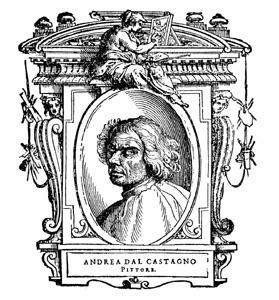
Андреа дел Кастаньо
1419 - 1457 , Италия
Бърза справка
- Artistic Movement Or Style: Ренесанс
- Artists Who Influenced This Artist:
- Масачо
- Джоти ди Бондоне
- Фра Филип Липи
- Паоло Учело
- Date Of Birth: c. 1419
- Date Of Death: 19 August 1457
- Full Name: Andrea del Castagno
- Nationality: Италиански
- Notable Artworks:
- Последната трапеза
- Разпятието
- Възкресението
- Place Of Birth: Castagnoli, Италия