

 Преглед в реален мащаб
 Сподели
 Сподели
 Подробности
 Ръководство

 Изтегляне
 Подобни артикули
 Рентгенова снимка
 Слайдшоу
 Статистика
Untitled
 Charcoal
- WallArt
- Expressionism
 1970
1970- Modern
 29.0 x 23.0 cm
 Museu do Caramulo
 Разгърни целия текст
Изкуството, представено на тази страница, е защитено от законите за авторско право, което означава, че не можем законно да създаваме или продаваме идентични репродукции. Тази защита се прилага съгласно международни споразумения като Бернска конвенция и от националното законодателство, включително разпоредбите на Закон за авторското право на САЩ – Раздел 17.
Като уважителна и законна алтернатива, ние предлагаме изработени по поръчка, ръчно рисувани произведения на изкуството, вдъхновени от оригинала. Нашите умени и професионални артисти внимателно изучават стила, настроението и артистичната същност на оригиналното произведение, за да създадат ново, уникално творческо произведение, което предизвиква същото чувство – оставайки в същото време самостоятелно оригинално творение.
Този метод е напълно съвместим с законите за авторско право, тъй като не включва копиране или дублиране на защитеното произведение. Вместо това става въпрос за творческа реинтерпретация – нова картина, която е вдъхновена от оригинала, но не е идентична с него.
Ръчно изработена маслена репродукция
Ръчно рисувана маслена картина върху платно във вашия размер и рамка, изработена по поръчка от нашите художници. ( Избор на принт Превключване към дигитално изображение)




































Изберете от нашите предварително зададени размери, които съответстват на оригиналните пропорции на произведението.

Въведете необходимата ширина и височина, за да паснат на вашата рамка или стена. Тъй като това е ръчна работа, при избор на размер с различен формат, художникът може да нарисува малко повече около картината или да отреже малко от периферията — вие избирате. Преди да започне рисуването, ще ви изпратим дигитален мок업 за одобрение. Картината, показана на тази страница, не е реалният резултат — само мок업ът го показва.
След получаване на поръчка, екипът на OriginalUniqueArt.com ще изпрати имейл до клиента с инструкции и ще предостави примерен макет за преглед.
Доставка по целия свят () в рамките на 3-4 седмици вместо стандартните 5 седмици. (23 Октомври). Без компромис с качеството.

Безплатна експресна доставка по целия свят

Висококачествено ленено платно

Пълно застраховане на доставката

Гаранция за възстановяване на митнически такси

Гаранция за пълно съответствие на цветовете

Политика за връщане в рамките на 100 дни (само при дефекти)

100% Гаранция за връщане на сумата

Отстъпка при поръчка на повече произведения
 Опцията със стъкло е налична само за размери под 110 см

Untitled
Техника на репродукция
Размер на репродукцията
-


Крайна цена
€ 264
The Raw Energy of Line and Shadow
In this evocative charcoal drawing from 1970, the Portuguese visionary Ana Hatherly de Sousa invites us into a world where nature is stripped of its serenity and reimagined as a site of profound kinetic energy. The work presents a dense, chaotic field of tall grasses or reeds, yet it transcends mere botanical representation to become an exploration of pure movement. There is no quiet meadow here; instead, the viewer is met with a swirling, turbulent landscape where dark, rhythmic lines dance across the paper in a state of unrestrained motion. The composition lacks a traditional focal point, intentionally guiding the eye on a wandering journey through an intricate network of shadows and light, much like a traveler lost within a thicket of wild growth.
The technique employed by Hatherly is as visceral as the subject matter itself. Utilizing the direct application of charcoal, the artist achieves a palpable sense of texture and physicality that demands attention. The varying thickness of each stroke—some heavy and smudged, others sharp and decisive—creates a dramatic interplay of depth. Through the masterful manipulation of density, light emerges from the darkness; where the charcoal is sparse, the paper breathes, suggesting highlights amidst the gloom, while the concentrated black masses suggest deep, impenetrable shadows. This tactile approach transforms the two-dimensional surface into a three-dimensional experience of grit and grace.
Expressionism and the Spirit of the Unseen
While the subject matter is representational, the soul of the piece is deeply rooted in Expressionism. Hatherly de Sousa, a polymath whose intellect spanned philology, poetry, and film, brings a linguistic sensitivity to her visual marks, treating each line as a word in an unspoken poem of struggle and vitality. The artwork eschews realistic precision in favor of emotional truth, capturing the "wildness" of the natural world through an almost violent application of medium. There is a palpable sense of tension within the frame, a suggestion of the internal struggles found within both nature and the human psyche.
For the discerning collector or interior designer, this piece offers a sophisticated layer of intellectual and aesthetic depth. Its monochromatic palette and abstract qualities make it an incredibly versatile choice for modern, minimalist, or industrial interiors, where it can serve as a powerful anchor of texture and mood. As a high-quality reproduction, it brings the raw, avant-garde spirit of 20th-century Portuguese experimentalism into the contemporary home, offering a window into a moment of pure, unadulterated creative impulse.
Въпроси и отговори
Кой формат на печат се препоръчва за „Untitled“ на Ana Hatherly De Sousa?
Размер Small, ориентация Landscape: това е препоръчителната конфигурация за печат на „Untitled“ на Ana Hatherly De Sousa.
Кога и с какви материали е създадено "Untitled"?
„Untitled“ е създадена през 1970 г. с Charcoal.
На каква възраст е бил Ana Hatherly De Sousa, когато е създадена „Untitled“?
Когато „Untitled“ е създадена през 1970, Ana Hatherly De Sousa – роден/а през 1929 – е бил/а на 41 години.
Биография на художника
A Life Interwoven: The Multifaceted Art of Ana Hatherly
Ana Hatherly de Sousa (1929-2015) was a singular figure in Portuguese art and culture, defying easy categorization as she moved fluidly between poetry, visual art, filmmaking, academia, and essay writing. Born in Porto, Portugal, her intellectual journey began with a degree in Germanic Philology from the University of Lisbon, followed by doctoral studies in Hispanic Studies at the University of California, Berkeley. This foundation in language and literature would prove crucial to her later explorations of form, meaning, and the very nature of artistic expression. However, Hatherly’s path wasn't one of linear progression; it was a constant questioning and re-evaluation of boundaries, a deliberate blurring of disciplines that positioned her as a pioneer of experimental art in Portugal. She spent years as a professor of human and social sciences at the New University of Lisbon, fostering critical thought and challenging conventional artistic norms within the academic sphere.The Genesis of Experimentation: Poetry and Visual Dialogue
Hatherly emerged during a period of significant political and cultural change in Portugal, and her work often reflected this turbulent context. She is widely recognized as one of the key figures in the Portuguese experimental poetry movement (Po.Ex) beginning in 1959, collaborating with artists like E.M. de Melo e Castro and António Aragão. This group sought to break away from traditional poetic forms, embracing visual elements, typography, and a radical approach to language itself. For Hatherly, this wasn’t simply about aesthetic innovation; it was about challenging the status quo and exploring new ways of communicating meaning in a rapidly changing world. Her early work demonstrates a fascination with concrete poetry, where the physical arrangement of words on the page became as important as their semantic content. This interest evolved into visual poetry, where text and image intertwined to create complex, layered compositions. She often described her process as beginning “with writing,” seeing herself as a writer who ventured into visual art through experimentation with language, but equally acknowledging that painting could be a starting point for literary exploration—a testament to the interconnectedness of all artistic forms in her worldview.Abstract Expressions and Political Undertones
Throughout her career, Hatherly’s visual work gravitated towards abstraction. Her paintings and drawings are characterized by bold lines, stark contrasts, and gestural energy. Pieces like the 1970 charcoal drawing of grasses reveal a turbulent emotionality reminiscent of Expressionism, while later monochrome abstract works from 1997 showcase complex networks of interwoven lines evoking unease and texture—a style often compared to Jackson Pollock’s action painting. However, Hatherly's abstraction was never purely formal; it frequently carried political undertones. Her art served as a vehicle for exploring themes of power, resistance, and social injustice. The series featuring stark black lines on cream backgrounds exemplifies this approach, conveying energy and disruption through raw texture and gestural abstraction. She wasn’t interested in creating decorative objects but rather in provoking thought and challenging viewers to confront uncomfortable truths.A Transdisciplinary Legacy: Film, Teaching & Beyond
Hatherly's artistic output extended far beyond poetry and painting. She ventured into filmmaking, exploring the possibilities of visual narrative and experimental techniques. Her work as an educator was equally significant; she fostered a spirit of critical inquiry at AR.CO in Lisbon and later established the Institute of Portuguese Studies at the Universidade Nova de Lisboa. This commitment to teaching reflects her belief in the importance of artistic education and the power of dialogue. She actively participated in literary associations, co-founding the PEN Club Português and receiving recognition for her book *Rilkeana*. Her vast body of work—spanning art, film, poetry, novels, essays, translations—is deeply multidimensional, defying labels and boundaries.Historical Significance & Enduring Influence
Ana Hatherly’s legacy lies in her unwavering commitment to experimentation and her refusal to be confined by traditional artistic categories. She was a true innovator, pushing the boundaries of Portuguese art and paving the way for future generations of artists. Her work continues to resonate today, inspiring those who seek to challenge conventions and explore new forms of expression. The Google Arts & Culture exhibition dedicated to her work, alongside scholarly analyses from institutions like UC Berkeley and the Taylor Institution Library at Oxford University, demonstrate the enduring relevance of her artistic vision. She remains a pivotal figure in understanding the development of avant-garde art in Portugal and its connection to broader European movements, a testament to her intellectual curiosity, artistic courage, and profound impact on the cultural landscape.
Ana Hatherly De Sousa
1929 - 2015 , Portugal
Бързи факти
- Full Name: Ana Hatherly de Sousa
- Nationality: Portuguese
- Date Of Birth: 1929
- Date Of Death: 2015
- Place Of Birth: Porto, Portugal
- Notable Artworks:
- Untitled (1970)
- Untitled (1997)
- From the series
- Of Human Servitude 1997
- Artistic Movement Or Style: Experimental poetry/art
Свързани статии

Mastering the Line: A Comprehensive Expert Guide to Technical Precision and Expressive Depth in Drawing
Elevate your artistic practice with this expert guide to mastering the line. Discover advanced techniques in graphite, charcoal, and contour drawing designed for art students seeking technical precision and expressive depth in their fine art studies.

Топ 25 шедьоври на Франсиско Гоя: Изкуство, история и лукс за вашия дом
Разгледайте топ 25 шедьоври на Франсиско Гоя – от портрети до исторически картини. Открийте историите, техниките и емоциите зад неговите най-известни творби. Луксозни репродукции за вашия дом в OriginalUniqueArt.com!
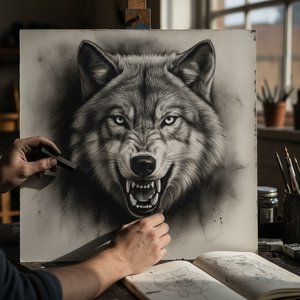
Charcoal Art Mastery: A Visual Journey Through Raw Power, Deep Shadows, and Expressive Texture
Master the raw power of charcoal art. Explore professional techniques in chiaroscuro, texture, and shadow to elevate your sketches from simple lines to high-impact, expressive masterpieces. A visual guide for art students seeking technical precision and emotional depth.

Относно нас
Открийте нашата история! Ние внасяме световнокласно изкуство във вашия живот чрез експертен подбор, персонализирани творения и безплатни прегледи. Одобрено от частни лица и фирми от 2000 г. насам.

Mastering Charcoal: The Definitive Expert Guide to Capturing Profound Depth, Texture, and Shadow
Elevate your artistry with this definitive expert guide to mastering charcoal. Designed for art students, learn professional techniques for capturing profound depth, intricate textures, and dramatic shadows through advanced blending and chiaroscuro methods.