

 Преглед в реален мащаб
 Сподели
 Сподели
 Подробности
 Ръководство

 Изтегляне
 Подобни артикули
 Рентгенова снимка
 Слайдшоу
 Статистика
Nemo


 Разгърни целия текст
Изкуството, представено на тази страница, е защитено от законите за авторско право, което означава, че не можем законно да създаваме или продаваме идентични репродукции. Тази защита се прилага съгласно международни споразумения като Бернска конвенция и от националното законодателство, включително разпоредбите на Закон за авторското право на САЩ – Раздел 17.
Този метод е напълно съвместим с законите за авторско право, тъй като не включва копиране или дублиране на защитеното произведение. Вместо това става въпрос за творческа реинтерпретация – нова картина, която е вдъхновена от оригинала, но не е идентична с него.
Жикле / Художествен принт
Giclée печат или принт върху платно с музейно качество, бързо производство и гъвкави опции за завършен вид. ( Поръчайте ръчно рисувано репродукция на този колекционерски предмет Превключване към дигитално изображение)




P118B €10

P118H €10

P118W €10

P438Z €10

P508JH €12

P508YH €12

P805H €10

P805Z €10

P919BZ €10

P919G €10

P919XJ €10

P959ZH €10

P968JZ €12

W106C €8

W218G €10

W218JH €8

W218Y €10

W307PJ €10

W316G €10

W316PJ €8

W316Y €10

W398PJ €8

W4111J €10

W500HY €15

W500JH €15

W692G €12

W849H €8

W940BG €15

W953PJ €8




Изберете от нашите предварително зададени размери, които съответстват на оригиналните пропорции на произведението.

Въведете необходимата ширина и височина, за да паснат на вашата рамка или стена. Принтовете могат само да се изрязват, но никога не могат да бъдат по-големи от оригиналната картина, така че при размер с различен формат част от изображението ще бъде загубена. Преди да започнем печат, ще ви изпратим дигитален мок업 за одобрение. Изображението, показано на тази страница, не показва реалното изрязване — само мок업ът го показва.
Доставка по целия свят () в рамките на 2 седмици вместо стандартните 4/5 седмици. (22 Октомври)

Безплатна експресна доставка по целия свят

Висококачествено ленено платно

Пълно застраховане на доставката

Гаранция за възстановяване на митнически такси

Гаранция за пълно съответствие на цветовете

Политика за връщане в рамките на 100 дни (само при дефекти)

100% Гаранция за връщане на сумата

Отстъпка при поръчка на повече произведения
 Опцията със стъкло е налична само за размери под 110 см

Nemo
Жикле / Художествен принт
Размер на репродукцията
-


Крайна цена
€ 70
Nemo – A Symphony of Geometric Form and Chance
Alexander Milne Calder’s “Nemo” stands as a testament to the enduring fascination with abstraction—a captivating exploration of color, shape, and movement that transcends mere visual representation. Created in 1947, this striking piece embodies Calder's signature approach: eschewing realism for a deliberate embrace of spontaneity and serendipity, mirroring the very essence of his celebrated mobiles.
The Visual Language of Equilibrium
Dominating the canvas is an intricate composition featuring overlapping circles and squares—a bold declaration of geometric principles. The palette bursts with vibrant hues—primarily reds, yellows, and blues—that harmonize to create a dynamic visual experience. Calder meticulously crafted these shapes using a flat painting technique, prioritizing form over texture; there’s no visible brushwork, reflecting his unwavering commitment to precision and control despite the illusion of movement.
A Reflection of Constructivism's Legacy
“Nemo” firmly roots itself within the influential Constructivist movement of the early 20th century. Like its contemporaries—artists who sought to liberate art from traditional conventions—Calder aimed to convey emotion and ideas through simplified geometric forms, rejecting decorative embellishments in favor of intellectual rigor. This stylistic choice underscores Calder’s belief that art should communicate directly with the viewer's intellect as well as their senses.
Symbolism Embedded in Motionless Form
Despite its apparent stillness, “Nemo” pulsates with an underlying sense of dynamism—a subtle suggestion of movement achieved through the careful arrangement of shapes and colors. Calder’s genius lies in transforming static form into a conduit for conveying emotion; the overlapping circles and squares evoke feelings of balance, harmony, and perhaps even controlled chaos. The artist deliberately avoided explicit symbolism, allowing viewers to interpret the artwork's impact on their own emotional landscape.
A Monumental Contribution to Modern Art
Alexander Milne Calder’s “Nemo” represents more than just a beautiful painting—it embodies a pivotal moment in artistic history. His pioneering exploration of kinetic sculpture and his unwavering dedication to geometric abstraction paved the way for subsequent generations of artists, establishing him as one of the most influential sculptors of the 20th century. This artwork continues to inspire admiration for its elegance, innovation, and profound engagement with fundamental principles of visual art.
Въпроси и отговори
В кое художествено направление и в коя епоха се поставя „Nemo“ на Александър Милен Кадер?
В „Nemo“ на Александър Милен Кадер изкуството от направлението Modernism се среща с епохата на Модерно изкуство.
Колко силен е контрастът в „Nemo“ на Александър Милен Кадер?
Нивото на контраст в „Nemo“ на Александър Милен Кадер е Statement.
В кой музей се намира оригиналът на "Nemo"?
Оригиналът на „Nemo“ може да бъде видян в Biennale Internazionale dell'Antiquariato di Firenze, Флоренция, Италия.
Биография на художника
Introduction to Alexander Milne Calder
Alexander Milne Calder (MILL-nee) was a Scottish-American sculptor born in Aberdeen, Scotland, on August 23, 1846. He is best known for his monumental architectural sculpture of Philadelphia City Hall and as the father of renowned sculptor Alexander Stirling Calder, alongside whose grandson, Alexander ‘Sandy’ Calder, achieved considerable acclaim in the 20th century. His artistic journey began amidst the vibrant Arts and Crafts movement, nurtured by a formative education at the Royal Academy in Edinburgh and honed through studies with John Rhind. He subsequently established himself in London, immersing himself in the artistic milieu of his time and contributing to significant projects like the Albert Memorial. A pivotal moment arrived in 1868 when Calder emigrated to the United States and settled in Philadelphia, where he pursued further academic endeavors under the tutelage of Thomas Eakins at the Pennsylvania Academy of Fine Arts. This relocation marked the commencement of a prolific artistic career characterized by innovation and experimentation.Early Life and Education
Calder’s upbringing instilled within him a profound appreciation for craftsmanship and artistic expression. Born to Nanette Lederer Calder, a painter, and Alexander Stirling Calder, a sculptor—who himself was a celebrated artist—he inherited a legacy of creative endeavor. His father's mastery of stone carving profoundly influenced his formative years, shaping his understanding of sculptural technique. Calder attended the Royal Academy in Edinburgh and studied with John Rhind, absorbing artistic principles that would inform his subsequent work. He honed his skills at the South Kensington School and collaborated closely with Thomas Eakins at the Pennsylvania Academy of Fine Arts, immersing himself in a stimulating environment conducive to artistic development. His father contracted tuberculosis during Calder’s youth, necessitating a relocation to Oracle, Arizona, where he resided alongside his wife, Louisa, fostering a familial bond that would endure throughout his life. Calder's formative years were enriched by friendships with Riley, an elderly resident of the ranch who imparted invaluable knowledge about sculpting and artistic vision.Career Highlights
Calder’s professional trajectory commenced in 1872 when he accepted a commission from John McArthur Jr., to create sculptures adorning Philadelphia City Hall—a project that demanded meticulous planning and execution over two decades. This ambitious undertaking showcased Calder's dedication to craftmanship and his ability to translate conceptual ideas into tangible forms. Simultaneously, he undertook the prestigious role of artistic director for the Fairmount Park Art Association, crafting an equestrian statue honoring George Gordon Meade—a testament to his commitment to public art and historical commemoration. His groundbreaking contribution to kinetic art arrived in 1931 with the creation of his first mobile—a sculptural innovation that embraced chance and movement—inspired by Marcel Duchamp’s conceptual approach. Calder's work quickly gained recognition within the Parisian avant-garde, propelling him to prominence as one of America’s foremost contemporary sculptors. A landmark retrospective exhibition at the Museum of Modern Art in New York in 1953 solidified Calder’s artistic reputation and cemented his place among the titans of American art history. His monumental sculptures—including *Spirale* for UNESCO headquarters and *Flamingo* for Chicago's Federal Center Plaza—became enduring symbols of artistic ambition and innovation.Legacy
Alexander Milne Calder’s influence extended far beyond his own creations, shaping the artistic landscape of subsequent generations. His son, Alexander Stirling Calder, followed in his father’s footsteps as a sculptor, perpetuating the Calder family tradition of artistic excellence. Similarly, Alexander ‘Sandy’ Calder—Calder's grandson—became a celebrated artist himself, carrying forward the legacy of innovation and experimentation established by his forefathers. Calder’s enduring contribution to art history continues to inspire artists worldwide, ensuring that his vision remains relevant for years to come.
Александър Милен Кадер
1898 - 1976 , Великобритания
Бързи факти
- Artistic Movement Or Style: Architectural sculpture
- Artists Or Movements Influenced By This Artist: ['Kinetic art']
- Artists Who Influenced This Artist: ['John Rhind']
- Date Of Birth: August 23, 1846
- Date Of Death: June 14, 1923
- Full Name: Alexander Milne Calder
- Nationality: Scottish-American
- Notable Artworks:
- Philadelphia City Hall
- William Penn statue
- Place Of Birth: Aberdeen, Scotland
Свързани статии

Beyond Form & Color: Geometric Abstraction's Evolution in 20th/21st Century Art
Explore the evolution of geometric abstraction from Cubism to contemporary art. Discover key artists like Malevich & Mondrian, investment insights, and expert collecting advice at OriginalUniqueArt.

Neo-Abstract Art: The High-Impact Evolution of Modern Visual Energy and Geometric Sophistication
Discover the power of Neo-Abstract art. Explore how bold geometric forms and high-impact visual energy are redefining modern design. Learn to curate sophisticated, high-energy spaces with the latest trends in contemporary abstraction and structural color.
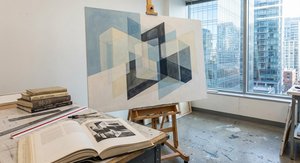
Beyond Form & Color: Geometric Abstraction's Enduring Legacy in Art History
Explore the captivating world of geometric abstraction! Discover its origins, key artists like Malevich & Mondrian, and why this movement remains highly valued by art collectors today. Expert insights at OriginalUniqueArt.

Топ 25 шедьоври на Василий Кандински: Абстрактно изкуство за вашия дом | OriginalUniqueArt.com
Разгледайте топ 25 шедьоври на Василий Кандински – пионер на абстрактното изкуство и експресионизма. Открийте историите зад цветните композиции, техниките и вдъхновението му. Купете висококачествени репродукции на картини Кандински за вашия дом на OriginalUniqueArt.com!

Топ 10 шедьовъра на геометричната абстракция за Вашия дом | OriginalUniqueArt.com
Разгледайте топ 10 шедьовъра на геометричната абстракция – Кандински, Мондриан и други! Открийте историите зад тези емблематични картини и добавете елегантност към дома си с репродукции от OriginalUniqueArt.com. Разгледайте пълната колекция онлайн!
