

 Преглед в реален мащаб
 Сподели
 Сподели
 Подробности
 Ръководство

 Изтегляне
 Подобни артикули
 Рентгенова снимка
 Слайдшоу
 Статистика
Lobster Trap and Fish Tail


 Разгърни целия текст
Жикле / Художествен принт
Giclée печат или принт върху платно с музейно качество, бързо производство и гъвкави опции за завършен вид. ( Поръчайте ръчно рисувано репродукция на този колекционерски предмет Превключване към дигитално изображение)




P118B $10

P118H $10

P118W $10

P438Z $10

P508JH $12

P508YH $12

P805H $10

P805Z $10

P919BZ $10

P919G $10

P919XJ $10

P959ZH $10

P968JZ $12

W106C $8

W218G $10

W218JH $8

W218Y $10

W307PJ $10

W316G $10

W316PJ $8

W316Y $10

W398PJ $8

W4111J $10

W500HY $15

W500JH $15

W692G $12

W849H $8

W940BG $15

W953PJ $8




Изберете от нашите предварително зададени размери, които съответстват на оригиналните пропорции на произведението.

Можете да въведете собствени размери, за да паснат на конкретна рамка или пространство. Ако избраният от Вас размер не съвпада с пропорциите на оригиналното изображение, ние ще изрежем произведението или ще разширим изображението с огледален или едноцветен ръб. Дигитален макет ще бъде изпратен за Ваше одобрение преди започването на производството.
Моля, имайте предвид, че предпрегледът на екрана не отразява реалното изрязване или разширяване. Само макетът ще покаже точно финалната композиция.
Въпреки че са налични персонализирани размери, препоръчваме да изберете размер от предварително дефинирания списък, за да запазите оригиналните пропорции.
Доставка по целия свят () в рамките на 2 седмици вместо стандартните 4/5 седмици. (27 Септември)

Безплатна експресна доставка по целия свят

Висококачествено ленено платно

Пълно застраховане на доставката

Гаранция за възстановяване на митнически такси

Гаранция за пълно съответствие на цветовете

Политика за връщане в рамките на 100 дни (само при дефекти)

100% Гаранция за връщане на сумата

Отстъпка при поръчка на повече произведения
 Опцията със стъкло е налична само за размери под 110 см

Lobster Trap and Fish Tail
Жикле / Художествен принт
Размер на репродукцията
-


Крайна цена
$ 80
Alexander Milne Calder’s Minimalist Dance of the Deep
Alexander Milne Calder's "Lobster Trap and Fish Tail," created in 1939, isn’t merely a depiction of marine life; it’s an embodiment of movement captured within a strikingly reductive aesthetic. This captivating abstract composition, rendered in the restrained palette of black, white, and varying shades of grey against a subtly lit expanse of pale gray, immediately draws the eye into its dynamic arrangement. The artwork speaks to a profound sense of fluidity and grace, achieved through the elongated, curving forms that dominate the canvas – stylized fish tails intertwined with what appears to be a lobster trap, creating an intriguing visual dialogue.
Calder’s approach leans heavily towards geometric abstraction, prioritizing line and form over realistic representation. The technique employed suggests a deliberate fusion of digital painting and illustration, resulting in a remarkably clean and precise execution. Notice the careful delineation of shapes – ovals morphing into elongated teardrops, culminating in simplified fins—each element contributing to the overall sense of controlled motion. Texture is subtly implied through variations in line weight and shading, rather than relying on literal surface detail, adding depth without sacrificing the artwork’s inherent minimalism.
A Reflection of Calder's Artistic Evolution
Understanding "Lobster Trap and Fish Tail" requires a brief journey into the life and work of Alexander Milne Calder. Born in Aberdeen, Scotland, in 1846, Calder initially trained as a sculptor under John Rhind, honing his skills at the Royal Academy in Edinburgh before migrating to London and working on the Albert Memorial. His subsequent move to Philadelphia in 1868 marked a pivotal moment, where he studied with Joseph A. Bailly and Thomas Eakins at the Pennsylvania Academy of Fine Arts. This period saw him gain recognition for monumental works like the Philadelphia City Hall sculpture – a complex undertaking involving over 250 individual pieces—and the colossal bronze statue of William Penn. Calder’s later career embraced kinetic art, experimenting with mobiles that responded to air currents and gravity, pushing the boundaries of sculptural form.
Interestingly, his grandson, Alexander “Sandy” Calder, continued this legacy, further developing the principles of chance and movement within sculpture. The influence of Joan Miró's biomorphic surrealism and Martha Graham’s choreography is palpable in Calder’s approach to motion – a deliberate harnessing of mechanical forces to evoke a sense of organic fluidity.
Symbolic Currents and Spatial Dynamics
Beyond its formal qualities, "Lobster Trap and Fish Tail" invites contemplation on deeper symbolic meanings. The arrangement of the fish tails, diagonally intersecting with a central mobile element, creates a powerful visual rhythm, suggesting an ongoing, almost perpetual movement. The lobster trap itself adds a layer of complexity, hinting at themes of capture, vulnerability, and perhaps even the precariousness of existence within the vastness of the ocean. The predominantly light gray background serves as a crucial anchor, emphasizing the shapes and contributing to the artwork’s serene yet dynamic mood.
Calder's masterful use of negative space—the expansive light gray field—is integral to the composition’s balance and overall impact. It allows the abstracted forms to breathe, preventing the piece from feeling cluttered or overwhelming. The flattened perspective, typical of abstract art, further enhances this sense of spaciousness, inviting viewers to lose themselves within the sculpture's graceful dance.
A Timeless Piece for Interior Spaces
"Lobster Trap and Fish Tail" is more than just a beautiful artwork; it’s a testament to Calder’s innovative spirit and his ability to capture the essence of movement. A hand-painted reproduction offers an exceptional opportunity to bring this captivating piece into your home or office, adding a touch of sophisticated serenity and visual intrigue. Its minimalist design complements a wide range of interior styles, while its subtle dynamism injects a sense of life and energy into any space. Consider it not just as decoration, but as a thoughtful meditation on form, motion, and the enduring beauty of the natural world.
Биография на художника
Introduction to Alexander Milne Calder
Alexander Milne Calder (MILL-nee) was a Scottish-American sculptor born in Aberdeen, Scotland, on August 23, 1846. He is best known for his monumental architectural sculpture of Philadelphia City Hall and as the father of renowned sculptor Alexander Stirling Calder, alongside whose grandson, Alexander ‘Sandy’ Calder, achieved considerable acclaim in the 20th century. His artistic journey began amidst the vibrant Arts and Crafts movement, nurtured by a formative education at the Royal Academy in Edinburgh and honed through studies with John Rhind. He subsequently established himself in London, immersing himself in the artistic milieu of his time and contributing to significant projects like the Albert Memorial. A pivotal moment arrived in 1868 when Calder emigrated to the United States and settled in Philadelphia, where he pursued further academic endeavors under the tutelage of Thomas Eakins at the Pennsylvania Academy of Fine Arts. This relocation marked the commencement of a prolific artistic career characterized by innovation and experimentation.Early Life and Education
Calder’s upbringing instilled within him a profound appreciation for craftsmanship and artistic expression. Born to Nanette Lederer Calder, a painter, and Alexander Stirling Calder, a sculptor—who himself was a celebrated artist—he inherited a legacy of creative endeavor. His father's mastery of stone carving profoundly influenced his formative years, shaping his understanding of sculptural technique. Calder attended the Royal Academy in Edinburgh and studied with John Rhind, absorbing artistic principles that would inform his subsequent work. He honed his skills at the South Kensington School and collaborated closely with Thomas Eakins at the Pennsylvania Academy of Fine Arts, immersing himself in a stimulating environment conducive to artistic development. His father contracted tuberculosis during Calder’s youth, necessitating a relocation to Oracle, Arizona, where he resided alongside his wife, Louisa, fostering a familial bond that would endure throughout his life. Calder's formative years were enriched by friendships with Riley, an elderly resident of the ranch who imparted invaluable knowledge about sculpting and artistic vision.Career Highlights
Calder’s professional trajectory commenced in 1872 when he accepted a commission from John McArthur Jr., to create sculptures adorning Philadelphia City Hall—a project that demanded meticulous planning and execution over two decades. This ambitious undertaking showcased Calder's dedication to craftmanship and his ability to translate conceptual ideas into tangible forms. Simultaneously, he undertook the prestigious role of artistic director for the Fairmount Park Art Association, crafting an equestrian statue honoring George Gordon Meade—a testament to his commitment to public art and historical commemoration. His groundbreaking contribution to kinetic art arrived in 1931 with the creation of his first mobile—a sculptural innovation that embraced chance and movement—inspired by Marcel Duchamp’s conceptual approach. Calder's work quickly gained recognition within the Parisian avant-garde, propelling him to prominence as one of America’s foremost contemporary sculptors. A landmark retrospective exhibition at the Museum of Modern Art in New York in 1953 solidified Calder’s artistic reputation and cemented his place among the titans of American art history. His monumental sculptures—including *Spirale* for UNESCO headquarters and *Flamingo* for Chicago's Federal Center Plaza—became enduring symbols of artistic ambition and innovation.Legacy
Alexander Milne Calder’s influence extended far beyond his own creations, shaping the artistic landscape of subsequent generations. His son, Alexander Stirling Calder, followed in his father’s footsteps as a sculptor, perpetuating the Calder family tradition of artistic excellence. Similarly, Alexander ‘Sandy’ Calder—Calder's grandson—became a celebrated artist himself, carrying forward the legacy of innovation and experimentation established by his forefathers. Calder’s enduring contribution to art history continues to inspire artists worldwide, ensuring that his vision remains relevant for years to come.
Александър Милен Кадер
1898 - 1976 , Великобритания
Бързи факти
- Artistic Movement Or Style: Architectural sculpture
- Artists Or Movements Influenced By This Artist: ['Kinetic art']
- Artists Who Influenced This Artist: ['John Rhind']
- Date Of Birth: August 23, 1846
- Date Of Death: June 14, 1923
- Full Name: Alexander Milne Calder
- Nationality: Scottish-American
- Notable Artworks:
- Philadelphia City Hall
- William Penn statue
- Place Of Birth: Aberdeen, Scotland
Свързани статии

Beyond Form & Color: Geometric Abstraction's Evolution in 20th/21st Century Art
Explore the evolution of geometric abstraction from Cubism to contemporary art. Discover key artists like Malevich & Mondrian, investment insights, and expert collecting advice at OriginalUniqueArt.
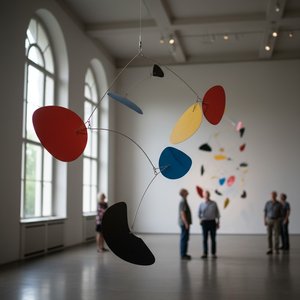
Alexander Calder: Kinetic Sculpture, Mobile Art & the Poetics of Chance
Explore the revolutionary world of Alexander Calder's kinetic sculptures & mobiles. Discover insights for collectors, acquisition advice, and the enduring legacy of this modern master. Expert analysis & art valuation.

Топ 10 шедьовъра на геометричната абстракция за Вашия дом | OriginalUniqueArt.com
Разгледайте топ 10 шедьовъра на геометричната абстракция – Кандински, Мондриан и други! Открийте историите зад тези емблематични картини и добавете елегантност към дома си с репродукции от OriginalUniqueArt.com. Разгледайте пълната колекция онлайн!

Топ 10 Бронзови Скулптури, Променили Изкуството завинаги | OriginalUniqueArt.bg
Разгледайте топ 10 легендарни бронзови скулптури, променили изкуството! От Роден до Микеланджело – истории на гении и вечни шедьоври. Вдъхновете се за вашия дом с OriginalUniqueArt.bg. Разгледайте пълната колекция онлайн!

Neo-Abstract Art: The High-Impact Evolution of Modern Visual Energy and Geometric Sophistication
Discover the power of Neo-Abstract art. Explore how bold geometric forms and high-impact visual energy are redefining modern design. Learn to curate sophisticated, high-energy spaces with the latest trends in contemporary abstraction and structural color.
