
 Преглед в реален мащаб
 Изпрати
 Сподели
 Детайли
 Ръководство

 Изтегляне
 Подобни артикули
 Рентгенова снимка
 Слайдшоу
 Въпроси и отговори
 Статистика
Nativity

- 36.0 x 26.0 cm


 Прочети повече
Жикле / Художествен принт
Giclée печат или принт върху платно с музейно качество, бързо производство и гъвкави опции за завършен вид. ( Купете ръчно рисувана картина Превключване към дигитално изображение)




P118B €10

P118H €10

P118W €10

P438Z €10

P508JH €12

P508YH €12

P805H €10

P805Z €10

P919BZ €10

P919G €10

P919XJ €10

P959ZH €10

P968JZ €12

W106C €8

W218G €10

W218JH €8

W218Y €10

W307PJ €10

W316G €10

W316PJ €8

W316Y €10

W398PJ €8

W4111J €10

W500HY €15

W500JH €15

W692G €12

W849H €8

W940BG €15

W953PJ €8




Изберете от нашите предварително зададени размери, които съответстват на оригиналните пропорции на произведението.

Въведете необходимата ширина и височина, за да паснат на вашата рамка или стена. Принтовете могат само да се изрязват, но никога не могат да бъдат по-големи от оригиналната картина, така че при размер с различен формат част от изображението ще бъде загубена. Преди да започнем печат, ще ви изпратим дигитален мок업 за одобрение. Изображението, показано на тази страница, не показва реалното изрязване — само мок업ът го показва.
Доставка по целия свят () в рамките на 2 седмици вместо стандартните 4/5 седмици. (9 Ноември)

Безплатна експресна доставка по целия свят

Висококачествено ленено платно

Пълно застраховане на доставката

Гаранция за възстановяване на митнически такси

Гаранция за пълно съответствие на цветовете

Политика за връщане в рамките на 100 дни (само при дефекти)

100% Гаранция за връщане на сумата

Оферта за отстъпка при поръчка на повече бройки
 Опцията със стъкло е налична само за размери под 110 см

Nativity
Жикле / Художествен принт
Размер на репродукцията
-


Обща цена
€ 72
A Dramatic Descent: Albrecht Altdorfer’s “Nativity”
Albrecht Altdorfer's "Nativity," painted around 1513, isn’t merely a depiction of the birth of Christ; it’s a visceral plunge into a realm of profound spiritual struggle and ultimately, fragile hope. This remarkable oil painting, now housed in the National Gallery of Art, stands as a pivotal work, marking a significant shift in European art history – Altdorfer is widely considered one of the first artists to truly embrace landscape as an independent subject, elevating it from mere backdrop to integral participant within the narrative.
The scene unfolds within a subterranean cavern, a chaotic and intensely dramatic space rendered with breathtaking detail. It’s a world sculpted from crumbling architecture, fiery flames licking at shadowed walls, and a palpable sense of impending doom. Yet, amidst this torment, a small group – a woman kneeling before a prone figure (traditionally interpreted as Christ), attended by two men struggling to lift him upwards – embodies the core themes of rescue and redemption. The composition is deliberately complex, layered with multiple figures engaged in desperate attempts at salvation, creating an immersive experience for the viewer that feels both claustrophobic and expansive.
A Baroque Vision Rooted in Northern Tradition
Altdorfer’s style defies easy categorization, yet it firmly resides within the burgeoning German Renaissance while simultaneously drawing heavily from the dramatic intensity of late Gothic and early mannerist traditions. The influence of the Baroque is undeniable – the dynamic composition, the heightened emotionalism, and the masterful use of light and shadow all point to this powerful movement. However, Altdorfer’s work retains a distinctly Northern sensibility, characterized by a ruggedness and an earthy quality that contrasts with the more polished aesthetics prevalent in Italy at the time. The brushwork is deliberately rough and uneven, lending a sense of immediacy and urgency to the scene – it feels as though we are witnessing this struggle unfold before our very eyes.
Technically, Altdorfer employs a layering technique, building up color and texture through multiple applications of oil paint. This creates a rich, almost sculptural surface, particularly evident in the depiction of the flames and the crumbling architecture. The use of perspective is subtly distorted, contributing to the overall feeling of unease and disorientation – it’s not a realistic portrayal but rather an emotionally charged interpretation of the biblical narrative. The color palette leans heavily towards warm tones—reds, oranges, and browns—creating a sense of heat, danger, and desperate urgency, punctuated by the cool blues and purples of the shadows.
Symbolism of Suffering and Salvation
Beyond its immediate visual impact, “Nativity” is laden with symbolic meaning. The subterranean setting immediately evokes themes of suffering, darkness, and the underworld – a direct reference to the biblical accounts of Christ’s death and resurrection. The figures attempting to rescue the prone figure represent humanity's struggle against despair and the desperate yearning for salvation. The angels ascending through the opening in the ceiling symbolize divine intervention and the promise of redemption. The chaotic landscape itself can be interpreted as a metaphor for the human condition – a world fraught with challenges, dangers, and uncertainties.
Notably, Altdorfer’s work reflects the broader anxieties of his time, grappling with questions of faith, mortality, and the relationship between humanity and God. The painting's power lies not just in its dramatic depiction of a biblical event but also in its exploration of universal themes—the struggle against adversity, the search for meaning, and the enduring hope for salvation. It’s a testament to Altdorfer’s ability to transform a familiar story into a profoundly moving and unforgettable work of art.
Въпроси и отговори
Какво чувство предава "Nativity"?
Емоционалният тон, отбелязан за „Nativity“ на Албрехт Алтдорфер, е Melancholic. Той обобщава усещането, което произведението изразява.
Кои цветове доминират в „Nativity“ на Албрехт Алтдорфер?
„Nativity“ на Албрехт Алтдорфер използва палитра от Earthy, като Phthalo Green (#2c1514) е доминиращият цвят.
Каква емоция предава произведението от Baroque „Nativity“?
В рамките на движението Baroque, „Nativity“ е запечатвано с Melancholic тон.
Биография на художника
Albrecht Altdorfer: A Pioneer of German Landscape and Emotional Intensity
Albrecht Altdorfer, born around 1480 in the vibrant city of Regensburg on the banks of the Danube River, stands as a truly remarkable figure – a bridge between the late Gothic era and the burgeoning German Renaissance. He wasn’t merely an artist *of* his time; he fundamentally reshaped it, particularly through his groundbreaking approach to landscape painting. Emerging from a family steeped in artistic tradition—his father, Ulrich Altdorfer, was himself a painter and miniaturist—Altdorfer quickly distinguished himself not as a follower of established styles, but as an innovator, forging a unique path marked by emotional depth and unprecedented naturalism. Regensburg, a strategically important free imperial city with strong ties to both the Holy Roman Empire and the Danube trade routes, provided him with a stimulating environment – a confluence of cultures and influences that profoundly shaped his artistic sensibilities and fostered a deep connection to the surrounding landscape. Beyond his artistic pursuits, Altdorfer was also a respected civic leader, serving as town architect and a member of Regensburg’s council—a testament to his multifaceted talents and engagement with the life of his city. His legacy rests not just on the beauty of his paintings, but on the radical shift he instigated in how artists perceived and represented nature itself.The Danube School and a Revolutionary Vision
Altdorfer is most prominently recognized as a key figure within the Danube School, an influential artistic circle active throughout southern Germany during the early 16th century. This group of artists shared a common fascination with exploring the expressive potential of landscape, elevating it from its traditional role as mere background to become a central and vital subject in its own right. Prior to Altdorfer’s work, landscapes were primarily utilized as settings for religious or historical narratives – providing context but rarely receiving individual attention. Altdorfer dared to depict nature *for itself*, imbuing it with atmosphere, emotion, and a profound sense of presence. This shift was dramatically catalyzed by a transformative journey down the Danube River and into the heart of the Alps around 1511. The sheer scale and dramatic beauty of these mountainous vistas—the towering peaks, dense forests, and turbulent rivers—ignited within him an intense passion for capturing their essence on canvas. He became, arguably, one of the first modern landscape painters, not simply replicating what he saw with photographic accuracy, but conveying a deeply felt *experience* – a sense of awe, mystery, and even spiritual connection to the natural world. This wasn’t merely topographical representation; it was about translating the feeling of being immersed within a landscape into visual form. Works like “The Large Spruce” exemplify this revolutionary approach, offering a serene yet intricate depiction of nature's beauty, capturing not just its appearance but also its inherent mood and energy.Masterpieces and Artistic Influences
Throughout his prolific career, Altdorfer produced a remarkably diverse body of work encompassing paintings, engravings, drawings, and architectural designs. Among his most celebrated achievements is *The Battle of Alexander at Issus* (1529), a monumental painting commissioned by Duke William IV of Bavaria. This masterpiece showcases not only Altdorfer’s exceptional mastery of composition, detail, and color, but also his innovative use of landscape to heighten the dramatic tension and emotional impact of the battle scene itself. The swirling clouds, jagged mountains, and chaotic melee of soldiers are rendered with a dynamism that overwhelms the viewer, creating a palpable sense of energy and spectacle. His collaboration with Emperor Maximilian I in Innsbruck from 1513 further expanded his artistic horizons and provided opportunities to undertake large-scale projects for the imperial court. Altdorfer’s style wasn't born in isolation; he was deeply influenced by a range of artists and movements. The poetic lyricism of Italian Renaissance painters like Giorgione, whose hazy landscapes and evocative lighting profoundly impacted him, combined with the expressive figures and dramatic narratives of Lucas Cranach the Elder, and the meticulous detail and technical precision of Albrecht Dürer all contributed to his distinctive artistic voice. However, Altdorfer skillfully synthesized these diverse influences into a uniquely personal vision—characterized by its intense emotionality, dramatic use of light and shadow, and evocative depictions of nature. His engravings, such as “Mucius Scaevola Burning His Hand,” demonstrate his exceptional skill in this medium, showcasing delicate lines, intricate details, and a remarkable ability to convey movement and drama.Exploring Altdorfer’s Diverse Works
Beyond the grand battle scenes and iconic landscapes, Altdorfer's artistic range encompassed religious subjects, mythological narratives, and even architectural designs. His depictions of biblical stories—such as “Abraham’s Sacrifice”—are imbued with a profound sense of drama and emotional depth, moving beyond simple illustration to explore complex themes of faith, morality, and human suffering. He wasn’t simply depicting scenes from scripture; he was using them as vehicles for exploring the fundamental questions of the human condition. His engravings, often small and intimate, offer glimpses into his creative process—revealing his meticulous observation skills, his masterful control of line and shading, and his ability to capture subtle nuances of expression. Furthermore, Altdorfer’s architectural designs, reflecting his role as town architect of Regensburg, demonstrate his practical abilities alongside his artistic sensibilities, contributing significantly to the city's fortifications and urban planning.Legacy and Lasting Impact
Albrecht Altdorfer’s artistic legacy extends far beyond the 55 panels, 120 drawings, and numerous engravings he created during his lifetime. He fundamentally altered the way artists approached landscape painting, paving the way for future generations to explore its expressive possibilities and to see nature not merely as a backdrop but as a subject worthy of profound contemplation. His influence can be seen in the works of later German Romantic painters who similarly sought to capture the sublime beauty and emotional power of nature—artists like Caspar David Friedrich, who built upon Altdorfer’s foundations. Today, Altdorfer’s art is represented in major museum collections across Europe, including the Museum Ostdeutsche Galerie in Germany (where his *Madonna (Beautiful Maria of Regensburg)* resides) and the Kunstsammlungen und Museen Augsburg in Austria. His innovative spirit, technical skill, and profound connection to the natural world continue to inspire artists and captivate audiences centuries after his death in 1538. He remains a towering figure of the German Renaissance—a true pioneer who dared to see landscape not merely as scenery but as a powerful force capable of evoking deep emotion and spiritual meaning. His work stands as a testament to the enduring power of art to transform our perception of the world around us – a legacy that continues to resonate with viewers today.
Албрехт Алтдорфер
1480 - 1538 , Германия
Бърза информация
- Artistic Movement Or Style: Данубската школа, Ренесанс
- Artists Or Movements Influenced By This Artist: ['Германски романтици']
- Artists Who Influenced This Artist:
- Джорджоне
- Лукас Кранх
- Албрехт Дюрер
- Date Of Birth: c. 1480
- Date Of Death: 1538
- Full Name: Albrecht Altdorfer
- Nationality: Германец
- Notable Artworks:
- Битката при Александрия
- Голямата ела
- Свети Георги и дракона
- Place Of Birth: Регенсбург, Германия
Свързани статии

The Enduring Legacy of Oil on Canvas: Technique, History & Aesthetic Impact
Explore the rich history & techniques of oil painting – from Renaissance masters to Impressionism. Discover pigments, layering methods, and why this timeless medium endures. Expert insights for artists & art enthusiasts.
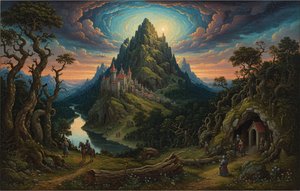
Albrecht Altdorfer: Innovation, Spirituality & the Northern Renaissance Landscape
Explore the groundbreaking art of Albrecht Altdorfer, a pioneer of the Northern Renaissance's Danube School. Discover his innovative landscapes, spiritual symbolism & lasting influence on German painting.
Албрехт Дюрер: 25 шедьовъра на Ренесанса за вашия дом | OriginalUniqueArt.com
Разгледайте 25 шедьовъра на Албрехт Дюрер – гравюри, автопортрети и ренесансови живописи. Открийте историите зад всяка творба и превърнете дома си в галерия с OriginalUniqueArt.com! Разгледайте пълната колекция онлайн.

The Enduring Power of Painting: A Historical & Contemporary Exploration of Form and Emotion
Explore the rich history & enduring techniques of oil painting with OriginalUniqueArt. Discover masterpieces, learn about art collecting, and find authentic handmade reproductions crafted by skilled artists.

Oil on Canvas: A Historical & Technical Exploration of a Timeless Artistic Medium
Explore the rich history & enduring techniques of oil painting on canvas. Discover the science behind its longevity, conservation practices, and contemporary relevance. Expert insights for art enthusiasts.


