

 Преглед в реален мащаб
 Сподели
 Сподели
 Подробности
 Ръководство

 Изтегляне
 Подобни артикули
 Рентгенова снимка
 Слайдшоу
 Статистика
Jean-Baptiste Pasteur


 Разгърни целия текст
Ръчно изработена маслена репродукция
Ръчно рисувана маслена картина върху платно във вашия размер и рамка, изработена по поръчка от нашите художници. ( Избор на принт Превключване към дигитално изображение)




P118B €10

P118H €10

P118W €10

P438Z €10

P508JH €12

P508YH €12

P805H €10

P805Z €10

P919BZ €10

P919G €10

P919XJ €10

P959ZH €10

P968JZ €12

W106C €8

W218G €10

W218JH €8

W218Y €10

W307PJ €10

W316G €10

W316PJ €8

W316Y €10

W398PJ €8

W4111J €10

W500HY €15

W500JH €15

W692G €12

W849H €8

W940BG €15

W953PJ €8




Изберете от нашите предварително зададени размери, които съответстват на оригиналните пропорции на произведението.

Въведете необходимата ширина и височина, за да паснат на вашата рамка или стена. Тъй като това е ръчна работа, при избор на размер с различен формат, художникът може да нарисува малко повече около картината или да отреже малко от периферията — вие избирате. Преди да започне рисуването, ще ви изпратим дигитален мок업 за одобрение. Картината, показана на тази страница, не е реалният резултат — само мок업ът го показва.
След получаване на поръчка, екипът на OriginalUniqueArt.com ще изпрати имейл до клиента с инструкции и ще предостави примерен макет за преглед.
Доставка по целия свят () в рамките на 3-4 седмици вместо стандартните 5 седмици. (26 Октомври). Без компромис с качеството.

Безплатна експресна доставка по целия свят

Висококачествено ленено платно

Пълно застраховане на доставката

Гаранция за възстановяване на митнически такси

Гаранция за пълно съответствие на цветовете

Политика за връщане в рамките на 100 дни (само при дефекти)

100% Гаранция за връщане на сумата

Отстъпка при поръчка на повече произведения
 Опцията със стъкло е налична само за размери под 110 см

Jean-Baptiste Pasteur
Техника на репродукция
Размер на репродукцията
-


Крайна цена
€ 263
A Portrait of Genius: Albert Edelfelt’s Vision of Louis Pasteur
The painting of Louis Pasteur by Albert Edelfelt stands as an emblem of scientific achievement and humanist compassion—a testament to the transformative power of art when allied with intellectual curiosity. Completed in 1881, it transcends mere representation; instead, Edelfelt captured not just Pasteur’s physical likeness but also his profound dedication to unraveling the mysteries of life and combating disease. This remarkable artwork resides within the Musée d’Orsay in Paris, offering visitors a chance to contemplate its enduring legacy.The Artist's Approach: Collaboration and Observation
Albert Edelfelt wasn’t merely commissioned to depict Pasteur; he actively participated in shaping the portrait’s narrative. Driven by an unwavering belief in the importance of scientific inquiry, Edelfelt meticulously documented Pasteur’s laboratory environment—a deliberate decision that underscored his commitment to portraying Pasteur as a man deeply engaged with his craft. As evidenced by Edelfelt's correspondence with his mother, he undertook extensive preparatory sketches and studies, capturing Pasteur’s posture and facial expressions with painstaking accuracy. These detailed observations informed the artist’s vision, resulting in an image imbued with palpable sincerity and intellectual depth.Style and Technique: Impressionistic Realism
Edelfelt’s style exemplifies a harmonious blend of impressionistic realism—a hallmark of his era—characterized by luminous brushstrokes and subtle tonal gradations. He skillfully employed oil paints on canvas to achieve a velvety texture that conveys both the solidity of Pasteur's physique and the ethereal quality of scientific contemplation. The artist’s masterful use of light creates an atmosphere of quiet intensity, drawing viewers into Pasteur’s world and emphasizing his serene gaze—a symbol of unwavering resolve and intellectual perseverance. Edelfelt’s technique reflects a broader artistic movement that sought to capture fleeting moments of experience while maintaining fidelity to observed reality.Historical Context: Science and Art in Belle Époque Paris
The painting emerged during the Belle Époque, a period marked by unprecedented optimism and cultural flourishing in Paris—a time when science and art intertwined to celebrate human progress. Pasteur’s groundbreaking discoveries in microbiology revolutionized medicine and challenged prevailing scientific dogma, establishing him as a beacon of intellectual brilliance. Edelfelt recognized this significance, elevating Pasteur's portrait to the status of an icon—a visual embodiment of the virtues prized by the Parisian intelligentsia. The artwork served as a powerful affirmation of the humanist spirit that permeated Belle Époque society.Symbolism: Calm Reflection and Intellectual Integrity
Beyond its technical prowess, Edelfelt’s portrait resonates with symbolic meaning. Pasteur's seated posture exudes composure and thoughtfulness—a deliberate gesture conveying his unwavering dedication to scientific pursuits. His clasped hands symbolize both physical strength and mental focus—representing the artist’s conviction that intellectual integrity is paramount to achieving profound understanding. The inclusion of a simple chair underscores the importance of solitude and contemplation—essential conditions for fostering creativity and pursuing knowledge with earnestness.Emotional Impact: A Legacy of Inspiration
The painting continues to inspire admiration for its ability to convey both scientific rigor and human compassion. It serves as a poignant reminder that intellectual curiosity can coexist harmoniously with empathy—a message particularly relevant in our contemporary world. Edelfelt’s portrait transcends mere depiction; it embodies the spirit of inquiry and perseverance—qualities celebrated throughout history as catalysts for transformative change. Its enduring presence within the Musée d’Orsay ensures that Louis Pasteur's image—and Albert Edelfelt’s masterful artistic vision—will continue to captivate audiences for generations to come.Въпроси и отговори
Мога ли да прегледам „Jean-Baptiste Pasteur“ на Алберт Еделфелт, преди да поръчам?
За да разгледате репродукция на „Jean-Baptiste Pasteur“ на Алберт Еделфелт, отворете страницата за преглед на произведението: Предварителен преглед.
Каква е наситеността на цветовете в „Jean-Baptiste Pasteur“ на Алберт Еделфелт?
Цветовете на „Jean-Baptiste Pasteur“ на Алберт Еделфелт имат Subtle Color наситеност. Наситеността описва колко ярки или приглушени са цветовете.
Кой е създал "Jean-Baptiste Pasteur" и кога?
"Jean-Baptiste Pasteur" е създадена от Алберт Еделфелт през 1881 г.
Биография на художника
Albert Edelfelt – Pioneer of Finnish Realism
Albert Gustaf Aristides Edelfelt (1854–1905) stands as one of Finland’s most celebrated artists, recognized for his unwavering commitment to realism and his profound ability to capture the spirit of his homeland through vivid depictions. Born in Porvoo, Sweden, on July 21st, 1854, Edelfelt descended from a Swedish-speaking aristocratic lineage – his father, Carl Albert Edelfelt, was an architect who had established himself in Finland since his youth, and his mother, Alexandra Edelfeldt née Brandt, possessed a keen interest in literature and art. Despite facing considerable financial hardships following his father’s untimely death, Alexandra steadfastly encouraged Edelfelt's artistic inclinations, enrolling him at the Drawing School of the Finnish Art Society in Helsinki where he honed his skills under Adolf von Becker’s guidance.- Early Artistic Influences: From a young age, Edelfelt demonstrated an innate talent for drawing and painting, nurtured by his mother's unwavering support. His fascination with art propelled him to pursue formal studies at the Drawing School of the Finnish Art Society in Helsinki and later at the Royal Academy of Fine Arts in Antwerp, Belgium.
- Antwerp Years – Mastering History Painting: In 1873-74, Edelfelt immersed himself in the study of history painting at Antwerp, absorbing the stylistic principles championed by Jean-Léon Gérôme. This formative period solidified his understanding of artistic technique and cemented his dedication to portraying historical narratives with meticulous detail.
- Parisian Breakthrough – Impressionism’s Embrace: Recognizing the dominant influence of Impressionism in Parisian art circles, Edelfelt relocated to Paris in 1874, seeking inspiration from fellow artists like Jules Bastien-Lepage. He embraced plein air painting—capturing landscapes and scenes directly from nature—a stylistic choice that would define his artistic output for years to come.
Notable Works – A Reflection of Finnish Identity
Edelfelt’s oeuvre is characterized by a remarkable sensitivity to the nuances of Finnish culture and landscape, reflecting his deep connection to his homeland. His paintings are not merely aesthetically pleasing; they serve as powerful visual records of Finland's history, traditions, and natural beauty. Among his most iconic creations are:- Portrait of Louis Pasteur (1886): This portrait exemplifies Edelfelt’s mastery of capturing the essence of his subject—Louis Pasteur—a renowned French biologist whose groundbreaking discoveries revolutionized scientific understanding.
- Young Woman in Her Boudoir (circa 1878): Executed with exquisite detail and imbued with a palpable sense of intimacy, this painting portrays a young woman in her private sanctuary, capturing the subtleties of feminine grace and emotion.
- Under the Birches (1883): This landscape masterpiece embodies Edelfelt’s signature style—a harmonious blend of realism and lyrical beauty—depicting a serene Finnish birch grove bathed in dappled sunlight. It is considered one of Finland's most beloved paintings.
- The Inauguration of Turku Academy (1896): Commissioned by the state to commemorate the founding of Turku University, Edelfelt’s monumental fresco showcases his artistic ambition and technical prowess—a testament to his enduring legacy as a Finnish artist.
Influence and Legacy – Shaping Finnish Art
Edelfelt's artistic vision profoundly impacted subsequent generations of Finnish painters, fostering a movement known as Finnish Realism. Artists like Akseli Gallen-Kallela and Gunnar Berndtson acknowledged Edelfelt’s influence, adopting his stylistic approach and exploring themes rooted in Finnish folklore and landscape. His unwavering dedication to portraying the natural world with honesty and sensitivity established him as a cornerstone of Finnish artistic heritage—a figure whose work continues to inspire admiration and scholarly study today.Museum Collections – Preserving Edelfelt's Artistic Heritage
Edelfelt’s paintings are proudly displayed in prominent museums across Finland, including Ateneum Museum in Helsinki, where visitors can immerse themselves in the splendor of his artistic achievements. The Ateneum houses a comprehensive collection of Edelfelt’s works—spanning portraits, landscapes, and genre scenes—providing invaluable insight into his creative process and artistic sensibilities. His legacy is commemorated through various initiatives, including a €100 commemorative coin issued in 2004 to celebrate his 150th birth anniversary – ensuring that Albert Edelfelt's contribution to Finnish art history remains vividly remembered for years to come.
Алберт Еделфелт
1854 - 1905 , Финландия
Бързи факти
- Artistic Movement Or Style: Realist
- Artists Or Movements Influenced By This Artist: ['Akseli Gallen-Kallela']
- Artists Who Influenced This Artist: ['Jean-Léon Gérôme']
- Date Of Birth: July 21, 1854
- Date Of Death: August 18, 1905
- Full Name: Albert Gustaf Aristides Edelfelt
- Nationality: Finnish
- Notable Artworks:
- Portrait of Louis Pasteur
- Young woman in her boudoir
- Under the birches
- Place Of Birth: Porvoo, Finland
Свързани статии
The Enduring Legacy of French Art: Movements, Masters & Cultural Impact
Explore the rich history of French art, from the Salon to Impressionism & beyond. Discover iconic masters, key movements, and expert guidance for collecting timeless masterpieces. OriginalUniqueArt.

Charles-André van Loo: A Study in Rococo Portraiture & the French Court's Artistic Dynamics
Explore the elegant world of Charles-André van Loo, a master of Rococo portraiture at the French court. Discover his life, techniques, and enduring influence on 18th-century art. Hand-painted reproductions available.
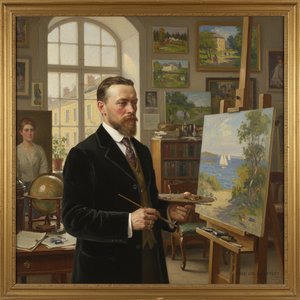
Albert Edelfelt: A Pioneer of Finnish Realism & International Impressionist Circles
Explore the life & work of Albert Edelfelt, a pioneering Finnish Realist painter who bridged Impressionism & national identity. Discover his masterpieces and lasting influence on art history.

Anne-Louis Girodet: Bridging Neoclassicism & Romanticism with Emotional Truth
Explore the captivating world of Anne-Louis Girodet, a pivotal figure bridging Neoclassicism & Romanticism. Discover his masterpieces and unique artistic vision with OriginalUniqueArt.

Топ 10 шедьоври на импресионизма: История, артисти и красота за вашия дом
Потопете се в света на импресионизма с нашия списък от 10 шедьовъра! От Моне до Реноар, разкрийте историите зад най-емблематичните картини. Вдъхновете дома си с изкуство – купете репродукции на високо качество на OriginalUniqueArt.com
