
 Представи си го
 Изпрати
 Сподели
 Детайли

 Изтегляне
 Подобни
 Рентгенова снимка
 Слайдшоу
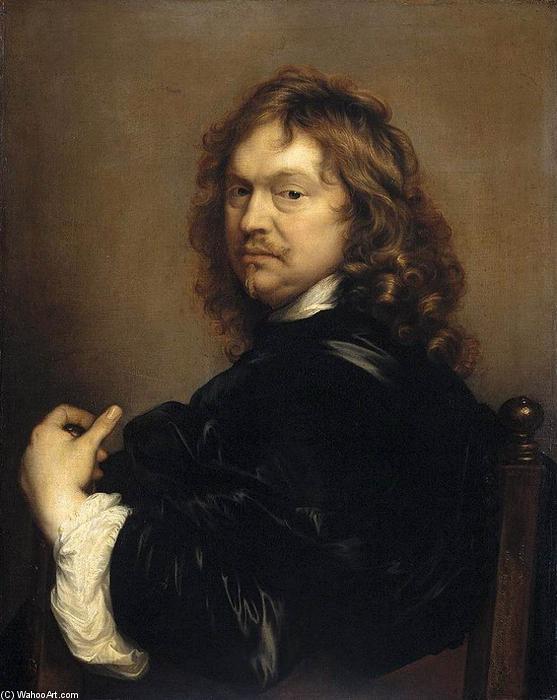
Self-Portrait


 Прочетете повече
Жикле / Художествен принт
Giclée печат или принт върху платно с музейно качество, бързо производство и гъвкави опции за завършен вид. ( Превключване към ръчно рисувана картина Превключване към изображение)




P118B $10

P118H $10

P118W $10

P438Z $10

P508JH $12

P508YH $12

P805H $10

P805Z $10

P919BZ $10

P919G $10

P919XJ $10

P959ZH $10

P968JZ $12

W106C $8

W218G $10

W218JH $8

W218Y $10

W307PJ $10

W316G $10

W316PJ $8

W316Y $10

W398PJ $8

W4111J $10

W500HY $15

W500JH $15

W692G $12

W849H $8

W940BG $15

W953PJ $8




Изберете от предварително зададените размери, които съответстват на оригиналните пропорции на произведението.

Можете да въведете собствени размери, за да паснат на конкретна рамка или пространство. Ако избраният от Вас размер не съвпада с пропорциите на оригиналното изображение, ние ще изрежем произведението или ще разширим изображението с огледален или едноцветен ръб. Дигитален макет ще бъде изпратен за Ваше одобрение преди започването на производството.
Моля, имайте предвид, че предпрегледът на екрана не отразява реалното изрязване или разширяване. Само макетът ще покаже точно финалната композиция.
Въпреки че са налични персонализирани размери, препоръчваме да изберете размер от предварително дефинирания списък, за да запазите оригиналните пропорции.
Доставка по целия свят () в рамките на 2 седмици вместо стандартните 4/5 седмици. (11 Август)

Безплатна експресна доставка по целия свят

Висококачествено ленено платно

Пълно застраховане при доставка

Гаранция за възстановяване на митнически такси

Гаранция за цветова точност

60-Дневен период за връщане (Само при дефекти)

100% Гаранция за връщане на парите

Предложение за отстъпка при поръчка на едро
 Стъклото е налично само в размери под 110 см

Self-Portrait
Жикле / Художествен принт
Размер на репродукцията
-


Обща цена
$ 80
Описание на колекционерския предмет
A Window into the Seventeenth Century: Adriaen Hanneman’s Self-Portrait
Adriaen Hanneman's 1656 self-portrait offers a remarkably intimate glimpse into the world of a Dutch Golden Age artist, revealing not just his likeness but also the social and intellectual currents of his time. This painting transcends a simple depiction of an individual; it’s a carefully constructed statement about identity, status, and the burgeoning artistic conventions of the era. The work immediately draws the eye with its restrained elegance – a deliberate choice that speaks volumes about Hanneman's considered approach to portraiture.
- The Figure: Seated in a comfortable chair, likely of considerable quality given the detail, the subject presents himself as a man of means and standing. His posture is upright, suggesting confidence and self-awareness. The dark coat, adorned with a crisp white collar – a hallmark of 17th-century Dutch attire – immediately establishes his social position.
- The Face: Hanneman’s face is the focal point, rendered with meticulous realism. The subtle lines etched around his eyes and mouth hint at experience and perhaps contemplation. His mustache and beard are carefully executed, adding to the authenticity of the portrait and reflecting prevailing male beauty standards. Crucially, his expression isn't overtly cheerful or dramatic; it’s a quiet seriousness, suggesting an intellectual bent – a man accustomed to thought and observation.
- Background & Composition: The stark simplicity of the background—a plain wall—is a masterstroke. It serves to isolate the subject entirely, amplifying his importance within the frame and directing all attention towards his personality and bearing. This technique was common in portraiture during this period, prioritizing the individual over elaborate settings.
A Masterclass in Dutch Portrait Technique
Hanneman’s skill lies not just in capturing likeness but also in employing a sophisticated understanding of light, shadow, and texture. The painting is executed with a realistic style, demonstrating a deep knowledge of anatomy and the effects of light on form. Notice how he uses subtle gradations of tone to create a sense of volume and depth – particularly evident in the rendering of the clothing and the folds of his hair. This masterful use of chiaroscuro (the contrast between light and dark) lends the portrait a three-dimensional quality, making it feel remarkably lifelike.
- Brushwork: The brushstrokes are generally smooth and controlled, reflecting Hanneman’s training under Jan Antonisz. van Ravesteyn the Younger. Van Ravesteyn instilled in him a precise, sculptural approach to rendering form – a legacy that is clearly visible in the carefully modeled features of the face and the detailed fabric of the coat.
- Color Palette: The muted tones—primarily blacks, whites, and browns—are typical of Dutch portraiture during this period. These restrained colors allowed Hanneman to focus on capturing subtle nuances of expression and texture rather than relying on vibrant hues.
Historical Context & Artistic Influences
Created in 1656, this self-portrait is firmly rooted within the Dutch Golden Age – a period of unprecedented artistic flourishing fueled by wealth, trade, and intellectual curiosity. Hanneman’s work reflects the influence of his contemporary, Anthony van Dyck, whose elegant and dynamic portraits were immensely popular throughout Europe. Hanneman's early years in England further shaped his style, exposing him to new trends and broadening his artistic horizons. His time with Constantijn Huygens, a prominent poet and composer, also suggests an engagement with the intellectual life of the court.
Interestingly, Hanneman’s background as a Catholic in a predominantly Protestant Netherlands subtly informed his career trajectory, potentially influencing his subject matter and patronage networks.Symbolism & Emotional Resonance
Beyond its technical brilliance, the self-portrait carries a subtle symbolic weight. The serious expression on Hanneman's face suggests an introspective nature – perhaps reflecting his role as an artist grappling with questions of identity and representation. The formality of his attire speaks to his social standing, while the quiet dignity of his pose conveys a sense of self-assuredness. Ultimately, this painting is not merely a likeness; it’s a carefully constructed portrait of a man, a time, and an artistic sensibility – inviting us to contemplate the complexities of human experience within the context of 17th-century Dutch society.
Биография на художника
Early Life and Artistic Foundations
Adriaen Hanneman, a pivotal figure in the Dutch Golden Age art scene, was born in The Hague around 1603 into a family of considerable wealth and Catholic faith. This privileged background provided him with access to an early artistic education, shaping not only his subject matter but also his connections within the influential circles of the time. From a young age, Hanneman demonstrated a keen eye for detail and a natural talent for rendering form – qualities that would become hallmarks of his distinctive style. His formal training began in 1619 under the tutelage of Jan Antonisz. van Ravesteyn the Younger, a respected portraitist from The Hague known for his precise and sculptural approach to depicting figures. Van Ravesteyn instilled in Hanneman a fundamental understanding of Dutch portraiture conventions, emphasizing accuracy, social standing, and the subtle nuances of character portrayal. This foundational period wasn’t merely about mastering technical skills; it was about absorbing the established aesthetic principles and learning how to capture not just likeness but also the essence of an individual's personality and position within society. The clarity and precision of Van Ravesteyn’s style served as a solid base upon which Hanneman would later build his own unique artistic voice, incorporating elements of Flemish elegance with a distinctly Dutch sensibility.The English Interlude: Embracing the Van Dyck Influence
A transformative chapter in Hanneman's career unfolded when he relocated to England around 1626. This move proved profoundly influential, placing him at the heart of a vibrant and rapidly evolving artistic landscape dominated by the court of Charles I. The arrival of Anthony van Dyck in London in 1632 marked a watershed moment, as Van Dyck’s elegant compositions, dynamic brushwork, and rich color palettes captivated Hanneman. It is widely believed that Hanneman had the opportunity to work within Van Dyck's studio during this period – an experience that undoubtedly shaped his aesthetic sensibilities and instilled in him a deep appreciation for the master’s techniques. Beyond Van Dyck, Hanneman also encountered other prominent artists like Cornelis Janssens van Ceulen and Daniel Mytens, broadening his artistic horizons and exposing him to diverse stylistic approaches. Crucially, he cultivated relationships with influential figures at the English court, most notably Constantijn Huygens, a powerful poet and advisor to Charles I who actively championed Hanneman’s career, facilitating introductions and securing commissions that propelled him into the circles of nobility. This period in England wasn't simply about imitation; it was an immersion in a sophisticated courtly culture – a dynamic environment where artistic innovation flourished alongside political intrigue.Return to The Hague and Artistic Maturity
Around 1638, Hanneman returned to his native The Hague, marking a significant shift in his career trajectory. This homecoming coincided with a period of personal stability as he married Maria van Ravesteyn, the daughter of his former teacher, solidifying his family’s legacy within the artistic community. Back in The Hague, Hanneman established himself as a respected portraitist, catering to the burgeoning demand for portraits among the Dutch nobility and members of the exiled English court who sought refuge in the Netherlands following the tumultuous events of the English Civil War. He skillfully blended the lessons learned from Van Dyck with a growing sense of distinctly Dutch artistic identity, creating works that were both elegant and imbued with local sensibilities. His subjects included prominent figures such as Constantijn Huygens himself, Charles II (then Prince of Wales), and William III, Prince of Orange – demonstrating his rising reputation and access to influential patrons. This period saw the development of a more mature style, characterized by a greater sense of psychological depth and an increasingly refined technique.Notable Works and Artistic Legacy
Hanneman’s artistic output spanned several decades, producing a remarkable body of work that reflects both his technical skill and his engagement with the cultural currents of his time. Among his most celebrated portraits are those of John Evelyn, a prominent English statesman; Charles II, capturing the youthful charisma of the future king; Henry, Duke of Gloucester, a poignant depiction of a young nobleman; and William III as a young prince – each portrait offering a glimpse into the lives and personalities of their subjects. Furthermore, Hanneman created a posthumous portrait of Maria I Stuart, showcasing his ability to capture the essence of a figure even from memory or description. His contributions extended beyond individual portraits, including a striking depiction of Constantijn Huygens and his children, commissioned by the poet himself – a work that exemplifies the close relationship between artist and patron. Hanneman’s legacy is deeply intertwined with the Confrerie Pictura, an influential artists' society he helped establish in 1656, demonstrating his commitment to fostering collaboration and innovation within the Dutch art world. Despite facing financial difficulties during the “Rampjaar” (Disaster Year) of 1672, Hanneman’s artistic achievements continue to be celebrated for their elegance, technical mastery, and insightful portrayal of human character.Historical Significance
Adriaen Hanneman stands as a significant figure in the history of Dutch Golden Age painting, representing a crucial bridge between the Flemish influence of Van Dyck and the evolving traditions of Dutch portraiture. His ability to synthesize elements of both styles – the elegance and dynamism of the Flemish court painter with the nuanced realism and social awareness characteristic of Dutch art – resulted in a distinctive artistic voice that resonated throughout Europe. Hanneman’s work not only documented the personalities and positions of his aristocratic patrons but also reflected the broader cultural and political landscape of 17th-century Netherlands, solidifying his place as a key contributor to the rich tapestry of Dutch artistic heritage. His influence extended beyond his own creations, impacting other painters such as Govert Flinck, demonstrating his significant contribution to Dutch portraiture during the Golden Age.
Адриаен Ханеман
1603 - 1671 , Нидерландия
Бързи факти
- Artistic Movement Or Style: Барокко, Портретна живопис
- Artists Or Movements Influenced By This Artist: ['Govert Flinck']
- Artists Who Influenced This Artist:
- Антоний ван Dyck
- Ян Равестен
- Date Of Birth: c. 1603
- Date Of Death: 1671
- Full Name: Adriaen Hanneman
- Nationality: Нидерландски
- Notable Artworks:
- Портрет на Джон Евелин
- Хенри, херцог на Глостър
- Уилям III като принц
- Place Of Birth: The Hague, Нидерландия
Всички статии

Топ 10 шедьовъра на Златния век на нидерландското изкуство | OriginalUniqueArt.com
Потопете се в Златния век на нидерландското изкуство! Рембранд, Вермеер и други майстори – разкрийте историите зад 10 шедьовъра. Купете висококачествени репродукции на картини за вашия дом на OriginalUniqueArt.com.

Golden Age Reflections: Dutch Baroque Painting & Cultural Innovation
Explore the Dutch Golden Age of painting! Discover key artists like Vermeer & ter Borch, their innovative techniques, and the rich cultural context behind these Baroque masterpieces. Learn about collecting & appreciating this iconic art period.

Ferdinand Bol (1616-1680): A Dutch Master of Portraiture & Dramatic Light
Explore the captivating world of Ferdinand Bol (1616-1680), a master Dutch portraitist deeply influenced by Rembrandt. Discover his life, style, and enduring legacy with OriginalUniqueArt.

Rembrandt van Rijn: A Life Illuminated – Innovation, Emotion, and the Dutch Golden Age
Explore the life & art of Rembrandt van Rijn, a Dutch Golden Age master. Discover his innovative techniques, iconic paintings like 'The Night Watch', and enduring legacy. Expert insights for collectors & enthusiasts.
Gerard van Honthorst: Illuminating the Dutch Golden Age with Caravaggism & Courtly Grace
Explore the captivating world of Gerard van Honthorst, a Dutch Golden Age master renowned for his dramatic chiaroscuro & courtly portraits. Discover his life, art, and lasting influence on Baroque painting.

