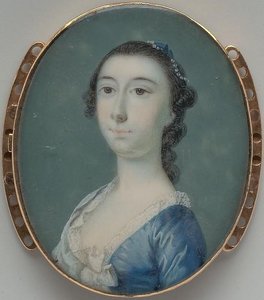
Портрет на Йеремияс Теус

Картини на Йеремияс Теус: 28-те най-известни, през погледа на галерията

Обновено Октомври 2026 · класирано според нашия индекс на популярност (търсения, посещения и поръчки за всяко произведение) · 29 творби на Йеремияс Теус в нашия каталог

Накратко

Според избора на галерията най-известната картина на Йеремияс Теус е Captain William Richardson (1743-1786) (1757), чийто оригинал се намира в Художествена галерия на Йейлския университет, Ню Хейвън. William Wragg (1750) и Portrait of Amarinthia Elliott (1748) допълват трио, което всяко око разпознава. От 29 произведения на Йеремияс Теус в нашия каталог, галерията представя 28 най-известните по-долу – всяко от тях е оригинал с посочен година, музей и това, което го прави уникално.

1716 – 1774, Кур Rococo Най-много творби: Метрополитън Музей на изкуствата

Топ 10 карти на Йеремияс Теус в галерията

1
Captain William Richardson (1743-1786) (1757) на Йеремияс Теус

Captain William Richardson (1743-1786)

A formal 18th-century portrait of a young man, presented within an oval vignette against a dark, monochromatic background. Captain William Richardson is depicted from the waist up, positioned at a slight angle while looking toward the viewer. The composition relies on a restrained color palette, dominated by the creamy white of his waistcoat and jacket, which contrasts sharply against a deep blue trim. This trim features intricate silver or gold…

2
William Wragg (1750) на Йеремияс Теус

William Wragg

In this intimate portrait of William Wragg, the sitter meets our gaze from a time long passed. Painted around 1750, the work captures a man of status through a refined, oval-shaped bust-length composition. He sits slightly off-center, his body turned toward the right while his eyes remain fixed forward, creating a sense of quiet presence. The subject wears a cool lavender-grey frock coat that contrasts against the warm, shimmering gold…

3
Portrait of Amarinthia Elliott (1748) на Йеремияс Теус

Portrait of Amarinthia Elliott

Portrait of Amarinthia Elliott, painted by Jeremiah Theus in 1748, captures a young woman in a formal, medium close-up composition. The subject is positioned slightly off-center, holding a small sprig of blue flowers against a muted, atmospheric background. This work originates from the mid-18th century, a period when Theus was establishing his presence within the colonial social hierarchy.

4
Mrs. Thomas Lynch (Elizabeh Allston Lynch) (1755) на Йеремияс Теус

Mrs. Thomas Lynch (Elizabeh Allston Lynch)

1755 · Oil On Canvas

In this oil on canvas portrait, we encounter Mrs. Thomas Lynch (Elizabeth Allston Lynch), a figure captured by the Swiss-American painter Jeremiah Theus. Created in 1755, the work offers a direct look at a woman of the colonial era. Theus, who established himself in Charleston, South Carolina, brought a refined sensibility to his depictions of the local elite. This specific piece reflects the quiet dignity of his portraiture from that…

5
Mrs. Peter Manigault (1757) на Йеремияс Теус

Mrs. Peter Manigault

1757 · Oil On Canvas

In this 1757 portrait, we encounter Elizabeth Wragg Manigault, a woman whose presence defines the social hierarchy of colonial South Carolina. She is captured in a full-length vertical composition, her figure positioned with a poised, slight offset that suggests both grace and a quiet, commanding authority. The light, descending from the upper left, catches the luminous sheen of her white and silver satin gown, creating a play of light and…

6
Portrait of John Faucheraud Grimké (1762) на Йеремияс Теус

Portrait of John Faucheraud Grimké

The mid-18th century in Charleston was a time of burgeoning commercial and social complexity. Theus arrived in the colony from Switzerland, contributing to a growing artistic community that sought to mirror European sophistication. His work provides a visual record of the individuals who shaped the social fabric of South Carolina. This portrait remains a specific window into the life of a man who navigated the legal and political intricacies of…

7
Portrait of Mrs. John Champneys (Anne Livingston, born 1746) (1763) на Йеремияс Теус

Portrait of Mrs. John Champneys (Anne Livingston, born 1746)

1763 · Oil On Canvas · Музеят на изкуствата в Хюстън, Хюстън

In this 1763 oil portrait, we encounter Mrs. John Champneys, known to history as Anne Livingston, captured in a moment of quiet contemplation. She is presented in a three-quarter view, her form emerging from a deep, atmospheric brown background that lends a sense of weight and presence to her figure. The lighting, descending softly from the upper left, traces the contours of her face and neck, creating a gentle play…

8
Mrs. Lionel Chalmers (Martha Logan) (1756) на Йеремияс Теус

Mrs. Lionel Chalmers (Martha Logan)

1756 · Oil On Canvas · Музей на изкуствата във Бостън, Бостън

Jeremiah Theus presents Mrs. Lionel Chalmers (Martha Logan) within a formal oval composition. The arrangement focuses on the subject's head and upper torso, utilizing a straight-on, medium close-up perspective to establish a sense of intimacy. The single female figure is captured with a calm, dignified expression, projecting an air of poise and social standing. This portrait, executed about 1756, centers the viewer's attention on the sitter's steady gaze and composed…

9
Dr. Lionel Chalmers (1756) на Йеремияс Теус

Dr. Lionel Chalmers

1756 · Oil On Canvas · Музей на изкуствата във Бостън, Бостън

The gaze of Dr. Lionel Chalmers meets the viewer from across the centuries, preserved within this 1756 oil portrait. Jeremiah Theus, a Swiss-born American painter, captures the man in a moment of quiet, professional dignity. The subject sits with a composed presence, his features rendered with a clarity that suggests a life of intellect and social standing. Every line of his expression seems to hold a silent story of the…

10
Mrs. Samuel Carne (1740-1805) (1765) на Йеремияс Теус

Mrs. Samuel Carne (1740-1805)

1765 · Oil On Canvas · New York Historical Society, Ню Йорк

The sitter gazes out from an oval frame, her presence steady and quiet against a dark, muted background. She is a woman of the mid-eighteenth century, captured in a moment of formal repose. Her attire speaks of a specific social standing, defined by the delicate translucency of a lace collar that rests against her neck. A dark choker encircles her throat, drawing the eye upward toward the soft features of…

Картини на Йеремияс Теус, класирани от 11 до 28

Темите, които привличат погледа на Йеремияс Теус

Четирите найчесто срещани теми в тези оригинални творби, всяка с най-добрия си пример.

Музеите, в които се съхраняват оригиналите на Йеремияс Теус

8 музея, които притежават най-голям брой от картините на тази страница.

Музеи Град Творения на Йеремияс Теус Картини от този списък
Метрополитън Музей на изкуствата, Ню ЙоркМетрополитън Музей на изкуствата Ню Йорк 4 Mrs. Jacob Motte (Rebecca Brewton), Mrs. John Dart, Gabriel Manigault
Национална галерия на изкуствата, УокшънтънНационална галерия на изкуствата Уокшънтън 3 James Cuthbert (?), Mr. Motte, Mrs. Cuthbert
Gibbes Museum of Art, CharlestonGibbes Museum of Art Charleston 3 Benjamin Smith, Полковник Барнард Елиът Бъ и Бий, Mrs. Barnard Elliott, Jr. (Mary Elizabeth Bellinger Elliott)
Детройтският институт за изкуства, ДетройтДетройтският институт за изкуства Детройт 2 William Wragg, Portrait of Amarinthia Elliott
Музей на изкуствата във Бостън, БостънМузей на изкуствата във Бостън Бостън 2 Mrs. Lionel Chalmers (Martha Logan), Dr. Lionel Chalmers
New York Historical Society, Ню ЙоркNew York Historical Society Ню Йорк 2 Mrs. Samuel Carne (1740-1805), Samuel Carne, MD (1725-1780)
Художествена галерия на Йейлския университет, Ню ХейвънХудожествена галерия на Йейлския университет Ню Хейвън 1 Captain William Richardson (1743-1786)
Музей на изкуствата „Джон и Мейбъл Ринглин“, СарасотаМузей на изкуствата „Джон и Мейбъл Ринглин“ Сарасота 1 Portrait of John Faucheraud Grimké

Йеремияс Теус, по една емблематична картина на десетилетие

Произведения по десетилетия

Изберете десетилетие, за да видите оригиналната творба, която го определя.

Картините на Йеремияс Теус: отговорите на галерията

Коя картина на Йеремияс Теус е най-известната от всички?Разкрийте отговора

Captain William Richardson (1743-1786) (1757), Художествена галерия на Йейлския университет, Ню Хейвън. Следват William Wragg (1750) и Portrait of Amarinthia Elliott (1748).

На каква възраст беше Йеремияс Теус, когато завърши Captain William Richardson (1743-1786)?Разкрийте отговора

41 години: Captain William Richardson (1743-1786) е от 1757 г., а Йеремияс Теус е роден/а в 1716.

Кои са 10-те най-добри картини на Йеремияс Теус?Разкрийте отговора

Captain William Richardson (1743-1786), William Wragg, Portrait of Amarinthia Elliott, Mrs. Thomas Lynch (Elizabeh Allston Lynch), Mrs. Peter Manigault, Portrait of John Faucheraud Grimké, Portrait of Mrs. John Champneys (Anne Livingston, born 1746), Mrs. Lionel Chalmers (Martha Logan), Dr. Lionel Chalmers и Mrs. Samuel Carne (1740-1805). Класацията по-горе показва годината и музея за всяко от тях.

Колко произведения е създал Йеремияс Теус?Разкрийте отговора

В нашия каталог са представени 29 произведения на Йеремияс Теус, датирани от 1748 до 1772.

Къде са изложени най-известните оригинали на Йеремияс Теус?Разкрийте отговора

Предимно в Метрополитън Музей на изкуствата (Ню Йорк), Национална галерия на изкуствата (Уокшънтън) и Gibbes Museum of Art (Charleston). В горната таблица с музеи са изброени всички тях.

Кога Йеремияс Теус създава най-известните си картини?Разкрийте отговора

В 1760s: 13 от 28 произведенията на тази страница са създадени тогава, като Portrait of John Faucheraud Grimké са сред тях.

Кои са най-ранните и най-късните известни творби на Йеремияс Теус?Разкрийте отговора

На тази страница най-старата е Portrait of Amarinthia Elliott (1748), а най-новата е Mrs. John Dart (1772).

Към кои сюжети Йеремияс Теус се връща най-често?Разкрийте отговора

Woman (8), Man (7) и 18th century (4), разпределени в 28 произведения на тази страница.

С коя техника е работил най-често Йеремияс Теус?Разкрийте отговора

Oil On Canvas, за 16 от 28 произведения на тази страница.

С кое художествено направление е свързан(а) Йеремияс Теус?Разкрийте отговора

Rococo, судейки по оригиналите на тази страница.

Кои оригинални творби на Йеремияс Теус притежава Метрополитън Музей на изкуствата?Разкрийте отговора

Mrs. Jacob Motte (Rebecca Brewton), Mrs. John Dart и Gabriel Manigault: Метрополитън Музей на изкуствата, Ню Йорк притежава 4 от произведенията на тази страница.

Йеремияс Теус: художникът

Jeremiah Theus: Charleston’s Rococo Portraitist

Jeremiah Theus (1716 – 1774) stands as a singular figure in the annals of early American art, primarily recognized for his prolific output of portraits executed during the flourishing Rococo period in Charleston, South Carolina. Born in Chur, Switzerland, he arrived in America with his family around 1740, driven by the promise of land grants and colonial opportunity offered by the British Crown. This migration marked the beginning of a career dedicated to capturing the elegance and sophistication of Charleston’s elite society—a remarkable feat considering the artistic landscape of the time.

Early Life & Training

Details surrounding Jeremiah Theus' formative years remain elusive, shrouded in the mists of history. However, circumstantial evidence suggests exposure to European artistic traditions, particularly Rococo style – a movement originating in France that championed grace, ornamentation, and pastel hues. This influence would indelibly shape his subsequent artistic endeavors. While precise biographical information is scarce, it’s plausible he received foundational training within Switzerland's artistic milieu—a testament to the importance of cultural heritage in shaping an artist’s trajectory.

Charleston Studio & Patronage

By 1740, Theus established a studio strategically positioned in Charleston’s bustling commercial district – a location that ensured access to influential patrons and fueled his creative output. Advertisements appearing in *The South Carolina Gazette* skillfully showcased his talents as a “limner,” or portrait painter, highlighting his unwavering commitment to serving the burgeoning colonial community. This astute business acumen underscored not only his artistic skill but also his understanding of the social dynamics underpinning Charleston’s cultural life. His patrons included prominent figures from Charleston's merchant class and planter families – individuals who recognized Theus’ ability to elevate their likenesses into enduring symbols of status and prestige.

A Master of Rococo Style & Technique

Theus’ distinctive artistic style is characterized by its unwavering adherence to Rococo principles—a movement originating in France that prioritized grace, ornamentation, and pastel hues. He deftly adapted English artistic conventions prevalent during the era, resulting in portraits imbued with a sense of refined elegance and meticulous detail. His canvases frequently employed geometric shapes – particularly circles and squares – and subtle tonal variations to create atmospheric depth and convey emotion – techniques honed through careful observation and experience. The influence of artists like François Boucher and Jean-Honoré Fragonard is palpable in his compositions, demonstrating an awareness of European artistic trends that would propel Charleston’s art scene forward. He skillfully utilized glazing techniques—applying thin layers of translucent paint over underlying colors—to achieve luminous effects and heighten the vibrancy of his palettes.

Notable Commissions & Artistic Legacy

Throughout his illustrious career, Theus undertook numerous commissions – a testament to his versatility and responsiveness to client desires. Among his most celebrated achievements were the gilded steeple of St. Michael’s Episcopal Church (1756), commissioned by the congregation's commissioners and representing a pinnacle of Charlestonian craftsmanship; the weather vane for Charleston City Hall—a symbol of civic pride—and contributions towards the construction of St. Michael’s Cathedral. His portraits captured not merely physical appearances but also psychological nuances – conveying character, emotion, and social standing with remarkable accuracy. The enduring fascination with his work stems from its ability to transport viewers back to a bygone era—a time of aristocratic grandeur and artistic innovation. Reproductions of his masterpieces continue to inspire admiration and scholarly study today, securing Jeremiah Theus’ place as one of Charleston's most revered artists. ### Historical Significance & Enduring Influence Jeremiah Theus’ contribution to American art history transcends mere stylistic imitation; he embodies a crucial nexus between European artistic traditions and the nascent cultural identity of the United States. His oeuvre serves as an invaluable visual chronicle of Charleston’s social landscape—a testament to the dynamism and sophistication of colonial America. By capturing the essence of his time, Theus elevated Charleston's artistic reputation and cemented its position as a center for Rococo art in North America. His legacy persists as one of Charleston’s most distinguished artistic figures – an artist who skillfully blended European influences with American sensibilities to produce works that resonate powerfully across centuries.