بورتريه لـ Théodore Ralli

أشهر 25 لوحات لـ Théodore Ralli، مختارات من المعرض

تحديث نوفمبر 2026 · مُرتبة حسب مؤشر شعبيتنا (عمليات البحث، والزيارات، والطلبات لكل عمل فني) · 26 من أعمال Théodore Ralli في كتالوجنا

باختصار

من بين جميع الأعمال الأصلية التي تركها Théodore Ralli، تُعد Marionettes in the Harem (1881) هي الأكثر شهرة. تأتي بعدهما مباشرة كل من Eavesdropping (1880) و The Kiss (1887). يضم كتالوجنا 26 من أعمال Théodore Ralli؛ حيث احتفظ المعرض بـ 25 من أكثر الأعمال التي يعجب بها العالم، مع عرض كل منها مع تاريخها ومتحفها وقصتها.

1852 – 1909, Constantinople أكبر مجموعة أعمال: المتحف الوطني (National Gallery)

أفضل 10 لوحات لـ Théodore Ralli: مختارات المعرض

1
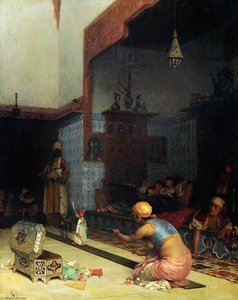
Marionettes in the Harem (1881) للفنان Théodore Ralli

Marionettes in the Harem

1881 · Oil

The composition presents a crowded interior scene rendered in a black and white palette. Within this space, at least nine figures are positioned in various states of repose and activity. Some individuals sit upon chairs or couches, while others remain standing throughout the room. A woman is depicted kneeling on the floor next to a child, appearing to engage with dolls. The architectural setting is defined by a blue and…

2
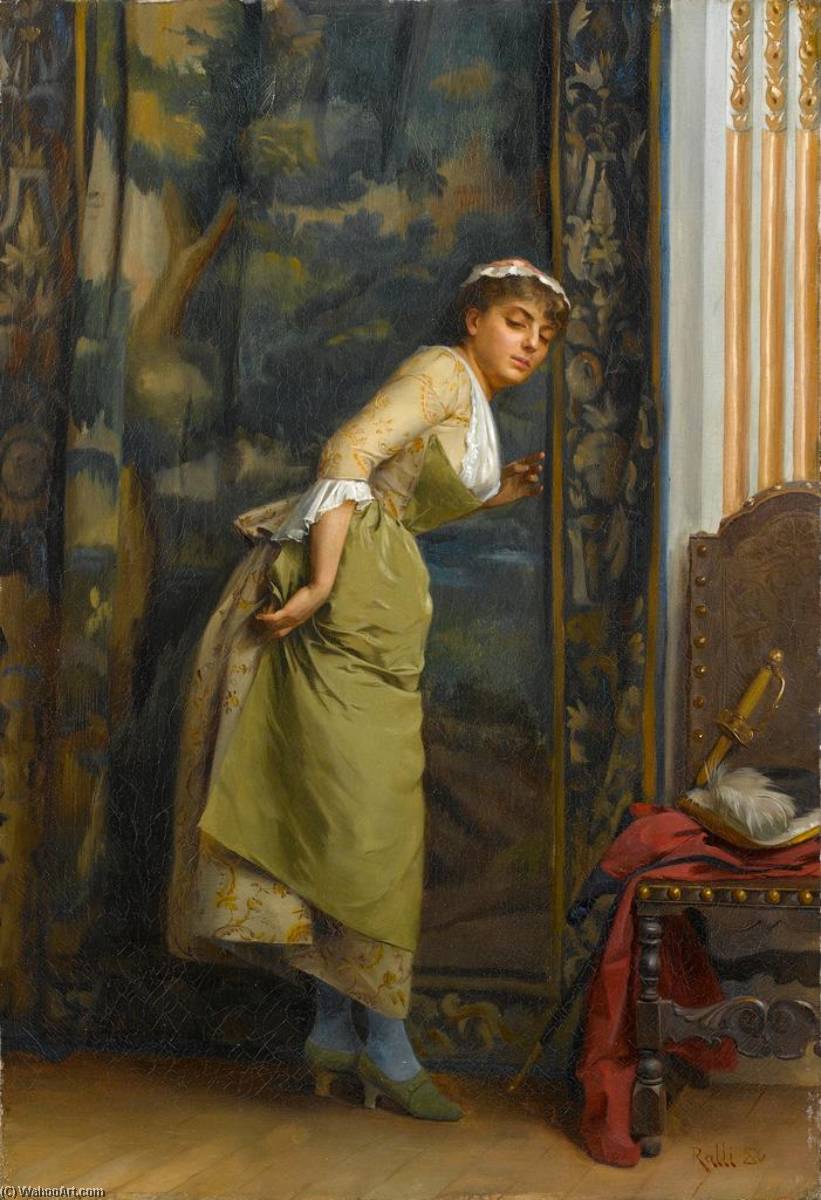
Eavesdropping (1880) للفنان Théodore Ralli

Eavesdropping

1880 · Oil On Canvas

In this oil painting from about 1880, Théodore Ralli captures a quiet, private moment of introspection. A young woman occupies the center of the scene, her gaze fixed intently upon an ornate mirror. She sits within a richly decorated room, surrounded by heavy drapery and substantial furniture that suggests an aristocratic or historical setting. The atmosphere feels heavy with a sense of melancholy, as if the viewer has stumbled upon…

3
The Kiss (1887) للفنان Théodore Ralli

The Kiss

1887 · Oil On Canvas

The intimate scene known as The Kiss emerges from the brush of Théodore Ralli, a painter who captures a profound moment of human connection. Completed in 1887, this oil on canvas freezes a tender encounter between two individuals. A Black man leans in to kiss a white woman, their proximity creating a quiet, private world within the frame. The air between them seems to hold a gentle warmth as they…

4
Child Hiding Behind Egyptian Sculpture, Luxor (1900) للفنان Théodore Ralli

Child Hiding Behind Egyptian Sculpture, Luxor

1900 · Oil On Panel

In "Child Hiding Behind Egyptian Sculpture, Luxor" by Théodore Ralli, a large, light-colored stone torso emerges from the sand. This partially buried sculpture anchors the foreground, its pale surface catching the light. Behind this heavy, silent relic, a person peeks out, partially visible in the midground. The scene captures a quiet moment of concealment or playfulness set within a desert landscape, likely in Luxor, Egypt. The perspective remains at eye…

5
The Offering للفنان Théodore Ralli

The Offering

In The Offering, Théodore Ralli presents a scene of quiet intimacy. The composition centers on a nude woman seated upon a stone bench. She is positioned as the primary focus of the work, her form rendered with a clarity that commands the viewer's attention. Small flowers are tucked into her hair, adding a delicate, natural element to her presence.

6
Flirtation للفنان Théodore Ralli

Flirtation

Oil

In "Flirtation" by Théodore Ralli, the air within the room feels heavy with a quiet, unspoken tension. The scene unfolds around a central fireplace, where the warmth of the hearth meets the cool stillness of a domestic interior. A man stands on the right side of the frame, his presence looming slightly over a woman who sits composed in her place. They are locked in a moment of intense connection,…

تستمر مجموعة Théodore Ralli، من 11 إلى 25

المواضيع التي استأثرت باهتمام Théodore Ralli

المواضيع الأربعة التي تتكرر باستمرار في هذه الأعمال الأصلية، مع تقديم أروع مثال لكل منها.

المتاحف التي تحتفظ بالأعمال الأصلية لـ Théodore Ralli

المتاحف 1 التي تضم أكبر عدد من اللوحات الموجودة في هذه الصفحة.

المتاحف المدينة أعمال Théodore Ralli لوحات من هذه القائمة
المتحف الوطني (National Gallery), أثيناالمتحف الوطني (National Gallery) أثينا 1 The Booty

Théodore Ralli عقداً بعد عقد: الأعمال الأصلية التي ميزت كل حقبة

الأعمال حسب العقد

اختر عقداً لتشاهد العمل الأصلي الذي يجسده.

أسئلة المقتنين حول لوحات Théodore Ralli

ما هو العمل الأكثر شهرة لـ Théodore Ralli؟اكتشف الإجابة

Marionettes in the Harem (1881). يليه Eavesdropping (1880) و The Kiss (1887).

كم كان عمر Théodore Ralli عندما تم إنجاز Marionettes in the Harem؟اكتشف الإجابة

عمر 29 عاماً: يعود تاريخ Marionettes in the Harem إلى 1881، وقد وُلد Théodore Ralli في 1852.

ما هي أشهر عشر لوحات لـ Théodore Ralli؟اكتشف الإجابة

Marionettes in the Harem, Eavesdropping, The Kiss, Child Hiding Behind Egyptian Sculpture, Luxor, The Offering, Flirtation, Holy Friday, Greece, On Shipboard, An Eastern Guard و La Sentinelle. يوضح التصنيف أعلاه سنة كل لوحة والمتحف التابعة له.

كم عدد اللوحات التي تركها Théodore Ralli؟اكتشف الإجابة

يضم كتالوجنا 26 من أعمال Théodore Ralli، التي يعود تاريخها من 1880 إلى 1900.

في أي متاحف تُعرض روائع Théodore Ralli؟اكتشف الإجابة

توجد غالبيتها في المتحف الوطني (National Gallery) (أثينا). يدرج جدول المتاحف أعلاه جميعها.

في أي سنوات رسم Théodore Ralli أشهر أعماله؟اكتشف الإجابة

في 1880s: تم إنجاز 3 من أصل 25 من الأعمال في هذه الصفحة خلال تلك الفترة، من بينها Marionettes in the Harem.

ما هي أول وآخر الأعمال الأصلية الشهيرة لـ Théodore Ralli؟اكتشف الإجابة

في هذه الصفحة، أقدم الأعمال يعود إلى Eavesdropping (1880) وأحدثها يعود إلى Child Hiding Behind Egyptian Sculpture, Luxor (1900).

ما هي المواضيع التي اختارها Théodore Ralli بشكل متكرر؟اكتشف الإجابة

Woman (3), Child (2) و Chair (2)، عبر 25 من الأعمال في هذه الصفحة.

ما هي التقنية التي استخدمها Théodore Ralli بشكل أكبر؟اكتشف الإجابة

Oil، لـ 2 من أصل 25 من الأعمال في هذه الصفحة.

Théodore Ralli: حياته وأعماله

Theodoros Ralli: Bridging East and West Through Orientalist Vision

Théodore Jacques Ralli (1852 - 1909) stands as a pivotal figure in late nineteenth-century Greek art history, embodying the spirit of Academic realism intertwined with the burgeoning fascination for Eastern cultures—a hallmark of Orientalism. Born in Constantinople to Iakovos Rallis and Katina Psiachi, he descended from a wealthy merchant family rooted in Chios, an island scarred by Ottoman rule and marked by significant cultural exchange. Early life details remain somewhat elusive, fueling speculation about his familial motivations for relocating to Paris amidst the growing tensions between Greece and Turkey.
  • Early Artistic Training: Ralli’s formative years were spent honing his skills under Jean-Léon Gérôme and Jean-Jules-Antoine Lecomte du Nouy, both luminaries of Academic art and fervent proponents of Orientalist painting. This mentorship profoundly shaped his artistic sensibilities, instilling a meticulous approach to observation and rendering the nuances of Eastern landscapes and figures with unwavering fidelity.
  • Parisian Engagement: Ralli established himself in Paris, immersing himself in the vibrant artistic milieu of the Belle Époque. He actively participated in Salon exhibitions—official art competitions overseen by the Académie des Beaux-Arts—demonstrating his commitment to upholding traditional artistic standards while simultaneously exploring new stylistic horizons.
  • Travels and Inspiration: Driven by an insatiable curiosity, Ralli embarked on extensive journeys throughout North Africa and the Middle East. These expeditions served as a catalyst for his creative output, fueling his imagination with vivid depictions of exotic locales—Cairo being a particular favored destination where he cultivated artistic activity during the winter months.

Orientalist Style and Artistic Techniques

Ralli’s oeuvre is predominantly characterized by Orientalist painting—a genre that emerged in Europe during the Victorian era, fueled by imperial expansion and romanticized notions of the “Orient.” Unlike many contemporaries who succumbed to sensationalism or caricature, Ralli approached his subject matter with a profound respect for cultural authenticity. His canvases eschewed blatant exoticism, prioritizing nuanced portrayals of daily life—scenes from Greek villages and interiors—infused with subtle symbolism and imbued with an atmosphere of melancholic contemplation.
  • Academic Realism: Ralli adhered rigorously to Academic realism—a stylistic doctrine championed by Gérôme—emphasizing meticulous detail, accurate perspective, and a restrained palette. This commitment to technical precision allowed him to capture the essence of his subjects with remarkable accuracy, conveying both visual beauty and psychological depth.
  • Influence of Jean-Léon Gérôme: His artistic trajectory was decisively shaped by Jean-Léon Gérôme’s teachings at the École des Beaux-Arts. Notably, Ralli drew inspiration from Gérôme's *The Booty*, a monumental painting that exemplifies Academic idealism and meticulous observation—a testament to Gérôme’s mastery of technique and his unwavering devotion to upholding artistic tradition.
  • Symbolic Depth: Beyond mere visual representation, Ralli’s paintings resonate with symbolic significance. Consider *The Laundress*, which captures the quiet dignity of rural Greek life against a backdrop of muted colors—a deliberate choice that underscores the artist's sensitivity to emotional nuance and his ability to convey profound ideas through subtle imagery.

Notable Works and Legacy

Ralli’s artistic output spanned numerous genres, encompassing portraits, genre scenes, architectural subjects, and landscapes—primarily depictions of Greece and the Middle East. Among his most celebrated paintings are *The Kiss*, a poignant interracial portrait reflecting the complexities of human relationships; *The Slave Market*, which confronts viewers with uncomfortable truths about colonialism and exploitation; and *Vigil of the Dead Pasha of Tangiers*, a haunting depiction of Moroccan funerary rituals imbued with spiritual solemnity.
  • Salon Recognition: His participation in Salon exhibitions garnered him considerable acclaim—resulting in numerous medals and awards—solidifying his reputation as one of France’s foremost artists of his time.
  • National Gallery Acquisition: The National Art Gallery in Athens holds a significant collection of Ralli's paintings, ensuring that his artistic legacy continues to inspire generations of art historians and enthusiasts.
  • Ralli Prize Establishment: In honor of Theodoros Ralli’s contribution to Greek art, the Ralli Prize was established in Paris—a testament to his enduring influence on the artistic landscape of Europe.

Concluding Reflections

Théodore Ralli's artistic vision—characterized by Academic realism tempered with Orientalist sensitivity—represents a remarkable synthesis of intellectual curiosity and artistic prowess. His unwavering dedication to meticulous observation, coupled with his profound understanding of human psychology, cemented his place as one of the most distinguished painters of the late nineteenth century. Through his evocative depictions of Greek life and Eastern landscapes, Ralli bequeathed to posterity an enduring testament to the power of art—a timeless exploration of beauty, melancholy, and the complexities of cultural encounter.