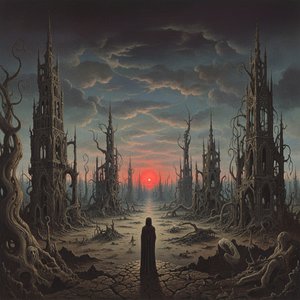
The Luminous Path of Jan Rubczak
In the grand tapestry of early twentieth-century European art, few lives embody the tragic intersection of creative brilliance and historical upheaval as poignantly as that of Jan Rubczak. Born in 1882 in Stanisławów, Rubczak emerged as a vital voice within the Postimpressionist movement, a painter whose brushstrokes captured the fleeting essence of light and landscape with profound sensitivity. His journey was one of constant movement across the great artistic hubs of Europe, from the academic rigor of Kraków to the avant-garde energy of Paris, reflecting a soul deeply attuned to the evolving visual language of his era.
Rubczak’s artistic foundation was laid within the prestigious halls of the Kraków Academy of Fine Arts, where he studied under masters such as Florian Cynk and Józef Pankiewicz. These formative years instilled in him a technical mastery that would later allow him to navigate diverse mediums, from delicate etchings to expansive oil landscapes. Seeking to expand his horizons beyond the borders of Poland, he traveled to the Academy of Visual Arts in Leipzig and eventually settled in Paris at the Académie Colarossi. It was in the vibrant atmosphere of France that Rubczak truly found his stride, finding inspiration in the rugged coastal scenes of Brittany and Normandy, where the interplay of sea and sky became a central theme in his repertoire.
A Legacy of Light and Line
The work of Jan Rubczak is characterized by a remarkable ability to marry structural precision with emotional resonance. As an engraver and painter, he possessed a dual mastery over the sharp, decisive line and the soft, atmospheric wash of color. His participation in significant exhibitions, such as the Salon d'Automne in 1911 and the prestigious Venice Biennale in 1914, marked his ascent into the international spotlight. Supported by influential figures like the poet and art dealer Léopold Zborowski, Rubczak’s work began to resonate with a broader audience, bridging the gap between Polish tradition and French modernism.
Beyond his individual canvases, Rubczak was a pillar of the artistic community, contributing to the very infrastructure of art in both France and Poland. His achievements include:
- Co-founding the Société des Artistes Polonaise in 1915, an initiative designed to promote Polish artistry on the global stage.
- Establishing a drawing school in Paris after 1917, where he passed his technical expertise to a new generation of creators.
- Founding the "Jednoróg" (Unicorn) artists' guild in Poland, fostering collaboration among contemporary painters.
- Serving as an assistant at the Kraków Academy, ensuring the continuity of academic excellence in his homeland.
A Tragic Conclusion to a Brilliant Life
Despite his professional triumphs and his dedication to the cultivation of art, Rubczak’s life was met with a devastating end. The shadows of the Second World War descended upon him with merciless force. In 1942, following a Gestapo raid on a café frequented by artists, Rubczak was caught in the machinery of persecution. Classified among those deemed "degenerate" by the occupying forces, he was transferred to the horrors of Auschwitz, where his life was tragically extinguished. His death remains a somber reminder of the vulnerability of culture during times of profound darkness.
Today, the memory of Jan Rubczak survives through his enduring contributions to the Postimpressionist canon. His landscapes, which once breathed with the salt air of Normandy and the light of the Polish countryside, serve as a testament to a life lived in pursuit of beauty. To look upon a Rubczak painting is to witness a moment of peace preserved forever against the tide of history, an eternal dialogue between the artist's vision and the ephemeral world.
الأسئلة والأجوبة
أين يمكن استكشاف أعمال Jan Rubczak الفنية المصنفة حسب الكلمات المفتاحية؟
تجمع صفحة حسب الكلمات المفتاحية الخاصة بـ Jan Rubczak أعمال الفنان وفقاً للكلمات المفتاحية.
في أي مدينة ودولة وُلد Jan Rubczak؟
وُلد Jan Rubczak في Ivano-Frankivsk، في Ukraine.
كيف تطور فن Jan Rubczak بمرور الوقت؟
تُعد مسيرة فنية الخاصة بـ Jan Rubczak خطاً زمنياً تفاعلياً يعرض أعمال الفنان بترتيب زمني، مقسمة إلى فصول تمثل مراحل مسيرته المهنية.