1

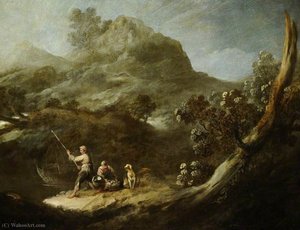
Landscape with Hunters, Ignacio de Iriarte, 1640 - 1685
Landscape with in the foreground hunters under a group of three trees. In the distance a city located at the foot of a mountain.

تحديث نوفمبر 2026 · مُرتبة حسب مؤشر شعبيتنا (عمليات البحث، والزيارات، والطلبات لكل عمل فني) · 6 أعمال لـ Ignacio de Iriarte في كتالوجنا
باختصار
من وجهة نظر المعرض، تُعد Landscape with Hunters, Ignacio de Iriarte, 1640 - 1685 (1685) أشهر لوحات Ignacio de Iriarte، والتي تُعرض لوحتها الأصلية في Rijksmuseum، أمستردام. Landscape with Figures (1660) و River Crossing (1665) يكملان الثلاثية التي تدركها كل عين. من بين 6 من أعمال Ignacio de Iriarte في كتالوجنا، يعرض المعرض أدناه 6 من أشهرها، كل منها عمل أصلي مع سنة إنتاجه، والمتحف الذي يضمها، وما يجعلها فريدة من نوعها.
Landscape with in the foreground hunters under a group of three trees. In the distance a city located at the foot of a mountain.

The Landscape with Figures painting by Ignacio De Iriarte is a masterpiece of Baroque art, characterized by its dramatic use of light and shadow. Created in 1660, this oil on canvas painting measures 108 x 163 cm and is housed at the Museo de Bellas Artes in Bilbao, Spain. Artistic Composition The painting features a dense and complex landscape, with various elements arranged to form a diagonal composition. A group…

Ignacio de Iriarte (1620-1685), a name often overshadowed by the luminaries of his time – Murillo, Zurbarán – nonetheless occupies a crucial position in Spanish Baroque art. Unlike many artists preoccupied with religious commissions or portraiture, Iriarte dedicated himself almost entirely to capturing the untamed grandeur of the Iberian Peninsula’s rural vistas. This unwavering focus resulted in a distinctive artistic style that distinguishes him from his contemporaries and secures his…

Ignacio de Iriarte: صيانة الجمال البري في عصر الباروك الإسباني تعتبر لوحة "المناظر الطبيعية مع الشيوخ" تحفة فنية فريدة من نوعها، تجسد رؤية خاصة بالرائد الإسباني إ Ignacio دي إيريارتة لعلاقة الفن بالإنسان والطبيعة في عصر الباروك الإسباني. لم يكن إيريارتة واحدًا بين الفنانين الذين يركزون على تصوير المشاهد الطبيعية كما كان، بل قام بتأسيس مساره الفني بشكل استثنائي نحو هذا النمط، ليُعرف بـ "كلود لورينس الفرنسي"، ويحظى بإرث فني…


المواضيع الأربعة التي تتكرر باستمرار في هذه الأعمال الأصلية، مع تقديم أروع مثال لكل منها.
المتاحف الـ 5 التي تضم أكبر عدد من اللوحات الموجودة في هذه الصفحة.
| المتحف | المدينة | أعمال Ignacio de Iriarte | لوحات من هذه القائمة |
|---|---|---|---|
 Rijksmuseum |
أمستردام | 1 | Landscape with Hunters, Ignacio de Iriarte, 1640 - 1685 |
 Museo de Bellas Artes |
بلباو | 1 | Landscape with Figures |
 متحف الإرميتاج |
سانت بطرسبرغ | 1 | River Crossing |
 متحف برادو |
مدريد | 1 | منظر طبيعي مع مرعى |
 Nostell Priory |
ويكفيلد | 1 | An Extensive Mountain Landscape with Figures and Sheep |
6 عاماً، من 1660 إلى 1665، تستعرض هذه الصفحة المسيرة المهنية الكاملة لـ Ignacio de Iriarte عبر تاريخها: مسيرة قصيرة، نراها هنا عاماً تلو الآخر من خلال أشهر أعمالها الأصلية.
اختر سنة لعرض أعمالها الأصلية.
The Landscape with Figures painting by Ignacio De Iriarte is a masterpiece of Baroque art, characterized by its dramatic use of light and shadow. Created in 1660, this oil on canvas painting measures 108 x 163 cm and is housed at the Museo de Bellas Artes in Bilbao, Spain. Artistic Composition The painting features a dense and complex landscape, with various elements arranged to form a diagonal composition. A group…
Ignacio de Iriarte (1620-1685), a name often overshadowed by the luminaries of his time – Murillo, Zurbarán – nonetheless occupies a crucial position in Spanish Baroque art. Unlike many artists preoccupied with religious commissions or portraiture, Iriarte dedicated himself almost entirely to capturing the untamed grandeur of the Iberian Peninsula’s rural vistas. This unwavering focus resulted in a distinctive artistic style that distinguishes him from his contemporaries and secures his…
المزيد من 1665
Landscape with Hunters, Ignacio de Iriarte, 1640 - 1685 (1685)، Rijksmuseum, أمستردام. ويليها Landscape with Figures (1660) وRiver Crossing (1665).
يضم كتالوجنا 6 من أعمال Ignacio de Iriarte، التي يعود تاريخها من 1660 إلى 1665.
توجد غالبيتها في Rijksmuseum (أمستردام), Museo de Bellas Artes (بلباو) و متحف الإرميتاج (سانت بطرسبرغ). يدرج جدول المتاحف أعلاه جميعها.
في 1665: تم إنجاز 2 من أصل 6 من الأعمال في هذه الصفحة خلال تلك الفترة، من بينها River Crossing.
في هذه الصفحة، أقدم الأعمال يعود إلى Landscape with Figures (1660) وأحدثها يعود إلى River Crossing (1665).
Ignacio de Iriarte, a name perhaps less familiar than those of his contemporaries Murillo or Zurbarán, stands as a pivotal figure in 17th-century Spanish art. Born in Azcoitia, Gipuzcoa, in 1620, he carved out a unique and remarkably successful career dedicated almost exclusively to landscape painting – a path rarely trodden by his peers at the time. His work, characterized by rugged, dramatic scenes often imbued with a sense of wildness and solitude, reveals an artist deeply attuned to the power and beauty of the Spanish countryside, earning him the somewhat evocative title of “the Spanish Claude Lorraine.” This article delves into the life, artistic development, and lasting legacy of this largely unsung master.
Iriarte’s early education was primarily at home, a common circumstance for artists of his era. However, in 1642, he moved to Seville and entered the studio of Francisco Herrera the Elder, where he initially focused on traditional portraiture and religious scenes. While he learned the fundamentals of color theory under Herrera, Iriarte quickly recognized that his true passion lay elsewhere. He found himself drawn to the untamed landscapes surrounding Seville, particularly the mountains near Aracena, a region that would become the enduring subject of much of his work. It was here, in 1646, that he married Doña Francisca de Chaves, though their marriage proved tragically short-lived.
His artistic trajectory shifted dramatically after this early period. Iriarte deliberately distanced himself from the prevailing trends of the time, rejecting the highly polished and often idealized depictions favored by many of his contemporaries. Instead, he embraced a more raw and expressive style, drawing inspiration from the works of Salvator Rosa, another master of dramatic landscapes. His paintings are not serene vistas; they are imbued with an atmosphere of drama, tension, and even melancholy. He captured the essence of the Spanish wilderness – its rugged peaks, dense forests, and turbulent rivers – with a remarkable sense of realism and emotional depth.
Iriarte’s association with Bartolomé Esteban Murillo proved to be one of the most significant collaborations in 17th-century Spanish art. The two artists shared a deep respect for each other's talents, and they frequently worked together on large-scale projects. Murillo typically focused on the human figures within his compositions, while Iriarte meticulously rendered the landscapes that framed them. A particularly poignant example of this collaboration is an unfinished landscape painting depicting a scene from the life of David, where Murillo sketched in the figures and Iriarte left the background incomplete – a testament to their falling out over the project. This episode highlights the differing approaches of the two artists: Murillo’s emphasis on narrative and human emotion versus Iriarte's dedication to capturing the sublime beauty of nature.
Iriarte’s career was further solidified by his membership in the Academia de Bellas Artes de Sevilla, where he served as its first secretary from 1660 to 1669 and again from 1667 to 1669. His work gained recognition throughout Spain and beyond, attracting the attention of collectors and patrons alike. He was celebrated for his ability to evoke a sense of atmosphere and emotion through his landscapes, earning him comparisons to the renowned Italian landscape painter Claude Lorrain. While the comparison isn’t entirely accurate – Iriarte's style possessed a uniquely Spanish character—it underscored the profound impact he had on the development of landscape painting in Spain.
Iriarte’s artistic style is immediately recognizable by its dramatic use of light, shadow, and color. He employed a technique known as *sfumato*, creating hazy, atmospheric effects that blurred the boundaries between foreground and background. His landscapes are often characterized by strong diagonals and dynamic compositions, conveying a sense of movement and energy. He favored earthy tones – browns, greens, and grays – to depict the rugged terrain, punctuated by flashes of vibrant color in the sky or foliage.
Unlike many of his contemporaries who relied on meticulous detail and precise rendering, Iriarte often employed looser brushstrokes and a more expressive approach. He prioritized capturing the *feeling* of a landscape over its literal representation, allowing for a degree of ambiguity and interpretation. This willingness to deviate from established conventions set him apart from other artists of his time and contributed to the distinctive character of his work.
His use of perspective was particularly noteworthy. Iriarte frequently employed aerial perspective – diminishing the clarity and intensity of colors as they receded into the distance – to create a sense of depth and scale. This technique, combined with his masterful handling of light and shadow, allowed him to transform ordinary landscapes into breathtaking vistas.
Several of Iriarte’s paintings have survived to this day, offering valuable insights into his artistic practice. “Landscape with Hunters” (circa 1640-1685), housed in Madrid, exemplifies his ability to capture the drama and grandeur of the Spanish wilderness. “Landscape with Figures,” also from Madrid, showcases his skill in integrating human figures into a carefully constructed landscape composition. “River Crossing,” currently located in Madrid, demonstrates his mastery of atmospheric perspective and dynamic composition.
Despite his considerable talent and influence, Iriarte’s work was not fully appreciated during his lifetime. He largely operated outside the established artistic circles of Seville, focusing on a niche market of patrons who valued his unique vision. However, in recent decades, Iriarte has experienced a resurgence of interest among art historians and collectors. His landscapes are now recognized as masterpieces of Spanish Baroque painting, offering a powerful testament to the beauty and resilience of the Spanish countryside.
Iriarte’s legacy extends beyond his individual paintings. He is considered a pioneer in the development of landscape painting in Spain, paving the way for future generations of artists who sought to capture the spirit of the Spanish wilderness. His work continues to inspire awe and admiration, reminding us of the enduring power of nature and the transformative potential of art.
This information is provided by OriginalUniqueArt.com as of October 26, 2023.