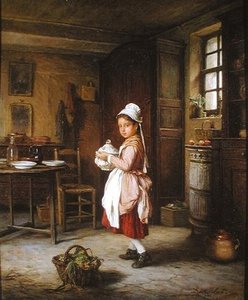
بورتريه لـ أندريه هنري دارجيلاس

أشهر 62 لوحات لـ أندريه هنري دارجيلاس، مختارات من المعرض

تحديث نوفمبر 2026 · مُرتبة حسب مؤشر شعبيتنا (عمليات البحث، والزيارات، والطلبات لكل عمل فني) · 63 أعمال لـ أندريه هنري دارجيلاس في كتالوجنا

باختصار

من بين جميع الأعمال الأصلية التي تركها أندريه هنري دارجيلاس، تُعد Around The World هي الأكثر شهرة. تأتي بعدهما مباشرة كل من Leaving Mass, (1863) و Boys Quarrelling On The Steps Of A Church, (1867). يضم كتالوجنا 63 من أعمال أندريه هنري دارجيلاس؛ حيث احتفظ المعرض بـ 62 من أكثر الأعمال التي يعجب بها العالم، مع عرض كل منها مع تاريخها ومتحفها وقصتها.

1828 – 1906, بوردو Realism أكبر مجموعة أعمال: Atkinson Art Gallery Collection

أفضل 10 لوحات لـ أندريه هنري دارجيلاس: مختارات المعرض

1
Around The World للفنان أندريه هنري دارجيلاس

Around The World

Oil On Canvas

The oil painting titled "Around The World" captures a lively classroom scene filled with youthful energy. At the heart of the composition, several boys interact with a large globe suspended from the ceiling; one boy is even seen swinging from a rope while holding onto the globe. The room is filled with various activities: some boys sit at desks examining books or maps, one works on a small project, and…

2
Leaving Mass, (1863) للفنان أندريه هنري دارجيلاس

Leaving Mass,

1863 · Oil On Canvas

The oil painting depicts a group of figures exiting a church into a snow-covered street. The scene is set during a cold winter day under an overcast sky, which produces a soft, diffused light across the composition. In the background, the imposing facade of a church provides a vertical anchor, while the street recedes into the distance through a series of buildings and diminishing figures. The color palette is composed…

3
Boys Quarrelling On The Steps Of A Church, (1867) للفنان أندريه هنري دارجيلاس

Boys Quarrelling On The Steps Of A Church,

1867 · Oil On Canvas

The scene unfolds upon a wide set of stone steps leading toward the facade of a classical-style church. A group of boys is positioned centrally, their bodies caught in the middle of a quarrel. The composition moves diagonally from the lower left toward the upper right, drawing the eye across the stone surfaces and through the movement of the figures. To the sides, buildings and trees frame the central action,…

4
The Long Walk Home, (1886) للفنان أندريه هنري دارجيلاس

The Long Walk Home,

1886 · Oil On Canvas

The dirt road stretches forward, a muted ribbon of ochre and gray cutting through the landscape. A woman moves along this path, her posture bearing the weight of the day. She carries her children close, their small forms nestled against her, while a small donkey follows, laden with the heavy goods of a life lived by the sun's cycle. The light is soft, filtered through an overcast sky that refuses…

5
Warming His Hands, (1886) للفنان أندريه هنري دارجيلاس

Warming His Hands,

1886 · Oil On Canvas

In this 1886 work, we find ourselves standing before a scene of profound stillness. A young boy is positioned behind a weathered wooden stall, his presence defined by a sense of quiet contemplation. He does not look at us; instead, his gaze is cast downward, heavy with an expression that suggests a weariness beyond his years. The composition is intimate, drawing the eye toward the textures of his existence—the rough…

6
Protecting the Schoolchildren للفنان أندريه هنري دارجيلاس

Protecting the Schoolchildren

Oil On Canvas

We are looking at Protecting the Schoolchildren, a work by the French realist painter Andre Henri Dargelas. This piece belongs to a period when Dargelas was establishing his presence within the Parisian art circles, moving away from the grand narratives of the era to focus on the quiet, often overlooked nuances of everyday life. His approach was marked by a commitment to observing the world with a sense of empathy…

7
Around the world للفنان أندريه هنري دارجيلاس

Around the world

Oil On Canvas

The oil on canvas depicts a classroom scene populated by several young boys engaged in various activities. At the center of the composition, a large globe hangs from the ceiling, and one boy is seen swinging from a rope while holding onto the sphere. Other children are distributed throughout the room; some sit at wooden desks examining books or maps, while one boy works on a small project on the…

تستمر مجموعة أندريه هنري دارجيلاس، من 11 إلى 62

المواضيع التي استأثرت باهتمام أندريه هنري دارجيلاس

المواضيع الأربعة التي تتكرر باستمرار في هذه الأعمال الأصلية، مع تقديم أروع مثال لكل منها.

المتاحف التي تحتفظ بالأعمال الأصلية لـ أندريه هنري دارجيلاس

المتاحف الـ 4 التي تضم أكبر عدد من اللوحات الموجودة في هذه الصفحة.

المتحف المدينة أعمال أندريه هنري دارجيلاس لوحات من هذه القائمة
Atkinson Art Gallery Collection, SouthportAtkinson Art Gallery Collection Southport 1 Morning Prayer
Petit Palais, باريسPetit Palais باريس 1 How Do I Look
Stedelijk Museum, AlkmaarStedelijk Museum Alkmaar 1 Winter's Blast
Wolverhampton Art Gallery, وولفرهامبتونWolverhampton Art Gallery وولفرهامبتون 1 The Happy Family

أندريه هنري دارجيلاس عقداً بعد عقد: الأعمال الأصلية التي ميزت كل حقبة

الأعمال حسب العقد

اختر عقداً لتشاهد العمل الأصلي الذي يجسده.

أسئلة المقتنين حول لوحات أندريه هنري دارجيلاس

ما هو العمل الأكثر شهرة لـ أندريه هنري دارجيلاس؟اكتشف الإجابة

Around The World. يليه Leaving Mass, (1863) و Boys Quarrelling On The Steps Of A Church, (1867).

ما هي أشهر عشر لوحات لـ أندريه هنري دارجيلاس؟اكتشف الإجابة

Around The World, Leaving Mass,, Boys Quarrelling On The Steps Of A Church,, The Long Walk Home,, Warming His Hands,, Protecting the Schoolchildren, Around the world, Riverfront,, Waiting For A Friend و Hide And Seek. يوضح التصنيف أعلاه سنة كل لوحة والمتحف التابعة له.

كم عدد اللوحات التي تركها أندريه هنري دارجيلاس؟اكتشف الإجابة

يضم كتالوجنا 63 من أعمال أندريه هنري دارجيلاس، التي يعود تاريخها من 1863 إلى 1898.

في أي متاحف تُعرض روائع أندريه هنري دارجيلاس؟اكتشف الإجابة

توجد غالبيتها في Atkinson Art Gallery Collection (Southport), Petit Palais (باريس) و Stedelijk Museum (Alkmaar). يدرج جدول المتاحف أعلاه جميعها.

في أي سنوات رسم أندريه هنري دارجيلاس أشهر أعماله؟اكتشف الإجابة

في 1860s: تم إنجاز 2 من أصل 62 من الأعمال في هذه الصفحة خلال تلك الفترة، من بينها Leaving Mass,.

ما هي أول وآخر الأعمال الأصلية الشهيرة لـ أندريه هنري دارجيلاس؟اكتشف الإجابة

في هذه الصفحة، أقدم الأعمال يعود إلى Leaving Mass, (1863) وأحدثها يعود إلى Riverfront, (1898).

ما هي المواضيع التي اختارها أندريه هنري دارجيلاس بشكل متكرر؟اكتشف الإجابة

Children (4), 19th century (4) و Childhood (4)، عبر 62 من الأعمال في هذه الصفحة.

ما هي التقنية التي استخدمها أندريه هنري دارجيلاس بشكل أكبر؟اكتشف الإجابة

Oil On Canvas، لـ 8 من أصل 62 من الأعمال في هذه الصفحة.

إلى أي حركة فنية ينتمي أندريه هنري دارجيلاس؟اكتشف الإجابة

Realism و Contemporary realism، بناءً على الأعمال الأصلية في هذه الصفحة.

أندريه هنري دارجيلاس: حياته وأعماله

André Henri Dargelas: A Painter of Quiet Observation

André Henri Dargelas (1828 – 1906) was a French realist painter who emerged from Bordeaux during the Belle Époque, establishing himself as a prominent figure in Parisian art circles. His distinctive style—characterized by meticulous detail and an empathetic portrayal of ordinary life—offers a valuable glimpse into the social consciousness of his era and continues to resonate with contemporary audiences. Unlike many artists preoccupied with grand narratives or heroic figures, Dargelas focused on capturing the subtle nuances of everyday existence, elevating seemingly unremarkable moments into canvases imbued with profound emotion and moral contemplation.
  • Early Life & Training: Born in Bordeaux, Dargelas received his initial artistic education from Jean-Baptiste Oudry, a celebrated Flemish landscape painter who instilled in him a foundational understanding of tonal painting and compositional balance. This formative influence would prove crucial to shaping Dargelas’s later aesthetic sensibilities.
  • Parisian Career & Influences: Moving to Paris in 1853, Dargelas quickly assimilated into the vibrant artistic milieu of the time, encountering artists like Gustave Courbet and Jean-François Millet. Courbet's uncompromising realism served as a catalyst for Dargelas’s own stylistic evolution, encouraging him to depict subjects with unflinching honesty and eschewing idealized representations.
  • Style & Technique: Dargelas’s technique was marked by painstaking observation and meticulous brushwork. He favored muted color palettes—often dominated by earthy tones—to create atmospheric landscapes and interiors that conveyed a palpable sense of place. His canvases are populated with figures rendered with remarkable accuracy, capturing their expressions and gestures with sensitivity and nuance. Notably, he skillfully employed chiaroscuro – the dramatic interplay of light and shadow – to heighten emotional impact.

Notable Works & Themes

Dargelas’s oeuvre comprises numerous paintings depicting scenes from rural life and domestic interiors. However, it is his depictions of children—particularly “Morning Prayer” and “Morning Prayers (2)”—that stand out as particularly poignant expressions of humanist values. These canvases capture the solemn beauty of religious observance within a familial setting, conveying a deep respect for innocence and faith. The artist’s meticulous attention to detail—from the folds of fabric to the expressions on the children's faces—transforms these simple scenes into powerful meditations on morality and compassion. His works frequently explore themes of poverty, hardship, and social responsibility, reflecting the anxieties and aspirations of his time.
  • "Morning Prayer" exemplifies Dargelas’s commitment to portraying ordinary life with dignity and sincerity. The painting's subdued colors and careful rendering of light contribute to its contemplative atmosphere.
  • "Morning Prayers (2)" similarly emphasizes the importance of faith and compassion, capturing a moment of quiet devotion amidst challenging circumstances.

Legacy & Historical Significance

André Dargelas’s contribution to French realist painting is undeniable. He championed a humanist aesthetic that prioritized observation and empathy over grand spectacle—a stance that aligns with the broader artistic currents of the Belle Évreux, marking him as a significant voice in documenting the realities of Victorian France. His paintings continue to inspire admiration for their understated beauty and moral depth, reminding viewers of the enduring power of art to illuminate human experience and foster compassion.