Defining Synthetic Cubism: From Fragmentation to Construction
--- title: Analytic and Synthetic Cubism | MoMA author: Alexandra Morrison url: https://www.moma.org/collection/terms/cubism/analytic-and-synthetic-cubism hostname: moma.org description: Art critics and art history scholars have divided Cubism into t...
To understand the radical shift that occurred within the early 20th-century avant-garde, one must look beyond the mere breaking of forms and toward the revolutionary act of building them anew. While the earlier phase of Analytical Cubism was characterized by a meticulous, almost clinical dissection of objects into fractured, monochromatic planes, Synthetic Cubism introduced a profound sense of construction. This later stage, flourishing roughly between 1912 and 1914, moved away from the deconstruction of reality and toward its synthesis. Instead of stripping an object down to its geometric essence through multiple viewpoints, artists like Pablo Picasso and Georges Braque began to assemble new realities using simpler shapes, brighter color palettes, and a groundbreaking approach to materiality.
This period represented a departure from the illusionistic traditions that had dominated Western art for centuries. Rather than attempting to create a window into a three-dimensional world, Synthetic Cubism embraced the flatness of the canvas. It was an era where the artist ceased to be a mere mirror of nature and became an architect of signs. By utilizing overlapping planes and flattened surfaces, the movement challenged the viewer to actively participate in the creation of meaning. For the modern professional, this shift offers a sophisticated visual language that priorits structure and symbolic depth over literal representation, making it an enduringly relevant tool for contemporary spatial storytelling.
The Mechanics of Texture: Mastering Collage and Materiality
 Collage
Collage (, from the French: coller, "to glue" or "to stick together") is a technique of art creation, primarily used in the visual arts, by which art results from an assembly of different forms, thus creating a new whole. Collage may refer to the tec...
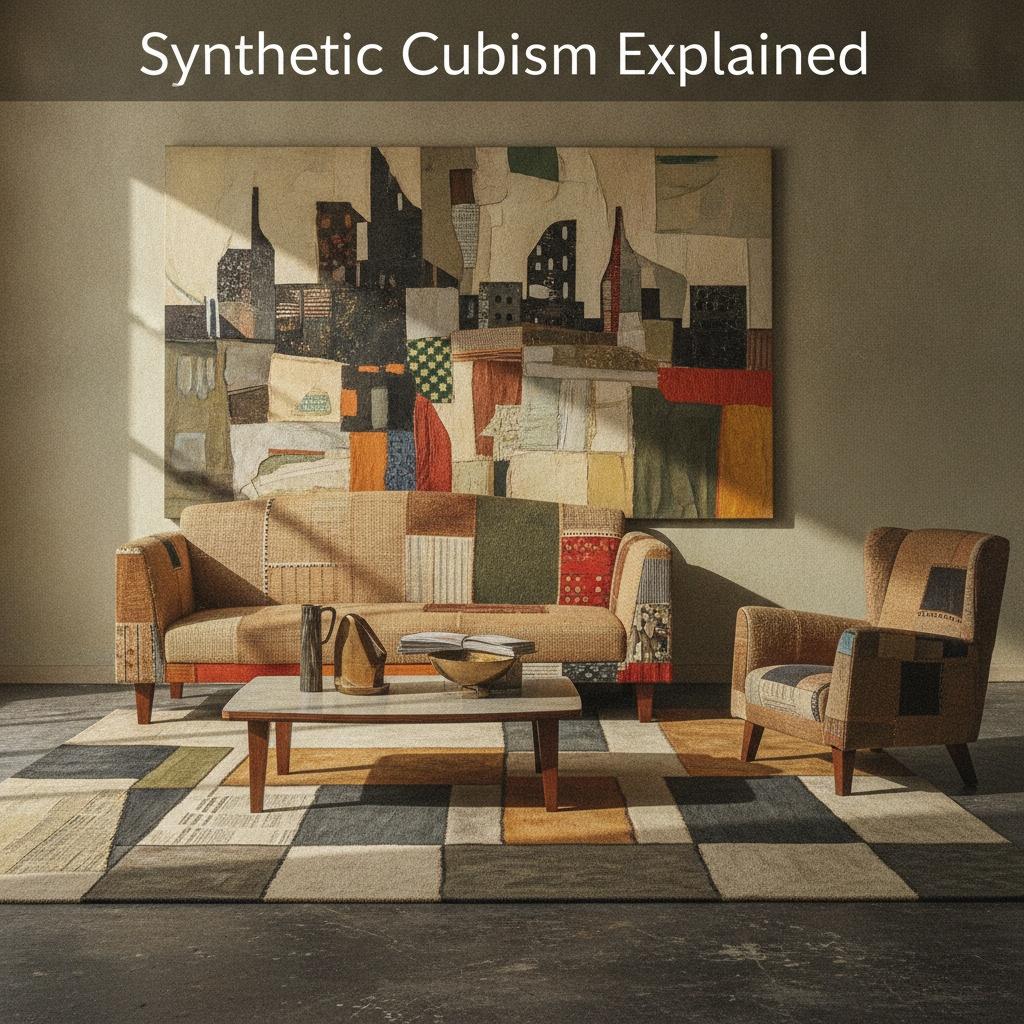
The true heartbeat of Synthetic Cubism lies in its tactile innovation, specifically through the invention and refinement of collage. This technique—derived from the French word coller, meaning to glue or stick together—transformed the canvas into a multidimensional landscape of textures. By incorporating non-traditional elements such as newspaper clippings, patterned papers, and even bits of fabric, artists introduced a physical reality that bypassed the need for painterly imitation. This was not merely an aesthetic choice but a philosophical one; it bridged the gap between high art and the everyday objects of modern life, injecting a raw, rhythmic energy into the composition.
In works such as Picasso’s Violin or his various papier collés, we see how the interplay of different surfaces creates a complex visual dialogue. The introduction of texture allows for a play of light and shadow that is not painted, but physically present. For designers managing large-scale hospitality projects, this emphasis on materiality provides a blueprint for creating depth in minimalist environments. The ability to layer patterns and textures—much like the Cubists layered newsprint and sand—allows for a sophisticated approach to interior surfaces, where the visual interest is derived from the structural tension between smooth planes and rugged, tactile elements.
Key Figures and Masterworks: The Legacy of Picasso and Braque
 Georges Braque's Masterpieces: 25 Paintings That Defined Cubism & Modern Art | OriginalUniqueArt
Introduction To gaze upon the canvases of Georges Braque is to witness a quiet revolution unfold. This collection of his top 25 artworks isn’t merely a survey of paintings; it's an intimate journey into the mind of an artist who dared to dismantle an...
The trajectory of modern art cannot be discussed without acknowledging the profound partnership between Pablo Picasso and Georges Braque. Their collaboration was so seamless during the development of Cubism that their works were often indistinguishable to the untrained eye. While Picasso brought a restless, transformative spirit—moving from the somber depths of his Blue Period to the radical reconstructions of Synthetic Cubism—Braque provided a disciplined, structural foundation rooted in his early training as a decorator. Braque’s background in the trade of house painters and decorators gave him an innate understanding of how form and structure interact with physical space.
Masterpieces such as Picasso’s Table in Front of Window serve as vibrant symphonies of light and life, demonstrating how fragmented forms can still convey a sense of movement and vitality. These works do not merely depict an interior; they reconstruct the very essence of perception. The legacy of these masters lies in their ability to question what constitutes art itself, moving from the representation of a subject to the creation of an autonomous object. For collectors and procurement managers, engaging with this lineage means bringing into a space a sense of historical weight and intellectual rigor that transcends mere decoration.
Integrating Cubist Aesthetics into Modern Hospitality Design
 Cubism
Cubism is an early-20th-century avant-garde art movement which began in Paris. It revolutionized painting and the visual arts, and sparked artistic innovations in music, ballet, literature, and architecture. Cubist subjects are analyzed, broken up, a...
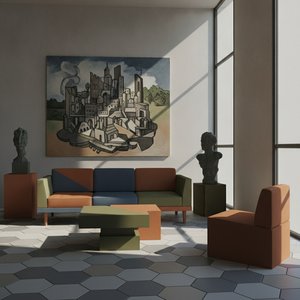
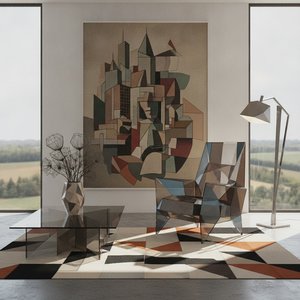
For the contemporary hotel designer or corporate decorator, Synthetic Cubism offers a versatile toolkit for defining atmosphere. The movement’s characteristic use of bold, geometric shapes and vibrant colors can serve as a powerful anchor in large-scale lobbies or executive lounges. Because the style avoids the clutter of traditional realism, it integrates seamlessly into modern, minimalist, or industrial interiors. The flattened planes of Cubist compositions complement the clean lines of modern architecture, providing a focal point that is intellectually stimulating without being visually overwhelming.
< Responding to the needs of high-traffic environments, the aesthetic of Synthetic Cubism allows for a controlled use of visual complexity. In a hotel setting, where the goal is often to create a sense of luxury and curated sophistication, the "constructed" nature of Cubist art can be used to echo the structural elements of the building itself. Whether through the use of large-format murals or strategically placed accent pieces, the movement’s emphasis on balance, rhythm, and geometric harmony provides a foundation for creating spaces that feel both avant-garde and profoundly stable.Strategic Implementation: Sizing, Framing, and Multi-Panel Layouts for Large-Scale Projects
 Guitar
Pablo Picasso’s Guitar: A Fragmented Reflection of Modernity The Guitar painting by Pablo Picasso, created in 1912, stands as a cornerstone of Synthetic Cubism—a movement that irrevocably altered the landscape of artistic representation. More than ju...
Executing a vision involving Cubist-inspired art requires a strategic approach to scale and composition. One of the most effective ways to utilize this style in expansive architectural settings is through the use of multi-panel or "split" paintings. By dividing a single, complex Cubist composition across three, four, or even five panels, a designer can command a large wall surface, creating a sense of movement that guides the eye across a corridor or a wide reception area. This technique mimics the fragmented nature of the art itself, turning the architecture into part of the artwork.
Furthermore, the choice of framing and finish is critical to maintaining the professional integrity of the installation. For a modern, seamless look, ExtendedWrap or MirrorWrap techniques allow the artist's brushstrokes to continue around the edges of the canvas, eliminating the visual break of a frame and emphasizing the painting as a structural component of the wall. When sourcing for large-scale projects, professionals should consider the durability of materials; our hand-painted oil reproductions on 100% cotton canvas are engineered with flexible gesso and protective Damar varnish to ensure that the vibrant colors and intricate textures remain pristine for decades. Whether through custom-sized commissions or standardized multi-panel sets, the goal is to achieve a cohesive, high-impact installation that reflects the prestige of the venue.