The Fundamentals of Cubism: Understanding Geometric Deconstruction
To understand the profound impact of Cubism on modern spatial design, one must first grasp its departure from the traditional window-on-the-world perspective that had dominated Western art since the Renaissance. At its core, Cubism is not merely an aesthetic choice but a radical restructuring of reality through geometric deconstruction. Rather than capturing a single, static moment from a fixed viewpoint, Cubist masters like Pablo Picasso and Georges Braque sought to represent the subject from multiple perspectives simultaneously. This approach breaks objects into their constituent parts—planes, facets, and volumes—creating a complex, rhythmic interplay of shapes that challenges the viewer's perception of depth and stability.
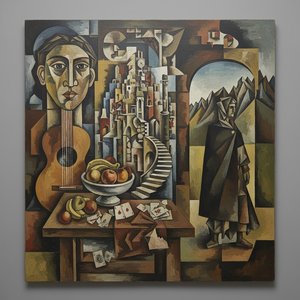
For the professional designer, this movement offers a sophisticated vocabulary of form. The reduction of organic subjects into cylinders, spheres, and cones provides a structural logic that can be mirrored in contemporary architectural elements. When we observe works such as Picasso’s Guitar, we see how earthy tones and geometric forms coalesce to create a dynamic composition that feels both grounded and intellectually stimulating. This deconstruction does not destroy the subject; rather, it reconstructates it into a more complete, multidimensional truth, offering a sense of intellectual depth that resonates in high-end, curated environments.
Analytical vs. Synthetic Cubism: Key Stylistic Evolutions for Decorators
The evolution of Cubism is traditionally divided into two distinct phases, each offering unique opportunities for interior curation. The first, known as Analytical Cubism, is characterized by a rigorous, almost clinical dissection of the subject. During this period, artists utilized a muted, monochromatic palette—heavy in ochres, greys, and browns—to ensure that the viewer’s focus remained entirely on the complex overlapping planes and structural intersections. This phase is ideal for corporate environments or minimalist hotel lobbies where a sense of understated authority and structural clarity is required. The complexity lies in the subtle shifts of light and shadow across fractured surfaces, providing visual interest without overwhelming the surrounding architecture.
As the movement progressed into Synthetic Cubism, the approach shifted toward construction rather than deconstruction. This phase introduced brighter colors, flatter shapes, and the revolutionary technique of collage, incorporating textures and varied materials into the canvas. In works like La Pareja, we see a more vibrant, tactile approach where contrasting hues and impasto techniques create a richer, more layered experience. For a designer, Synthetic Cubism offers a way to introduce energy and warmth into a space. It allows for a more playful use of color and texture, making it an excellent choice for boutique hospitality projects that aim to evoke emotion and a sense of modern luxury through bold, graphic compositions.
Integrating Cubist Masterpieces into Modern Hospitality Interiors
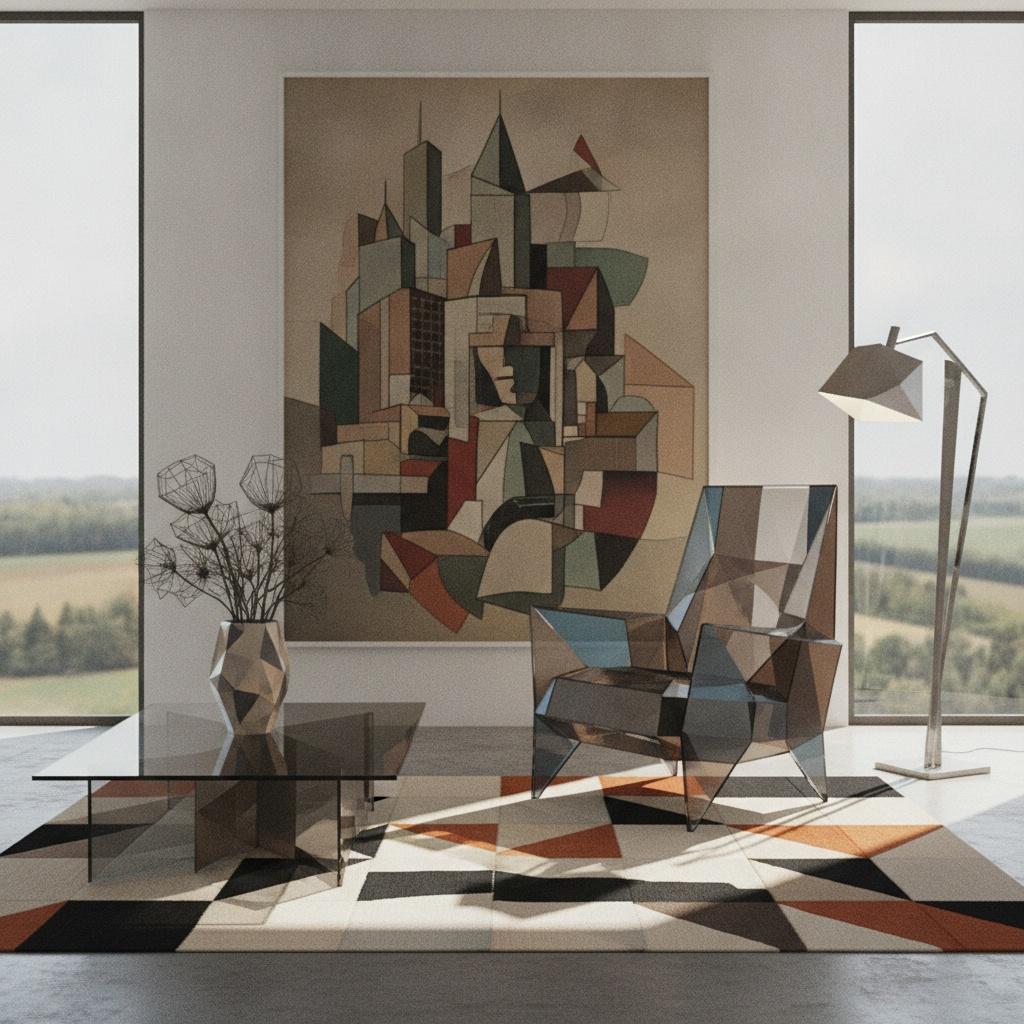
Incorporating Cubist-inspired art into hospitality design requires a strategic balance between visual complexity and spatial harmony. Because Cubism relies heavily on fragmented planes and intersecting lines, it can serve as a powerful focal point that anchors a room. In a large hotel lounge or a sophisticated restaurant, a single, well-placed Cubist reproduction can act as the conceptual heart of the design, dictating the color palette and the geometric rhythm of the furniture and lighting fixtures. The key is to treat the artwork not as an isolated object, but as an integral component of the architectural narrative.
The versatility of Cubism allows it to bridge the gap between different design eras. It can complement the clean lines of mid-century modernism or provide a striking contrast to the soft, organic curves of contemporary biophilic design. When selecting pieces for a professional project, consider the tonal range of the artwork; a monochromatic Analytical piece can enhance a sleek, industrial aesthetic, while a more colorful Synthetic work can breathe life into a more traditional or eclectic setting. By aligning the structural language of the art with the physical geometry of the space, designers can create an immersive environment that feels both curated and cohesive.
Strategic Implementation: Using Multi-Panel Cubist Sets for Large-Scale Walls
One of the most effective ways to utilize Cubism in large-scale commercial projects is through the implementation of multi-panel or polyptych arrangements. In expansive hotel corridors, grand staircases, or wide lobby walls, a single canvas often lacks the necessary scale to command attention. By splitting a complex Cubist composition across three, four, or even five panels, the designer can create a sweeping, cinematic effect that guides the eye through the space. This multi-panel trend allows for a seamless flow of color and brushwork across a vast surface area, transforming a structural wall into a monumental piece of architectural art.
This approach also provides a unique opportunity to manipulate the rhythm of a room. A wide, horizontal arrangement can emphasize the length of a corridor, while a vertical configuration can draw the eye upward toward high ceilings or ornate moldings. For procurement managers and designers working with large-scale installations, these multi-panel sets offer a scalable solution that maintains the integrity of the original masterpiece while adapting to specific architectural dimensions. The continuity of the artist's hand across the gaps between panels creates a sense of movement and interconnectedness that is essential for high-impact, professional environments.
Sourcing and Customization: Tailoring Cubist Reproductions to Project Specifications
For the professional decorator or procurement manager, the ability to customize art to meet exact project specifications is paramount. The modern landscape of art reproduction allows for a level of precision that was previously impossible. Whether it is adjusting the color palette of a Picasso-inspired piece to match a new upholstery fabric or requesting a specific size to fit a custom-built alcove, the possibilities for customization ensure that every artwork serves the broader design intent. This includes the ability to request "period shifts" or stylistic remixes, such as applying a Cubist fragmentation to a contemporary photograph, creating a bespoke piece of history for a unique property.
Reliability in sourcing is just as critical as aesthetic quality. When managing large-scale orders for hospitality chains, professionals require a streamlined process that includes clear documentation, VAT-compliant invoicing, and dependable global logistics. The transition from a digital mockup to a finished, hand-painted oil reproduction on cotton canvas ensures that the final product possesses the tactile depth—the visible brushstrokes and rich impasto—that mass-produced prints lack. By leveraging professional services that offer pre-shipment photo approval and coordinated project management, designers can ensure that every piece delivered to their site meets the rigorous standards of excellence required for world-class interiors. All these high-quality solutions are available through the extensive catalog at OriginalUniqueArt.com.