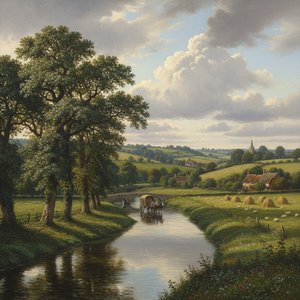
A classical landscape (William Linton)
أبدع William Linton (1791–1876) في A classical landscape.

 معاينة الحجم الواقعي

 لوحة زيتية مرسومة يدوياً
 مشاركة
 مشاركة
 ورقة الحقائق


 تحميل الملف
 قطع مشابهة
 الأشعة السينية
 عرض شرائح
 الأسئلة والأجوبة

 الإحصائيات
A classical landscape باختصار
- العنوان
- A classical landscape
- الفنان
- William Linton (1791–1876)
- تاريخ ميلاد الفنان
- Liverpool, United Kingdom
- الموضوع
- landscape
صور عالية الدقة لـ A classical landscape
William Linton, A classical landscape. ملك عام
أسئلة وإجابات حول A classical landscape
ماذا يصور "A classical landscape" للفنان William Linton؟
تتضمن الموضوعات المتضمنة في "A classical landscape" للفنان William Linton كلاً من landscape، والتي تلخص مجتمعةً فحوى العمل الفني.
هل العمل "A classical landscape" ضمن الملكية العامة؟
تندرج لوحة "A classical landscape" للفنان William Linton ضمن نطاق ملك عام - انتهت مدة حماية حقوق الطبع والنشر الخاصة به، وتحدد هذه الحالة الشروط التي يمكن بموجبها إعادة إنتاج صورة العمل الفني.
من أبدع "A classical landscape"؟
تم إبداع "A classical landscape" بواسطة William Linton. وتصف المعلومات الواردة في هذه الصفحة العمل الأصلي لـ William Linton.
ما هي الأسباب الكامنة وراء الوضع القانوني لحقوق الطبع والنشر لـ "A classical landscape" للفنان William Linton؟
تعتمد حالة حقوق الطبع والنشر لـ "A classical landscape" - ملك عام - انتهت مدة حماية حقوق الطبع والنشر الخاصة به - على تاريخ وفاة الفنان في 1876.
عن الفنان، William Linton

1791–1876, United Kingdom
William Linton
The Romantic Visionary of Classical Landscape William Linton, born in the maritime atmosphere of Liverpool in 1791, emerged as a pivotal figure in British landscape painting during the Victorian era—a period defined by a profound fascination with both scientific observation and idealized beauty. His artistic journey began not with the grand gestures of a master, but through the humble and disciplined practice of copying the works of legends like Claude Lorrain and Richard Wilson. These early encounters were transformative, instilling in Linton a deep-seated appreciation for the interplay of natural light and the sweeping grandeur of panoramic compositions. This foundational period shaped his distinctive style, allowing him to weave classical sensibilities into the fabric of 19th-century Romanticism.
وأيضاً لـ William Linton
 The Bathing Pool
 View Of Edinburgh; And View Of Stirling
 An Italianate Landscape, With Peasants And Livestock In The Foreground
 Bury From Blackford Bridge
مقالات حول A classical landscape
 British Landscapes: The Enduring Spirit of the Countryside in Art and Interior DesignExplore the mastery of British landscape art from Constable to Cartlidge. Discover timeless beauty for your home today.
 John Constable: Nature, Light & the Romantic Vision of Rural EnglandExplore the life & art of John Constable, the Romantic painter who revolutionized landscape with emotive scenes of rural England. Discover …
 Atmospheric Vistas: A Study of Notable Landscape CompositionsExplore a masterclass on atmospheric landscapes from Patinir to Monet. Discover the evolution of light and texture in art history.