
 إرسال
إرسال مشاركة
 عرض التفاصيل
 دليل الأعمال الفنية للطلاب

 تحميل
تحميل
 قطع مشابهة
 عرض شرائح متتابع
 الإحصائيات
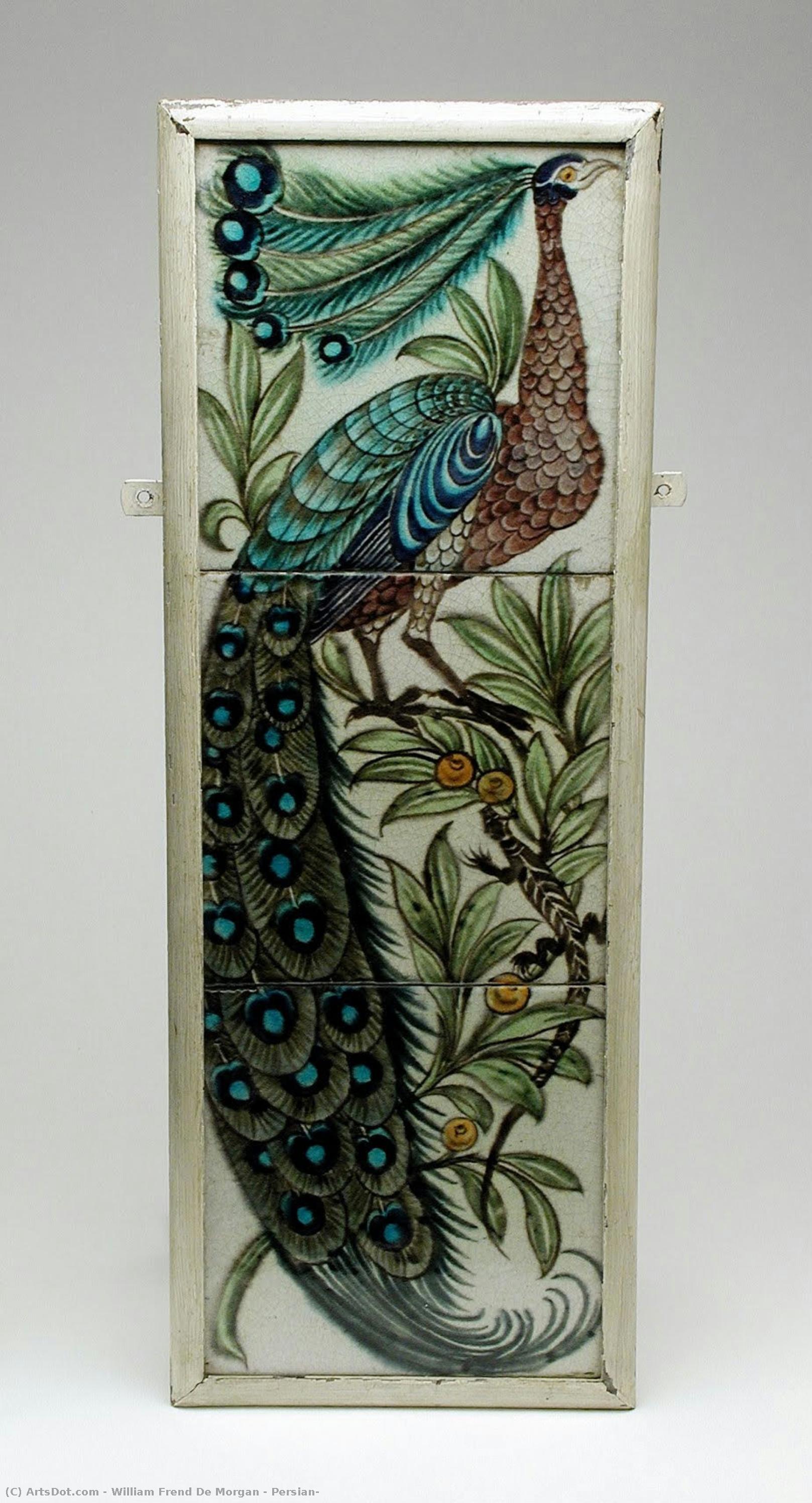
Persian
 Ceramics
- Arts and Crafts
 1897
1897 46.0 x 15.0 cm
 متحف لوس أنجلس لمهرجان الفنون
 اقرأ المزيد
احصل على صورة رقمية عالية الدقة ومعزّزة، بجودة تفوق بكثير المعاينة عبر الإنترنت.
يتم إعداد كل ملف بعناية فائقة على أيدي متخصصينا باستخدام أدوات متقدمة ولمسات يدوية خبيرة، لضمان تمتع كل صورة بوضوح استثنائي، ودقة لونية متناهية، وتفاصيل دقيقة.
يتم تسليم الملف النهائي عبر البريد الإلكتروني في غضون 72 ساعة، وهو مُحسَّن للاستخدام الفوري في المجالات المهنية والتحريرية ومجالات الطباعة؛ وهي ذات الجودة التي تعتمد عليها كبرى استوديوهات التصميم ودور النشر والمعارض الفنية المرموقة.
صورة رقمية
حمّل ملفاً عالي الدقة للعرض الشخصي، والطباعة، والمشاريع الإبداعية. ( التبديل إلى المطبوعات اطلب نسخة مرسومة يدويًا)
مزايا مُضمّنة مع كل طلب صورة رقمية
خدمة تسليم رقمي احترافية ومضمونة
عندما تختار OriginalUniqueArt.com، فأنت لا تحصل على مجرد صورة فحسب، بل ستحصل على عمل فني رقمي مُحسّن باحترافية، صُمم بدقة متناهية ومصحوب بضمان الرضا. إليك كل ما يتضمنه طلبك تلقائياً:

تسليم سريع عبر البريد الإلكتروني
ستصلك ملفات صورك الرقمية عالية الدقة عبر البريد الإلكتروني في غضون 72 ساعة من إتمام الطلب - لتكون جاهزة للاستخدام الفوري.

ملف رقمي مُعزز بالذكاء الاصطناعي
يتم تحسين عملك الفني باحترافية باستخدام أدوات الذكاء الاصطناعي المتقدمة والتحرير اليدوي، لضمان أقصى درجات التفاصيل والوضوح ودقة الألوان.

إعادة إرسال مجانية مدى الحياة
هل حذفت ملفك أو فقدته عن طريق الخطأ؟ لا تقلق - سنعيد إرساله إليك في أي وقت، مجاناً.

بدون رسوم استيراد - على الإطلاق
استمتع بأعمالك الفنية فوراً دون أي رسوم جمركية أو ضرائب أو مصاريف شحن - فالتحميلات الرقمية دائماً ما تكون معفاة من الضرائب.

ضمان دقة الألوان
نضمن لك دقة انعكاس الألوان الأصلية في صورتك الرقمية بأقصى قدر ممكن، وذلك باستخدام أدوات احترافية وتقنيات متطورة لإدارة الألوان.

ضمان الرضا لمدة 100 يوم
إذا لم تكن راضياً عن صورتك الرقمية، فسنقوم بتعديلها أو استرداد 100% من قيمتها خلال 100 يوم - دون طرح أي أسئلة.

ضمان استعادة الأموال بنسبة 100%
لم تكن راضياً؟ استرد كامل المبلغ خلال 100 يوم من استلام ملفك الرقمي - دون طرح أي أسئلة.

خصومات الطلبات الكبيرة
اشتري 3 صور، ووفر 10% - اشتري 5، ووفر 15% - اشتري +10، ووفر 20%. مثالية للمشاريع الإبداعية، والمعارض، والوكالات.
A Vision of the Orient: The Allure of William Frend De Morgan's "Persian"
Within the rich tapestry of 19th-century decorative arts, few pieces possess the captivating blend of artistry and exoticism as William Frend De Morgan’s “Persian” tile panel. Created in 1888-1897 during his prolific period at Merton Abbey, this work transcends mere ornamentation; it's a portal to a reimagined East, infused with Victorian sensibilities and a profound understanding of ancient artistic traditions. More than just a decorative object, it’s a testament to De Morgan’s innovative spirit and his ability to synthesize diverse influences into a singularly beautiful whole.
The panel immediately draws the eye with its vibrant palette – deep blues reminiscent of Persian Iznik ware, punctuated by turquoise highlights, manganese purples hinting at ancient dyes, and the warm glow of Indian red. These colors aren’t simply applied; they are meticulously layered to create a luminous depth that seems to shift and shimmer in the light. The intricate design is dominated by stylized peacocks, their tails spread in an explosion of feathers, each feather rendered with painstaking detail. Surrounding these majestic birds are delicate floral motifs – lotus blossoms, irises, and stylized leaves – all arranged within a complex geometric framework. This combination of natural forms and structured patterns speaks to De Morgan’s fascination with both the organic beauty of nature and the order inherent in ancient civilizations.
The Roots of Inspiration: Victorianism Meets Islamic Art
De Morgan's “Persian” panel is a product of its time, deeply rooted in the artistic currents of the late Victorian era. The Arts and Crafts movement, with its emphasis on handcrafted quality and rejection of mass-produced goods, provided the intellectual framework for his work. However, De Morgan’s inspiration extended far beyond England; he was profoundly influenced by the art and architecture of the Islamic world, particularly the exquisite ceramics of Persia (modern-day Iran). He meticulously studied examples of Iznik tiles – renowned for their vibrant colors and intricate designs – recognizing their potential to create a similar effect on English earthenware.
This fascination with the East wasn’t merely aesthetic; it reflected a broader cultural shift. The Victorian era witnessed a growing interest in Orientalism—a Western fascination with, and often romanticized depiction of, Eastern cultures. De Morgan skillfully navigated this trend, avoiding simplistic stereotypes and instead creating a nuanced representation that celebrated the beauty and sophistication of Persian art while firmly grounding it within his own artistic vision.
Technique and Craftsmanship: A Master at Work
The creation of “Persian” involved a complex and demanding process. De Morgan’s studio employed a combination of traditional and innovative techniques. The tiles themselves were typically made from biscuit-fired earthenware, providing a sturdy base for the intricate decoration. The lustrous glaze—the hallmark of this piece—was achieved through a painstaking layering of colored oxides applied to the wet clay before firing. This process required immense skill and control, as even slight variations in temperature or humidity could dramatically affect the final result.
The use of multiple layers of color created an almost three-dimensional effect, with the colors seeming to float above the surface of the tile. The intricate detailing—the feathers of the peacocks, the delicate petals of the flowers—was achieved through a combination of hand-painting and stenciling. De Morgan’s assistants played a crucial role in this process, meticulously applying the pigments and ensuring that each element of the design was executed with precision.
A Legacy of Beauty: De Morgan's Enduring Influence
William Frend De Morgan’s “Persian” tile panel stands as a remarkable achievement—a testament to his artistic vision, technical skill, and deep understanding of art history. It embodies the spirit of the Arts and Crafts movement while simultaneously celebrating the beauty and sophistication of Persian art. Today, reproductions of this iconic piece continue to captivate audiences with their vibrant colors, intricate designs, and evocative symbolism. It remains a powerful reminder of the enduring legacy of Victorian decorative arts and the transformative power of artistic inspiration.
الأسئلة والأجوبة
ما هو اللون الطاغي الذي ينساب عبر "Persian" للفنان William Frend De Morgan؟
تطغى على "Persian" للفنان William Frend De Morgan مسحة من اللون Green to Violet Spectrum.
كيف تم بناء التكوين اللوني لـ "Persian" للفنان William Frend De Morgan؟
يُظهر التحليل اللوني لـ "Persian" للفنان William Frend De Morgan تباينًا Statement وتناغمًا Strong Color Unity.
كيف يوازن "Persian" بين الضوء والظلال؟
سُجلت درجة سطوع "Persian" للفنان William Frend De Morgan عند brilliant، مع مستوى لمعان يبلغ Bright Balance.
سيرة الفنان
A Life Immersed in Pattern and Innovation
William Frend De Morgan, born in London in 1839, was a figure who defied easy categorization. He wasn’t simply a potter, nor merely a tile designer, or even solely a novelist—he was a polymath whose artistic spirit permeated multiple disciplines. Born into an intellectually stimulating environment – his father, Augustus De Morgan, was a renowned mathematician, and his mother, Sophia Elizabeth Frend, a progressive thinker and writer – young William received encouragement to pursue his creative inclinations. Though he initially enrolled at the Royal Academy Schools, a sense of disillusionment soon set in, leading him toward a more collaborative and aesthetically aligned path. This pivotal shift came with his introduction to William Morris, a meeting that would profoundly shape De Morgan’s artistic trajectory and immerse him within the burgeoning Arts and Crafts movement.From Stained Glass to Ceramic Revelation
De Morgan's early explorations centered on stained glass, working alongside Morris & Co., contributing designs imbued with medieval and mythological narratives. However, it was a fascination with lustre – that shimmering, iridescent quality found in ancient Hispano-Moresque pottery and Italian maiolica – that truly ignited his artistic passion. He dedicated himself to rediscovering the lost techniques of lustreware, meticulously experimenting with glazes and firing processes. This pursuit wasn’t merely about replicating an aesthetic; it was a scientific investigation driven by an insatiable curiosity. By 1872, De Morgan had fully committed to ceramics, establishing his own pottery in Chelsea. The decade that followed proved remarkably fruitful, though marked by technical challenges. He skillfully combined commercially produced tiles with his own creations, notably developing a high-quality biscuit tile celebrated for its irregularities and durability. His designs during this period began to coalesce around recurring motifs: fantastical creatures, galleons, fish, and intricate floral patterns, all rendered in a distinctive “Persian” palette of deep blues, turquoise, manganese purple, greens, Indian red, and lemon yellow.Eastern Influences and Artistic Flourishing
De Morgan’s artistic vision was deeply informed by his profound interest in Eastern art, particularly Islamic tilework. This fascination wasn't superficial imitation but a genuine appreciation for the complex geometric patterns, vibrant colors, and symbolic richness of these traditions. He absorbed these influences, translating them into a unique visual language that blended medieval aesthetics with Oriental motifs. Between 1882 and 1900, De Morgan received significant commissions, most notably producing elaborate tile panels for twelve P&O liners under the direction of T.E. Colcutt, as well as earlier work for Tsar Alexander II’s yacht, Livadia. These large-scale projects showcased his ability to translate intricate designs into expansive decorative schemes. His pottery also flourished, encompassing chargers, rice dishes, and vases, often brought to life through the skilled hands of decorators like Charles Passenger, Fred Passenger, Joe Juster, and Miss Babb – artists who faithfully executed De Morgan’s visionary concepts.A Legacy Beyond Ceramics
Though his pottery and tile designs remain his most celebrated achievements, William De Morgan's creative energy extended into the realm of literature. In his later years, he embarked on a second career as a novelist, publishing nine works between 1906 and 1917. His novels, characterized by realistic dialogue and insightful social commentary, were well-received during his lifetime. De Morgan’s impact resonates through the enduring appeal of his art. He wasn't simply replicating historical styles; he was innovating, experimenting, and forging a unique aesthetic that continues to captivate audiences today. The De Morgan Centre in London stands as a testament to his legacy, preserving and showcasing his remarkable contributions to Victorian decorative arts. His work embodies the spirit of the Arts and Crafts movement – a commitment to craftsmanship, artistic integrity, and the harmonious integration of art into everyday life.Key Dates & Notable Works
- 1839: Born in Gower Street, London.
- 1863: Began experimenting with stained glass and ventured into pottery.
- 1872: Established his own pottery in Chelsea.
- 1882-1900: Commissioned to produce tile panels for P&O liners and the Tsar’s yacht.
- 1906-1917: Published nine novels.
- 1917: Passed away in London.
- The Annunciation (featured on OriginalUniqueArt.com)
- Sunrise, Inverness Copse (by Paul Nash, featured on OriginalUniqueArt.com)
- Music Cabinet
- The Welsh Bible

William Frend De Morgan
1839 - 1917 , United Kingdom
حقائق سريعة
- Full Name: William Frend De Morgan
- Nationality: British
- Date Of Birth: 1839
- Date Of Death: 1917
- Place Of Birth: London, United Kingdom
- Notable Artworks:
- The Annunciation
- Music Cabinet
- The Welsh Bible
- Artistic Movement Or Style: Arts and Crafts
- Artists Who Influenced This Artist: ['William Morris']