 التبديل إلى نسخة مطبوعة
 عرض المزيد







































 بالنسبة للأعمال الفنية أو النسخ المطبوعة التي يتجاوز طول أي من أضلاعها 105 سم (حوالي 41 بوصة)، سيتم شحن الإطار كمجموعة مفككة؛ حيث تضمن هذه الطريقة سلامة التوصيل وتمنع حدوث أي أضرار أثناء النقل.


Isaac Newton
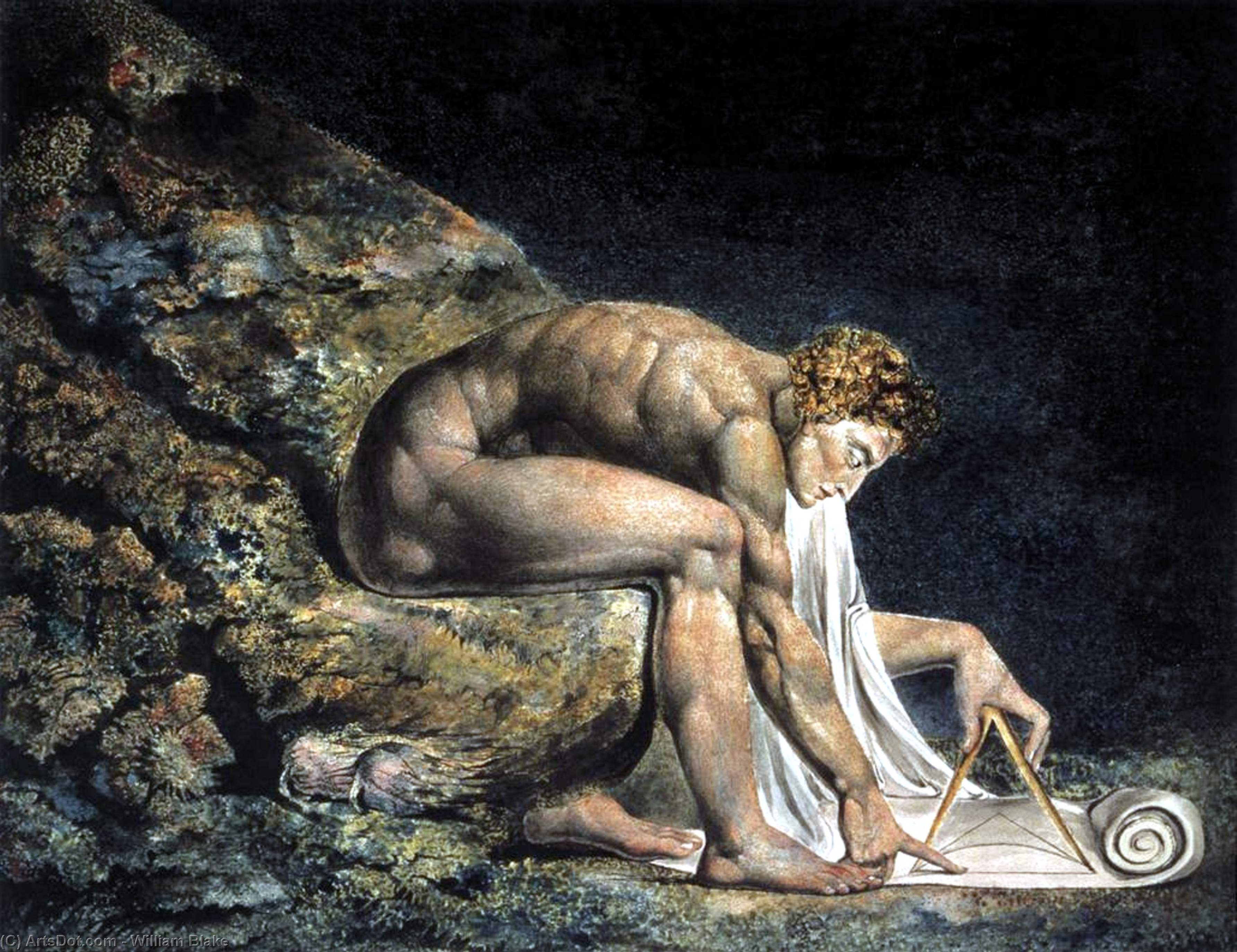
William Blake's Isaac Newton, created in 1795, is a captivating and thought-provoking engraving that showcases the artist's unique blend of mysticism and critique of scientific rationalism. This piece is part of the esteemed collection at the Tate Gallery in London, United Kingdom.Blake’s depiction of Newton is not a traditional portrait but rather an allegorical representation. The figure of Newton is shown sitting on a rock, his back turned to the viewer, engrossed in his work. He is surrounded by elements that symbolize his scientific endeavors, such as a compass and a piece of cloth. The bird perched atop the rock adds a touch of mysticism, suggesting a connection between the natural world and human knowledge.
Blake's use of symbolism in Isaac Newton is multifaceted. The rock upon which he sits can be seen as a symbol of solidity and permanence, contrasting with the fluid, ever-changing nature of human understanding. Blake's work often explores the tension between reason and imagination, and Isaac Newton is no exception. By depicting Newton in this manner, Blake questions the dominance of scientific thought over other forms of knowledge and experience.
The engraving technique used by Blake adds a layer of depth and texture to the piece. The intricate details and the play of light and shadow create a sense of dimensionality, drawing the viewer into the world of the painting. This style is characteristic of Romanticism, emphasizing emotion, imagination, and individualism.
Blake's work was influenced by various artistic movements, including Romanticism and Neoclassicism. His unique blend of mysticism and critique of scientific rationalism places him at the forefront of innovative artists who challenged conventional norms. For those interested in exploring more of Blake’s works, William Blake:Isaac Newton and William Blake:Newton are available on OriginalUniqueArt. Additionally, the museum where this piece is housed, Tate Gallery, is discussed in detail at Discovering the Masterpieces of Tate Britain, United Kingdom.
This engraving captures a profound dichotomy—Newton’s unwavering focus on scientific observation juxtaposed against the ethereal presence of the bird and the rock. Blake deliberately avoids portraying Newton as merely a man of intellect; instead, he presents him as an embodiment of humanity's struggle to reconcile reason with intuition. The artist’s masterful use of chiaroscuro enhances this dramatic effect, highlighting Newton’s solitary posture and emphasizing the symbolic significance of his surroundings.
Considered alongside Blake’s broader philosophical concerns regarding the role of imagination in shaping human understanding, Isaac Newton stands as a powerful emblem of Romantic artistic vision. Its enduring appeal lies in its ability to provoke contemplation on the fundamental questions concerning human consciousness and our relationship with the natural world.
OriginalUniqueArt offers exceptional reproductions of William Blake’s Isaac Newton, meticulously crafted to preserve the artist's original aesthetic and technical brilliance. Explore high-quality prints that bring this iconic artwork into your home or office.
الأسئلة والأجوبة
ما هو اللون الأكثر بروزاً في "Isaac Newton"؟
يتميز العمل الفني "Isaac Newton" للفنان ويليام بليك بلونه السائد وهو أسود (#101115).
من هو الفنان الذي يُنسب إليه العمل "Isaac Newton"؟
الفنان الذي أبدع عمل "Isaac Newton" هو ويليام بليك، والعمل مُدرج تحت اسم ويليام بليك.
هل يتوفر عرض شرائح لـ "Isaac Newton" للفنان ويليام بليك؟
يمكن عرض "Isaac Newton" للفنان ويليام بليك كعرض شرائح في صفحة عرض شرائح الخاصة بالعمل الفني.
 معاينة الحجم الواقعي
 مشاركة
 مشاركة
 التفاصيل
 دليل
دليل

 تحميل الملف
 قطع مشابهة
 الأشعة السينية
 عرض شرائح
 الأسئلة والأجوبة
 الإحصائيات