التبديل إلى نسخة مطبوعة
 عرض المزيد







































 بالنسبة للأعمال الفنية أو النسخ المطبوعة التي يتجاوز طول أي من أضلاعها 105 سم (حوالي 41 بوصة)، سيتم شحن الإطار كمجموعة مفككة؛ حيث تضمن هذه الطريقة سلامة التوصيل وتمنع حدوث أي أضرار أثناء النقل.


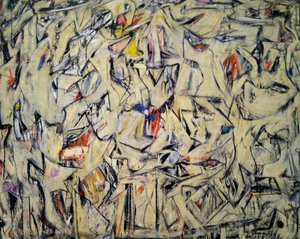
Still Life (1945): A Testament to Emotion and Form
Willem de Kooning’s “Still Life” stands as an emblem of abstract expressionism, encapsulating the movement's core tenets—a rejection of representational art in favor of spontaneous gesture and emotional resonance. Painted in 1945, amidst the turbulent aftermath of World War II, this artwork transcends mere depiction; it embodies a profound exploration of psychological states and formal experimentation.
- Subject Matter: The composition centers around a woman’s nude torso bathed in a warm pink hue—a deliberate departure from traditional still life subjects. Alongside her is another figure, partially obscured, adding to the painting's enigmatic quality.
- Style and Technique: De Kooning employed a bold, energetic brushstroke technique characterized by thick impasto—heavy application of paint—creating palpable textural surfaces. The palette utilizes vibrant yellows, greens, and oranges, juxtaposed against the dominant pink background, generating visual dynamism.
- Historical Context: “Still Life” emerged during a pivotal moment in art history, coinciding with the ascendancy of Jackson Pollock and other pioneers of action painting. It reflects the broader anxieties and aspirations of postwar America—a desire to express inner turmoil while simultaneously asserting artistic freedom.
The painting’s symbolism is multilayered. The nude figure represents vulnerability and exposure, mirroring the psychological fragility experienced by artists grappling with existential questions during wartime. Simultaneously, the fragmented forms challenge conventional notions of perspective and spatial organization—a hallmark of de Kooning's stylistic innovation.
Influenced by Cubism and Surrealism, De Kooning fused geometric abstraction with dreamlike imagery, resulting in a distinctive visual language that captivated audiences worldwide. “Still Life” remains an enduring testament to the transformative power of art—a celebration of emotion and form intertwined within a single frame.
- Notable Influences: Cubism’s fragmentation of space provided inspiration for De Kooning's exploration of visual ambiguity, while Surrealism encouraged him to tap into subconscious impulses.
- Recognition: “Still Life” garnered critical acclaim upon its debut and cemented De Kooning’s reputation as one of the foremost artists of his era—a figure whose legacy continues to inspire contemporary creatives.
For those seeking a deeper understanding of Willem de Kooning's artistic vision, exploring Willem De Kooning on Wikipedia offers invaluable insights into his life and oeuvre.
الأسئلة والأجوبة
أين يمكنني العثور على دليل لـ "Still Life"؟
يُعد دليل "Still Life" صفحة دليل تعليمي الخاصة بالعمل الفني؛ وهي ورقة حقائق قابلة للطباعة تستعرض العمل الفني مع شرحه، وسطر الائتمان، وجدول البيانات التعريفية (الفنان، التواريخ، الوسيط، الحجم الأصلي، والمجموعة).
ما هي إعدادات الطباعة المقترحة لـ "Still Life" للفنان ويليم دي كونينغ؟
بالنسبة لـ "Still Life"، يُنصح بالطباعة بحجم كبير وبوضعية اتجاه عمودي.
ما مدى قوة الألوان في "Still Life" للفنان ويليم دي كونينغ؟
تتميز لوحة "Still Life" للفنان ويليم دي كونينغ بكثافة لونية نابضة بالحياة.
 معاينة الحجم الواقعي
 مشاركة
 مشاركة
 التفاصيل
 دليل
دليل

 تحميل الملف
 قطع مشابهة
 الأشعة السينية
 عرض شرائح
 الأسئلة والأجوبة
 الإحصائيات