معاينة الحجم الحقيقي
 مشاركة
 مشاركة
 التفاصيل

 تحميل الملف
 قطع مشابهة
 الأشعة السينية
 عرض شرائح
Saint Bartholomew


 عرض المزيد
طباعة جيلي / مطبوعات فنية
طباعة جيكلي أو كانفاس بجودة المتاحف، مع سرعة في التنفيذ وخيارات متنوعة للتشطيب. ( اشترِ لوحة مرسومة يدويًا اشترِ الصورة)




P118B $10

P118H $10

P118W $10

P438Z $10

P508JH $12

P508YH $12

P805H $10

P805Z $10

P919BZ $10

P919G $10

P919XJ $10

P959ZH $10

P968JZ $12

W106C $8

W218G $10

W218JH $8

W218Y $10

W307PJ $10

W316G $10

W316PJ $8

W316Y $10

W398PJ $8

W4111J $10

W500HY $15

W500JH $15

W692G $12

W849H $8

W940BG $15

W953PJ $8




اختر من بين أحجامنا المُعدّة مسبقًا والتي تتطابق مع النسب الأصلية للعمل الفني.

يمكنك إدخال أبعادك الخاصة لتناسب إطاراً أو مساحة معينة. وإذا لم يتطابق الحجم الذي اخترته مع نسب الصورة الأصلية، فسنقوم إما بقص العمل الفني أو تمديد الصورة باستخدام حافة معكوسة أو بلون مصمت. سيتم إرسال نموذج تجريبي رقمي لاعتمادك قبل بدء الإنتاج.
يرجى ملاحظة أن المعاينة على الشاشة لا تعكس عملية القص أو التمديد الفعلية؛ حيث سيوضح النموذج التجريبي فقط التكوين النهائي بدقة.
وعلى الرغم من توفر أحجام مخصصة، إلا أننا نوصي باختيار أبعاد من القائمة المحددة مسبقاً للحفاظ على النسب الأصلية.
توصيل عالمي إلى خلال أسبوعين بدلاً من المدة القياسية البالغة 4/5 أسابيع. 27 أغسطس

شحن سريع ومجاني لجميع أنحاء العالم

قماش كتان عالي الجودة

تأمين شحن شامل

ضمان استرداد الرسوم الجمركية

ضمان مطابقة الألوان الحقيقية

سياسة الإرجاع خلال 60 يومًا (في حالات العيوب فقط)

ضمان استرداد نقدي بنسبة 100%

خصم عند طلب عدة قطع
 خيار الزجاج متاح فقط للمقاسات التي تقل عن 110 سم

Saint Bartholomew
طباعة جيلي / مطبوعات فنية
مقاس النسخة المطبوعة
-


السعر الإجمالي النهائي
$ 80
وصف القطعة الفنية
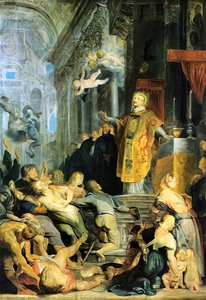
A Portrait of Divine Agony: The Soul of Rubens’ Saint Bartholomew
To encounter Sir Peter Paul Rubens’ “Saint Bartholomew” is to step directly into the heart of the Baroque era, where the boundaries between the earthly and the divine blur through a lens of profound human suffering. Executed in 1612, this masterpiece serves as more than a mere religious icon; it is a visceral exploration of martyrdom and spiritual endurance. The painting captures the saint in a moment of intense psychological and physical vulnerability, his face etched with a distress that transcends the canvas. As he gazes toward the viewer, one does not simply observe a biblical figure, but rather witnesses a soul navigating the turbulent waters of faith and agony. This is Rubens at his most intimate, stripping away the grander spectacles of his typical mythological scenes to focus on the raw, unadorned essence of human experience.
The technical brilliance of this work lies in Rubens’ masterful use of oil on panel, a medium that allowed him to achieve an almost supernatural luminosity. Through the painstaking application of translucent glazes, the artist creates a surface that breathes with life. The textures are nothing short of revelatory; the heavy, earth-toned folds of the saint's robe possess a weight and tactile reality, while the skin tones exhibit a warmth and subtle glow that seem to pulse with an inner vitality. This mastery of light and shadow—the quintessential chiaroscuro of the Baroque—directs the eye toward the focal point: the hands pressed against the chest, a gesture that encapsulates both desperation and a plea for divine mercy. For the discerning collector or interior designer, such a piece offers a profound sense of depth, acting as a dramatic anchor in any curated space.
The Architect of Emotion: Historical Context and Artistic Vision
Born in Siegen and shaped by the vibrant, often volatile artistic atmosphere of Antwerp, Peter Paul Rubens was a man whose life was defined by movement and resilience. His early experiences with displacement due to religious persecution deeply informed his ability to portray the complexities of the human condition. In “Saint Bartholomew,” we see the culmination of his training under Tobias Verhaecq and his absorption of the dramatic energy found in the Counter-Reformation movement. The painting embodies the spiritual fervor of its time, designed to elicit a visceral response from the faithful, pulling them into a state of empathy and contemplation.
Beyond its religious significance, the work stands as a testament to the Flemish Baroque style, characterized by its dynamic compositions and rich, emotive palettes. Rubens does not merely depict a saint; he engineers a spectacle of emotion. The way the figure occupies the frame, creating an almost claustrophobic sense of presence, forces a confrontation between the subject and the observer. For those seeking to infuse a room with character and historical gravity, this reproduction offers an unparalleled opportunity to possess a fragment of art history—a piece that speaks of resilience, the beauty found in struggle, and the eternal power of the human spirit.
السيرة الذاتية للفنان
Sir Peter Paul Rubens: A Baroque Master!
Sir Peter Paul Rubens, a name that resonates with the very essence of Baroque dynamism, was far more than simply a painter. He was a diplomat, a scholar, and a cultural architect who fundamentally reshaped the artistic landscape of 17th-century Europe. Born in Siegen, Germany, in 1577, his early life was marked by displacement—a formative experience that would subtly permeate his later work with an undercurrent of drama and emotional depth. His father, Jan Rubens, a lawyer fleeing religious persecution for his Calvinist beliefs, uprooted the family from their native Antwerp, then under Spanish rule. This initial exile instilled in young Peter Paul a sense of resilience and adaptability, qualities that would serve him well throughout his multifaceted career. Following his father’s death in 1587, the family returned to Antwerp, where he received a humanist education before embarking on his artistic training around 1590, apprenticing under Tobias Verhaecht and Adam van Noort, honing foundational skills in drawing and painting techniques. However, it was his time with Otto van Veen that proved pivotal, exposing him to the rich legacy of Italian Renaissance art—a world he would soon embrace wholeheartedly.The Italian Awakening and Artistic Synthesis
In 1600, Rubens embarked on a transformative journey to Italy, a pilgrimage that irrevocably shaped his artistic vision. For eight years, he immersed himself in the masterpieces of Michelangelo, Raphael, and Titian, absorbing their mastery of form, color, and composition. The influence of these Renaissance giants is readily apparent in his early Italian works, characterized by classical themes and idealized figures. Yet, Rubens didn’t merely imitate; he synthesized these influences with his own innate talent, developing a distinctive style marked by vibrant hues, dynamic compositions, and a sensuous depiction of the human form. He studied anatomy meticulously, resulting in figures that possessed both physical realism and emotional power—robust bodies imbued with life and movement. This period wasn’t solely about artistic development; it was a profound intellectual awakening, fostering a deep appreciation for classical mythology and literature which would become recurring motifs throughout his oeuvre. Upon returning to Antwerp in 1608, Rubens swiftly established himself as the leading artist of his time, receiving a flood of commissions that testified to his burgeoning reputation and solidifying his position at the forefront of Flemish art.A Master of Many Forms: Painting Beyond Boundaries
Rubens’s artistic output was astonishingly diverse and prolific. He didn't confine himself to a single genre; instead, he excelled in history paintings, mythological scenes, portraits, landscapes, and religious works—a testament to his versatility and boundless creativity. His large-scale canvases, often intended for churches, palaces, and public spaces, were breathtaking displays of technical virtuosity and dramatic storytelling. The Descent from the Cross (c. 1616-1617) exemplifies his masterful use of light and shadow to create a scene of profound emotional intensity, drawing viewers into the heart of the narrative. The Raising of the Cross (1610-1611), with its swirling figures and dynamic composition, showcases his ability to convey movement and energy—a hallmark of his Baroque style. Even in seemingly static subjects like The Judgement of Paris (c. 1636), Rubens infused a sense of life and vitality through his vibrant color palette and sensual depiction of the human form. His technique was equally remarkable – a masterful command of oil painting, employing impasto to create texture and depth, alongside delicate glazing techniques to achieve luminous effects. He frequently employed allegorical figures and symbolic imagery, layering narratives with complex meanings that invited contemplation and interpretation.Diplomacy, Legacy, and Enduring Influence
Rubens’s influence extended far beyond the realm of art. His diplomatic skills were highly sought after by the Southern Netherlands (modern-day Belgium), and he undertook numerous missions to England, France, and Spain, negotiating treaties and fostering political alliances—a unique dual role that afforded him a nuanced perspective on European affairs and further enhanced his reputation as a man of intellect and influence. In 1630, he married Hélène Fourment, who became both his muse and frequent subject in his paintings – her youthful beauty gracing many of his later works, embodying the sensuality and vitality that characterized his style. He continued to paint prolifically until his death in Antwerp in 1640, leaving behind a vast legacy that continues to inspire awe and admiration. His impact on subsequent generations of artists is immeasurable; painters like Anthony van Dyck, Jacob Jordaens, and Eugène Delacroix all drew inspiration from his dynamic compositions, vibrant colors, and sensuous figures. Rubens didn’t just define the Baroque style—he elevated painting to a new level of prestige and influence, solidifying Antwerp as a major center of artistic production during the 17th century. He remains, centuries later, a towering figure in the history of art, a testament to the power of human creativity and the enduring allure of Baroque splendor. ## Key Characteristics of Rubens’s Style- Dynamic Composition: Rubens' paintings are known for their energetic and dramatic arrangements of figures.
- Vibrant Color Palette: He employed a rich, warm color scheme that brought his canvases to life.
- Sensuous Figures: His depictions of the human form were characterized by fullness, vitality, and often, overt sensuality.
- Masterful Use of Light and Shadow: Rubens skillfully manipulated light and shadow to create depth, drama, and emotional impact.
- Allegorical Symbolism: His works frequently incorporated allegorical figures and symbolic imagery, adding layers of meaning and complexity.

بيتر بول روبنز
1577 - 1640 , ألمانيا
حقائق سريعة
- Artistic Movement Or Style: باروكي
- Artists Or Movements Influenced By This Artist:
- أنتوني فان ديوك
- ياكو بوردجونس
- Artists Who Influenced This Artist:
- ميكائيل أنجيلوس
- رافائيل
- تيشان
- Date Of Birth: 28 يونيو 1577
- Date Of Death: 30 مايو 1640
- Full Name: بيتر بول روبنز
- Nationality: فلندي
- Notable Artworks:
- نزول المسيح من الصليب
- رفع الصلب
- Place Of Birth: زيغن، ألمانيا
مقالات ذات صلة

Masterpieces of Motion: The Top 25 Greatest Artworks by Peter Paul Rubens
Immerse yourself in the dramatic splendor of Baroque master, Peter Paul Rubens. Explore 25 iconic paintings, from mythological epics to vibrant portraits. Find inspiration for museum-quality art reproductions and luxury decor. Discover all masterpieces on OriginalUniqueArt.com.
Masterpieces of Motion: The Top 25 Greatest Artworks by Peter Paul Rubens
Immerse yourself in the dramatic beauty of Baroque masterworks. Explore our curated list of the top 25 Peter Paul Rubens paintings, from mythological epics to powerful portraits. Find inspiration for museum-quality art reproductions and decor. Discover all masterpieces on OriginalUniqueArt.com.
Masterpieces of Motion: The Top 25 Greatest Artworks by Peter Paul Rubens
Immerse yourself in the dramatic splendor of Baroque master Peter Paul Rubens. Explore 25 iconic paintings, from mythological tales to vibrant oil masterpieces. Find inspiration for museum-quality art reproductions and decor. Discover all masterpieces on OriginalUniqueArt.com.
Mastering Form: The 25 Most Iconic Artworks by Paul Cézanne
Journey through the revolutionary world of Paul Cézanne. Explore 25 iconic Post-Impressionist masterpieces, from his structural landscapes to timeless still lifes. Find inspiration and museum-quality art reproductions for your collection. Discover all masterpieces on OriginalUniqueArt.com.
Mastering Abstraction: The 25 Most Iconic Artworks by Paul Klee
Immerse yourself in the vibrant world of Paul Klee. Explore 25 iconic masterpieces of abstraction, from rhythmic lines to bold colors. Find inspiration for your decor with museum-quality art reproductions. Discover all masterpieces on OriginalUniqueArt.com.