معاينة الحجم الواقعي
 إرسال
إرسال مشاركة
 عرض التفاصيل
 دليل الأعمال الفنية للطلاب

 تحميل
تحميل
 قطع مشابهة
 الأشعة السينية
 عرض شرائح متتابع
 الإحصائيات
Crucifix
 Oil On Canvas
- WallArt
- International Gothic
 1321
1321- Late Medieval
 164.0 x 147.0 cm
 اقرأ المزيد
طباعة جيلي / مطبوعات فنية
طباعة جيكلي أو كانفاس بجودة المتاحف، مع سرعة في التنفيذ وخيارات متنوعة للتشطيب. ( اطلب نسخة مرسومة يدويًا التحويل إلى الصورة الرقمية)




P118B E£10

P118H E£10

P118W E£10

P438Z E£10

P508JH E£12

P508YH E£12

P805H E£10

P805Z E£10

P919BZ E£10

P919G E£10

P919XJ E£10

P959ZH E£10

P968JZ E£12

W106C E£8

W218G E£10

W218JH E£8

W218Y E£10

W307PJ E£10

W316G E£10

W316PJ E£8

W316Y E£10

W398PJ E£8

W4111J E£10

W500HY E£15

W500JH E£15

W692G E£12

W849H E£8

W940BG E£15

W953PJ E£8




اختر من بين أحجامنا المُعدّة مسبقاً والتي تتوافق مع النسب الأصلية للعمل الفني.

أدخل العرض والارتفاع اللذين تحتاجهما، ليتناسب مع إطارك أو جدارك. يمكن قص المطبوعة فقط، ولا يمكن أبداً جعلها أكبر من الصورة الأصلية، لذا فإن أي مقاس بشكل مختلف سيؤدي إلى فقدان جزء من الصورة. سنرسل لك نموذجاً رقمياً تجريبياً لاعتماده قبل البدء في عملية الطباعة. الصورة المعروضة في هذه الصفحة لا توضح القص الفعلي — النموذج التجريبي فقط هو ما يظهر ذلك.
توصيل عالمي إلى خلال أسبوعين بدلاً من المدة القياسية البالغة 4/5 أسابيع. (21 أكتوبر)

شحن سريع ومجاني لجميع أنحاء العالم

قماش كتان فاخر

تأمين شامل على الشحن

ضمان استرداد الرسوم الجمركية

ضمان دقة مطابقة الألوان

سياسة الإرجاع خلال 100 يوم (في حالات العيوب فقط)

ضمان استرداد نقدي بنسبة 100%

عرض خصم الكميات
 خيار الزجاج متاح فقط للمقاسات التي تقل عن 110 سم

Crucifix
طباعة جيلي / مطبوعات فنية
مقاس النسخة المطبوعة
-


إجمالي السعر
E£ 4131
A Testament to Faith and Courtly Grace: Simone Martini’s “Crucifix” (1321)
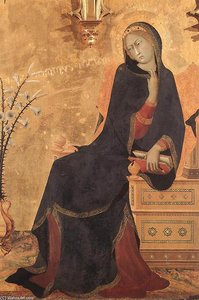
This arresting depiction of the crucifixion, attributed to the masterful hand of Simone Martini, transcends mere religious iconography; it is a profound meditation on faith, suffering, and the enduring power of grace. Painted in 1321, during the apex of his career, this work exemplifies Martini’s signature style – a breathtaking synthesis of Sienese artistic tradition with an unparalleled sensitivity to color and form. Measuring 164 x 147 cm, the scale of the painting immediately draws the viewer into the heart of the scene, fostering a deeply personal connection with the figures depicted.
- Subject Matter: The composition centers on Jesus Christ crucified, presented with an almost agonizing realism that was revolutionary for its time. His posture, rendered with meticulous detail, conveys both physical pain and spiritual anguish.
- The Presence of Mary Magdalene: Standing beside the cross is Mary Magdalene, a figure often associated with repentance and devotion. Her presence underscores the themes of redemption and forgiveness central to Christian belief.
- Angelic Intervention: Above the cross, three angels are depicted in various positions, adding an ethereal dimension to the scene and suggesting divine intervention – a common motif in medieval religious art.
Technique and Artistic Innovation
Simone Martini’s technical prowess is immediately apparent in every brushstroke. Executed in tempera on panel, a technique favored by Sienese artists of the period, the painting boasts an astonishing level of detail and luminosity. The use of vibrant colors – rich blues, reds, and golds – creates a visual feast that was considered groundbreaking for its time. Martini’s mastery of line is particularly noteworthy; each contour is precisely rendered, contributing to the overall sense of realism and emotional intensity. The influence of Giotto, though debated, is undeniable in his approach to depicting human form, albeit filtered through his own distinctive aesthetic.
- Tempera on Panel: The use of tempera paint, known for its slow drying time and ability to build up layers of color, allowed Martini to achieve the remarkable detail and depth characteristic of his work.
- Line as Form: Martini’s meticulous attention to line is a defining feature of his style, creating a sense of solidity and weight in the figures and architectural elements.
Symbolism and Historical Context
Created during a period of intense religious fervor and artistic innovation, “Crucifix” reflects the profound spiritual concerns of 14th-century Siena. The painting’s symbolism is layered and complex, drawing upon both biblical narratives and medieval theological beliefs. The inclusion of the book in the lower left corner likely represents the Gospels, while the cup may symbolize the Eucharist – a central element of Christian worship. Siena itself was a powerful city-state, deeply invested in religious patronage, and Martini’s work served as a testament to its faith and artistic prestige. This piece is considered one of the most important examples of Sienese Gothic art, bridging the gap between the late medieval and early Renaissance periods.
Emotional Impact and Artistic Legacy
More than just a religious depiction, “Cruifix” evokes a powerful emotional response in the viewer. The raw intensity of Jesus’s suffering, combined with the serene presence of Mary Magdalene and the ethereal quality of the angels, creates a scene of profound pathos. Simone Martini's "Crucifix" remains a testament to his artistic genius and a poignant reminder of humanity's enduring struggle with faith, mortality, and redemption. A hand-painted reproduction offers an unparalleled opportunity to experience the beauty and emotional depth of this iconic masterpiece in your own space.
الأسئلة والأجوبة
ما هي تقنية وحجم العمل الأصلي "Crucifix" للفنان سيمون مارتيني؟
أُنجزت لوحة "Crucifix" باستخدام Oil On Canvas، وتبلغ أبعادها 164 x 147 cm في شكلها الأصلي.
كم عدد الأشخاص الذين يشاهدون "Crucifix"؟
تعرض صفحة الإحصائيات الخاصة بـ "Crucifix" للفنان سيمون مارتيني إحصائيات الزيارات العامة: عدد الزيارات الشهرية لهذا العمل الفني، ومقارنةً مع أكثر أعمال الفنان مشاهدةً، بالإضافة إلى المناطق التي يأتي منها الزوار.
هل تُعدّ "Crucifix" للفنان سيمون مارتيني لوحةً زاهية الألوان أم داكنة؟
من حيث السطوع الملحوظ، فإن "Crucifix" للفنان سيمون مارتيني يتميز بـ deep_shadow.
نبذة عن الفنان
Simone Martini: The Poet’s Muse and the Elegance of Gothic
Simone Martini (c. 1284 – July 1344) stands as a cornerstone of Tuscan Gothic art, an artist whose oeuvre embodies the refined sensibilities and meticulous craftsmanship that defined the era. Born in Siena—a city renowned for its vibrant artistic tradition—Martini’s life story is interwoven with tales of patronage, pilgrimage, and intellectual engagement, offering a glimpse into the cultural landscape of fourteenth-century Italy.
Early Life and Artistic Training
Precise biographical details surrounding Martini's birth remain elusive, shrouded in the uncertainties inherent to historical records. However, scholarly consensus suggests that he emerged from Siena sometime around 1284/85—likely the son of Martino Senese, a craftsman specializing in preparing plaster for frescoes.
His formative years were spent under the tutelage of Duccio di Buoninsegna, Siena’s foremost painter and arguably the most influential figure in Tuscan Gothic. Vasari recounts that Martini apprenticed himself to Giotto—a claim debated by modern art historians—yet Duccio undeniably instilled in him a profound understanding of stylistic principles rooted in Byzantine tradition.
Furthermore, Martini's exposure to Sienese goldsmithing workshops honed his technical skills and fostered an appreciation for decorative embellishment—a characteristic that would permeate his subsequent artistic endeavors. The influence of Memmo di Filippuccio—another prominent artist of Siena—extended beyond mere apprenticeship; their collaboration cemented Martini’s position within the city’s artistic milieu.
The Maestà: A Synthesis of Styles
Martini's magnum opus, the *Maestà* fresco commissioned for the Palazzo Pubblico in Siena (completed 1315), exemplifies his masterful synthesis of Gothic and Byzantine elements. The monumental panel depicts Mary enthroned with Christ Child—a composition that draws inspiration from Byzantine iconography while simultaneously incorporating Sienese decorative conventions.
The fresco’s shimmering gold leaf, meticulously applied by Martini's workshop, underscores the importance of materiality in conveying visual splendor. Moreover, Martini’s innovative use of perspective—particularly in the depiction of drapery folds—represents a significant advancement in artistic technique and foreshadows developments within Florentine painting.
The Maestà is not merely a technical achievement; it embodies Martini's aesthetic vision—a vision characterized by elegance, grace, and an unwavering commitment to capturing the spiritual essence of religious iconography. It stands as a testament to Martini’s ability to elevate artistic craftsmanship into a form of sublime beauty.
Beyond Siena: Patronage and Artistic Innovation
Martini’s artistic career extended beyond Siena's borders, encompassing commissions from papal courts in Avignon and Naples—a testament to his renown as an artist and the enduring appeal of his stylistic innovations. His patronage by Robert of Anjou—king of Naples—provided him with invaluable opportunities for experimentation and creative exploration.
Among Martini’s most celebrated works are the *Saint Louis Crowning Robert* (1317), executed for the royal court in Naples, and the *Saint Catherine Polyptych*, commissioned by Assisi Cathedral. These paintings showcase Martini's unparalleled command of color and form—demonstrating his mastery of both monumental fresco painting and intimate panel portraits.
His innovative approach to composition—particularly evident in the depiction of Christ before Pilate—challenged prevailing artistic conventions and signaled a decisive break from medieval stylistic norms. Martini’s legacy resides not only in his technical prowess but also in his contribution to shaping the aesthetic sensibilities of his time—a contribution that continues to inspire admiration and scholarly inquiry centuries later.
A Lasting Influence on Gothic Art
Simone Martini's influence reverberates throughout European art history, particularly within the realm of Gothic painting. His stylistic refinements—characterized by flowing lines, delicate ornamentation, and an unwavering pursuit of beauty—established a new standard for artistic excellence.
Artists across Europe emulated Martini’s techniques and compositional strategies—resulting in a widespread dissemination of his aesthetic vision. Martini's legacy transcends mere stylistic imitation; it embodies the enduring power of art to communicate spiritual values and elevate human experience—a testament to Simone Martini’s place as one of the most influential figures in the history of European painting.

سيمون مارتيني
1284 - 1344 , إيطاليا
لمحة سريعة
- Artistic Movement Or Style: الدييكو الكوني المعتبرة
- Artists Who Influenced This Artist: ['الدييكو دي بوينيسينا"، "جيوتو دي بوندو']
- Date Of Birth: ع. ١٢٨٤
- Date Of Death: ١٣٤٤
- Full Name: Simone Martini
- Nationality: إيطالي
- Notable Artworks: ['الم Maestà"، "القديس لويس من طولوزة"، "القديسة كاترين الأليكساندريا البوليبيتخ"، "الإنعاش مع القديسة ماريجوري والقداسة أنسانوس']
- Place Of Birth: سني، إيطاليا
مقالات ذات صلة
Late Medieval Masterpieces: 10 Artworks That Defined an Era | OriginalUniqueArt
Journey through 10 defining Late Medieval masterpieces – from Giotto's frescoes to Jan van Eyck’s realism. Explore the stories, techniques & vibrant colors of Gothic art. Find museum-quality reproductions and elevate your home decor with OriginalUniqueArt.com! Discover all masterpieces on OriginalUniqueArt.com
Simon Vouet: A Baroque Master's Journey from Italian Influence to French Classicism
Explore the life & art of Simon Vouet, a pivotal French Baroque painter who introduced Italian styles to France. Discover his masterpieces and lasting influence on 17th-century art.

Simone Martini: Innovation, Spirituality & Courtly Refinement in Sienese Painting
Explore the captivating world of Simone Martini, a pivotal figure in Sienese painting & the International Gothic style. Discover his innovative techniques, spiritual depth, and lasting influence on early Renaissance art.
Proto-Renaissance Masters: 10 Artworks That Changed History | OriginalUniqueArt
Journey back to the dawn of Renaissance art! Explore 10 iconic Proto-Renaissance masterpieces by Giotto, Cimabue & Duccio. Discover their stories, techniques & lasting impact. Find museum-quality reproductions for your home at OriginalUniqueArt.com
High Medieval Art: 10 Masterpieces That Shaped an Era | OriginalUniqueArt
Journey through High Medieval Art! Explore 10 iconic masterpieces – from Giotto's frescoes to stunning Gothic cathedrals. Discover the stories behind these timeless paintings, sculptures & illuminated manuscripts. Find museum-quality art reproductions at OriginalUniqueArt.com.