

 معاينة الحجم الحقيقي
 مشاركة
 مشاركة
 التفاصيل

 تحميل الملف
 قطع مشابهة
 الأشعة السينية
 عرض شرائح
St Augustine Arriving in Carthage


 عرض المزيد
نسخة زيتية مصنوعة يدوياً
لوحة زيتية مرسومة يدوياً على الكانفاس بالمقاس والإطار الذي تفضله، تُنفذ حسب الطلب على أيدي فنانينا. ( اشترِ نسخة مطبوعة اشترِ الصورة)




































اختر من بين أحجامنا المُعدّة مسبقًا والتي تتطابق مع النسب الأصلية للعمل الفني.

يمكنك إدخال أبعادك الخاصة لتناسب إطارًا معينًا أو مساحة محددة. وإذا لم يتطابق الحجم الذي اخترته مع نسب الصورة الأصلية، فسنقوم إما بقص العمل الفني أو توسيع اللوحة بإضافة عناصر مرسومة يدويًا. سيتم إرسال نموذج رقمي إليك للموافقة عليه قبل بدء الإنتاج.
يرجى ملاحظة أن المعاينة على الشاشة لا تعكس عملية القص أو التوسيع الفعلية؛ حيث إن النموذج الرقمي وحده هو الذي سيوضح التكوين النهائي بدقة.
وعلى الرغم من توفر أحجام مخصصة، إلا أننا نوصي باختيار أبعاد من القائمة المحددة مسبقًا للحفاظ على النسب الأصلية للعمل الفني.
بعد إتمام الطلب، سيرسل فريق OriginalUniqueArt.com بريداً إلكترونياً للعميل لطلب التعليمات وتزويده بمعاينة تجريبية (mockup).
توصيل عالمي إلى خلال 3 إلى 4 أسابيع بدلاً من المدة المعتادة البالغة 5 أسابيع. (22 أغسطس). جودة لا تهاون فيها.

شحن سريع ومجاني لجميع أنحاء العالم

قماش كتان عالي الجودة

تأمين شحن شامل

ضمان استرداد الرسوم الجمركية

ضمان مطابقة الألوان الحقيقية

سياسة الإرجاع خلال 60 يومًا (في حالات العيوب فقط)

ضمان استرداد نقدي بنسبة 100%

خصم عند طلب عدة قطع
 خيار الزجاج متاح فقط للمقاسات التي تقل عن 110 سم

St Augustine Arriving in Carthage
خامة إعادة الإنتاج
مقاس النسخة المطبوعة
-


السعر الإجمالي النهائي
$ 300
وصف العمل الفني
Introduction to the Painting and its Artist
Ottaviano Nelli, an Italian painter from Gubbio, was born around 1375. He is known for his frescoes and panel paintings in the Umbrian-Gothic style. One of his most famous works is the fresco cycle depicting the life of St Augustine in the choir apse at Sant'Agostino, Gubbio, Italy. Among these frescoes, "St Augustine Arriving in Carthage" stands out as a masterpiece of early Renaissance art.Historical Context and Significance
The fresco cycle at Sant'Agostino was created around 1410-1415, during the period of humanism when the view of St Augustine changed. The new humanist image of St Augustine began to appear in miniature painting and wall cycles towards the end of the fourteenth century. St Augustine Arriving in Carthage is a significant work that documents this changing view of the saint.Visual Analysis
In St Augustine Arriving in Carthage, Nelli skillfully depicts St Augustine's journey from Rome to Carthage, where he would embrace Manichaeism before converting to Christianity. The artist masterfully uses perspective and color to create a sense of depth and movement, drawing the viewer into the narrative. The figures in the fresco are depicted with naturalism and individuality, reflecting Nelli's understanding of human anatomy and his ability to capture emotional expression. The use of architectural elements, such as columns and arches, adds structure and balance to the composition while also providing a sense of place.The Legacy of Ottaviano Nelli
Ottaviano Nelli's work had a significant impact on the development of early Renaissance art in Umbria. His innovative use of perspective and naturalistic figure representation set new standards for future artists. Today, his works can be found in various museums, including Sant'Agostino in Gubbio, Italy.Experience the Masterpiece with a Hand-Made Oil Painting Reproduction
At OriginalUniqueArt.com, we offer high-quality hand-made oil painting reproductions of Ottaviano Nelli's St Augustine Arriving in Carthage. Our skilled artists meticulously recreate each detail, ensuring you can enjoy this masterpiece in the comfort of your own home. To learn more about our process and available options, visit our website or contact us directly.Conclusion
St Augustine Arriving in Carthage by Ottaviano Nelli is a remarkable example of early Renaissance art that showcases the artist's mastery of narrative, perspective, and naturalistic figure representation. By understanding its historical context and visual language, we can appreciate the significance of this work and its impact on the development of Italian art. St Augustine Arriving in Carthage is a must-see for anyone interested in early Renaissance art or the life of St Augustine. At OriginalUniqueArt.com, we are proud to offer hand-made oil painting reproductions that allow you to experience this masterpiece up close and personal.السيرة الذاتية للفنان
The Master of Umbrian Frescoes: The Life and Legacy of Ottaviano Nelli
In the heart of the Italian Quattrocento, amidst the rolling landscapes of Umbria, the name Ottaviano Nelli resonates as a cornerstone of early Renaissance artistry. Born around 1375 in the historic town of Gubbio, Nelli was not merely an artist but a scion of a profound creative lineage. Emerging from a family steeped in the traditions of the brush—with his father, Martino Nelli, and grandfather, Mello da Gubbio, providing a foundational blueprint—he inherited a deep-seated connection to the regional stylistic conventions of his homeland. His life was a tapestry woven from both artistic devotion and civic duty; he was a man who moved seamlessly between the quiet sanctity of the workshop and the bustling political arenas of his community, serving as a consul for the St. Pietro district in 1400 and later for the Sant'Andrea district in 1440.
Nelli’s artistic journey was far from insular. While his roots remained firmly planted in the Umbrian soil, his vision was expanded by the winds of change blowing from Siena and Florence. As the burgeoning Renaissance began to reshape the Italian peninsula, Nelli absorbed the evolving sensibilities of these great artistic centers. His work reflects a sophisticated dialogue between the established Umbrian-Gothic style and the emerging humanism of the era. This period of transition is most vividly captured in his mastery of fresco, where he blended decorative elegance with an burgeoning sense of expressive dynamism. The influence of Lombard and Burgundian styles further enriched his palette and compositional depth, allowing him to create narratives that felt both timelessly sacred and strikingly contemporary.
A Narrative in Color: The St. Augustine Cycle
The true zenith of Nelli’s career is perhaps best embodied in the breathtaking fresco cycle dedicated to the life of St. Augustine, located within the choir apse of Sant'Agostino in Gubbio. Created between approximately 1410 and 1415, this monumental undertaking serves as a profound historical document of a changing theological landscape. Within these walls, Nelli captures the shift toward a more humanistic view of the saint, moving away from rigid iconography toward a more relatable, emotional portrayal. One particular masterpiece within this cycle, "St. Augustine Arriving in Carthage," stands as a testament to his technical prowess. In this work, Nelli utilizes perspective and color with remarkable skill to depict the saint's journey, creating a sense of movement and depth that draws the viewer into the very heart of the narrative.
Beyond the grand scale of his frescoes, Nelli’s ability to infuse sacred themes with vernacular elements created a unique visual language. His figures possess a burgeoning naturalism and individuality, reflecting an early understanding of human anatomy and emotional nuance. While he did produce panel paintings—such as the Madonna del Belvedere and the Polyptych of Pietralunga—it is widely acknowledged by historians that his true genius flourished in the expansive, enduring medium of fresco. His ability to structure complex compositions using architectural elements like columns and arches provided a sense of stability and place, grounding his spiritual subjects in a tangible, earthly reality.
The Teacher and the Torchbearer
The significance of Ottaviano Nelli extends far beyond the borders of Gubbio, reaching into the very fabric of Renaissance art history through his role as a mentor. His workshop was a crucible of talent, where he passed down the secrets of the Umbrian tradition to a new generation of painters. His pupils included his own brother, Tommaso, as well as notable figures such as Domenico Di Cecco di Baldi and Ubaldo Di Matteo. Perhaps most impressively, the ripples of his influence can be felt in the works of masters like Gentile da Fabriano and Giovanni Sanzio, both of whom were shaped by Nelli’s innovative approach to light, color, and narrative structure.
As we look back upon the career of this pivotal Umbrian master, we see an artist who bridged the gap between the medieval past and the Renaissance future. His life, which likely concluded around 1444, left behind a legacy of vibrant frescoes that continue to illuminate the churches of Umbria. Through his dedication to both his craft and his community, Nelli ensured that the artistic identity of Gubbio would be forever etched in the annals of Italian history, providing a foundation upon which the great masters of the Quattrocento could build.

ottaviano nelli
1375 - 1444 , Italy
حقائق سريعة
- Artistic Movement Or Style: Early Quattrocento
- Artists Or Movements Influenced By This Artist:
- Sienese Painting
- Bolognese Painting
- Lombard Painting
- Burgundian Style
- Artists Who Influenced This Artist:
- Gentile da Fabriano
- Giovanni Pintali
- Cristoforo di Nicoluccio
- Salimbeni
- Guiduccio Palmerucci
- Date Of Birth: ca. 1375
- Date Of Death: ca. 1444
- Full Name: Ottaviano Nelli
- Nationality: Italian
- Notable Artworks:
- St Augustine Arriving in Carthage
- Madonna del Belvedere
- Life of the Virgin
- Madonna della misericordia e santi
- Last Judgement
- Saint Jerome
- Circumcision of Christ and Mystical Marriage of Saint Francis
- Place Of Birth: Gubbio, Italy
مقالات ذات صلة

الفريسكو كإرث عائلي: الحفاظ على التراث من خلال فن الجدار
اكتشف فن الفريسكو العريق وتاريخه الغني مع OriginalUniqueArt. خبراء في الحفاظ على التراث، وتقديم أعمال فنية فاخرة مخصصة لتصميم منزلك. جودة عالية وموثوقية تضمن إرثًا دائمًا.
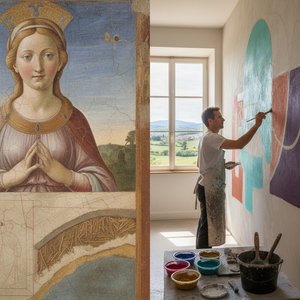
The Enduring Legacy of Fresco Painting: Techniques, History & Contemporary Relevance
Explore the rich history & enduring artistry of fresco painting – from Giotto to Michelangelo! Discover techniques, conservation efforts, & modern applications. Learn how OriginalUniqueArt brings this timeless art form to your home.

The Enduring Legacy of Fresco: Technique, History & Artistic Expression Across Cultures
Explore the rich history & enduring legacy of fresco painting! Discover ancient techniques, Giotto's masterpieces, and modern applications. Expert insights for art lovers & professionals.

The Enduring Legacy of Fresco: Technique, History & Artistic Expression
Explore the rich history & enduring artistry of fresco painting. Discover techniques from Giotto to Michelangelo, conservation efforts, & modern applications. Learn how OriginalUniqueArt brings this timeless art form to your home.

قوة الذكريات الحية: الفريسكات الداخلية وتأثيرها العاطفي على المساحات المعيشية
اكتشف قوة الفريسكو وتأثيره العاطفي على المساحات المعيشية. دليل شامل لتاريخ هذا الفن العريق وتقنياته، مع روائع عصر النهضة ونصائح للاستثمار في الأعمال الفنية الراقية.

