

 معاينة الحجم الحقيقي
 مشاركة
 مشاركة
 التفاصيل
 الدليل

 تحميل الملف
 قطع مشابهة
 الأشعة السينية
 عرض شرائح
 الإحصائيات
Marcel Duchamp, Subscription Bonus for the Monte Carlo Roulette


 عرض المزيد
نسخة زيتية مصنوعة يدوياً
لوحة زيتية مرسومة يدوياً على الكانفاس بالمقاس والإطار الذي تفضله، تُنفذ حسب الطلب على أيدي فنانينا. ( التحويل إلى المطبوعات الانتقال إلى الصورة الرقمية)




P118B $10

P118H $10

P118W $10

P438Z $10

P508JH $12

P508YH $12

P805H $10

P805Z $10

P919BZ $10

P919G $10

P919XJ $10

P959ZH $10

P968JZ $12

W106C $8

W218G $10

W218JH $8

W218Y $10

W307PJ $10

W316G $10

W316PJ $8

W316Y $10

W398PJ $8

W4111J $10

W500HY $15

W500JH $15

W692G $12

W849H $8

W940BG $15

W953PJ $8




اختر من بين أحجامنا المُعدّة مسبقًا والتي تتطابق مع النسب الأصلية للعمل الفني.

يمكنك إدخال أبعادك الخاصة لتناسب إطارًا معينًا أو مساحة محددة. وإذا لم يتطابق الحجم الذي اخترته مع نسب الصورة الأصلية، فسنقوم إما بقص العمل الفني أو توسيع اللوحة بإضافة عناصر مرسومة يدويًا. سيتم إرسال نموذج رقمي إليك للموافقة عليه قبل بدء الإنتاج.
يرجى ملاحظة أن المعاينة على الشاشة لا تعكس عملية القص أو التوسيع الفعلية؛ حيث إن النموذج الرقمي وحده هو الذي سيوضح التكوين النهائي بدقة.
وعلى الرغم من توفر أحجام مخصصة، إلا أننا نوصي باختيار أبعاد من القائمة المحددة مسبقًا للحفاظ على النسب الأصلية للعمل الفني.
بعد إتمام الطلب، سيرسل فريق OriginalUniqueArt.com بريداً إلكترونياً للعميل لطلب التعليمات وتزويده بمعاينة تجريبية (mockup).
توصيل عالمي إلى خلال 3 إلى 4 أسابيع بدلاً من المدة المعتادة البالغة 5 أسابيع. (21 سبتمبر). جودة لا تهاون فيها.

شحن سريع ومجاني لجميع أنحاء العالم

قماش كتان عالي الجودة

تأمين شحن شامل

ضمان استرداد الرسوم الجمركية

ضمان مطابقة الألوان الحقيقية

سياسة الإرجاع خلال 100 يوم (في حالات العيوب فقط)

ضمان استرداد نقدي بنسبة 100%

خصم عند طلب عدة قطع
 خيار الزجاج متاح فقط للمقاسات التي تقل عن 110 سم

Marcel Duchamp, Subscription Bonus for the Monte Carlo Roulette
خامة إعادة الإنتاج
مقاس النسخة المطبوعة
-


السعر الإجمالي النهائي
$ 300
A Gamble with Reality: Unpacking Duchamp’s “Monte Carlo Bonds”
Marcel Duchamp’s “Monte Carlo Bonds,” created in 1924, isn’t merely a piece of art; it's an audacious proposition—a collision between the tangible and the ephemeral, the legal and the absurd. Born from Duchamp’s obsessive fascination with chance and his attempts to understand the mechanics of probability within the opulent world of the Monte Carlo Casino, this work transcends traditional artistic boundaries, demanding a deeper engagement than simple visual appreciation.
The image itself—a stark black-and-white photograph featuring Duchamp’s face, partially obscured by soapy lather and framed by devilish horns—immediately establishes an unsettling tension. It's a portrait stripped of conventional dignity, transformed into a mischievous caricature. This deliberate distortion reflects Duchamp’s core philosophy: to challenge the established notions of beauty and value within art. The photograph, expertly executed by Man Ray, isn’t simply documentation; it’s a carefully constructed element of the overall conceit.
The System of Chance: A Financial Illusion
At its heart, “Monte Carlo Bonds” is a complex financial scheme disguised as an artwork. Duchamp meticulously designed thirty bearer bonds, each promising a 20% return on investment based on the results of roulette games played at the Casino. The bonds weren’t intended for actual trade; instead, they functioned as a conceptual framework—a way to explore the inherent randomness and unpredictability of gambling. The phrase “moustiques domestiques demi-stock” (domestic mosquitoes half-stock) printed in small green text on the reverse adds another layer of cryptic humor, hinting at the fleeting nature of fortune and the potential for disappointment.
- Legal Document, Artistic Statement: The work cleverly blends legal formality with artistic expression, blurring the lines between contract and creation.
- Mathematical Precision: Duchamp’s system was based on rigorous mathematical calculations, attempting to impose order onto a fundamentally chaotic game of chance.
- The Illusion of Profit: The promise of 20% return fueled the initial interest in the bonds, highlighting the seductive power of financial speculation.
Man Ray’s Photographic Intervention and Surrealist Echoes
Man Ray's photographic portrait is crucial to the work’s impact. His choice to capture Duchamp’s face partially obscured by soap—a domestic, almost childlike image—contrasts sharply with the seriousness of a financial document. This juxtaposition creates a potent visual paradox, mirroring Duchamp’s own desire to subvert traditional artistic conventions. The photograph also evokes Surrealist themes of transformation and the subconscious, aligning with Ray's broader exploration of identity and perception.
The image is a black and white photograph of a man wearing a mask on his face. The man appears to be sitting down in the picture. There are two other people visible in the background, but they are not as prominent as the main subject. In addition to the people, there are three chairs present in the scene. One chair is located near the left side of the image, another one is situated closer to the center, and the third chair can be found on the right side of the picture. The overall composition of the photograph suggests that it might have been taken at a social gathering or event where people are seated around chairs.A Legacy of Deconstruction: Duchamp’s Enduring Influence
“Monte Carlo Bonds” remains a pivotal work in the history of art, embodying Duchamp's radical approach to artistic practice. It challenged the very definition of what constitutes “art,” questioning the role of the artist and the value system within the art market. More than just a failed financial venture, it’s a profound meditation on chance, illusion, and the relationship between reality and representation—a work that continues to provoke thought and inspire debate nearly a century after its creation. Its enduring appeal lies in its ability to simultaneously entertain and unsettle, reminding us of the inherent absurdity and complexity of human experience.
السيرة الذاتية للفنان
A Life Illuminated by Shadows
Emmanuel Radnitzky, known globally as Man Ray, was a restless spirit who defied easy categorization. Born in 1890 in Philadelphia to Russian Jewish immigrant parents, his journey from aspiring painter to pioneering photographer and filmmaker embodies the radical artistic ferment of the early 20th century. The shift from “Manny” Radnitzky to the enigmatic “Man Ray” itself speaks volumes about an artist determined to forge a new identity, one unbound by convention. His family’s move to New York City proved pivotal, exposing him to the burgeoning modernist scene and instilling in him a lifelong fascination with experimentation. Early influences included the European avant-garde showcased at Alfred Stieglitz's 291 gallery, and the gritty realism of the Ashcan School – a blend that would subtly inform his later work. Though initially dedicated to painting, it was photography that ultimately became Ray’s most potent medium for exploring the boundaries of perception and reality. He wasn't merely capturing images; he was inventing new ways of *seeing*. His early artistic endeavors were marked by a desire to break from traditional styles, influenced by his exposure to both European modernism and the raw energy of New York City life. The Ferrer Centre, with its anarchist leanings and emphasis on free expression, proved particularly formative during this period, fostering an environment where experimentation was not just encouraged but expected.Dada, Surrealism, and the Pursuit of the Impossible
Man Ray's artistic trajectory took a dramatic turn with his encounter with Marcel Duchamp in New York around 1915. This meeting sparked a shared fascination with challenging traditional notions of art, leading to explorations of “ready-mades” – ordinary manufactured objects elevated to the status of artwork. This rebellious spirit propelled Ray into the heart of the Dada movement, an anti-art protest born from the disillusionment of World War I. In 1921, he made the momentous decision to relocate to Paris, becoming a central figure in both the Dada and Surrealist circles that flourished there. While never fully aligning himself with any rigid artistic dogma, Ray embraced the Surrealists’ exploration of the unconscious mind, dreams, and the irrational. His work during this period is characterized by a dreamlike quality, often unsettling yet undeniably captivating. He wasn't interested in depicting reality as it *is*, but rather as it *feels* – fragmented, distorted, and imbued with hidden meanings. This embrace of the subconscious allowed him to move beyond mere representation towards an exploration of psychological states and emotional resonance within his art. His collaborations with other Surrealist artists, like Salvador Dalí, further solidified his position within the movement, though he always maintained a degree of independence in his artistic vision. He sought to dismantle conventional aesthetic boundaries, questioning the very definition of art itself through provocative juxtapositions and unconventional techniques.Rayographs and the Alchemy of Light
Perhaps Man Ray is most celebrated for his invention of the “rayograph,” a cameraless photographic technique he stumbled upon almost by accident. These images—created by placing objects directly onto light-sensitive paper and exposing them to light—resulted in ethereal, ghostly compositions that defied conventional photographic representation. The rayograph wasn't simply an alternative method; it was a philosophical statement about the nature of photography itself. By eliminating the camera lens, Ray stripped away the illusion of objectivity, revealing the inherent subjectivity of the medium. These weren't representations *of* things, but rather direct imprints *from* them, imbued with a sense of mystery and otherworldliness. Beyond rayographs, his photographic portraits – particularly those of artists like Lee Miller (who would become both his muse and collaborator) – are renowned for their striking compositions and psychological depth. He experimented relentlessly with solarization, multiple exposures, and darkroom manipulation, pushing the boundaries of what photography could achieve. Solarization, in particular, became a signature technique, creating dramatic reversals of tone that added an element of the uncanny to his portraits. This exploration wasn’t merely technical; it was a deliberate attempt to unlock hidden layers within the subject, revealing not just their appearance but also their inner world.Beyond Stillness: Film and a Lasting Legacy
Man Ray’s artistic curiosity extended beyond still images into the realm of filmmaking. His experimental films, such as *Le Retour à la Raison* (1923) and *L'Étoile de Mer* (1928), were characterized by their surreal imagery, unconventional editing techniques, and rejection of narrative conventions. These weren’t stories told in a traditional sense; they were visual poems, explorations of form, rhythm, and the subconscious. He often employed innovative techniques like stop-motion animation and superimposition to create disorienting and dreamlike effects. Though his film work remained relatively small in volume, it was profoundly influential on subsequent generations of avant-garde filmmakers. Throughout his long career, Man Ray continued to challenge artistic norms, refusing to be confined by labels or expectations. He died in Paris in 1976, leaving behind a body of work that continues to inspire and provoke. His legacy lies not only in his technical innovations but also in his unwavering commitment to artistic freedom and his relentless pursuit of the impossible—a true pioneer who forever altered our perception of art and reality. His influence can be seen across various disciplines, from contemporary photography and film to fashion and design, demonstrating the enduring power of his vision.A Continuing Influence
- Photography: Man Ray’s techniques, particularly rayography and solarization, continue to be explored by contemporary photographers.
- Surrealism: His contributions solidified the movement's visual language and inspired countless artists across disciplines.
- Experimental Film: His pioneering work in film laid the groundwork for future generations of avant-garde filmmakers.
- Fashion Photography: Ray’s innovative approach to portraiture and composition influenced the development of modern fashion photography.

مان راي
1890 - 1976 , الولايات المتحدة الأمريكية
حقائق سريعة
- أعمال بارزة:
- الرايوجراف
- العود إلى العقلانية
- نجمة البحر
- الاسم الكامل: إيمانويل رادنيتزكي
- الجنسية: أمريكي
- الحركة الفنية: الدادية والسريالية
- الفنانون المؤثرون: ['مارسيل دوشامب']
- الفنانون المتأثرون:
- السريالية
- الفيلم التجريبي
- تاريخ الميلاد: 27 أغسطس 1890
- تاريخ الوفاة: 18 نوفمبر 1976
- مكان الميلاد: فيلادلفيا، الولايات المتحدة
مقالات ذات صلة

Beyond the Lens: Photography's Enduring Influence on Modern & Contemporary Art
Explore photography's pivotal role in shaping modern & contemporary art. Discover key movements, influential artists like Stieglitz, and expert collecting advice from OriginalUniqueArt.

Pictorialism: A Search for Artistic Photography's Soul – Aesthetics, Techniques & Legacy
Explore the captivating world of Pictorialism – a pivotal movement that transformed photography into fine art. Discover key artists like Stieglitz & Käsebier, techniques, and collecting tips from experts.
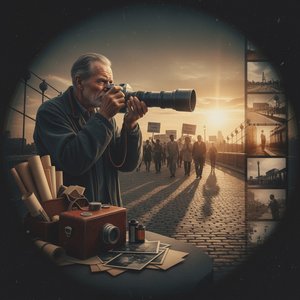
Witnessing History Through Lens & Light: Documentary Photography's Enduring Legacy
Explore the powerful history of documentary photography – from its origins to contemporary masters like Gordon Parks & W. Eugene Smith. Discover how this art form shapes our understanding of society and witness pivotal moments in time.

The Lens of Truth: A Comprehensive History and Legacy of Documentary Photography
Explore the profound history of documentary photography. From early daguerreotypes to social reform movements, discover how the lens captures truth, preserves vanishing cultures, and shapes our global visual narrative through an expert art-historical lens.

Monochrome Visions: Exploring the Aesthetic & Historical Significance of Black & White Photography
Explore the rich history & artistic power of black and white photography. From early techniques to iconic masters like Ansel Adams, discover why monochrome continues to captivate art lovers today. Expert insights for collectors.