التبديل إلى المطبوعات
 اقرأ المزيد







































 بالنسبة للأعمال الفنية أو النسخ المطبوعة التي يتجاوز طول أي من أضلاعها 105 سم (حوالي 41 بوصة)، سيتم شحن الإطار كمجموعة مفككة. تضمن هذه الطريقة سلامة التوصيل وتمنع حدوث أي أضرار أثناء النقل.


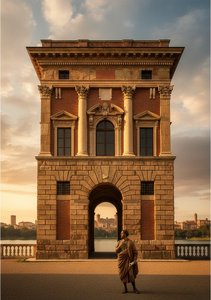
A Window into Renaissance Harmony: Façade (detail) by Leon Battista Alberti
- Subject Matter: This meticulously rendered detail captures the iconic façade of Palazzo Rucellai in Florence, Italy – a building that embodies the very principles of Renaissance architectural design. The painting isn't merely a depiction of stone and brick; it’s an exploration of order, proportion, and the harmonious relationship between human intellect and the natural world.
- Artist’s Vision: Painted by Leon Battista Alberti in 1446, this work represents more than just a commission. Alberti was a pivotal figure in the Renaissance – an architect, theorist, humanist scholar, and artist who sought to codify the rules of beauty and proportion. He believed that architecture should be rooted in mathematical ratios and geometric forms, reflecting divine order.
Technical Brilliance: A Study in Perspective and Light
- Renaissance Technique: Alberti’s masterful use of linear perspective is immediately apparent. The receding lines of the façade create a convincing illusion of depth, drawing the viewer into the heart of the building. Notice how he employs subtle shading – *chiaroscuro* – to model the stone blocks and highlight their textures, adding a remarkable sense of three-dimensionality to what is essentially a two-dimensional surface.
- Materiality: The choice of light-colored stone is crucial. It reflects the Florentine sunlight, enhancing the building’s luminosity and contributing to its overall elegance. Alberti's attention to detail extends beyond mere representation; he sought to capture the *essence* of the material itself.
Symbolism and Context: The Architecture of Humanism
- Architectural Principles: Palazzo Rucellai, designed by Alberti, was a groundbreaking structure that exemplified the humanist ideals of the Renaissance. Its symmetrical design, based on classical Roman precedents, reflected a belief in human reason and potential. The evenly spaced arches and windows were not just functional; they were symbolic representations of order and harmony.
- Historical Significance: Created during a period of immense intellectual and artistic ferment, this painting offers a valuable glimpse into the burgeoning Renaissance spirit. Alberti’s work influenced generations of architects and artists, shaping the course of Western art and architecture for centuries to come. It stands as a testament to the power of observation, mathematical precision, and human creativity.
Emotional Impact & Reproduction
- A Timeless Masterpiece: “Façade (detail)” evokes a sense of serenity, order, and intellectual contemplation. The painting’s harmonious composition invites the viewer to appreciate the beauty of architectural design and the enduring legacy of Renaissance thought.
- OriginalUniqueArt Reproduction: Our hand-painted reproductions capture every nuance of Alberti's original work, ensuring an authentic representation for your home or office. We utilize archival quality materials and skilled artisans to create a stunning piece that will be treasured for generations.
الأسئلة والأجوبة
ما هو الطابع الذي سيضفيه "Façade (detail)" على المكان؟
تتمتع لوحة "Façade (detail)" للفنان ليون باتيستا ألبيرتي بأجواء Elegant، ويُنصح بوضعها في Living Room. والمقصود بالحالة المزاجية هو ما يضفيه العمل الفني على المساحة المحيطة به.
ما هي الغرفة المقترحة لعرض "Façade (detail)"، مع مراعاة لوحة ألوانه؟
بفضل لوحة ألوانه التي تتميز بـ Neutrals، يُنصح بوضع "Façade (detail)" للفنان ليون باتيستا ألبيرتي في Living Room؛ حيث تُعد الألوان أحد الأسباب وراء هذا الاقتراح.
ما هو اللون السائد في "Façade (detail)" للفنان ليون باتيستا ألبيرتي؟
اللون السائد في "Façade (detail)" للفنان ليون باتيستا ألبيرتي هو Ochre to Sepia. ويمثل هذا اللون النغمة الأساسية لمجموعة الألوان المستخدمة.
 معاينة الحجم الواقعي
 إرسال
إرسال مشاركة
 عرض التفاصيل
 دليل الأعمال الفنية للطلاب

 تحميل
تحميل
 قطع مشابهة
 الأشعة السينية
 عرض شرائح متتابع
 Q&A
Q&A الإحصائيات