
 نسخة زيتية
 كل ما يخص Self-Portrait

































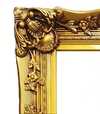
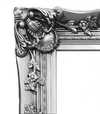

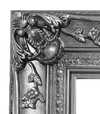


 بالنسبة للأعمال الفنية أو النسخ المطبوعة التي يتجاوز طول أي من أضلاعها 105 سم (حوالي 41 بوصة)، سيتم شحن الإطار كمجموعة مفككة؛ حيث تضمن هذه الطريقة سلامة التوصيل وتمنع حدوث أي أضرار أثناء النقل.


Identification of the Self-Portrait by Lee Krasner
Lee Krasner produced Self-Portrait in 1929. The work emerged during a formative period of her training, intended for submission to the National Academy to secure enrollment in a specific class. This piece represents an early engagement with the academic traditions of the time, even as it signaled her developing individual agency.
The composition features the artist herself, rendered with a defiant expression. She is positioned within a natural setting, surrounded by elements of the outdoors. This specific portrayal captures a sense of personal resolve through the subject's gaze and the organic environment that frames her.
Composition and Visual Elements of the Work
The composition is centered on a young woman positioned within a semi-outdoor setting. Her face occupies a significant portion of the canvas, establishing a direct presence. The background is composed of a window frame, lush greenery, and a weathered wooden barrel. These elements create a sense of intimacy through a close-up view, while the perspective remains somewhat flattened, a characteristic typical of portraiture, with only a slight recession into the background.
Organic lines dominate the visual structure, following the natural contours of the figure and the surrounding foliage. The shapes are predominantly natural, seen in the rounded forms of the plants and the cylindrical volume of the barrel. Diffused lighting defines the scene, casting soft shadows and highlights that emphasize the subject's facial features and the varied textures of the environment.
Technique and Material Application
Executed in oil on canvas, the work demonstrates a technical approach rooted in academic realism while incorporating early impressionistic tendencies. The artist employs layering and careful blending to achieve realistic effects, particularly in the rendering of light and atmosphere. Soft brushstrokes define the subject, creating a sense of intimacy through the subtle modulation of tone.
Texture is articulated through deliberate brushwork rather than heavy impasto. The artist distinguishes between surfaces by varying the application of paint: the walls and background elements possess a suggested roughness, while the skin and clothing are rendered with a smoother, more seamless finish. This tactile differentiation helps establish a sense of depth and physical presence within the semi-outdoor setting.
Historical Context and Artistic Training
The artist’s formal education began at the Women's Art School of Cooper Union, where she acquired foundational discipline in visual arts. This period of rigorous training provided the technical bedrock for her later experiments in abstraction. By the time she produced this work, she had transitioned to the National Academy of Design, where she studied between 1928 and 1932. This academic environment emphasized traditional techniques and anatomical accuracy, skills evident in her early portraiture.
The late 1920s marked a significant shift in the American art landscape. The opening of the Museum of Modern Art in 1929 introduced new modernist perspectives that influenced her developing aesthetic. This work emerged during a formative stage of her career, as she navigated the tension between the structured logic of her academic training and the burgeoning influence of modernism. The painting reflects a moment of transition, captured while she was a student at the National Academy of Design.
Related Works by Lee Krasner
The artist's broader oeuvre demonstrates a continuous evolution of form and scale. In 1949, Krasner produced Untitled, a work that reflects her engagement with the shifting dynamics of the mid-century art scene. This period of her practice often involved a dialogue between structured composition and gestural expression, marking a departure from her earlier academic training.
Later developments in her career are represented by Rising Green, 1972. This work, held in the Metropolitan Museum of Art, exemplifies the stylistic shifts that characterized her later years. Her ability to reinvent her visual language allowed her to move through distinct phases, transitioning from the controlled studies of her youth toward the expansive, organic abstractions seen in her later catalog.
الأسئلة والأجوبة
هل لوحة Self-Portrait مرسومة يدوياً أم مطبوعة؟
مرسومة يدوياً: يقوم رسام محترف بمحاكاة Self-Portrait بالألوان الزيتية على قماش الكتان.
ما الحجم الذي يجب أن أختاره لـ Self-Portrait؟
أبعاد العمل الأصلي هي 76 x 82 cm. تتراوح المقاسات من 30.5 x 32.8 cm (E£12006) إلى 230.8 x 248.8 cm (E£127405)؛ ويوضح الجدول الموجود في هذه الصفحة الخيارات المتاحة وأسعارها.
كم تستغرق عملية التوصيل؟
تستغرق عملية التوصيل من 4 إلى 5 أسابيع، مع خدمة الشحن السريع المجاني لجميع أنحاء العالم؛ كما يتوفر خيار الإنتاج المستعجل في هذه الصفحة. يمكنك إرجاع العمل الفني خلال 100 يوم واسترداد كامل المبلغ دون أي شروط.
ما هي الوسائط التي استخدمها لي كراسنر في عمله Self-Portrait؟
Oil On Canvas
 معاينة الحجم الواقعي

 مشاركة
 مشاركة
 التفاصيل
 بطاقة المعلومات


 تحميل الملف
 قطع مشابهة
 الأشعة السينية
 عرض شرائح
 الأسئلة والأجوبة

 الإحصائيات


