

 معاينة الحجم الحقيقي
 مشاركة
 مشاركة
 التفاصيل

 تحميل الملف
 قطع مشابهة
 الأشعة السينية
 عرض شرائح
The Prisoner
 Oil On Canvas
- WallArt
- Impressionism
 1790
1790- 19th Century
 41.0 x 47.0 cm
 Yale Center for British Art
 عرض المزيد
نسخة زيتية مصنوعة يدوياً
لوحة زيتية مرسومة يدوياً على الكانفاس بالمقاس والإطار الذي تفضله، تُنفذ حسب الطلب على أيدي فنانينا. ( اشترِ نسخة مطبوعة اشترِ الصورة)




P118B $10

P118H $10

P118W $10

P438Z $10

P508JH $12

P508YH $12

P805H $10

P805Z $10

P919BZ $10

P919G $10

P919XJ $10

P959ZH $10

P968JZ $12

W106C $8

W218G $10

W218JH $8

W218Y $10

W307PJ $10

W316G $10

W316PJ $8

W316Y $10

W398PJ $8

W4111J $10

W500HY $15

W500JH $15

W692G $12

W849H $8

W940BG $15

W953PJ $8




اختر من بين أحجامنا المُعدّة مسبقًا والتي تتطابق مع النسب الأصلية للعمل الفني.

يمكنك إدخال أبعادك الخاصة لتناسب إطارًا معينًا أو مساحة محددة. وإذا لم يتطابق الحجم الذي اخترته مع نسب الصورة الأصلية، فسنقوم إما بقص العمل الفني أو توسيع اللوحة بإضافة عناصر مرسومة يدويًا. سيتم إرسال نموذج رقمي إليك للموافقة عليه قبل بدء الإنتاج.
يرجى ملاحظة أن المعاينة على الشاشة لا تعكس عملية القص أو التوسيع الفعلية؛ حيث إن النموذج الرقمي وحده هو الذي سيوضح التكوين النهائي بدقة.
وعلى الرغم من توفر أحجام مخصصة، إلا أننا نوصي باختيار أبعاد من القائمة المحددة مسبقًا للحفاظ على النسب الأصلية للعمل الفني.
بعد إتمام الطلب، سيرسل فريق OriginalUniqueArt.com بريداً إلكترونياً للعميل لطلب التعليمات وتزويده بمعاينة تجريبية (mockup).
توصيل عالمي إلى خلال 3 إلى 4 أسابيع بدلاً من المدة المعتادة البالغة 5 أسابيع. (17 أغسطس). جودة لا تهاون فيها.

شحن سريع ومجاني لجميع أنحاء العالم

قماش كتان عالي الجودة

تأمين شحن شامل

ضمان استرداد الرسوم الجمركية

ضمان مطابقة الألوان الحقيقية

سياسة الإرجاع خلال 60 يومًا (في حالات العيوب فقط)

ضمان استرداد نقدي بنسبة 100%

خصم عند طلب عدة قطع
 خيار الزجاج متاح فقط للمقاسات التي تقل عن 110 سم

The Prisoner
خامة إعادة الإنتاج
مقاس النسخة المطبوعة
-


السعر الإجمالي النهائي
$ 300
وصف العمل الفني
The Enigmatic Gaze Within Industrial Shadows
To stand before Joseph Wright of Derby's "The Prisoner" is to step across the threshold into a moment suspended between confinement and revelation. This masterful work, dating from 1790, does not offer easy answers; rather, it envelops the viewer in an atmosphere thick with mystery and intellectual tension. The composition centers on a solitary figure framed by a stark brick archway—a visual metaphor for passage or entrapment. His gaze, directed outward as if toward an unseen vista beyond the immediate gloom, becomes the focal point of our contemplation. It is a portrait not just of a man, but of the human condition grappling with its own boundaries.
Illuminating the Age of Change
Joseph Wright was a painter inextricably linked to the dawn of the Industrial Revolution. His art possesses an almost scientific precision, reflecting an era obsessed with mechanism, discovery, and the dramatic transformation of man's relationship with his environment. In "The Prisoner," this spirit is palpable. The darkness of the room contrasts sharply with the implied light source beyond the arch, mirroring the Enlightenment’s own tension between established order and burgeoning scientific inquiry. The inclusion of objects—the watchful clock on the wall, the quietly perched bird—are not mere decorative elements; they are silent witnesses to a pivotal moment in history, suggesting that even within apparent stasis, time marches relentlessly forward.
Symbolism of Confinement and Freedom
The symbolism woven into this canvas is rich for deep consideration. The archway itself functions as a powerful trope: it suggests both the passage through a gateway and the physical limitation of a cell. Is the man imprisoned by his circumstances, or is he merely contemplating the nature of freedom from within? The bird, often a symbol of the soul or liberty, adds another layer to this dialectic. These elements invite us, the modern viewer, to project our own anxieties about constraint versus aspiration onto the canvas. It speaks to that universal yearning for what lies just beyond the visible frame.
A Study in Chiaroscuro and Mood
Technically, the painting is a superb exercise in dramatic lighting, or chiaroscuro. Wright masterfully uses deep shadows to heighten the drama, allowing only select areas—the man’s face, the bird, the visible details of the architecture—to catch the light. This technique does more than illuminate; it directs our emotional focus. The overall effect is one of profound introspection. For those who appreciate art that demands contemplation rather than mere admiration, this piece offers a sophisticated visual dialogue about knowledge, restriction, and the enduring spirit.
Bringing the Masterpiece Home
Owning a reproduction of "The Prisoner" allows you to curate an atmosphere of intellectual depth within your own space. Whether placed in a library corner or a study where contemplation is valued, this artwork brings with it the gravitas of history and the mystery of human thought. It serves not just as decoration, but as a sophisticated conversation starter—a piece that whispers tales of scientific fervor and existential questioning across the centuries.
السيرة الذاتية للفنان
The Luminary of Derby: Joseph Wright and the Dawn of the Industrial Age
Joseph Wright, known to history as “Wright of Derby,” was more than a painter; he was a visual philosopher who captured a pivotal moment in human existence. Born in 1734 amidst the burgeoning industrial heartland of England, Wright didn’t merely depict his time—he *illuminated* it, both literally and figuratively. His canvases weren't filled with grand historical narratives or aristocratic portraits alone; they pulsed with the energy of scientific discovery, the drama of enlightenment thought, and the stark beauty of a landscape irrevocably altered by human innovation. He stands as the first major artist to truly grapple with, and celebrate, the spirit of the Industrial Revolution, an era that would redefine civilization itself. His early life in Derby, steeped in the practical world of his father’s legal profession, provided a grounding that perhaps informed his later fascination with precision and observation. Though initially destined for law, young Joseph's inclination towards art proved irresistible, leading him to London at seventeen to study under Thomas Hudson, a prominent portrait painter of the day. This formal training laid a foundation, but it was Wright’s innate curiosity and independent spirit that would ultimately forge his unique artistic path.Chiaroscuro and the Spirit of Inquiry
Wright's technical mastery is immediately apparent in his dramatic use of chiaroscuro, a technique borrowed from Baroque masters like Caravaggio but employed with a distinctly modern sensibility. He wasn’t simply interested in creating visual drama; he used light and shadow to symbolize the unveiling of knowledge, the struggle between darkness and understanding. Consider masterpieces such as *An Experiment on a Bird in the Air Pump* (1768), where candlelight throws stark relief upon the faces of onlookers witnessing a scientific demonstration—a scene brimming with both wonder and anxiety. The painting isn’t just about the experiment itself; it's an exploration of humanity’s burgeoning curiosity, its willingness to probe the mysteries of nature, and the ethical implications of such endeavors. Similarly, *A Philosopher Lecturing on the Orrery* (1766) presents a captivating scene where a miniature solar system is unveiled, illuminating not only the faces of the captivated audience but also the expanding universe of scientific thought. These weren’t isolated incidents; Wright consistently sought subjects that allowed him to explore the intersection of science, philosophy, and human emotion. His style was subtly influenced by Alexander Cozens, particularly in his compositional approaches, yet he remained fiercely independent, forging a visual language uniquely his own.Beyond Portraits: Landscapes and the Romantic Sensibility
While Wright is celebrated for his “candlelight pictures,” to limit him to that single aspect of his oeuvre would be a grave disservice. He was also a gifted landscape painter, capturing the rugged beauty of Derbyshire and beyond with an increasingly Romantic sensibility. Works like *Dovedale by Moonlight* showcase his ability to evoke atmosphere and emotion through subtle gradations of light and shadow, transforming familiar scenes into evocative visions. His landscapes weren’t merely topographical representations; they were imbued with a sense of awe and reverence for the natural world—a sentiment that resonated deeply with the growing Romantic movement. Even in these seemingly tranquil scenes, however, there's often an undercurrent of melancholy or mystery, hinting at the fragility of nature and the inevitability of change. *Rydal Waterfall* (1795), exemplifies this skill, showcasing his mastery of capturing both power and serenity within a single composition.A Legacy Forged in Light and Shadow
Wright’s impact on British art was profound, though perhaps not immediately recognized during his lifetime. He faced some resistance from the established artistic circles, notably declining full membership to the Royal Academy after feeling slighted—a testament to his independent spirit. However, his influence extended beyond formal institutions. Artists like William Pether and John Downman were directly inspired by his techniques, particularly his dramatic use of light and shadow. More broadly, Wright’s work paved the way for a new generation of artists who sought to capture the dynamism and complexity of the modern world. He didn't just paint what he saw; he painted what he *felt*—the excitement, the anxiety, the wonder—of an era on the cusp of transformation. His paintings remain powerful reminders of a time when humanity dared to question everything, to explore the unknown, and to embrace the possibilities of a new age. Today, his works are held in major museums worldwide, ensuring that the luminary of Derby continues to illuminate our understanding of art, science, and the human spirit.- Notable Works: *An Experiment on a Bird in the Air Pump*, *A Philosopher Lecturing on the Orrery*, *Dovedale by Moonlight*.
- Influences: Thomas Hudson, Alexander Cozens, Baroque masters like Caravaggio.
- Key Characteristics: Dramatic chiaroscuro, exploration of scientific themes, Romantic landscapes.

جوزيف رايت
1734 - 1797 , المملكة المتحدة
حقائق سريعة
- أعمال بارزة:
- تجربة على طائر في مضخة الهواء
- فيلسوف يلقي محاضرة
- دوفديل في ضوء القمر
- الاسم الكامل: جوزيف رايت من ديربي
- الجنسية: بريطاني
- الحركة الفنية: الكياروسكورو، الرومانسية
- الفنانون المؤثرون:
- توماس هدسون
- الكسندر كوزنز
- تاريخ الميلاد: 3 سبتمبر 1734
- تاريخ الوفاة: 29 أغسطس 1797
- مكان الميلاد: ديربي، المملكة المتحدة
مقالات ذات صلة

Illuminating Enlightenment: Joseph Wright of Derby's Scientific Vision
Explore the captivating world of Joseph Wright of Derby, a pioneer of Enlightenment art. Discover his masterful chiaroscuro, scientific themes & investment potential. Expert analysis for collectors.
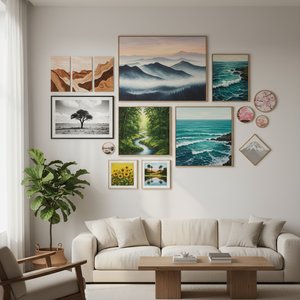
Beyond the Horizon: 10 Landscape Masterpieces for Your Home Decor
Journey through 10 breathtaking landscape paintings by Monet, Van Gogh & more! Explore iconic artworks, artistic techniques & find inspiration for your home decor. Museum-quality reproductions at OriginalUniqueArt.com. Discover all masterpieces on OriginalUniqueArt.com
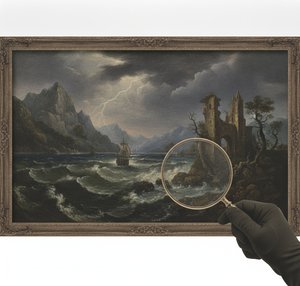
Epic Drama & Dark Vibes: The Ultimate Collector's Guide to Baroque Landscapes
Master the art of drama with our ultimate guide to Baroque landscapes. Discover the power of chiaroscuro, explore legendary masters, and learn how to curate epic, dark-vibe masterpieces for your collection with expert insights from OriginalUniqueArt.

أفضل 10 لوحات طبيعية رومانسية غيرت مسار الفن وجمّلت الديكور | OriginalUniqueArt
اكتشف 10 روائع فنية رسمت مسار الفن الرومانسي! استكشف لوحات فريدريش، مالارد وأكثر. قصص الفنانين، تقنيات الرسم، وجمال المناظر الطبيعية الخلابة. احصل على أعمال فنية عالية الجودة من OriginalUniqueArt.com!

Evocations of Place: A Historical Journey Through Landscape Art
Explore the rich history of landscape art with OriginalUniqueArt. Discover renowned artists, movements like Impressionism & Romanticism, and expert guidance for collecting timeless pieces. Find your perfect serene escape today!


