

 معاينة الحجم الحقيقي
 مشاركة
 مشاركة
 التفاصيل

 تحميل الملف
 قطع مشابهة
 الأشعة السينية
 عرض شرائح
 الإحصائيات
Johannes de Doper vermaant de Farizeeërs, middenpaneel van een drieluik, Jan van Coninxloo (II), 1557
 Early Netherlandish
 1557
1557 209.0 x 202.0 cm
 عرض المزيد
نسخة زيتية مصنوعة يدوياً
لوحة زيتية مرسومة يدوياً على الكانفاس بالمقاس والإطار الذي تفضله، تُنفذ حسب الطلب على أيدي فنانينا. ( التحويل إلى المطبوعات الانتقال إلى الصورة الرقمية)




































اختر من بين أحجامنا المُعدّة مسبقًا والتي تتطابق مع النسب الأصلية للعمل الفني.

يمكنك إدخال أبعادك الخاصة لتناسب إطارًا معينًا أو مساحة محددة. وإذا لم يتطابق الحجم الذي اخترته مع نسب الصورة الأصلية، فسنقوم إما بقص العمل الفني أو توسيع اللوحة بإضافة عناصر مرسومة يدويًا. سيتم إرسال نموذج رقمي إليك للموافقة عليه قبل بدء الإنتاج.
يرجى ملاحظة أن المعاينة على الشاشة لا تعكس عملية القص أو التوسيع الفعلية؛ حيث إن النموذج الرقمي وحده هو الذي سيوضح التكوين النهائي بدقة.
وعلى الرغم من توفر أحجام مخصصة، إلا أننا نوصي باختيار أبعاد من القائمة المحددة مسبقًا للحفاظ على النسب الأصلية للعمل الفني.
بعد إتمام الطلب، سيرسل فريق OriginalUniqueArt.com بريداً إلكترونياً للعميل لطلب التعليمات وتزويده بمعاينة تجريبية (mockup).
توصيل عالمي إلى خلال 3 إلى 4 أسابيع بدلاً من المدة المعتادة البالغة 5 أسابيع. (16 سبتمبر). جودة لا تهاون فيها.

شحن سريع ومجاني لجميع أنحاء العالم

قماش كتان عالي الجودة

تأمين شحن شامل

ضمان استرداد الرسوم الجمركية

ضمان مطابقة الألوان الحقيقية

سياسة الإرجاع خلال 100 يوم (في حالات العيوب فقط)

ضمان استرداد نقدي بنسبة 100%

خصم عند طلب عدة قطع
 خيار الزجاج متاح فقط للمقاسات التي تقل عن 110 سم

Johannes de Doper vermaant de Farizeeërs, middenpaneel van een drieluik, Jan van Coninxloo (II), 1557
خامة إعادة الإنتاج
مقاس النسخة المطبوعة
-


السعر الإجمالي النهائي
$ 450
السيرة الذاتية للفنان
A Legacy of Light and Line: The Life of Jan van Coninxloo II
In the vibrant tapestry of the sixteenth-century Low Countries, few names carry the weight of a true artistic dynasty quite like that of Jan van Coninxloo II. Born in Brussels around 1489, Jan was not merely an individual creator but a vital link in a multi-generational lineage of Flemish masters. As the son of Jan van Coninxloo I, he was immersed from birth in a world where the brush and the palette were the primary languages of storytelling. His early years in Brussels placed him at the heart of a burgeoning Renaissance, a period where the meticulous traditions of the Northern masters began to dance with the new, dramatic possibilities of light and perspective.
The trajectory of his life was one of movement and adaptation, mirroring the shifting political and religious landscapes of Europe. While his roots remained firmly planted in the soil of Brussels, his career saw him navigating the great artistic hubs of the era. His presence in Antwerp around 1550, where he registered with the prestigious Guild of Saint Luke, speaks to a man of significant standing and professional rigor. This period of his life was marked by a profound engagement with the contemporary masters; he moved within circles that included the celebrated Bernard van Orley, whose influence on the Brussels art scene likely informed Jan’s own approach to integrating religious narratives with grander, more complex compositions.
The Mastery of Sacred Narrative and Landscape
To gaze upon a work attributed to Jan van Coninxloo II is to witness a delicate balance between the divine and the earthly. He was a painter who understood that a religious scene gained its emotional potency from the world it inhabited. His works, often executed with exquisite care in oil on panel, frequently featured sacred subjects—such as The Virgin and Child Enthroned or scenes of the Flight into Egypt—not as isolated icons, but as living moments embedded within architectural grandeur or lush, atmospheric landscapes. This ability to weave the spiritual into the tangible is what defines his unique contribution to the South Netherlandish tradition.
His technical prowess was particularly evident in his handling of light and detail. There is a certain luminosity in his compositions that suggests a deep fascination with how sunlight filters through foliage or strikes a stone altar. This mastery allowed him to bridge the gap between the rigid, symbolic landscapes of the earlier Flemish tradition and the more fluid, emotive styles that would eventually pave the way for the Baroque. His works often served as a precursor to the more dramatic chiaroscuro seen in later centuries, using subtle shifts in tone to guide the viewer's eye through complex, multi-layered scenes.
A Dynasty of Visionaries
The historical significance of Jan van Coninxloo II extends far beyond his individual canvases; he was the architect of a family legacy that would shape European art for decades. His marriage to Elisabeth Hasaert produced a generation of artists who would carry his technical foundations into new territories and styles. Among his most notable descendants was his son, Gillis van Coninxloo III, a celebrated landscape painter who would become a titan of the late sixteenth century.
Through his children, Jan’s influence rippled through the annals of art history:
- Gillis van Coninxloo III: A master of the forest landscape, carrying the family's botanical precision into the next era.
- Catharina and Hans van Coninxloo: Members of a family unit that functioned as a cohesive force within the Flemish guild system.
As the religious tensions of the Dutch Revolt began to reshape the borders of Europe, Jan’s later years likely saw him navigating the complexities of relocation, perhaps eventually finding refuge in Emden, Germany. Though his life ended around 1555, the echoes of his brushwork remained. He stands as a pivotal figure—a master who took the established traditions of his ancestors and infused them with the burgeoning energy of a new age, ensuring that the Coninxloo name would remain synonymous with the beauty and complexity of the Flemish spirit.

jan van coninxloo (ii)
1489 - 1555 , Belgium
حقائق سريعة
- Artistic Movement Or Style: High Renaissance, Mannerism
- Artists Or Movements Influenced By This Artist:
- Baroque
- Rococo
- Artists Who Influenced This Artist:
- Lorenzo Costa
- Francesco Francia
- Andrea Mantegna
- Leonardo da Vinci
- Date Of Birth: August 1489
- Date Of Death: March 1534
- Full Name: Antonio Allegri da Correggio
- Nationality: Italian
- Notable Artworks:
- Assumption of the Virgin
- Jupiter and Io
- Vision St. John Patmos
- Place Of Birth: Correggio, Italy
مقالات ذات صلة

أعمال ريمبراند فان راين الخالدة: 25 تحفة فنية آسرة لديكور منزلك
اكتشف 25 تحفة فنية لريمبراند فان راين، رائد العصر الذهبي الهولندي. استكشف قصص لوحاته الشهيرة وتقنيات الرسم المذهلة. احصل على إعادة إنتاج عالية الجودة لديكور منزلك الفاخر على OriginalUniqueArt.com

Hugo van der Goes: Devotion, Innovation & the Psychological Depth of Early Netherlandish Painting
Explore the revolutionary art of Hugo van der Goes – a master of Early Netherlandish painting renowned for his dramatic realism, psychological depth & profound influence on Renaissance artists. Discover his iconic works and lasting legacy.

Jan van Eyck: Innovation, Symbolism & the Dawn of Early Netherlandish Painting
Explore the revolutionary art of Jan van Eyck! Discover his groundbreaking oil painting techniques, hidden symbolism, and lasting impact on the Early Netherlandish Renaissance. A deep dive for art enthusiasts.
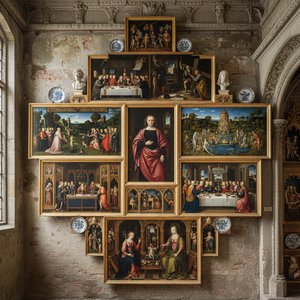
Early Netherlandish Masters: 10 Paintings That Revolutionized Art & Decor
Journey into the Early Netherlandish Renaissance! Explore 10 iconic paintings by Jan van Eyck, Rogier van der Weyden & more. Discover stunning detail, symbolism, and oil painting techniques. Find museum-quality art reproductions for your home at OriginalUniqueArt.com.

Early Netherlandish Masters: 10 Paintings That Revolutionized Art & Decor
Journey into the world of Early Netherlandish painting! Explore 10 masterpieces by Jan van Eyck, Rogier van der Weyden & more. Discover stunning detail, symbolism & Renaissance art for your home decor. Find museum-quality reproductions on OriginalUniqueArt.com