

 معاينة الحجم الواقعي
 إرسال
إرسال مشاركة
 عرض التفاصيل
 دليل الأعمال الفنية للطلاب

 تحميل
تحميل
 قطع مشابهة
 الأشعة السينية
 عرض شرائح متتابع
 الإحصائيات
Landscape
 Oil On Copper
- Baroque Landscape
 24.0 x 19.0 cm
 متحف برادو
 اقرأ المزيد
احصل على صورة رقمية عالية الدقة ومعزّزة، بجودة تفوق بكثير المعاينة عبر الإنترنت.
يتم إعداد كل ملف بعناية فائقة على أيدي متخصصينا باستخدام أدوات متقدمة ولمسات يدوية خبيرة، لضمان تمتع كل صورة بوضوح استثنائي، ودقة لونية متناهية، وتفاصيل دقيقة.
يتم تسليم الملف النهائي عبر البريد الإلكتروني في غضون 72 ساعة، وهو مُحسَّن للاستخدام الفوري في المجالات المهنية والتحريرية ومجالات الطباعة؛ وهي ذات الجودة التي تعتمد عليها كبرى استوديوهات التصميم ودور النشر والمعارض الفنية المرموقة.
صورة رقمية
حمّل ملفاً عالي الدقة للعرض الشخصي، والطباعة، والمشاريع الإبداعية. ( التبديل إلى المطبوعات اطلب نسخة مرسومة يدويًا)
مزايا مُضمّنة مع كل طلب صورة رقمية
خدمة تسليم رقمي احترافية ومضمونة
عندما تختار OriginalUniqueArt.com، فأنت لا تحصل على مجرد صورة فحسب، بل ستحصل على عمل فني رقمي مُحسّن باحترافية، صُمم بدقة متناهية ومصحوب بضمان الرضا. إليك كل ما يتضمنه طلبك تلقائياً:

تسليم سريع عبر البريد الإلكتروني
ستصلك ملفات صورك الرقمية عالية الدقة عبر البريد الإلكتروني في غضون 72 ساعة من إتمام الطلب - لتكون جاهزة للاستخدام الفوري.

ملف رقمي مُعزز بالذكاء الاصطناعي
يتم تحسين عملك الفني باحترافية باستخدام أدوات الذكاء الاصطناعي المتقدمة والتحرير اليدوي، لضمان أقصى درجات التفاصيل والوضوح ودقة الألوان.

إعادة إرسال مجانية مدى الحياة
هل حذفت ملفك أو فقدته عن طريق الخطأ؟ لا تقلق - سنعيد إرساله إليك في أي وقت، مجاناً.

بدون رسوم استيراد - على الإطلاق
استمتع بأعمالك الفنية فوراً دون أي رسوم جمركية أو ضرائب أو مصاريف شحن - فالتحميلات الرقمية دائماً ما تكون معفاة من الضرائب.

ضمان دقة الألوان
نضمن لك دقة انعكاس الألوان الأصلية في صورتك الرقمية بأقصى قدر ممكن، وذلك باستخدام أدوات احترافية وتقنيات متطورة لإدارة الألوان.

ضمان الرضا لمدة 100 يوم
إذا لم تكن راضياً عن صورتك الرقمية، فسنقوم بتعديلها أو استرداد 100% من قيمتها خلال 100 يوم - دون طرح أي أسئلة.

ضمان استعادة الأموال بنسبة 100%
لم تكن راضياً؟ استرد كامل المبلغ خلال 100 يوم من استلام ملفك الرقمي - دون طرح أي أسئلة.

خصومات الطلبات الكبيرة
اشتري 3 صور، ووفر 10% - اشتري 5، ووفر 15% - اشتري +10، ووفر 20%. مثالية للمشاريع الإبداعية، والمعارض، والوكالات.
A Flemish Master’s Woodland Reverie: Gillis van Coninxloo's “Landscape”
Gillis van Coninxloo’s “Landscape,” a captivating oil on copper panel, transports the viewer to a realm of serene contemplation within a meticulously rendered Flemish forest. Painted around 1598, this work stands as a pivotal example of the artist’s mastery in capturing the atmospheric depth and intricate detail characteristic of the early 16th-century Golden Age. More than just a depiction of nature, it's an invitation to lose oneself within a carefully constructed world of light, shadow, and subtle symbolism – a testament to van Coninxloo’s profound understanding of both landscape painting and the human experience.
The scene unfolds before us with remarkable realism. A dense thicket of trees dominates the foreground, their leaves rendered with an almost obsessive attention to detail; each vein, each curl of bark, is painstakingly observed and faithfully reproduced. These trees aren’t merely static elements; they create a palpable sense of depth, drawing the eye into the heart of the forest. Beyond them, a modest collection of buildings – likely farmhouses or small dwellings – nestles amongst the foliage, suggesting a quiet rural existence. The architecture is understated yet solid, reflecting a pragmatic approach to building within this natural setting. In the distance, a formidable castle rises above the horizon, its imposing silhouette anchoring the composition and hinting at notions of power, protection, and perhaps even isolation.
The Alchemy of Light and Shadow: Technique and Style
Van Coninxloo’s technical skill is immediately apparent in his masterful use of oil on copper. This medium allowed for a remarkable level of detail and luminosity – the surface retains a subtle sheen that enhances the richness of the colors and creates an almost three-dimensional effect. The artist employs a technique known as “chiaroscuro,” skillfully manipulating light and shadow to sculpt the forms and create a dramatic sense of depth. Notice how the sunlight filters through the trees, dappling the ground in pools of brightness while simultaneously casting deep shadows beneath the foliage. This interplay of light and dark isn’t merely decorative; it imbues the scene with a palpable atmosphere – a feeling of both tranquility and mystery.
Stylistically, “Landscape” aligns itself with the Flemish tradition of landscape painting, yet van Coninxloo departs from some of the more rigid conventions of the time. While influenced by the Northern Mannerist style—characterized by its emphasis on detail and symbolic imagery—he introduces a greater sense of naturalism and emotional resonance. The composition is carefully balanced, creating a harmonious whole that invites contemplation. The muted color palette – dominated by greens, browns, and grays – contributes to the overall feeling of serenity and timelessness.
A Window into 16th-Century Life and Belief
To fully appreciate “Landscape,” it’s important to consider its historical context. Painted during a period of religious upheaval and political instability in the Netherlands, this work reflects both the anxieties and the enduring values of the era. The castle, for instance, can be interpreted as a symbol of authority – whether representing secular power or divine protection. The humble dwellings nestled within the forest suggest a connection to the land and a reverence for rural life. Furthermore, the dense woodland itself has long been associated with themes of solitude, introspection, and the spiritual realm.
Interestingly, this painting was originally housed in the Museo del Prado in Madrid, Spain, a testament to its enduring appeal across national boundaries. The artist’s biography reveals a fascinating journey – from Antwerp to Germany and eventually Amsterdam—reflecting the shifting political landscape of the time. His work served as a bridge between artistic styles, incorporating elements of Mannerism while embracing the burgeoning realism of the Dutch Golden Age.
A Timeless Masterpiece: Reproduction and Inspiration
Reproductions of “Landscape” capture only a fraction of its original impact. The subtle nuances of light, texture, and atmosphere are difficult to replicate fully, but OriginalUniqueArt’s hand-painted reproductions strive to honor the artist's vision with remarkable fidelity. This piece offers an exceptional opportunity for interior designers seeking to evoke a sense of tranquility and connection to nature – imagine it adorning a study or a living room, providing a focal point that invites contemplation. Collectors will find “Landscape” to be a valuable addition to any art collection, representing a significant moment in the history of Flemish landscape painting.
For further exploration, we encourage you to visit the linked resources:
- Wikipedia Entry on Gillis van Coninxloo
- The Metropolitan Museum of Art’s “Wooded Landscape”
- OriginalUniqueArt's Gillis van Coninxloo Forest Landscape
الأسئلة والأجوبة
كيف يمكن وصف الحالة المزاجية لـ "Landscape" للفنان جيليس فان كونينكلو؟
تتمثل الحالة المزاجية العامة لـ "Landscape" للفنان جيليس فان كونينكلو في Calm. وتصف هذه الحالة الأجواء العامة للعمل الفني.
ما هي الوسائط المستخدمة في تنفيذ "Landscape" للفنان جيليس فان كونينكلو؟
تعتمد التقنية المستخدمة في "Landscape" للفنان جيليس فان كونينكلو على Oil On Copper. وتهدف النسخ المطبوعة إلى محاكاة مظهر هذه التقنية.
ما هي التقنية والأبعاد الخاصة بـ "Landscape" للفنان جيليس فان كونينكلو؟
أُنجزت لوحة "Landscape" باستخدام Oil On Copper، وتبلغ أبعادها 24 x 19 cm في شكلها الأصلي.
سيرة الفنان
A Master of the Verdant Realm
Gillis van Coninxloo stands as a pivotal figure in the evolution of Northern landscape art, serving as a vital bridge between the intricate Mannerist traditions and the burgeoning atmospheric depth of the early Baroque. Born in Antwerp, Belgium, his life was deeply intertwined with the rich artistic lineage of the Low Countries. The son of a painter, he was immersed in a world where craftsmanship and natural observation were paramount. His early training under masters such as Pieter Coecke van Aelst the Younger and Lenaert Kroes provided him with a rigorous foundation, but it was his time working in the workshop of Gillis Mostaert that truly allowed his talent to flourish, permitting him to contribute to professional works while honing his unique vision.
His journey was one of movement and expansion, reflecting the shifting political and cultural tides of the era. While his career found its roots in Antwerp, the latter portion of his life saw him traversing much of Europe, working in Germany and eventually settling in the Dutch Republic. This nomadic existence allowed his style to absorb various regional influences, ultimately contributing to a sophisticated development of the forest landscape. He became renowned for his ability to transform a mere depiction of woodland into a profound sensory experience, where the viewer is not merely looking at trees, but is invited to step into a living, breathing ecosystem.
The Alchemy of Light and Forest
The true brilliance of Coninxloo lies in his unparalleled mastery of the forest landscape. He possessed a singular ability to manipulate light and shadow—a technique often associated with chiaroscuro—to sculpt the dense thickets and intertwining branches that define his compositions. In works such as his Forest Landscape, one can observe an almost obsessive attention to detail; every vein of a leaf and every texture of bark is rendered with meticulous care. He utilized the medium of oil on panel and copper to achieve a luminous quality, allowing light to filter through a canopy of various greens, creating a sense of atmospheric depth that feels both tangible and ethereal.
Beyond the mere technical execution, his landscapes are imbued with a sense of narrative and quiet symbolism. A winding path might lead the eye toward a distant, humble village or an imposing castle on the horizon, suggesting themes of isolation, protection, or the coexistence of civilization and the wild. His work captures a transition in art history where the landscape ceased to be a mere backdrop for human drama and instead became the protagonist itself. Through his careful construction of light, shadow, and depth, Coninxloo created worlds that invite serene contemplation, leaving an indelible mark on the development of the Dutch and Flemish Golden Age.
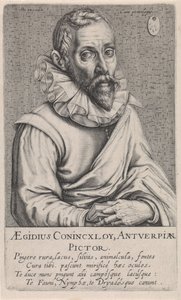
جيليس فان كونينكلو
1544 - 1606 , إيطاليا