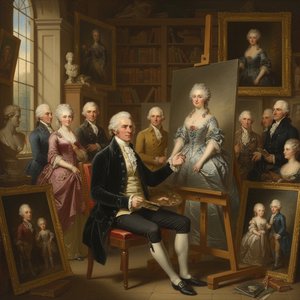
نسخة زيتية
 كل ما يخص Peter Romney







































 بالنسبة للأعمال الفنية أو النسخ المطبوعة التي يتجاوز طول أي من أضلاعها 105 سم (حوالي 41 بوصة)، سيتم شحن الإطار كمجموعة مفككة؛ حيث تضمن هذه الطريقة سلامة التوصيل وتمنع حدوث أي أضرار أثناء النقل.


The Enigmatic Figure: An Exploration of George Romney's "Unknown Man"
George Romney’s 1765 portrait, often referred to as “Unknown Man,” is far more than a simple likeness. It’s a carefully constructed tableau of Georgian society, brimming with subtle gestures and intellectual curiosity. Painted during a pivotal period of artistic and social change in Britain, the work offers a rare glimpse into the mind of a man contemplating his place within a rapidly evolving world. The painting depicts a gentleman, dressed in the fashionable attire of the era – a dark blue jacket, waistcoat, breeches, and buckled shoes – seated at an easel before a drafting table laden with geometric diagrams. His gaze is direct, almost challenging, as he turns to face the viewer, inviting us into his private thoughts.
The initial impression might be one of formality, but closer inspection reveals layers of complexity. Romney masterfully employs chiaroscuro – the dramatic contrast between light and shadow – to sculpt the figure’s form and draw attention to key details. The subtle shading around the eyes suggests a contemplative mood, while the precise rendering of his hands, poised over the drafting tools, speaks volumes about his intellectual pursuits. The background is deliberately muted, focusing entirely on the subject and reinforcing the sense of intimacy within the scene.
A Study in Georgian Intellectualism
Romney’s “Unknown Man” isn't merely a portrait; it’s a visual argument about the nature of art itself. The diagrams on the drafting table, reminiscent of mathematical principles and architectural designs, hint at a debate taking place – a discussion between Romney’s brothers, Peter and James, regarding the theoretical foundations of painting. Peter, depicted gesturing towards the geometric forms, advocates for a rational, structured approach to artistic creation, drawing parallels with the precision of mathematics and design. James, standing behind him, counters this argument by pointing to a classical bust, suggesting that true artistry should be rooted in tradition and precedent – a reverence for the masters of antiquity.
This internal dialogue is brilliantly captured through Romney’s skillful use of composition and gesture. The brothers' postures and expressions convey their differing viewpoints with remarkable subtlety. The painting reflects the broader intellectual currents of the Georgian era, a time marked by an intense interest in reason, science, and classical learning. It was a period where artists were grappling with questions about the role of art in society and the relationship between beauty, truth, and knowledge.
Technique and Context: Romney’s Signature Style
Romney's technique is characterized by its remarkable realism and psychological depth. He possessed an extraordinary ability to capture not just the outward appearance of his subjects but also their inner lives. His portraits were renowned for their immediacy and emotional resonance, a quality that quickly established him as one of the most sought-after artists of his day.
The painting’s provenance is significant. It was part of the collection of Sir George Beaumont, a prominent figure in Georgian society and a patron of the arts. Beaumont's collection reflected his own intellectual interests, showcasing works that celebrated reason, learning, and classical ideals. The portrait’s journey through subsequent collections underscores its enduring appeal as a symbol of Georgian sophistication and artistic achievement.
A Portrait of Quiet Contemplation
Ultimately, “Unknown Man” is a poignant meditation on the complexities of human experience. It invites us to consider not just the subject's identity but also his thoughts, feelings, and aspirations. Romney’s masterful handling of light, shadow, and gesture creates a powerful sense of intimacy, drawing us into this quiet moment of intellectual reflection. It remains a compelling testament to the artist’s skill and a valuable window into the social and cultural landscape of Georgian England – a timeless image that continues to resonate with viewers today.
الأسئلة والأجوبة
هل لوحة Peter Romney مرسومة يدوياً أم مطبوعة؟
مرسومة يدوياً: يقوم رسام محترف بمحاكاة Peter Romney بالألوان الزيتية على قماش الكتان.
ما الحجم الذي يجب أن أختاره لـ Peter Romney؟
تتراوح المقاسات من 34.7 x 28.9 cm (E£10780) إلى 240.9 x 200.6 cm (E£95513)؛ ويوضح الجدول الموجود في هذه الصفحة الخطوات الأساسية وأسعارها.
كم تستغرق عملية التوصيل؟
تستغرق عملية التوصيل من 4 إلى 5 أسابيع، مع خدمة الشحن السريع المجاني لجميع أنحاء العالم؛ كما يتوفر خيار الإنتاج المستعجل في هذه الصفحة. يمكنك إرجاع العمل الفني خلال 100 يوم واسترداد كامل المبلغ دون أي شروط.
أين توجد النسخة الأصلية من Peter Romney؟
النسخة الأصلية ضمن مجموعة المعرض الوطني للصور في لندن.
ما هي الوسائط التي استخدمها جورج رومني في عمله Peter Romney؟
Acrylic On Canvas
 معاينة الحجم الواقعي

 مشاركة
 مشاركة
 التفاصيل
 ورقة الحقائق


 تحميل الملف
 قطع مشابهة
 الأشعة السينية
 عرض شرائح
 الأسئلة والأجوبة

 الإحصائيات