التبديل إلى نسخة مطبوعة
 عرض المزيد







































 بالنسبة للأعمال الفنية أو النسخ المطبوعة التي يتجاوز طول أي من أضلاعها 105 سم (حوالي 41 بوصة)، سيتم شحن الإطار كمجموعة مفككة؛ حيث تضمن هذه الطريقة سلامة التوصيل وتمنع حدوث أي أضرار أثناء النقل.


A Vision of Artistic Intellect
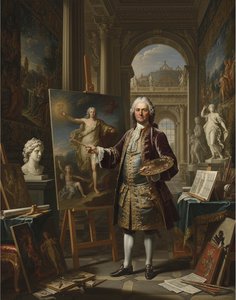
In the quiet, dignified presence of François Hubert Drouais' 1758 masterpiece, Portrait of Edmé Bouchardon, we encounter more than just a likeness; we enter the very mind of the Enlightenment. This exquisite oil on canvas serves as a profound window into the life of one of France’s most celebrated sculptors, capturing not merely his physical features but the very essence of his creative spirit. As the viewer approaches this portrait, they are immediately struck by an aura of intellectual contemplation and a sense of dignified repose that seems to emanode from the sitter himself. Drouais, a master of the Rococo era, transcends the boundaries of traditional portraiture to present a narrative of dedication, where every brushstroke contributes to a larger story of artistic legacy and cultural significance.
The composition is a triumph of classical balance and subtle sophistication. Positioned slightly off-center within an ornate, sculptural chair, Bouchardon gazes toward the viewer with an expression that invites deep reflection. Drouais employs a masterful use of chiaroscuro, allowing light to wash across the subject's face from the left, carving out his features with a soft yet commanding dimensionality. This interplay of light and shadow does more than create depth; it imbues the scene with a psychological weight, highlighting the textures of his powdered wig and the crisp white of his shirt cuffs against a somber, atmospheric background. The deliberate arrangement of the sitter alongside sculptural elements on a nearby pedestal serves as a silent testament to his vocation, grounding the portrait in the tangible reality of his craft.
The Language of Symbolism and Technique
Beyond the surface beauty lies a rich tapestry of symbolism that speaks to the cultural fervor of 18th-century France. The inclusion of sculptures prominently displayed within the frame is no mere decorative choice; these objects act as emblems of Bouchardon’s identity, anchoring his status as a titan of sculpture. Through these elements, Drouais elevates the portrait from a personal study to a celebration of craftsmanship and the intellectual currents of the Enlightenment. The warm, harmonious palette—dominated by rich browns, deep reds, and soft beiges—creates an atmosphere of timeless elegance, making the piece feel both intimately personal and historically monumental.
For the discerning collector or interior designer, this artwork offers a rare opportunity to integrate a piece of history into a contemporary space. The technical prowess displayed in Drouais' meticulous blending of brushstrokes creates a seamless transition of tones that lends the painting a lifelike, breathing quality. Whether placed in a grand library, a formal study, or as a focal point in a sophisticated living area, this reproduction brings with it an air of academic prestige and aesthetic grace. It is a work that does not merely decorate a wall but enriches the very soul of a room, offering a continuous dialogue between the grandeur of the past and the refined tastes of the present.
الأسئلة والأجوبة
ما هي التقنية المستخدمة في صنع "EDME BOUCHARDON"؟
تعتمد التقنية المستخدمة في "EDME BOUCHARDON" للفنان فرانسوا هوبير دورويه على Oil On Canvas، وتهدف النسخ المطبوعة إلى محاكاة مظهر هذه التقنية.
ما هو المكان والاستخدام الموصى به لـ "EDME BOUCHARDON"؟
يُقترح استخدام "EDME BOUCHARDON" لـ Accent، والمساحة الموصى بها هي Living Room.
إلى أي حركة فنية ينتمي العمل "EDME BOUCHARDON" للفنان فرانسوا هوبير دورويه؟
ينتمي العمل "EDME BOUCHARDON" إلى مدرسة Neoclassicism، وهي المدرسة التي تمثل التقليد الفني الذي يندرج ضمنه هذا العمل.
 معاينة الحجم الواقعي
 مشاركة
 مشاركة
 التفاصيل
 دليل
دليل

 تحميل الملف
 قطع مشابهة
 الأشعة السينية
 عرض شرائح
 Q&A
Q&A الإحصائيات