
 معاينة الحجم الواقعي
 مشاركة
 مشاركة
 التفاصيل
 دليل
دليل

 تحميل الملف
 قطع مشابهة
 الأشعة السينية
 عرض شرائح
 الأسئلة والأجوبة
 الإحصائيات
Cocolo

- 92.0 x 73.0 cm


 عرض المزيد
طباعة جيلي / مطبوعات فنية
طباعة جيكلي أو كانفاس بجودة المتاحف، مع سرعة في التنفيذ وخيارات متنوعة للتشطيب. ( شراء لوحة مرسومة يدويًا الانتقال إلى الصورة الرقمية)




P118B E£10

P118H E£10

P118W E£10

P438Z E£10

P508JH E£12

P508YH E£12

P805H E£10

P805Z E£10

P919BZ E£10

P919G E£10

P919XJ E£10

P959ZH E£10

P968JZ E£12

W106C E£8

W218G E£10

W218JH E£8

W218Y E£10

W307PJ E£10

W316G E£10

W316PJ E£8

W316Y E£10

W398PJ E£8

W4111J E£10

W500HY E£15

W500JH E£15

W692G E£12

W849H E£8

W940BG E£15

W953PJ E£8




اختر من بين أحجامنا المُعدّة مسبقاً والتي تتوافق مع النسب الأصلية للعمل الفني.

أدخل العرض والارتفاع المطلوبين ليتناسب المقاس مع إطارك أو جدارك. يرجى الملاحظة أن المطبوعة يمكن قصها فقط ولا يمكن تكبيرها لتتجاوز أبعاد الصورة الأصلية، لذا فإن اختيار مقاس بأبعاد مختلفة سيؤدي إلى فقدان جزء من الصورة. سنرسل لك نموذجاً رقمياً تجريبياً لاعتماده قبل البدء في عملية الطباعة. الصورة المعروضة في هذه الصفحة لا توضح شكل القص الفعلي — النموذج التجريبي فقط هو ما يظهر ذلك بدقة.
توصيل عالمي إلى خلال أسبوعين بدلاً من المدة القياسية البالغة 4/5 أسابيع. (11 نوفمبر)

شحن سريع ومجاني لجميع أنحاء العالم

قماش كتان عالي الجودة

تأمين شامل على الشحن

ضمان استرداد الرسوم الجمركية

ضمان مطابقة الألوان الحقيقية

سياسة الإرجاع خلال 100 يوم (في حالات العيوب فقط)

ضمان استرداد نقدي بنسبة 100%

خصم عند طلب كميات
 خيار الزجاج متاح فقط للمقاسات التي تقل عن 110 سم

Cocolo
طباعة جيلي / مطبوعات فنية
مقاس النسخة المطبوعة
-


إجمالي السعر النهائي
E£ 4265
The Enigmatic Gaze of Cocolo
Francis Picabia’s Cocolo, painted in 1938, immediately draws the viewer into a realm suspended between dream logic and sharp artistic wit. This oil on canvas piece is not merely a portrait; it is an encounter with mystery itself. The subject—a woman whose long, dark hair cascades forward, partially obscuring her features—commands attention through its sheer enigmatic quality. Her downward gaze suggests introspection, perhaps contemplation of something just beyond the frame's edge, inviting us, the observers, to lean in and decipher what holds her focus. The entire composition pulses with a quiet, almost melancholic energy that belies the painting’s vibrant, if slightly jarring, Dadaist undercurrent.
Dada Echoes and Kitsch Allure
To understand Cocolo is to appreciate its place within the tumultuous currents of early 20th-century avant-garde art. While Picabia's career spanned Cubism and Surrealism, this work settles comfortably into a kitsch Dadaist sensibility. This style allows for an embrace of the seemingly trivial alongside profound artistic commentary. The inclusion of the striking red ribbon around her neck serves as one such focal point—a deliberate splash of saturated color against the softer tones of the canvas. It acts like a visual exclamation mark, drawing the eye and perhaps symbolizing a constraint, a declaration, or simply a fashionable accessory within the chaos of modern life that Picabia so keenly observed.
Technique and Visual Texture
The mastery evident in this piece lies in its handling of oil paint on canvas. One can almost feel the texture beneath the surface—the deliberate brushstrokes that build up the illusion of fabric, hair, and skin. The technique is sophisticated enough to render a sense of depth while maintaining the flatness and playful artificiality inherent to Dadaism. For those considering a reproduction for your space, understanding this interplay between polished finish and raw artistic gesture is key; it promises an object that feels both historically significant and immediately decorative.
Symbolism and Emotional Resonance
The symbolism within Cocolo remains wonderfully ambiguous, which is precisely its strength. The veil of hair suggests the mystery surrounding female identity or perhaps the unknowable depths of the subconscious. Coupled with the downward gaze, the painting evokes a sense of private moment—a pause in the relentless march of history that Picabia himself navigated so brilliantly through his own multifaceted career. It speaks to themes of observation, concealment, and the beauty found in moments of quiet self-reflection. Owning this piece is acquiring not just art, but a conversation starter steeped in intellectual curiosity.
Integrating Art into Living Space
For interior design enthusiasts, Cocolo offers unparalleled depth. Its slightly theatrical, yet intimate scale (92 x 73 cm), makes it perfect for anchoring a sophisticated gallery wall or lending an unexpected focal point to a richly decorated drawing-room. It pairs beautifully with furnishings that have character—perhaps velvet upholstery or antique wood—allowing the painting’s vibrant red accent and its complex narrative to interact dynamically with your chosen décor, transforming a mere room into a curated experience.
الأسئلة والأجوبة
هل يمكنني معاينة "Cocolo" للفنان فرانسيس بيكايا على جداري الخاص قبل الشراء؟
يمكنك معاينة "Cocolo" للفنان فرانسيس بيكايا على جدارك الخاص عبر صفحة معاينة بتقنية الواقع المعزز الخاصة بالعمل الفني، وذلك باستخدام تقنية الواقع المعزز على جهاز متوافق.
إلى أي مرحلة من مسيرة فرانسيس بيكايا الفنية ينتمي العمل "Cocolo"؟
ينتمي العمل "Cocolo" إلى الفترة Dada period من مسيرة فرانسيس بيكايا المهنية، مما يربط هذا العمل بمراحل تطور الفنان الفني.
ما هي إعدادات الطباعة المقترحة لـ "Cocolo" للفنان فرانسيس بيكايا؟
يُنصح بطباعة "Cocolo" للفنان فرانسيس بيكايا بحجم Medium وبوضعية Portrait.
السيرة الذاتية للفنان
A Life Forged in Avant-Garde Fire: The World of Francis Picabia
Francis Picabia, a name synonymous with the restless spirit of early 20th-century art, was more than just a painter; he was a provocateur, a poet, a typographer, and a relentless explorer of artistic boundaries. Born in Paris in 1879 to a French mother and a Cuban father steeped in diplomatic circles, Picabia’s life was marked by both privilege and a profound dissatisfaction with convention. This duality fueled his artistic journey, propelling him through Cubism, Dada, Surrealism, and beyond, leaving an indelible mark on the landscape of modern art. His early years were shadowed by tragedy – the loss of his mother to tuberculosis when he was just five – but also nurtured by a father who encouraged his burgeoning talent. Inheriting a substantial fortune allowed Picabia the freedom to dedicate himself entirely to artistic pursuits, a luxury that enabled him to relentlessly experiment and challenge established norms. He wasn’t merely interested in *what* art looked like; he questioned its very purpose and meaning.
From Impressionistic Beginnings to Cubist Revolution
Picabia's initial forays into the art world were rooted in the prevailing styles of the time, particularly Impressionism. He painted Parisian landscapes and riverbanks with a technical proficiency that nonetheless left him feeling unfulfilled. Critics found his work derivative, lacking originality, prompting a crucial turning point. This dissatisfaction spurred him to seek new avenues of expression, leading him towards the revolutionary ideas brewing within the Cubist movement around 1909. Joining the Puteaux Group – a collective including Marcel Duchamp and Guillaume Apollinaire – proved pivotal. He immersed himself in the deconstruction of form, the fragmentation of perspective, and the exploration of geometric abstraction. This period saw a significant shift in his aesthetic, moving away from representational accuracy towards a more conceptual approach to painting. His canvases began to pulse with a new energy, reflecting the intellectual ferment of the era. The influence of Duchamp was particularly strong, fostering a shared spirit of iconoclasm and a willingness to dismantle artistic traditions.
Dada’s Provocateur: Machines, Satire, and the Rejection of Reason
The outbreak of World War I served as a catalyst for Picabia's most radical phase – his embrace of Dadaism. Disgusted by the senseless violence and societal hypocrisy he witnessed, he rejected reason, logic, and traditional artistic values altogether. A move to New York in 1915 placed him at the heart of an emerging American Dada scene alongside Duchamp and Man Ray. It was here that Picabia truly honed his unique brand of Dadaist expression. He began creating a series of “machine drawings,” depicting fantastical mechanical contraptions – often imbued with sexual undertones – that served as biting critiques of modern society’s obsession with technology and industrialization. These works weren't simply depictions of machines; they were allegories for the dehumanizing forces at play in the world around him. His satirical wit, combined with a masterful command of line and form, made these drawings particularly potent. He published *The Little Review*, a Dadaist journal that further disseminated his provocative ideas and challenged conventional artistic norms. Universal Prostitution, a complex drawing created during this period, exemplifies his willingness to confront taboo subjects and dismantle societal expectations.
A Shifting Kaleidoscope: Surrealism and Beyond
Picabia’s artistic journey was characterized by constant evolution and a refusal to be bound by the limitations of tradition. While deeply involved with Dada, he briefly flirted with Surrealism in the 1920s, exploring the realm of dreams and the subconscious. However, even this association proved temporary. He quickly grew disillusioned with what he perceived as the rigid dogma of the Surrealist movement, preferring to maintain his independence and continue charting his own course. Throughout the latter part of his career, Picabia continued to experiment with various styles and techniques, incorporating elements of figuration, abstraction, and even transparency into his work. His later paintings often featured biomorphic forms and a vibrant palette, reflecting a renewed interest in organic shapes and sensual textures. He remained a restless innovator until his death in 1953, leaving behind a body of work that continues to challenge and inspire artists today.
Legacy: A Pioneer of Modern Artistic Freedom
Francis Picabia’s influence on modern art is undeniable. His relentless experimentation, his rejection of convention, and his willingness to embrace contradiction paved the way for generations of artists who followed. He was a true pioneer of artistic freedom, demonstrating that art could be anything – a political statement, a philosophical inquiry, a personal expression, or simply a playful exploration of form and color. His work anticipated many of the key developments in 20th-century art, from Pop Art to Conceptualism. He challenged the very definition of what constituted “art,” forcing viewers to question their own assumptions and preconceptions. Today, Picabia’s paintings are celebrated for their intellectual rigor, their visual dynamism, and their enduring relevance. His legacy lies not only in his individual masterpieces but also in his unwavering commitment to artistic innovation and his refusal to be bound by the limitations of tradition.

فرانسيس بيكايا
1879 - 1953 , فرنسا
حقائق سريعة
- Artistic Movement Or Style: دادا، سريالية
- Artists Or Movements Influenced By This Artist: ['الدادا']
- Artists Who Influenced This Artist:
- ألفرد سيслей
- مارسيل دوشامب
- Date Of Birth: ٢٢ يناير ١٨٧٩
- Date Of Death: ٣٠ نوفمبر ١٩٥٣
- Full Name: فرانسيس بيكايا
- Nationality: فرنسي
- Notable Artworks: ['ثلاث دراسات لشخصيات عند قاعدة صليب']
- Place Of Birth: باريس، فرنسا
مقالات ذات صلة

The Enduring Power of Painting: A Historical & Contemporary Exploration of Form and Emotion
Explore the rich history & enduring techniques of oil painting with OriginalUniqueArt. Discover masterpieces, learn about art collecting, and find authentic handmade reproductions crafted by skilled artists.

Crimson Threads of Narrative: Exploring Symbolism & Representation in Artworks Featuring the Red Dress
Explore the rich symbolism of the red dress in art history! From ancient power displays to iconic portraits like Cézanne’s 'Madame Cezanne', discover the cultural and artistic significance behind this captivating color. Expert analysis & insights.
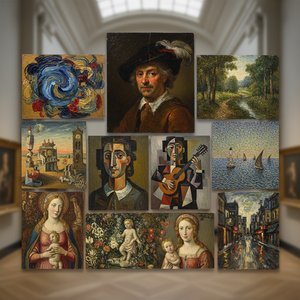
Oil on Board Masters: 10 Paintings That Redefined Art | OriginalUniqueArt
Explore 10 legendary 'Oil on Board' masterpieces by Van Gogh, Monet & more! Discover art history, iconic styles like Impressionism, and find museum-quality reproductions to elevate your home decor. Explore the full collection online at OriginalUniqueArt.com.

Oil on Canvas: A Historical & Technical Exploration of a Timeless Artistic Medium
Explore the rich history & enduring techniques of oil painting on canvas. Discover the science behind its longevity, conservation practices, and contemporary relevance. Expert insights for art enthusiasts.

The Enduring Legacy of Oil on Canvas: Technique, History & Aesthetic Impact
Explore the rich history & techniques of oil painting – from Renaissance masters to Impressionism. Discover pigments, layering methods, and why this timeless medium endures. Expert insights for artists & art enthusiasts.