التبديل إلى نسخة مطبوعة
 عرض المزيد







































 بالنسبة للأعمال الفنية أو النسخ المطبوعة التي يتجاوز طول أي من أضلاعها 105 سم (حوالي 41 بوصة)، سيتم شحن الإطار كمجموعة مفككة؛ حيث تضمن هذه الطريقة سلامة التوصيل وتمنع حدوث أي أضرار أثناء النقل.


A Dramatic Echo of Shakespeare’s Tragedy
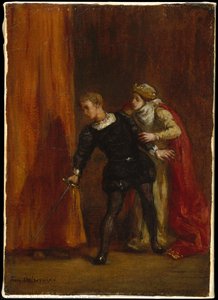
Eugène Delacroix's “Hamlet and His Mother,” completed in 1849, stands as a poignant distillation of William Shakespeare’s iconic tragedy. More than just a depiction of a pivotal scene—the moment Hamlet confronts Gertrude about her illicit marriage to Claudius—it embodies the very spirit of Romanticism: raw emotion, theatrical grandeur, and an unwavering belief in the power of art to convey profound psychological truths.
- Subject Matter: The painting captures a crucial juncture within Hamlet’s narrative – Gertrude’s discovery of Polonius concealed behind the curtain, immediately preceding Hamlet's fatal act of revenge.
- Style & Technique: Delacroix adheres faithfully to a lithograph created for a portfolio dedicated to Shakespeare’s play, prioritizing dramatic color and movement over meticulous detail. His masterful brushstrokes imbue the canvas with palpable energy, mirroring the turmoil within the characters depicted.
The Romantic Palette: Color as Emotion
Delacroix's artistic vision is firmly rooted in the tenets of Romanticism. He eschewed the academic conventions of his time, favoring instead a vibrant palette designed to evoke intense feelings. The dominant hues—deep reds and golds—reflect Gertrude’s regal status and symbolize passion and deceit. Contrasting shades of black and grey underscore the oppressive atmosphere of Claudius's court and heighten the drama surrounding Hamlet’s confrontation.
Symbolism Within Shadow and Light
The darkened curtain serves as more than just a backdrop; it represents secrecy, deception, and the hidden truths that plague Hamlet’s psyche. Delacroix skillfully employs chiaroscuro—the dramatic interplay of light and shadow—to sculpt the figures and amplify their emotional expressions. Gertrude's gaze is fixed on Hamlet with palpable apprehension, conveying her vulnerability and complicity in Claudius’s scheme.
A Legacy of Dramatic Expression
"Hamlet and His Mother" resonates powerfully across time because it transcends mere narrative representation. It captures the essence of Shakespeare’s exploration of morality, grief, and revenge—themes that continue to captivate audiences today. Delacroix's unwavering commitment to artistic innovation cemented his place as a cornerstone of Romantic art, inspiring generations of painters to embrace emotion and theatricality in their own work.
- Location: Currently housed in the Metropolitan Museum of Art, New York City
- Dimensions: 27 x 18 cm
الأسئلة والأجوبة
هل تسمح حقوق الطبع والنشر لـ "هاملت وأمه" للفنان أوجين ديلاكروا بإعادة الإنتاج؟
تندرج لوحة "هاملت وأمه" للفنان أوجين ديلاكروا، والمحفوظة في المتحف المتروبوليتاني للفنون، ضمن الملكية العامة (ملك عام - انتهت مدة حماية حقوق الطبع والنشر الخاصة به)؛ وتحدد هذه الحالة مدى إمكانية إعادة إنتاج الصورة.
هل توجد أعمال فنية مشابهة لـ "هاملت وأمه"؟
تستعرض صفحة أعمال مشابهة لعمل "هاملت وأمه" للفنان أوجين ديلاكروا أعمالاً فنية ذات صلة.
كيف ينسجم عمل "هاملت وأمه" مع موضوعات أوجين ديلاكروا وأسلوبه الفني؟
ينتمي العمل "هاملت وأمه" إلى نتاج أوجين ديلاكروا ضمن مدرسة الرومانسية، التي تتناول موضوعاتها المسجلة إلهام روبنز, المشاركة السياسية, سرد درامي, تعبير رومانسي, مشهد شكسبيري أيقوني.
 معاينة الحجم الواقعي
 مشاركة
 مشاركة
 التفاصيل
 دليل
دليل

 تحميل الملف
 قطع مشابهة
 الأشعة السينية
 عرض شرائح
 الأسئلة والأجوبة
 الإحصائيات