

 معاينة الحجم الحقيقي
 مشاركة
 مشاركة
 التفاصيل

 تحميل الملف
 قطع مشابهة
 الأشعة السينية
 عرض شرائح
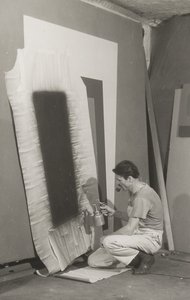
Untitled (35 14)
 1935
1935 19.0 x 23.0 cm
 عرض المزيد
طباعة جيلي / مطبوعات فنية
طباعة جيكلي أو كانفاس بجودة المتاحف، مع سرعة في التنفيذ وخيارات متنوعة للتشطيب. ( التحويل إلى لوحة مرسومة يدوياً التبديل إلى الصورة)




































اختر من بين أحجامنا المُعدّة مسبقًا والتي تتطابق مع النسب الأصلية للعمل الفني.

يمكنك إدخال أبعادك الخاصة لتناسب إطاراً أو مساحة معينة. وإذا لم يتطابق الحجم الذي اخترته مع نسب الصورة الأصلية، فسنقوم إما بقص العمل الفني أو تمديد الصورة باستخدام حافة معكوسة أو بلون مصمت. سيتم إرسال نموذج تجريبي رقمي لاعتمادك قبل بدء الإنتاج.
يرجى ملاحظة أن المعاينة على الشاشة لا تعكس عملية القص أو التمديد الفعلية؛ حيث سيوضح النموذج التجريبي فقط التكوين النهائي بدقة.
وعلى الرغم من توفر أحجام مخصصة، إلا أننا نوصي باختيار أبعاد من القائمة المحددة مسبقاً للحفاظ على النسب الأصلية.
توصيل عالمي إلى خلال أسبوعين بدلاً من المدة القياسية البالغة 4/5 أسابيع. 11 أغسطس

شحن سريع ومجاني لجميع أنحاء العالم

قماش كتان عالي الجودة

تأمين شحن شامل

ضمان استرداد الرسوم الجمركية

ضمان مطابقة الألوان الحقيقية

سياسة الإرجاع خلال 60 يومًا (في حالات العيوب فقط)

ضمان استرداد نقدي بنسبة 100%

خصم عند طلب عدة قطع
 خيار الزجاج متاح فقط للمقاسات التي تقل عن 110 سم

Untitled (35 14)
طباعة جيلي / مطبوعات فنية
مقاس النسخة المطبوعة
-


السعر الإجمالي النهائي
$ 80
وصف القطعة الفنية
Artist Background
Balcomb Greene was an American artist known for his contributions to the Abstract Art movement. With a background in philosophy and psychology, Greene brought a distinct perspective to his artistic endeavors. His work is characterized by geometric shapes, bold colors, and a sense of dynamic energy.The Painting
"Untitled (35-14)" features a dominant yellow background with blue accents, creating a striking visual contrast. The composition is balanced by the presence of several figures, although the main subject appears to be wearing sunglasses, adding an air of mystery to the piece. The use of paper as the primary medium gives the artwork a sense of fragility and intimacy.Artistic Significance
This painting is significant not only because of its artistic merit but also due to its place in Greene's oeuvre. It represents a pivotal moment in the artist's development, as he began to explore new techniques and styles. The Smithsonian American Art Museum has recognized the importance of this work, adding it to their collection.- Handmade oil paintings reproductions of "Untitled (35-14)" can be found on OriginalUniqueArt.com, allowing art enthusiasts to appreciate the beauty of this piece in their own homes.
- For more information on Balcomb Greene and his artistic style, visit Wikipedia.
In conclusion, "Untitled (35-14)" by Balcomb Greene is a captivating artwork that showcases the artist's unique style and technique. Its significance extends beyond its artistic merit, representing a pivotal moment in Greene's development as an artist.
السيرة الذاتية للفنان
A Life Dedicated to the Evolving Language of Abstraction
Balcomb Greene, born John Wesley Greene in 1904 in Millville, New York, embarked on a remarkable artistic journey that mirrored the seismic shifts occurring within the American art world throughout the 20th century. Initially steered toward a religious path by his father, a Methodist minister, Greene’s intellectual curiosity led him to Syracuse University where he immersed himself in philosophy and psychology. This early exploration of the human condition, of thought and perception, would subtly inform his later artistic endeavors, even as he moved decisively away from representational forms. A pivotal moment arrived with his marriage to fellow artist Gertrude Glass Greene in 1926, a partnership that proved not only personally fulfilling but also creatively catalytic. Together, they ventured to Paris in 1931, a city then pulsating with avant-garde energy, and it was there, amidst the ferment of modernism, that Greene truly discovered his calling as a painter. The influence of pioneers like Juan Gris, Piet Mondrian, Pablo Picasso, and Henri Matisse became apparent, yet Greene wasn’t content to merely emulate; he sought to forge his own distinct visual vocabulary.From Geometric Precision to Expressive Figuration
Greene's early work was characterized by a rigorous commitment to non-objective abstraction – geometric planes interlocking and overlapping in carefully considered compositions. These weren’t simply aesthetic exercises, however; they were explorations of spatial relationships, of color as an independent force, and of the fundamental building blocks of visual experience. He became a central figure in the burgeoning American abstract art movement, co-founding and serving as the first chairman of *American Abstract Artists* (AAA) in 1936. This organization was crucial in advocating for the acceptance of abstraction at a time when it faced considerable resistance from both critics and the public. Simultaneously, Greene engaged with socially conscious art through his work with the Works Progress Administration (WPA), creating significant murals for the Williamsburg Houses and the 1939 New York World’s Fair – early examples of abstract art integrated into public spaces. However, the 1940s witnessed a profound shift in Greene's artistic approach. While remaining deeply committed to formal concerns, he began to reintroduce the human figure into his compositions. This wasn’t a rejection of abstraction but rather an expansion of its possibilities. He explored themes of light and shadow with increasing intensity, imbuing his figures with a sense of psychological depth and emotional resonance. His work became more expressive, less concerned with pure geometry and more focused on conveying the “intuitive spirit” of man.Recognition and Enduring Legacy
Throughout his career, Balcomb Greene exhibited extensively, showcasing his evolving style at prestigious galleries such as Bertha Schaefer Gallery in New York, Feingarten Gallery in Los Angeles, and Saidenberg Gallery in New York. A significant milestone was the retrospective exhibition held at the Whitney Museum of American Art in 1961, a testament to the breadth and depth of his artistic achievement. In 1972, he was elected as an Associate member of the National Academy of Design, further solidifying his standing within the American art establishment. Beyond these accolades, Greene’s lasting impact lies in his role as a tireless advocate for abstract art and his willingness to challenge conventional boundaries. He bridged the gap between pure abstraction and expressive figuration, demonstrating that these seemingly disparate approaches could coexist and enrich one another. His murals remain important examples of early abstract public art, while his paintings continue to captivate viewers with their subtle complexities and emotional power.A Voice for Modernism
Balcomb Greene’s historical significance extends beyond his individual artistic contributions. He was a crucial voice in promoting modernism during a period when it was often misunderstood or dismissed. Through his involvement with the AAA, his writings, and his teaching – he held positions at Carnegie Institute of Technology and Black Mountain College – he helped to cultivate a more receptive audience for abstract art. His commitment to an independent artistic vision, often diverging from prevailing trends, established him as a unique and influential figure in American modernist art. He wasn’t simply following a prescribed path; he was actively shaping the discourse around abstraction, pushing its boundaries, and exploring its potential to express profound human experiences. His work serves as a reminder that true artistic innovation requires both technical mastery and an unwavering dedication to one's own creative impulses.Key Characteristics of His Work
- Early Abstraction: Geometric forms, interlocking planes, non-representational compositions.
- Shift to Figuration: Incorporation of the human figure in the 1940s, exploring light and shadow.
- Influences: Cubism, Neo-Plasticism, Surrealism, but maintaining a distinct individual style.
- WPA Murals: Significant examples of early abstract public art at Williamsburg Houses and the 1939 World’s Fair.
- Advocacy for Abstraction: Founding member and first chairman of American Abstract Artists (AAA).
Balcomb Greene
1904 - 1990 , United States of America
حقائق سريعة
- Artistic Movement Or Style: Abstract Expressionism
- Artists Or Movements Influenced By This Artist: American Abstract Artists
- Artists Who Influenced This Artist:
- Juan Gris
- Piet Mondrian
- Pablo Picasso
- Henri Matisse
- Date Of Birth: May 22, 1904
- Date Of Death: Nov 12, 1990
- Full Name: Balcomb Greene
- Nationality: American
- Notable Artworks:
- Untitled (39 03)
- Untitled (34 8)
- Way Down Blue
- Place Of Birth: Millville, USA

