التبديل إلى نسخة مطبوعة
 عرض المزيد







































 بالنسبة للأعمال الفنية أو النسخ المطبوعة التي يتجاوز طول أي من أضلاعها 105 سم (حوالي 41 بوصة)، سيتم شحن الإطار كمجموعة مفككة؛ حيث تضمن هذه الطريقة سلامة التوصيل وتمنع حدوث أي أضرار أثناء النقل.


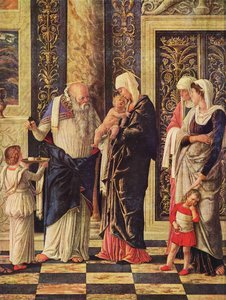
A Renaissance Echo: Andrea Mantegna’s ‘The Circumcision of Christ’
Andrea Mantegna, born near Padua around 1431, represents a singular convergence of artistic vision—a testament to the enduring fascination with antiquity that defined the burgeoning Italian Renaissance. He wasn't merely adopting classical forms; it was an ambitious undertaking: a fervent desire to resurrect the spirit of Rome within this transformative period. Unlike many contemporaries who drew inspiration solely from idealized representations of Greco-Roman sculpture and architecture, Mantegna possessed an unparalleled dedication to archaeological accuracy. This obsession stemmed directly from his formative years under Francesco Squarcione, whose workshop functioned less as a conventional studio and more as an academy devoted to the meticulous study of Roman ruins, sculptures, and inscriptions. It was within these walls—surrounded by fragments of a lost empire—that Mantegna’s artistic sensibilities truly blossomed—a sensibility characterized by sculptural forms, dramatic perspective, and an almost obsessive attention to detail. This approach distinguishes him from his peers and establishes him as one of the foremost innovators of his time.- Subject Matter: The painting depicts a pivotal biblical scene – the circumcision of Jesus Christ – capturing a moment of profound religious significance.
- Style: Mantegna’s style embodies the High Renaissance, prioritizing realism and incorporating elements of classical art. However, it transcends mere imitation; instead, he skillfully reimagines classical ideals through a distinctly humanist lens.
Technique & Innovation: Sculptural Perspective
Mantegna's mastery lay not just in depicting figures realistically but in pioneering a revolutionary technique—sculptural perspective. Departing from the flattened planes of earlier Gothic art, he achieved an unprecedented illusion of depth by employing mathematical principles borrowed from Euclid and Roman architectural treatises. This method dramatically altered the viewer’s experience, creating a palpable sense of space and conveying a profound emotional impact. The artist meticulously crafted figures with muscular contours reminiscent of Roman sculptures, subtly influencing the overall composition and reinforcing the painting's monumental grandeur. Careful shading and modeling techniques further enhanced this illusion of three-dimensionality, elevating ‘The Circumcision’ to an artistic pinnacle.- Medium: Oil paint on wood panel – a favored medium during the Renaissance known for its luminosity and ability to capture nuanced tonal variations.
- Perspective: Mantegna skillfully utilizes linear perspective—a cornerstone of Renaissance art—to create a convincing illusion of depth, mirroring the architectural grandeur of Roman buildings.
Historical Context & Symbolism
Painted around 1460-1461, ‘The Circumcision’ emerged during a period of intense intellectual and artistic revival in Italy. The rediscovery of classical texts and monuments fueled humanist scholarship and inspired artists to explore themes of human dignity and moral virtue. Mantegna's depiction of the biblical narrative reflects these prevailing ideals, portraying Jesus as a noble figure bathed in divine light—a deliberate homage to Roman imperial iconography. The horse in the background serves as a symbolic reference to Caesar Augustus, emphasizing the painting’s connection to Rome’s golden age and reinforcing its overarching message of spiritual authority.- Roman Influence: Mantegna's work demonstrates the profound impact of classical art on Renaissance aesthetics—particularly evident in the sculptural forms and monumental scale.
- Religious Symbolism: The painting conveys a powerful theological statement about Jesus’s divine incarnation and purification, aligning with Christian beliefs regarding salvation and redemption.
Emotional Impact & Artistic Legacy
‘The Circumcision of Christ’ transcends mere visual representation; it evokes a palpable sense of solemn reverence and spiritual contemplation. Mantegna's masterful execution—combined with his innovative perspective technique—creates an immersive experience for the viewer, transporting them back to the grandeur of Rome while simultaneously conveying the profound significance of Christian faith. This artwork remains a testament to Mantegna’s artistic genius and continues to inspire admiration for its beauty, intellectual rigor, and enduring emotional resonance. Its influence can be seen in subsequent Renaissance paintings, cementing Mantegna's place as one of the most influential artists of his era.الأسئلة والأجوبة
ما هو الطابع العاطفي لـ "The Circumcision" للفنان أندريا مانتيغنا؟
يجسد عمل "The Circumcision" للفنان أندريا مانتيغنا نبرة عاطفية Spiritual.
ما هي حقوق إعادة إنتاج العمل الفني "The Circumcision" في غاليريا أوفيزي؟
النسخة الأصلية من "The Circumcision" محفوظة في غاليريا أوفيزي، والعمل يندرج ضمن ملك عام - انتهت مدة حماية حقوق الطبع والنشر الخاصة به.
ما هي التقنية المستخدمة في صنع "The Circumcision"؟
تعتمد التقنية المستخدمة في "The Circumcision" للفنان أندريا مانتيغنا على Acrylic On Canvas، وتهدف النسخ المطبوعة إلى محاكاة مظهر هذه التقنية.
 معاينة الحجم الواقعي
 مشاركة
 مشاركة
 التفاصيل
 دليل
دليل

 تحميل الملف
 قطع مشابهة
 الأشعة السينية
 عرض شرائح
 الأسئلة والأجوبة
 الإحصائيات