

 معاينة الحجم الحقيقي
 مشاركة
 مشاركة
 التفاصيل

 تحميل الملف
 قطع مشابهة
 الأشعة السينية
 عرض شرائح
The Old Mill
 Oil On Canvas
- WallArt
- Hudson River School
 1855
1855- 19th Century
 110.0 x 95.0 cm
 عرض المزيد
طباعة جيلي / مطبوعات فنية
طباعة جيكلي أو كانفاس بجودة المتاحف، مع سرعة في التنفيذ وخيارات متنوعة للتشطيب. ( اشترِ لوحة مرسومة يدويًا اشترِ الصورة)




P118B $10

P118H $10

P118W $10

P438Z $10

P508JH $12

P508YH $12

P805H $10

P805Z $10

P919BZ $10

P919G $10

P919XJ $10

P959ZH $10

P968JZ $12

W106C $8

W218G $10

W218JH $8

W218Y $10

W307PJ $10

W316G $10

W316PJ $8

W316Y $10

W398PJ $8

W4111J $10

W500HY $15

W500JH $15

W692G $12

W849H $8

W940BG $15

W953PJ $8




اختر من بين أحجامنا المُعدّة مسبقًا والتي تتطابق مع النسب الأصلية للعمل الفني.

يمكنك إدخال أبعادك الخاصة لتناسب إطاراً أو مساحة معينة. وإذا لم يتطابق الحجم الذي اخترته مع نسب الصورة الأصلية، فسنقوم إما بقص العمل الفني أو تمديد الصورة باستخدام حافة معكوسة أو بلون مصمت. سيتم إرسال نموذج تجريبي رقمي لاعتمادك قبل بدء الإنتاج.
يرجى ملاحظة أن المعاينة على الشاشة لا تعكس عملية القص أو التمديد الفعلية؛ حيث سيوضح النموذج التجريبي فقط التكوين النهائي بدقة.
وعلى الرغم من توفر أحجام مخصصة، إلا أننا نوصي باختيار أبعاد من القائمة المحددة مسبقاً للحفاظ على النسب الأصلية.
توصيل عالمي إلى خلال أسبوعين بدلاً من المدة القياسية البالغة 4/5 أسابيع. 24 أغسطس

شحن سريع ومجاني لجميع أنحاء العالم

قماش كتان عالي الجودة

تأمين شحن شامل

ضمان استرداد الرسوم الجمركية

ضمان مطابقة الألوان الحقيقية

سياسة الإرجاع خلال 60 يومًا (في حالات العيوب فقط)

ضمان استرداد نقدي بنسبة 100%

خصم عند طلب عدة قطع
 خيار الزجاج متاح فقط للمقاسات التي تقل عن 110 سم

The Old Mill
طباعة جيلي / مطبوعات فنية
مقاس النسخة المطبوعة
-


السعر الإجمالي النهائي
$ 80
وصف القطعة الفنية
A Serene Encounter with the Past
In the quietude of Albert Bierstadt’s "The Old Mill," painted in 1855, we are invited into a world where time seems to have slowed to the gentle rhythm of flowing water. This exquisite landscape serves as a window into a romanticized rural existence, capturing a moment of profound stillness within a lush, verdant valley. At the heart of the composition sits a small stone mill, a humble testament to human industry nestled harmoniously beside a meandering stream. The scene is not merely a depiction of a place, but an invitation to experience the tranquility of the natural world. Through his masterful use of atmospheric perspective, Bierstadt allows the viewer's eye to wander from the textured details of the foreground foliage into the soft, receding layers of rolling hills, creating a sense of infinite depth that draws the soul into the landscape.
The technical brilliance of this oil on canvas work lies in its ability to balance meticulous detail with an ethereal, painterly softness. As a practitioner deeply influenced by his training in Düsseldorf, Bierstadt employs a sophisticated understanding of light and shadow to breathe life into the scene. The lighting is masterfully diffused, suggesting the gentle, even glow of an overcast day, which prevents harsh contrasts and instead fosters a muted, harmonious color palette. Dominated by earthy browns, deep forest greens, and cool blues and grays, the colors evoke a sense of organic unity. The brushwork, while smooth in its blending to create realistic textures of stone and leaf, retains a subtle vitality that lends dimension to the undulating terrain and the fluid motion of the water.
Symbolism and the Romantic Spirit
Beyond its aesthetic beauty, "The Old Mill" resonates with the profound emotional themes characteristic of the Hudson River School and the broader Romantic movement. During this era, artists sought to capture the sublime—the overwhelming power and spiritual presence of nature. Here, however, Bierstadt explores a more intimate version of the sublime: the peaceful coexistence between man and the environment. The mill acts as a powerful symbol of human presence and industriousness, yet it does not dominate the landscape; rather, it is cradled by the earth, suggesting a symbiotic relationship where civilization exists in quiet reverence to the natural order.
For the discerning collector or interior designer, this piece offers more than just visual elegance; it provides an emotional anchor for any space. The painting’s horizontal emphasis and balanced composition instill a sense of stability and calm, making it an ideal centerpiece for rooms designed for reflection and relaxation. Whether placed in a sunlit study or a sophisticated living area, the artwork brings with it a timelessness that transcends modern trends. It is a piece that invites conversation, prompting viewers to contemplate the enduring beauty of the rural landscape and the quiet strength found in nature's most peaceful corners.
السيرة الذاتية للفنان
A Pioneer of the American West: The Life and Art of Albert Bierstadt
Born in Prussia in 1830, Albert Bierstadt’s story is one deeply interwoven with the burgeoning identity of America itself. His family's early emigration to New Bedford, Massachusetts, when he was just a year old, planted the seeds for a lifelong fascination with the landscapes that would come to define his artistic legacy. Though initially self-taught, sketching with crayons as a youth, Bierstadt recognized the need for formal training and embarked on studies in Düsseldorf, Germany, in 1853. This European grounding proved crucial, providing him with technical mastery—a meticulous attention to detail and a sophisticated understanding of light and atmosphere—that he would later apply to his depictions of the American wilderness. It was not merely replication that Bierstadt sought, but an emotional resonance, a way to convey the sublime power and beauty of nature.Capturing the Majesty: The Hudson River School and Beyond
Upon his return to the United States in 1857, Bierstadt quickly became associated with the Hudson River School, a group of artists dedicated to portraying the American landscape with both accuracy and romantic idealism. However, while sharing their reverence for nature, Bierstadt soon distinguished himself through his ambitious scale and dramatic compositions. He wasn’t content to simply paint pretty pictures; he aimed to create immersive experiences that transported viewers to the heart of the wilderness. His breakthrough came in 1858 with a Swiss landscape exhibited at the National Academy of Design, earning him immediate acclaim and honorary membership. But it was his subsequent expeditions westward—first with land surveyor Frederick W. Lander in 1859, then with author Fitz Hugh Ludlow in 1863 to Yosemite Valley—that truly ignited his artistic vision. These journeys weren’t just about observation; they were about immersion, allowing Bierstadt to absorb the grandeur of the Rocky Mountains, the vastness of the plains, and the awe-inspiring scale of canyons and waterfalls.The Painter of Empires: Shaping Perceptions of the West
Bierstadt’s paintings weren't simply landscapes; they were statements about national identity and Manifest Destiny. His canvases—often enormous in size—depicted the American West not as a harsh, untamed frontier, but as a land of promise, abundance, and divine beauty. The Rocky Mountains, Lander’s Peak, completed in 1863 and purchased for an astonishing $25,000 (equivalent to nearly $400,000 today), exemplifies this approach. The painting isn't a precise topographical rendering; it’s a carefully constructed vision of idealized grandeur, bathed in golden light and imbued with a sense of spiritual significance. This ability to evoke emotion, to inspire awe, made Bierstadt immensely popular during his lifetime. He wasn’t just an artist; he was a cultural ambassador, shaping how Americans—and the world—perceived the West. His work fueled westward expansion by presenting it as a noble and divinely ordained undertaking.Technical Mastery and Artistic Influences
Bierstadt's technique was characterized by a remarkable attention to detail, honed during his studies in Düsseldorf. He employed a glazing technique, building up layers of translucent paint to create luminous effects and atmospheric depth. His use of light – often dramatic and golden – became his signature style. European landscape painting, particularly the works of Caspar David Friedrich and the Barbizon School artists, provided early inspiration. However, Bierstadt moved beyond mere imitation, developing a uniquely American vision that emphasized the scale and majesty of the Western wilderness. He also drew influence from Japanese woodblock prints, incorporating elements of compositional asymmetry and flattened perspective into his work. His paintings often feature meticulously rendered details of flora and fauna, reflecting a deep appreciation for natural history.Legacy and Influence: A Lasting Impression
While Bierstadt's popularity waned somewhat in the late 19th century as artistic tastes shifted, his influence on American landscape painting remains undeniable. He demonstrated the power of large-scale canvases to create immersive experiences, a technique later adopted by many artists. His meticulous attention to detail and masterful use of light continue to inspire painters today. Beyond his technical achievements, Bierstadt’s work serves as a valuable historical document, offering insights into the evolving perceptions of the American West during a period of rapid change and expansion. He captured a moment in time—a vision of pristine wilderness before it was irrevocably altered by human intervention. His paintings are not just beautiful images; they are windows into a pivotal era in American history, reminding us of both the promise and the cost of westward expansion. His legacy endures, ensuring that his breathtaking landscapes will continue to captivate and inspire generations to come.
ألبرت بيرشتادت
1830 - 1902 , ألمانيا
حقائق سريعة
- الأعمال البارزة:
- منظر طبيعي غربي
- مشهد ساحلي
- الاسم الكامل: ألبرت بيرشتات
- الجنسية: ألماني أمريكي
- الحركة الفنية: مدرسة نهر هدسون
- تاريخ الميلاد: 7 يناير 1830
- تاريخ الوفاة: 18 فبراير 1902
- مكان الميلاد: زولينجن، ألمانيا
مقالات ذات صلة
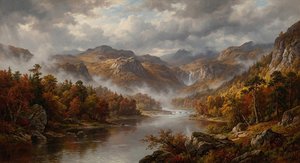
أعلى 10 روائع تحدد مدرسة نهر هدسون: رحلة في الفن الراقي وجمال الطبيعة
اكتشف روائع مدرسة نهر هدسون! استكشف 10 لوحات فنية خالدة لـ Thomas Cole و Frederic Church وغيرهم. فن أمريكي رومانسي، مناظر طبيعية خلابة وألوان ترابية ساحرة. احصل على أعمال فنية راقية لديكور منزلك على OriginalUniqueArt.com
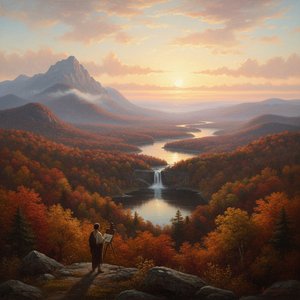
The Sublime Landscape: Exploring the Hudson River School Movement
Explore the captivating world of the Hudson River School! Discover the history, artists, and defining characteristics of this iconic American art movement. Learn about Romanticism's influence & find inspiration for your collection.

Albert Bierstadt: Luminosity, Landscape & the American Ideal
Explore the breathtaking landscapes of Albert Bierstadt, master of the American West & a leading figure in the Hudson River School. Discover his luminous style and iconic paintings – a timeless investment for art lovers.
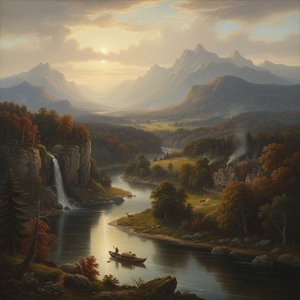
Capturing the American Spirit: A Journey Through Iconic Landscapes and the Legacy of the Hudson River School
Explore the profound beauty of American art history. From the Hudson River School to iconic landscapes, discover a curated journey through the masterpieces that defined a nation's spirit and the enduring legacy of American Romanticism.
Wild & Untamed: The High-Impact Energy of American Romanticism and the Hudson River School
Experience the raw power of American Romanticism. Explore the high-impact energy of the Hudson River School through premium, hand-painted oil reproductions that capture the sublime beauty and untamed spirit of the American wilderness for discerning collectors.



