

 معاينة الحجم الواقعي
 إرسال
إرسال مشاركة
 عرض التفاصيل
 دليل الأعمال الفنية للطلاب

 تحميل
تحميل
 قطع مشابهة
 الأشعة السينية
 عرض شرائح متتابع
 الإحصائيات
Study of a Tree
 Oil On Canvas
- WallArt
- Hudson River School
 1864
1864- 19th Century
 24.0 x 20.0 cm
 المتحف المتروبوليتاني للفنون
 اقرأ المزيد
طباعة جيلي / مطبوعات فنية
طباعة جيكلي أو كانفاس بجودة المتاحف، مع سرعة في التنفيذ وخيارات متنوعة للتشطيب. ( اطلب نسخة مرسومة يدويًا التحويل إلى الصورة الرقمية)




P118B E£10

P118H E£10

P118W E£10

P438Z E£10

P508JH E£12

P508YH E£12

P805H E£10

P805Z E£10

P919BZ E£10

P919G E£10

P919XJ E£10

P959ZH E£10

P968JZ E£12

W106C E£8

W218G E£10

W218JH E£8

W218Y E£10

W307PJ E£10

W316G E£10

W316PJ E£8

W316Y E£10

W398PJ E£8

W4111J E£10

W500HY E£15

W500JH E£15

W692G E£12

W849H E£8

W940BG E£15

W953PJ E£8




اختر من بين أحجامنا المُعدّة مسبقاً والتي تتوافق مع النسب الأصلية للعمل الفني.

أدخل العرض والارتفاع اللذين تحتاجهما، ليتناسب مع إطارك أو جدارك. يمكن قص المطبوعة فقط، ولا يمكن أبداً جعلها أكبر من الصورة الأصلية، لذا فإن أي مقاس بشكل مختلف سيؤدي إلى فقدان جزء من الصورة. سنرسل لك نموذجاً رقمياً تجريبياً لاعتماده قبل البدء في عملية الطباعة. الصورة المعروضة في هذه الصفحة لا توضح القص الفعلي — النموذج التجريبي فقط هو ما يظهر ذلك.
توصيل عالمي إلى خلال أسبوعين بدلاً من المدة القياسية البالغة 4/5 أسابيع. (23 أكتوبر)

شحن سريع ومجاني لجميع أنحاء العالم

قماش كتان فاخر

تأمين شامل على الشحن

ضمان استرداد الرسوم الجمركية

ضمان دقة مطابقة الألوان

سياسة الإرجاع خلال 100 يوم (في حالات العيوب فقط)

ضمان استرداد نقدي بنسبة 100%

عرض خصم الكميات
 خيار الزجاج متاح فقط للمقاسات التي تقل عن 110 سم

Study of a Tree
طباعة جيلي / مطبوعات فنية
مقاس النسخة المطبوعة
-


إجمالي السعر
E£ 4136
A Study in Silent Majesty: Albert Bierstadt's ‘Study of a Tree’ (1864)
Albert Bierstadt’s “Study of a Tree,” executed in 1864, offers a profoundly intimate glimpse into the artistic process and the burgeoning Romantic sensibility that defined the Hudson River School. This unassuming grayscale study, measuring just 24 x 20 cm, transcends its modest scale to reveal a masterful exploration of form, texture, and light – hallmarks of Bierstadt’s celebrated career. More than simply a depiction of an oak tree, it's a meditation on nature’s enduring strength and the artist’s profound connection to the American wilderness.
Technical Brilliance and Impressionistic Echoes
- Medium & Technique: Executed in oil paint or charcoal on canvas or paper, this piece showcases Bierstadt's meticulous technique. Thick, impasto brushstrokes – a deliberate choice – build up the texture of the bark with remarkable realism, inviting the viewer to almost feel the rough surface beneath their fingertips. The rapid application of paint suggests a ‘plein air’ study, capturing the essence of the tree in a fleeting moment.
- Line and Shape: Lines are not rigid outlines but rather implied through the expressive layering of pigment, creating a dynamic sense of movement and growth within the branches. Organic shapes dominate – rounded masses for the trunk and limbs, fragmented forms hinting at leaves and twigs – reflecting Bierstadt’s commitment to representing nature's inherent irregularity.
- Color Palette & Lighting: The monochromatic palette—a symphony of grays, whites, and blacks—is crucial to the work’s impact. It eliminates distractions, forcing the viewer to focus entirely on the interplay of light and shadow, and the subtle variations in texture that define the tree's surface. The diffused lighting evokes a sense of quiet contemplation, mirroring the sublime experience of encountering nature’s grandeur.
Historical Context: The Hudson River School and the Sublime
Created during the height of the Hudson River School’s influence, “Study of a Tree” reflects the movement's fascination with capturing the dramatic beauty of the American landscape. Bierstadt, like his contemporaries, sought to elevate nature beyond mere representation, aiming to evoke a sense of awe and wonder – what was termed ‘the sublime.’ This wasn’t about photographic accuracy; it was about conveying an emotional response to the vastness and power of the natural world. The work speaks to a period of rapid American expansion and settlement, where artists were tasked with documenting and celebrating the nation's newfound wilderness.
Symbolism and Emotional Resonance
Despite its seemingly simple subject matter, “Study of a Tree” carries significant symbolic weight. The tree itself represents resilience, strength, and longevity – qualities deeply valued in the burgeoning American identity. The grayscale palette contributes to an atmosphere of introspection and quiet contemplation, inviting viewers to connect with their own sense of wonder and appreciation for the natural world. The work’s inherent stillness suggests a timelessness, a connection to something far greater than ourselves.
A Timeless Masterpiece – Perfect for Interior Design
"Study of a Tree" by Albert Bierstadt is more than just an artwork; it's a portal to the Romantic era and a testament to the enduring power of nature. Its evocative style and masterful technique make it a compelling addition to any collection, while its monochromatic palette ensures versatility within diverse interior design schemes – from contemporary minimalist spaces to traditional settings seeking a touch of timeless elegance. OriginalUniqueArt offers meticulously crafted hand-painted reproductions that faithfully capture the essence of this iconic piece, allowing you to bring its silent majesty into your home.
الأسئلة والأجوبة
هل تسمح حقوق الطبع والنشر لـ "Study of a Tree" للفنان ألبرت بيرشتادت بإعادة الإنتاج؟
إن الوضع القانوني لحقوق الطبع والنشر لعمل "Study of a Tree" للفنان ألبرت بيرشتادت واضح: فالعمل يندرج ضمن ملك عام - انتهت مدة حماية حقوق الطبع والنشر الخاصة به. ولا يغير وجوده في المتحف المتروبوليتاني للفنون من هذا الوضع شيئاً.
ما هو الأصل الوطني الذي يقف وراء Hudson River School عمل "Study of a Tree"؟
تربط لوحة "Study of a Tree" بين حركة Hudson River School وألمانيا من خلال مسقط رأس مبدعها.
ما مدى تشبع وكثافة الألوان في "Study of a Tree" للفنان ألبرت بيرشتادت؟
تتميز ألوان "Study of a Tree" بدرجة تشبع تبلغ Muted وكثافة لونية تصل إلى Monochromatic.
نبذة عن الفنان
A Pioneer of the American West: The Life and Art of Albert Bierstadt
Born in Prussia in 1830, Albert Bierstadt’s story is one deeply interwoven with the burgeoning identity of America itself. His family's early emigration to New Bedford, Massachusetts, when he was just a year old, planted the seeds for a lifelong fascination with the landscapes that would come to define his artistic legacy. Though initially self-taught, sketching with crayons as a youth, Bierstadt recognized the need for formal training and embarked on studies in Düsseldorf, Germany, in 1853. This European grounding proved crucial, providing him with technical mastery—a meticulous attention to detail and a sophisticated understanding of light and atmosphere—that he would later apply to his depictions of the American wilderness. It was not merely replication that Bierstadt sought, but an emotional resonance, a way to convey the sublime power and beauty of nature.Capturing the Majesty: The Hudson River School and Beyond
Upon his return to the United States in 1857, Bierstadt quickly became associated with the Hudson River School, a group of artists dedicated to portraying the American landscape with both accuracy and romantic idealism. However, while sharing their reverence for nature, Bierstadt soon distinguished himself through his ambitious scale and dramatic compositions. He wasn’t content to simply paint pretty pictures; he aimed to create immersive experiences that transported viewers to the heart of the wilderness. His breakthrough came in 1858 with a Swiss landscape exhibited at the National Academy of Design, earning him immediate acclaim and honorary membership. But it was his subsequent expeditions westward—first with land surveyor Frederick W. Lander in 1859, then with author Fitz Hugh Ludlow in 1863 to Yosemite Valley—that truly ignited his artistic vision. These journeys weren’t just about observation; they were about immersion, allowing Bierstadt to absorb the grandeur of the Rocky Mountains, the vastness of the plains, and the awe-inspiring scale of canyons and waterfalls.The Painter of Empires: Shaping Perceptions of the West
Bierstadt’s paintings weren't simply landscapes; they were statements about national identity and Manifest Destiny. His canvases—often enormous in size—depicted the American West not as a harsh, untamed frontier, but as a land of promise, abundance, and divine beauty. The Rocky Mountains, Lander’s Peak, completed in 1863 and purchased for an astonishing $25,000 (equivalent to nearly $400,000 today), exemplifies this approach. The painting isn't a precise topographical rendering; it’s a carefully constructed vision of idealized grandeur, bathed in golden light and imbued with a sense of spiritual significance. This ability to evoke emotion, to inspire awe, made Bierstadt immensely popular during his lifetime. He wasn’t just an artist; he was a cultural ambassador, shaping how Americans—and the world—perceived the West. His work fueled westward expansion by presenting it as a noble and divinely ordained undertaking.Technical Mastery and Artistic Influences
Bierstadt's technique was characterized by a remarkable attention to detail, honed during his studies in Düsseldorf. He employed a glazing technique, building up layers of translucent paint to create luminous effects and atmospheric depth. His use of light – often dramatic and golden – became his signature style. European landscape painting, particularly the works of Caspar David Friedrich and the Barbizon School artists, provided early inspiration. However, Bierstadt moved beyond mere imitation, developing a uniquely American vision that emphasized the scale and majesty of the Western wilderness. He also drew influence from Japanese woodblock prints, incorporating elements of compositional asymmetry and flattened perspective into his work. His paintings often feature meticulously rendered details of flora and fauna, reflecting a deep appreciation for natural history.Legacy and Influence: A Lasting Impression
While Bierstadt's popularity waned somewhat in the late 19th century as artistic tastes shifted, his influence on American landscape painting remains undeniable. He demonstrated the power of large-scale canvases to create immersive experiences, a technique later adopted by many artists. His meticulous attention to detail and masterful use of light continue to inspire painters today. Beyond his technical achievements, Bierstadt’s work serves as a valuable historical document, offering insights into the evolving perceptions of the American West during a period of rapid change and expansion. He captured a moment in time—a vision of pristine wilderness before it was irrevocably altered by human intervention. His paintings are not just beautiful images; they are windows into a pivotal era in American history, reminding us of both the promise and the cost of westward expansion. His legacy endures, ensuring that his breathtaking landscapes will continue to captivate and inspire generations to come.
ألبرت بيرشتادت
1830 - 1902 , ألمانيا
لمحة سريعة
- الأعمال البارزة:
- منظر طبيعي غربي
- مشهد ساحلي
- الاسم الكامل: ألبرت بيرشتات
- الجنسية: ألماني أمريكي
- الحركة الفنية: مدرسة نهر هدسون
- تاريخ الميلاد: 7 يناير 1830
- تاريخ الوفاة: 18 فبراير 1902
- مكان الميلاد: زولينجن، ألمانيا
مقالات ذات صلة

Wild & Untamed: The High-Impact Energy of American Romanticism and the Hudson River School
Experience the raw power of American Romanticism. Explore the high-impact energy of the Hudson River School through premium, hand-painted oil reproductions that capture the sublime beauty and untamed spirit of the American wilderness for discerning collectors.
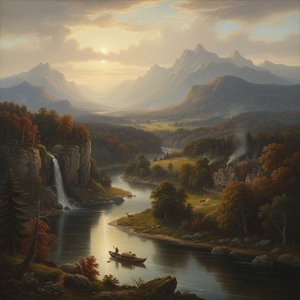
Capturing the American Spirit: A Journey Through Iconic Landscapes and the Legacy of the Hudson River School
Explore the profound beauty of American art history. From the Hudson River School to iconic landscapes, discover a curated journey through the masterpieces that defined a nation's spirit and the enduring legacy of American Romanticism.

The Sublime Landscape: Exploring the Hudson River School Movement
Explore the captivating world of the Hudson River School! Discover the history, artists, and defining characteristics of this iconic American art movement. Learn about Romanticism's influence & find inspiration for your collection.
أعلى 10 روائع تحدد مدرسة نهر هدسون: رحلة في الفن الراقي وجمال الطبيعة
اكتشف روائع مدرسة نهر هدسون! استكشف 10 لوحات فنية خالدة لـ Thomas Cole و Frederic Church وغيرهم. فن أمريكي رومانسي، مناظر طبيعية خلابة وألوان ترابية ساحرة. احصل على أعمال فنية راقية لديكور منزلك على OriginalUniqueArt.com
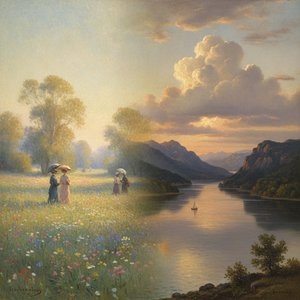
Capturing the Light: A Journey Through the Soul of American Impressionism and the Hudson River School
Explore the luminous beauty of American Impressionism and the Hudson River School. Discover a curated journey through light, landscape, and history, celebrating the enduring legacy of masters through exquisite, hand-painted oil reproductions for the discerning art lover.


