التبديل إلى نسخة مطبوعة
 عرض المزيد







































 بالنسبة للأعمال الفنية أو النسخ المطبوعة التي يتجاوز طول أي من أضلاعها 105 سم (حوالي 41 بوصة)، سيتم شحن الإطار كمجموعة مفككة؛ حيث تضمن هذه الطريقة سلامة التوصيل وتمنع حدوث أي أضرار أثناء النقل.


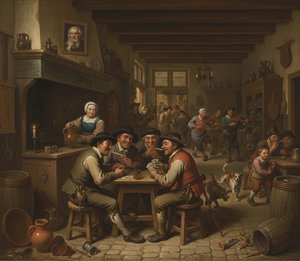
A Moment of Village Life
In this 1661 scene, we find ourselves amidst a gathering in a village street, where the air seems to hum with the low melodies of musicians. A group of men has assembled, some cradling violins and cellos, their presence anchoring the movement of the crowd. There is a quiet energy here, found in the way individuals are scattered throughout the composition, engaged in their own small interactions. You might notice a horse standing nearby, adding a touch of rustic reality to the atmosphere. The scene captures a sense of community engagement, where the simple act of gathering for an outdoor celebration becomes the central focus of the work.
Technique and Atmosphere
The brushwork reflects the traditions of the Flemish Baroque, focusing on the textures of everyday existence. There is a careful attention paid to the way light settles upon the figures and the objects they carry, such as handbags and backpacks. The artist employs a style that captures the boisterous energy of life without relying on grand gestures. Instead, the mood is shaped by the rhythmic movement of the people and the subtle details of the village setting. Through these observations, the painting offers a window into the customs of the seventeenth-century countryside, presenting a world where communal joy is found in the shared experience of music and fellowship.
الأسئلة والأجوبة
ما هي الأسباب الكامنة وراء الوضع القانوني لحقوق الطبع والنشر لـ "Rural Feast" للفنان Abraham Teniers؟
تعتمد حالة حقوق الطبع والنشر لـ "Rural Feast" - ملك عام - انتهت مدة حماية حقوق الطبع والنشر الخاصة به - على تاريخ وفاة الفنان في 1670.
إلى أي حقبة تاريخية ينتمي "Rural Feast" للفنان Abraham Teniers؟
تعود "Rural Feast" إلى عصر Early Modern.
ما هي المواد المستخدمة في صنع "Rural Feast"، وبأي أسلوب تم تنفيذها؟
تجمع لوحة "Rural Feast" بين تقنية Oil وأسلوب حركة Baroque.
 معاينة الحجم الواقعي
 مشاركة
 مشاركة
 التفاصيل
 دليل
دليل

 تحميل الملف
 قطع مشابهة
 الأشعة السينية
 عرض شرائح
 الأسئلة والأجوبة
 الإحصائيات