1

救生筏上的梅杜萨号幸存者
让-路易·安德烈·特奥多尔·热里卡尔的这部巨作不仅仅是对一场海上灾难的描绘;它是一次对人类绝望、政治丑闻以及自然崇高力量的直观探索。这幅完成于1819年的画布尺寸巨大(491 x 716 cm),超越了人体比例,它永恒地记录了1816年法国护卫舰“麦杜萨号”沉没后那段令人心碎的余波——这场悲剧源于渎职与腐败,曾令整个法国社会为之震惊。

Updated October 2026 · ranked by our popularity score (searches, visits and orders for each work) · 183 works by 泰奥多尔·杰利柯 in our catalogue
In short
救生筏上的梅杜萨号幸存者 (1818) is the 泰奥多尔·杰利柯 painting that draws the most eyes; the original belongs to the 卢浮宫, 巴黎. After it, the eye goes to Nymph and Satyr (Jupiter and Antiope) (1820) and The Oath of Brutus after the Death of Lucretia (1815). Among the 183 works of 泰奥多尔·杰利柯 in our catalog, these 100 are the most famous, each a unique original presented with its year, its museum and the reason it endures.
让-路易·安德烈·特奥多尔·热里卡尔的这部巨作不仅仅是对一场海上灾难的描绘;它是一次对人类绝望、政治丑闻以及自然崇高力量的直观探索。这幅完成于1819年的画布尺寸巨大(491 x 716 cm),超越了人体比例,它永恒地记录了1816年法国护卫舰“麦杜萨号”沉没后那段令人心碎的余波——这场悲剧源于渎职与腐败,曾令整个法国社会为之震惊。

The Allure of the Divine Encounter: Géricault’s *Nymph and Satyr* Jean-Louis André Théodore Géricault's *Nymph and Satyr*, painted in 1819, isn’t merely a depiction of a mythological scene; it’s a profound exploration of desire, transgression, and the inherent tension between innocence and primal instinct. Born amidst the tumultuous backdrop of post-revolutionary France, Géricault, already recognized for his dramatic intensity, sought to capture not just a narrative but an emotional truth—a…

The Oath of Brutus after the Death of Lucretia is an oil on canvas by Théodore Géricault. This history painting captures a moment of heavy, political consequence. The artist, Théodore Géricault, rendered the scene with a focus on the weight of human resolve. It emerged from his studio about 1815.

This vigorous painting of six lions in a remote, spectrally illuminated lair—possibly intended to evoke the Atlas Mountains of Morocco—is an extraordinary example of Gericault’s spontaneous handling of paint. Rather than applying finishing touches to make a polished cabinet picture, the artist left the painting in a state known as an esquisse, or sketch, a work prized by fellow artists for its strength of directly capturing a subject or effect.…

Théodore Géricault's "The Kiss," painted in 1816, isn’t merely a depiction of lovers entwined; it’s a visceral embodiment of the burgeoning Romantic movement’s fascination with raw emotion, dramatic intensity, and the sublime. This arresting work, housed within the Thyssen-Bornemisza Museum in Madrid, transcends simple representation to become a profound meditation on passion, vulnerability, and the very essence of human connection. Géricault, already a figure known for his unflinching portrayals of…

A Symphony of Suffering: Géricault’s “Wounded Soldiers Retrating from Russia” Jean-Louis André Théodore Géricault's "Wounded Soldiers Retrating from Russia" is not merely a painting; it’s a visceral embodiment of the horrors and human cost of war, rendered with an unprecedented level of realism and emotional intensity for its time. Completed in 1814, this monumental canvas—measuring a commanding 250 x 206 cm—captures a pivotal moment during Napoleon's disastrous invasion of Russia,…

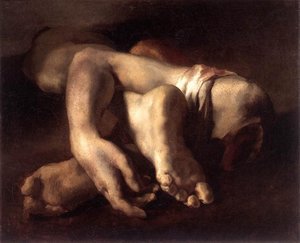
Jean-Louis André Théodore Géricault's "Study of Feet and Hands," painted in 1818, isn’t a grand statement of Romantic drama like his monumental “The Raft of the Medusa.” Instead, it offers a profoundly intimate glimpse into the artist’s meticulous process and a poignant meditation on the human form. This unassuming oil painting—measuring a modest 52 x 64 cm—is far more than just a preparatory sketch; it's a concentrated distillation of Géricault’s…

Jean-Louis André Théodore Géricault's "The Raft of the Medusa," a monumental detail from his 1818 painting, isn’t merely a depiction of shipwreck; it’s a visceral plunge into the depths of human suffering and political indictment. The scene, rendered with a dramatic intensity characteristic of Romanticism, captures the harrowing aftermath of the French frigate *Medusa*'s wreck off the coast of Mauritania in 1816. This disaster, largely attributed to the incompetence and…


Théodore Géricault's "The Wreck," painted in 1821, isn’t merely a seascape; it’s a visceral confrontation with the sublime—a raw depiction of humanity’s vulnerability against the overwhelming force of nature. Born amidst the turbulent currents of post-revolutionary France, Géricault, a figure both lauded and controversial within the burgeoning Romantic movement, channeled his own anxieties and the era's fascination with dramatic events into this monumental canvas. The painting immediately commands attention not…
 The Horse Race1816 · 提森·博爾涅米薩博物館
12
 Swiss Guard and Wounded Veteran1819 · 卢浮宫
13
 Mazeppa1823 · 香提伊城堡
14
 Two Horses1809 · 菲利普斯收藏馆
15
 A Turk (Mustapha)1820 · 卢浮宫
16
 A Carabinier with his Horse1814 · 鲁昂美术馆
17
 Riderless Horse Races (detail)1817 · 卢浮宫
18
 Boxers1818 · 香提伊城堡
19
 Horse Market: Five Horses at the Stake1816 · 卢浮宫
20
 The Epsom Derby1821 · 卢浮宫
21
 Mounted Trumpeters of Napoleon's Imperial Guard1813 · 国家美术馆
22
 Three Lovers1817 · J·保罗·盖蒂博物馆
23
 Portrait of Simon Bonnesoeur-Bourginire1812 · 明尼阿波利斯艺术学院
24
 Equestrian portrait of Wincenty Krasiński.1814 · 华沙国家博物馆
25
 The Wounded Cuirassier, study1814 · 布鲁克林博物馆
26
 Lion devouring a horse香提伊城堡
27
 Français Étude de bras et de main realisé par Géricault por son oeuvre Le Radeau de la Méduse1819
28
 Untitled (ARJCHM)卢浮宫
29
 Scene from the Epidemic of Yellow Fever in Cadiz1819 · 弗吉尼亚美术馆
30
 The Raft of the Medusa, Louvre1819
31
 Head of a Drowned Man1819
32
 Portrait of a Young Man1818 · 明尼阿波利斯艺术学院
33
 A study for a nude.1801 · 华沙国家博物馆
34
 Study of a Model1818 · J·保罗·盖蒂博物馆
35
 The Martyrdom of Saint Peter1814 · 巴塞尔艺术博物馆
36
 The Wreck1824 · 卢浮宫
37
 The Scotsman1801 · Petit Palais
38
 Mater dolorosa, Copy after Ribera1811 · 巴塞尔艺术博物馆
39
 Lion in Repose沃尔特斯艺术博物馆
40
 Equestrian Portrait of Jérôme Bonaparte, after Antoine-Jean GROS1813 · 德拉克罗国家博物馆
41
 Justice and Divine Vengeance Pursuing Crime1811
42
 Lying Lions1812
43
 The Trumpeter of the Orleans Hussars1813
44
 The Trumpeter of the Lancers of the Guard1813 · Burrell Collection
45
 The horse is out of the stable1810 · Condé Museum
46
 Un carabinier, vu à mi-corps1814
47
 Portrait of Louise Vernet1812
48
 Head of a woundet Man1814 · 羅爾富萊茨博物館
49
 Untitled (ARJCJD)1814
50
 The Monomaniac of Child Abduction1822
51
 Horse Race, Moving to the Right1820 · Musée des Beaux-Arts de Caen
52
 The Raft of the Medusa1818
53
 Etude d'un homme nu (Study of a Nude Man)1817 · The New Art Gallery Walsall
54
 Mounted Jockey1821 · 弗吉尼亚美术馆
55
 Portrait of a Negro1822 · 布法罗 AKG 艺术博物馆
56
 Portrait Study of a Youth1819 · 泰特不列颠美术馆
57
 The White Horse Tavern1821 · Fogg Museum
58
 Cattle Market1817 · Fogg Museum
59
 Fighting Horses1820 · 纽约现代艺术博物馆
60
 Wounded Soldiers in a Cart1815 · Fitzwilliam Museum
61
 Shipwrecked on a Beach (The Tempest)1822 · 耶鲁大学艺术馆
62
 Alexandre Colin1815
63
 The Raft of the Medusa1818
64
 Course de Chevaux montés allant à gauche, au moment du départ1822
65
 Francisco de Moncada Marqués d'Aytona1815 · 阿姆斯特丹博物馆
66
 Riderless Racers at Rome1817 · 沃尔特斯艺术博物馆
67
 Trumpeter of the Hussars1817
68
 Nude Warrior with a Spear1816 · 国家美术馆
69
 The Wild Horse Race at Rome1817
70
 The Raft of the Medusa, Detalj,1819
71
 Portrait of a Negro1800 · 阿茹达国家宫
72
 Head of a Youth1824 · 南澳大利亚美术馆
73
 Portrait d'homme1825 · 法布尔博物馆
74
 Equestrian Portrait of Charles V1814 · 旧金山美术馆
75
 Chestnut horse in a stable1814 · 史丹福大學坎托藝術中心
76
 Horses of the Auvergne1822 · 密歇根大学艺术博物馆
77
 A Prancing Grey Horse1812 · Burrell Collection
78
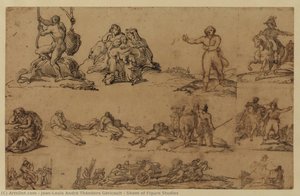 Sheet of Figure Studies1818 · 柯尔德美术馆
79
 Portrait of an Artist in His Studio1820 · 卢浮宫
80
 An Officer of the Chasseurs Commanding a Charge1812 · 卢浮宫
81
 Study of a nude man华沙国家博物馆
82
 The Plaster Kiln1823 · 卢浮宫
83
 Officer of Chasseurs à Cheval of the Imperial Guard Charging1812
84
 Dogs Fighting Bears1814 · Foundation E.G. Bührle Collection
85
 Cheval gris au râtelier1811
86
 Untitled (ARJCGT)1814
87
 The Woman with Gambling Mania, ca1822
88
 Deutsch Firmenschild für einen Hufschmied, Detail1814
89
 Italian Landscape with Tomb1818 · Petit Palais
90
 A Cart Loaded with Kegs1822 · Rhode Island School of Design Museum of Art
91
 Cinq chevaux vus par la croupe1821
92
 The Race of the Riderless Horses1817 · J·保罗·盖蒂博物馆
93
 Dervish in His Stall1820
94
 Untitled (ARJCHB)1819
95
 Untitled (ARJCJF)1818
96
 Untitled (ARJCHV)1817 · Palais des Beaux-Arts de Lille
97
 German Der Page Mazeppa1820
98
 English Anatomical Pieces1819 · 鲁昂美术馆
99
 A Shipwreck1817
100
 Français Têtes coupées English Cut heads Português Cabeças cortadas1818
The four subjects that come back most often in these originals, each with its finest example.
The 8 museums that hold the most of the paintings on this page.
| Museum | City | Works by 泰奥多尔·杰利柯 | Paintings from this list |
|---|---|---|---|
 卢浮宫 |
巴黎 | 20 | 救生筏上的梅杜萨号幸存者, The Raft of the Medusa (detail), Leda and the Swan |
 香提伊城堡 |
尚蒂伊 | 6 | Mazeppa, Boxers, Lion devouring a horse |
 J·保罗·盖蒂博物馆 |
洛杉矶 | 3 | Three Lovers, Study of a Model, The Race of the Riderless Horses |
 华沙国家博物馆 |
华沙 | 3 | Equestrian portrait of Wincenty Krasiński., A study for a nude., Study of a nude man |
 Burrell Collection |
格拉斯哥 | 8 | The Trumpeter of the Lancers of the Guard, A Prancing Grey Horse |
 法布尔博物馆 |
蒙彼利埃 | 4 | Study of Feet and Hands, Portrait d'homme |
 Petit Palais |
巴黎 | 3 | The Scotsman, Italian Landscape with Tomb |
 提森·博爾涅米薩博物館 |
馬德里 | 2 | The Kiss, The Horse Race |
Pick a decade to see the original that defines it.

Jean-Louis André Théodore Géricault's "Two Horses," painted in 1808-1809, isn’t merely a depiction of two magnificent animals; it’s a visceral exploration of movement, power, and the fleeting nature of existence. Born amidst the tumultuous backdrop of revolutionary France, Géricault was a restless spirit, rejecting the rigid formality of Neoclassicism in favor of a Romantic intensity that sought to capture raw emotion and dramatic truth. This painting, rendered in oil on…
让-路易·安德烈·特奥多尔·热里卡尔的这部巨作不仅仅是对一场海上灾难的描绘;它是一次对人类绝望、政治丑闻以及自然崇高力量的直观探索。这幅完成于1819年的画布尺寸巨大(491 x 716 cm),超越了人体比例,它永恒地记录了1816年法国护卫舰“麦杜萨号”沉没后那段令人心碎的余波——这场悲剧源于渎职与腐败,曾令整个法国社会为之震惊。
The Allure of the Divine Encounter: Géricault’s *Nymph and Satyr* Jean-Louis André Théodore Géricault's *Nymph and Satyr*, painted in 1819, isn’t merely a depiction of a mythological scene; it’s a profound exploration of desire, transgression, and the inherent tension between innocence and primal instinct. Born amidst the tumultuous backdrop of post-revolutionary France, Géricault, already recognized for his dramatic intensity, sought to capture not just a narrative but an emotional truth—a…
救生筏上的梅杜萨号幸存者 (1818), 卢浮宫, 巴黎. Nymph and Satyr (Jupiter and Antiope) (1820) and The Oath of Brutus after the Death of Lucretia (1815) come next.
27 years old: 救生筏上的梅杜萨号幸存者 dates from 1818, and 泰奥多尔·杰利柯 was born in 1791.
救生筏上的梅杜萨号幸存者, Nymph and Satyr (Jupiter and Antiope), The Oath of Brutus after the Death of Lucretia, Lions in a Mountainous Landscape, The Kiss, Wounded Soldiers Retrating from Russia, Study of Feet and Hands, The Raft of the Medusa (detail), Leda and the Swan and The Wreck. The ranking above gives each one's year and museum.
Our catalog holds 183 works by 泰奥多尔·杰利柯, dated from 1800 to 1824.
Mostly in 卢浮宫 (巴黎), 香提伊城堡 (尚蒂伊) and J·保罗·盖蒂博物馆 (洛杉矶). The museum table above lists them all.
In 1810s: 67 of the 100 works on this page were made then, 救生筏上的梅杜萨号幸存者 among them.
On this page, the earliest is Portrait of a Negro (1800) and the latest The Wreck (1824).
Man (12), Portrait (9) and Horse (8), across the 100 works on this page.
Oil On Canvas, for 25 of the 100 works on this page.
Romantic painting, judging by the originals on this page.
救生筏上的梅杜萨号幸存者, The Raft of the Medusa (detail) and Leda and the Swan: the 卢浮宫, 巴黎 holds 14 of the works on this page.
Yes, as a reproduction: the original stays in its museum, but any painting on this page can be painted by hand for you, made to order one at a time, from the painting's own page.