放贷者及其妻子
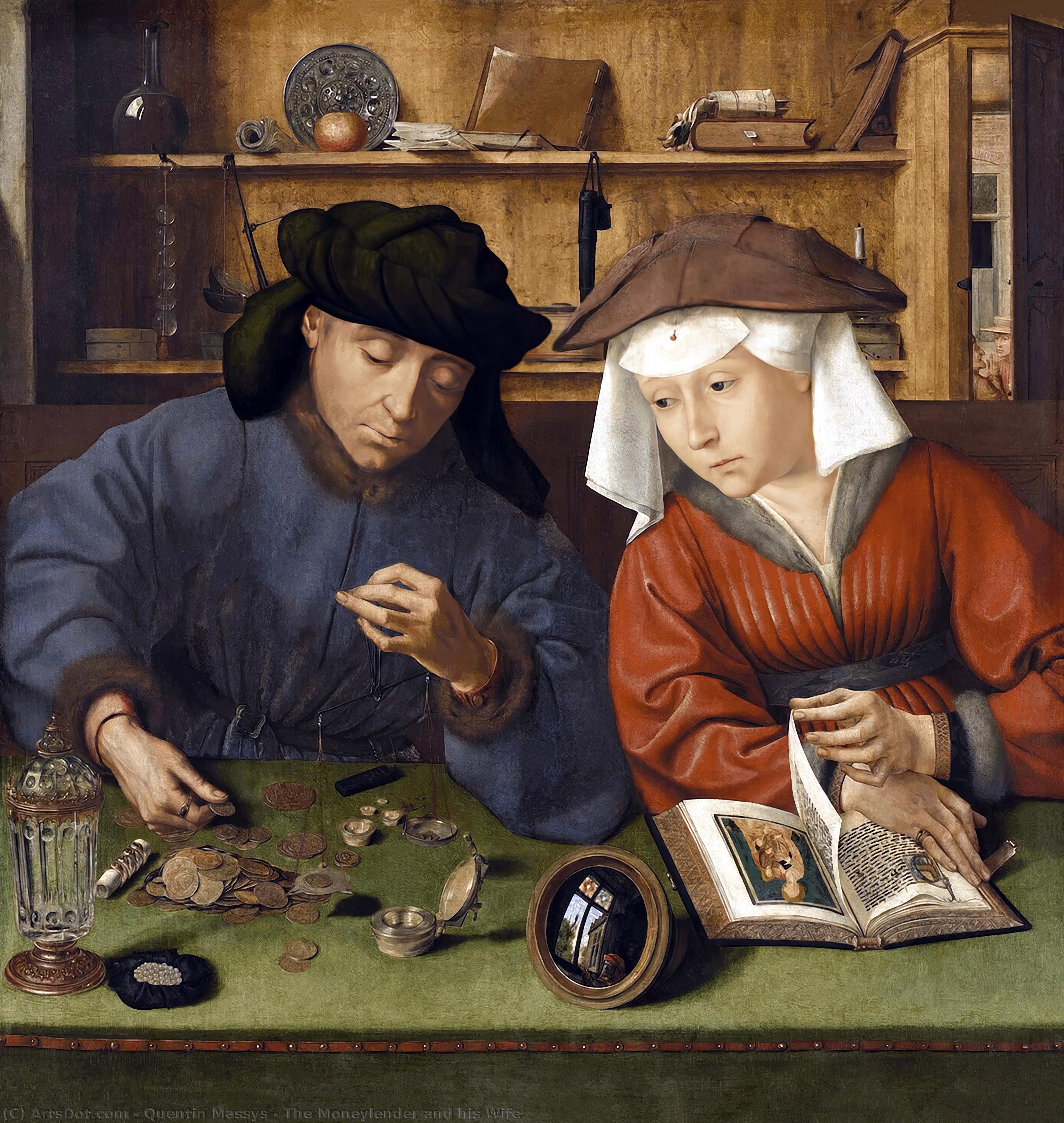
在昆廷·马赛斯于1514年创作的杰作《放贷者及其妻子》那静谧而亲密的氛围中,我们受邀跨越时间的门槛,步入一个充满深厚生活气息与无声叙事的世界。这件目前保存在卢浮宫神圣殿堂中的布面油画,是安特卫普画派精湛技艺的惊人典范。乍看之下,画面呈现的是一对男女坐在桌旁的平凡瞬间,但在表象之下,却交织着复杂的社会评论与细腻细节。构图的重心在于那块厚重且富有质感的绿色桌布,它为一系列物件搭建了舞台,低声诉说着关于商业、智慧以及尘世财富转瞬即逝的故事。
简而言之
在 昆滕·马赛斯 留下的所有原作中,最著名的作品是 放贷者及其妻子 (1514)。 紧随其后的是 Portrait of Erasmus of Rotterdam (1517) 和 The Virgin Enthroned (1525)。 我们的目录收录了 昆滕·马赛斯 的 147 件作品;画廊完整保留了 100 件享誉世界的杰作,并为每一件作品详细标注了创作日期、馆藏机构及其背后的故事。
在昆廷·马赛斯于1514年创作的杰作《放贷者及其妻子》那静谧而亲密的氛围中,我们受邀跨越时间的门槛,步入一个充满深厚生活气息与无声叙事的世界。这件目前保存在卢浮宫神圣殿堂中的布面油画,是安特卫普画派精湛技艺的惊人典范。乍看之下,画面呈现的是一对男女坐在桌旁的平凡瞬间,但在表象之下,却交织着复杂的社会评论与细腻细节。构图的重心在于那块厚重且富有质感的绿色桌布,它为一系列物件搭建了舞台,低声诉说着关于商业、智慧以及尘世财富转瞬即逝的故事。
To stand before this portrait is to step directly into the vibrant intellectual currents of the early sixteenth century. Quentin Massys has captured not merely a likeness, but an entire state of being—the profound concentration of a Renaissance mind at work. The subject, Erasmus of Rotterdam, radiates the quiet authority of scholarship. Dressed in the somber black attire typical of learned men of his era, he is seated amidst the…
In the quiet, hallowed atmosphere of the Staatliche Museen Berlin, there exists a window into the spiritual heart of the sixteenth century. Quentin Massys’ “The Virgin Enthroned,” completed around 1525, is far more than a mere religious portrait; it is a profound meditation on grace and the intersection of the earthly and the divine. As a cornerstone of the Antwerp School, this masterpiece captures a pivotal moment in art history…
The portrait presents a frontal, bust-length view of Christ, positioned centrally against a dark, undifferentiated background. The subject's face is illuminated by a soft, diffused light that defines the contours of the nose, the jawline, and the orbital sockets. A golden halo, composed of fine, radiating lines, emanates from behind the head, creating a sharp contrast with the deep tones of the backdrop. The hair is rendered in long, wavy…
To gaze upon this exquisite detail from Quentin Massys’s 1514 masterpiece, The Moneylender and His Wife, is to be invited across the threshold of a meticulously preserved moment in time. It is not merely a fragment of paint on panel; it is a concentrated jewel box of Northern Renaissance life, rich with unspoken narratives and dazzling technical mastery. The scene, captured from the legendary work housed at the Musée du…
To gaze upon this detail from Quentin Massys's The Moneylender and his Wife is to be invited across the threshold of a meticulously preserved moment in time. It is not merely a fragment of paint on panel; it is a concentrated jewel box of Northern Renaissance life, rich with unspoken narratives and dazzling technical mastery. The scene, captured from the masterpiece housed in the Musée du Louvre, draws the eye…
To gaze upon this depiction of The Adoration of the Magi is to step directly into a moment suspended in time—a tableau vivant brimming with piety, wonder, and profound human connection. Quentin Massys has masterfully captured not merely an event from sacred scripture, but the very essence of devotion itself. Mary cradles the divine infant Jesus, the focal point around which all gazes converge. The composition is richly populated; a…
The St Anne Altarpiece (detail) is a fragment of a larger narrative painted by Quinten Metsys. This specific section emerged from a work created in 1507. It captures a quiet moment within a sacred lineage, rendered with the precision of a hand accustomed to the weight of iron and the glint of metal.
In the quiet, contemplative corner of the St Anne Altarpiece, specifically its left wing, we encounter a moment of profound spiritual intimacy that has captivated viewers for over five centuries. Painted in 1507 by the Flemish master Quentin Massys, this work serves as a breathtaking window into the soul of the Northern Renaissance. The scene is anchored by the figure of St Anne, depicted with a poignant realism that eschews…
To gaze upon this exquisite detail from Quentin Massys's 1514 masterpiece, The Moneylender and his Wife, is to be invited across the threshold of a meticulously preserved moment in time. It is not merely a fragment of paint on panel; it is a concentrated jewel box of Northern Renaissance life, rich with unspoken narratives and dazzling technical mastery. In this intimate glimpse, we find ourselves seated at a table laden…
这些原作中反复出现的四个主题,各有一个最杰出的范例。
收藏了本页中大部分画作的 8 家博物馆。
| 博物馆 | 城市 | 昆滕·马赛斯 的作品 | 此列表中的画作 |
|---|---|---|---|
| 柏林 | 8 | Head of a Mourning Woman, Head of a Mourning Woman, The purchase agreement | |
| 安特卫普 | 7 | Christ as Salvator Mundi, Saint John the Baptist, Saint John | |
| 布鲁塞尔 | 6 | St Anne Altarpiece (detail), St Anne Altarpiece (left wing), St Anne Altarpiece | |
| 里斯本 | 6 | Jesus Among the Doctors, Saint John and the Women at the Tomb of Christ, Presentation at the Temple | |
| 布鲁塞尔 | 6 | The Deathbed of Saint Anne, The Refusal of the Offering of Joachim, The Seven Sorrows of the Virgin | |
| 慕尼黑 | 6 | Mary with Child (Copy after a lost original), Man of Sorrows, Rem Altar: Saint Roch with the Angel (Reverse: Saint Anne Selbdritt) | |
| 安特卫普 | 7 | St John Altarpiece (detail), St John Altarpiece (right wing), St John Altarpiece (left wing) | |
| 巴黎 | 4 | The Moneylender and his Wife (detail), The Moneylender and his Wife (detail), The Moneylender and his Wife (detail) |
选择一个年代,探索定义该时代的原创杰作。
In this 1496 portrait, we find ourselves in the presence of Jacob Obrecht, a man whose life was defined by the precision of musical notation and the solemnity of the liturgy. The sitter is captured in a three-quarter pose, his hands clasped in a gesture of quiet contemplation or perhaps prayer. There is a stillness here that feels intentional, as if the subject has paused mid-thought to acknowledge the viewer.…
The portrait presents a frontal, bust-length view of Christ, positioned centrally against a dark, undifferentiated background. The subject's face is illuminated by a soft, diffused light that defines the contours of the nose, the jawline, and the orbital sockets. A golden halo, composed of fine, radiating lines, emanates from behind the head, creating a sharp contrast with the deep tones of the backdrop. The hair is rendered in long, wavy…
In the quiet, hallowed atmosphere of the Staatliche Museen Berlin, there exists a window into the spiritual heart of the sixteenth century. Quentin Massys’ “The Virgin Enthroned,” completed around 1525, is far more than a mere religious portrait; it is a profound meditation on grace and the intersection of the earthly and the divine. As a cornerstone of the Antwerp School, this masterpiece captures a pivotal moment in art history…
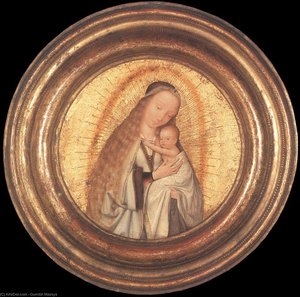
To gaze upon this depiction of the Madonna and Child is to step directly into the hushed reverence of the High Renaissance. It is more than just a portrait; it is a profound meditation on maternal love, divine connection, and enduring devotion. The composition centers with breathtaking tenderness on the Virgin Mary cradling the infant Jesus. Her posture speaks of serene acceptance, while the gentle interaction—the kiss upon her cheek…
放贷者及其妻子 (1514)。紧随其后的是 Portrait of Erasmus of Rotterdam (1517) 和 The Virgin Enthroned (1525)。
48岁:放贷者及其妻子创作于1514年,昆滕·马赛斯出生于1466年。
放贷者及其妻子, Portrait of Erasmus of Rotterdam, The Virgin Enthroned, Christ as Salvator Mundi, The Moneylender and his Wife (detail), The Moneylender and his Wife (detail), The Adoration of the Magi, St Anne Altarpiece (detail), St Anne Altarpiece (left wing) 及 The Moneylender and his Wife (detail)。上方排名显示了每件作品的创作年份及馆藏机构。
我们的目录收录了 147 件 昆滕·马赛斯 的作品,创作年代从 1490 年至 1530 年。
多见于 柏林国家美术馆 (柏林), 安特卫普皇家美术馆 (安特卫普) 及 Musées Royaux des Beaux-Arts (布鲁塞尔)。上方的博物馆列表列出了所有相关机构。
在 1510s 期间:本页 100 件作品中有 34 件创作于该时期,其中包含 放贷者及其妻子 件作品。
在本页面中,最早的作品创作于 Madonna and Child (1490),最晚的创作于 Madonna and Child (1530)。
Man (38), Woman (37) 及 Child (16),共计 100 件作品。
Oil On Panel,共计 58 件(本页共有 100 件作品)。
根据本页面的原作,北欧文艺复兴
Head of a Mourning Woman, Head of a Mourning Woman 及 The purchase agreement:柏林国家美术馆, 柏林收藏了本页中 7 件作品。
在十六世纪低地国家那片充满活力且蓬勃发展的土地上,很少有名字能像昆廷·马赛斯这样具有如此深远的奠基意义。作为安特卫普画派公认的先驱,马赛斯是一位连接了早期尼德兰传统中那种细致入微、虔诚的精神追求,与北欧文艺复兴时期新兴人文主义精神的画家。他于1466年左右出生于比利时的鲁汶,其早年生活至今仍如同一幅由传说与历史碎片交织而成的挂毯。在艺术史的传闻中,在他拿起画笔之前,曾接受过铁匠的训练——这一细节为他后来对纹理与材质那令人惊叹的掌控力,增添了一种深沉且富有触感的厚重感。这种金属加工的背景,或许在他心中植入了一种对物质世界的独特敬畏,使他能够以无与伦避的精准度,去描绘丝绸的光泽、钱币的冷冽寒光,以及人类皮肤那饱经风霜的质感。
大约在1490年,随着他从鲁汶学术气息浓厚的氛围转向安特卫普这个繁忙的商业枢纽,马赛斯开始将自己独特的丝线编织进佛兰德艺术的宏大织锦中。他的早期训练——可能是在迪尔克·鲍茨的指导下完成的——使他承袭了汉斯·孟林和罗吉尔·范德韦登等大师的艺术血脉。从这些前辈那里,他继承了对逼真性的执着追求,即在表现中探寻真理。然而,马赛斯绝非仅仅是一位模仿者。在保留其先辈们标志性的精妙细节的同时,他在作品中注入了一种全新的、蓬勃向上的生命力,并展现出一种勇于探索人类境遇复杂性的胆识,这种探索既体现在宗教的庄严之中,也体现在辛辣的社会评论里。
马赛斯的卓越之处在于他能够游刃有余地穿梭于两个看似截然不同的世界:神圣与世俗。一方面,他的宗教构图是关于信仰的深刻冥想。在诸如《受难像中的基督与捐赠者》等作品中,他捕捉到了十字架刑罚那原始而沉重的情感张力,利用盛期文艺复锐的审美感,呈现出一个既动人心魄又技术无瑕的场景。他通过人类苦难的视角来描绘神性的能力,使他的宗教题材产生了一种直抵灵魂的亲密感,让观者能够真切地感受到精神世界的存在。
另一方面,马赛斯也是讽刺艺术流派的大师,他用画笔作为一面镜子,映射出那个时代不断变迁的社会道德。他拥有一双洞察人性弱点的锐利眼睛,经常创作出将现实主义与微妙、嘲弄的机智融合在一起的场景。这种双重性在他处理肖像画和风俗画时表现得最为明显:他可以从《圣母与圣婴》那宁静的美感,瞬间切换到对当代生活那种更为复杂、充满道德层面的刻画。他的作品经常探讨贪婪、虚荣以及物质财富与精神纯洁之间的张力,这使他成为了后来几个世纪中那些伟大的风俗画家们的先驱。
昆廷·马赛斯的历史地位不言而喻;他是安特卫普艺术革命的催化剂。通过在植根于故土丰富传统的同时引入新的母题与技法,他为整个十六世纪统治佛兰德地区的画派提供了蓝图。他的影响力可以追溯到整个北欧艺术的演进过程,因为他为一种更加富有表现力、注重观察的风格铺平了道路,这种风格拥抱了现代化世界日益增长的复杂性。
时至今日,我们铭记马赛斯不仅是因为他是一位技艺精湛的匠人,更是因为他是一位捕捉了一个时代灵魂的叙事者。他的艺术遗产被保存在其影像那持久的力量之中: