光琳 肖像

光琳 作品:画廊视角下的 36 幅名作

更新于 November 2026 · 基于我们的流行度评分排名(每件作品的搜索量、访问量及订单量) · 36 件 光琳 作品收录于我们的目录中

简而言之

在画廊看来,光琳 最著名的作品是 Title(Japanese): 円形図案集 (1700),其原作现收藏于 大阪 的 大阪市立美术馆。 Fukurokuju (1700) 与 Hotei (1704) 共同构成了那组令人过目不忘的艺术三部曲。 在我们的目录中,光琳 共有 36 件作品,画廊为您精选了以下 36 件最著名的原作,并详细列出了每件作品的创作年份、馆藏机构及其独特之处。

1658 – 1716, 平安京 Rinpa 藏品最多:大都会艺术博物馆

画廊中 光琳 的十大名画

1
Title(Japanese): 円形図案集 (1700) 由 光琳

Title(Japanese): 円形図案集

1700 · Ink On Paper · 大阪市立美术馆, 大阪

A single deer pauses within a ring of shifting life. It stands on one leg, a momentary stillness amidst the quiet movement of the woods. Leaves and flowers drift through the composition, some clinging to the earth near the animal's feet, others floating in the empty space of the background. The scene captures a breath held in the forest. It is a small, circular world where nature is distilled into…

2
Fukurokuju (1700) 由 光琳

Fukurokuju

1700 · Ink · 明尼阿波利斯艺术学院, 明尼阿波利斯

In Fukurokuju, Ogata Kōrin presents the deity through a highly stylized and expressive lens. The subject is rendered as an elderly man, defined by a long beard and a high, prominent forehead. The artist employs a flat perspective, prioritizing the silhouette and the essential features of the figure over three-dimensional depth. This approach emphasizes the character's iconographic form rather than anatomical realism.

3
Hotei (1704) 由 光琳

Hotei

1704 · Ink On Paper

A heavy, dark sphere rests behind a seated figure, a moon of ink that anchors the composition. Hotei sits with a quiet, rounded presence, his form defined by the sweeping, confident strokes of a brush. He cradles two black cats against his robes, their small shapes mirroring the curves of his own body. The ink is deep and certain, flowing across the cream-colored paper to create a sense of weight…
4
Rabbits under the Moon, Peonies, and Hollyhocks (801) 由 光琳

Rabbits under the Moon, Peonies, and Hollyhocks

801 · Ink On Paper

The scene unfolds in Rabbits under the Moon, Peonies, and Hollyhocks, a work that breathes with the quiet energy of the Rinpa school. Here, Ogata Kōrin captures a moment of botanical grace, inviting the viewer into a world where nature and design meet in a delicate dance. The artist, born in Heian-kyō, Japan, moves through the medium with the practiced hand of a man who understands both the flow of…

5
Pheasant (1687) 由 光琳

Pheasant

1687 · Ink On Paper · 克利夫兰艺术博物馆, 克利夫兰

A single pheasant occupies the left side of the composition, its body rendered in profile with the beak slightly parted as if in mid-call. The bird's long, sweeping tail extends toward the bottom right corner, creating an asymmetrical balance typical of the Rinpa school. Fine, rhythmic brushstrokes define the texture of the feathers, while a striking patch of red marks the bird's face. The surrounding flowers are depicted with delicate,…

7
Seiobo (1705) 由 光琳

Seiobo

1705 · Ink · Kimbell Art Museum, 沃斯堡

In the delicate dance of ink and color upon silk, Ogata Kōrin captures a moment that transcends the earthly realm. Seiobo, a masterpiece dating to approximately 1705, invites the viewer into a mythic landscape where the boundaries between the mortal and the divine blur. The painting depicts the legendary Queen Mother of the West, known in Japan as Seiobo, an immortal Taoist deity of profound significance. Kōrin presents her not…

8
Plum Tree (1700) 由 光琳

Plum Tree

1700 · Ink On Paper · 克利夫兰艺术博物馆, 克利夫兰

We are looking at Plum Tree, a work created by Ogata Kōrin around 1700. This piece emerges from the Rinpa School, a tradition that Kōrin helped define through his diverse talents. He was a practitioner of many disciplines, working as a Japanese landscape illustrator, lacquerer, painter, and textile designer.

9
Writing box, Design of Yatsu-hashi bridge (1700) 由 光琳

Writing box, Design of Yatsu-hashi bridge

1700 · Lacquer

The Writing box, Design of Yatsu-hashi bridge emerges from the hands of Ogata Kōrin, a leading figure of the Rinpa School. This object, a suzuribako, carries the unmistakable touch of an artist who transformed the decorative arts of the Edo period. Born in Heian-kyō, Japan, Ogata Kōrin lived from 1658 to 1716, a life that saw the evolution of a distinct visual language. This specific piece dates to about 1700,…

10
Flowers of Spring and Autumn (1701) 由 光琳

Flowers of Spring and Autumn

1701 · Ink

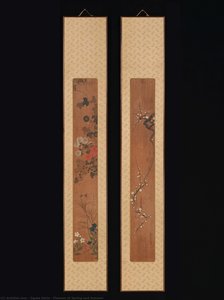
Flowers of Spring and Autumn, painted by Ogata Kōrin around 1701, captures the shifting breath of the seasons across two panels. On the right-hand side, white plum blossoms cling to the stark, dark branches of a leafless tree. These blossoms act as a quiet harbinger of spring, emerging from the wood's fine grain. The composition relies on the tension between the bare limbs and the sudden, pale life of the…

光琳 的画作,排名第 11 至 36

令 光琳 驻足的创作主题

这些原作中反复出现的四个主题,各有一个最杰出的范例。

收藏有 光琳 原作的博物馆

收藏了本页中大部分画作的 8 家博物馆。

博物馆 城市 光琳 的作品 此列表中的画作
大都会艺术博物馆, 纽约大都会艺术博物馆 纽约 13 Irises at Yatsuhashi (Eight Bridges), Rabbits, Preliminary Drawing of Three Deer Mounted on a Hanging-scroll Painting of Flowering Bush Clover
克利夫兰艺术博物馆, 克利夫兰克利夫兰艺术博物馆 克利夫兰 3 Pheasant, Chrysanthemums by a Stream, Plum Tree
大阪市立美术馆, 大阪大阪市立美术馆 大阪 2 Title(Japanese): 円形図案集, Title(Japanese): 梅蒔絵箱図案
底特律艺术学院, 底特律底特律艺术学院 底特律 2 Corn and Pampas Grass: Corn, Corn and Pampas Grass: Pampas Grass
明尼阿波利斯艺术学院, 明尼阿波利斯明尼阿波利斯艺术学院 明尼阿波利斯 1 Fukurokuju
Kimbell Art Museum, 沃斯堡Kimbell Art Museum 沃斯堡 1 Seiobo
サントリー美術館, 东京サントリー美術館 东京 1 Flowering Plants in Autumn
波士顿美术馆, 波士顿波士顿美术馆 波士顿 1 Waves at Matsushima

光琳,每十年一件代表作

各年代作品数量

选择一个年代,探索定义该时代的原创杰作。

光琳 的画作:画廊解答

哪幅 光琳 的画作最为闻名?揭晓答案

Title(Japanese): 円形図案集 (1700),大阪市立美术馆, 大阪。紧随其后的是 Fukurokuju (1700) 和 Hotei (1704)。

光琳 完成 Title(Japanese): 円形図案集 时多大年纪?揭晓答案

42岁:Title(Japanese): 円形図案集创作于1700年,光琳出生于1658年。

光琳 最受欢迎的 10 幅画作是哪些?揭晓答案

Title(Japanese): 円形図案集, Fukurokuju, Hotei, Rabbits under the Moon, Peonies, and Hollyhocks, Pheasant, Chrysanthemums by a Stream, Seiobo, Plum Tree, Writing box, Design of Yatsu-hashi bridge 及 Flowers of Spring and Autumn。上方排名显示了每件作品的创作年份及馆藏机构。

光琳 创作了多少件作品?揭晓答案

我们的目录收录了 36 件 光琳 的作品,创作年代从 1687 年至 1709 年。

光琳 最著名的原作收藏于何处?揭晓答案

多见于 大都会艺术博物馆 (纽约), 克利夫兰艺术博物馆 (克利夫兰) 及 大阪市立美术馆 (大阪)。上方的博物馆列表列出了所有相关机构。

光琳 是在什么时候创作出最著名的画作的?揭晓答案

在 1700s 期间:本页 36 件作品中有 12 件创作于该时期,其中包含 Title(Japanese): 円形図案集 件作品。

光琳 最早和最晚的代表作有哪些?揭晓答案

在本页面中,最早的作品创作于 Pheasant (1687),最晚的创作于 Irises at Yatsuhashi (Eight Bridges) (1709)。

光琳 最常创作的主题是什么?揭晓答案

Traditional japan (7), Flowers (4) 及 Japanese art (4),共计 36 件作品。

光琳 最常用的创作媒介是什么?揭晓答案

Ink On Paper,共计 6 件(本页共有 36 件作品)。

光琳 属于哪种艺术流派?揭晓答案

根据本页面的原作,Rinpa

大都会艺术博物馆收藏了哪些光琳的原作?揭晓答案

Irises at Yatsuhashi (Eight Bridges), Rabbits 及 Preliminary Drawing of Three Deer Mounted on a Hanging-scroll Painting of Flowering Bush Clover:大都会艺术博物馆, 纽约收藏了本页中 13 件作品。

光琳:艺术家

小林光琳:琳派艺术的大师

小林光琳(1658-1716)是日本艺术史上举足轻重的关键人物,这位大师以其绚丽夺目的画作与创新的设计,深刻地塑造了琳派(Rinpa school)的艺术面貌。他出生于京都一个从事纺织业的富裕商人家庭,其艺术生涯呈现出一种“大器晚成”的壮丽,从早年的艺术爱好者蜕变为享誉世界的艺术家,以其令人屏息的屏风画(byōbutsu)和对自然界精妙绝伦的描绘而闻名。他的艺术遗产不仅通过那些标志性的传世之作得以延续,更通过对后世一代又一代艺术家的深远影响而永存,其中最著名的便是酒井抱一,正是这位后辈极力推崇并推广了光琳那独树一帜的风格。

光琳的早年生活沉浸在京都精英阶层的传统氛围之中。他的父亲小林宗坚是一位受人尊敬的书法家,也是能乐(Noh theater)的赞助人,他从小便培养了儿子们对艺术的敏锐感知力。尽管光琳最初更倾向于社交活动,但他接受了正式的艺术教育,虽然确凿的证据尚难寻觅,但其风格很可能受到了狩野派教学的影响。至关重要的是,他的艺术灵魂深受其叔祖父本阿弥光悦以及画家俵屋宗达的影响——这两位正是琳派艺术的奠基者。这些前辈对自然主义、细腻细节以及革命性色彩理论的追求,构成了光琳自身艺术发展的坚实基石。

大师的崛起

光琳作为一名重要艺术家的崭露头角发生在其生命的后期,大约在1701年至1705年间。这一时期见证了他最负盛名的杰作诞生,其中包括标志性的《鸢尾花》(一双六扇屏风,现已被列为日本国宝)。这些画作绝非仅仅是对自然的简单再现;它们是经过精心构思的艺术篇章,充满了象征意义,并展示了光琳对色彩、纹理与透视法的卓越掌控。通过在丝绸或纸张上熟练运用矿物颜料与有机材料,他创造出了在当时具有革命性的鲜艳色调,彻底摆脱了早期流派所偏好的那种克制且素雅的色调。

除了《鸢尾花》,光琳的作品题材广泛,涵盖了梅花、鹤与松树(长寿的传统象征),甚至包括描绘日常生活场景的画作。然而,真正定义其艺术遗产的是他的屏风作品。例如创作于1714至1715年左右的《红白梅》,便是这种大师技艺的典范,在精心编排的构图中展现了色彩与形态之间动态的交织。这些作品并非单纯的装饰品,它们代表了对美学与象征意义的高级理解,深刻反映了江户时代的审美价值观。

技艺与创新

光琳的艺术技法以其非凡的细节关注度和对材料的深刻理解为特征。他在色彩调配上采用了一种独特的方法,将红花红、群青和孔雀石绿等矿物颜料与有机染料结合使用,从而达到令人惊叹的浓郁且富有光泽的效果。他将金箔细致地敷设于纸面之上,为画作增添了一种空灵的气息,创造出一种令观者沉醉其中的闪烁深度。

此外,光琳的造诣不仅限于绘画;他同时也是一位技艺精湛的漆艺师,擅长设计如“莳绘”(makie,浮雕设计)和“仁荷”(inrō,药盒)等装饰性器物。这些作品展示了他的多才多艺,以及将艺术原则无缝融入不同媒介的能力。他在设计领域的创新——尤其是在纺织品领域——深刻影响了整个江户时代的时尚潮流。

传承与影响

小林光琳对日本艺术的影响是无法估量的。他不仅仅是在继承传统,更是振兴并巩固了琳派,使其成为当时艺术版图中的主导力量。他的作品成为了后世艺术家的典范,尤其是酒井抱一,他通过细致地临摹光琳的画作,将这种风格传播到了日本各地。正是由于抱一的努力,才确保了光琳的艺术遗产在艺术家逝世后依然能够长久流传。

时至今日,光琳的杰作主要收藏于静冈县热海市的美术馆中,这本身就是对其持久价值与重要性的明证。他的作品持续激励着艺术家与艺术爱好者,为人们提供了一个窥见江户时代日本绚烂世界以及这位最伟大画家天才智慧的窗口。

核心作品

  • 鸢尾花 (1701-1705):一对六扇屏风,日本国宝。
  • 红白梅 (1714或1715年):一对两扇屏风。
  • 风神与雷神 (约1700年):一组宏伟的屏风,现藏于东京国立博物馆。
  • 鹤、松与竹 :琳派风格的经典范例,展示了长寿的象征意义。