彼得大帝在彼得霍夫审问皇储阿列克谢·彼得罗维奇
这幅油画描绘了一幕沉重而肃穆的历史场景,背景设定在彼得霍夫宫的蒙普莱西尔宫内部。整个构图聚焦于大理石纹理华丽的宽大桌子两侧的两个身影。在画面的右侧,彼得一世坐在一把镶有红色天鹅绒的软垫椅上,身体略微前倾,目光中透着不容置疑的威严。而在左侧,皇储阿列克谢·彼得罗维奇则笔直地站立着,他低垂着头,神情沮丧。他身着天鹅绒背心,穿着高筒丝绸长袜,脚蹬带有搭扣的黑色皮鞋,轻盈的蕾丝袖口与衬衫领口更加衬托出他那苍白的面容。
简而言之
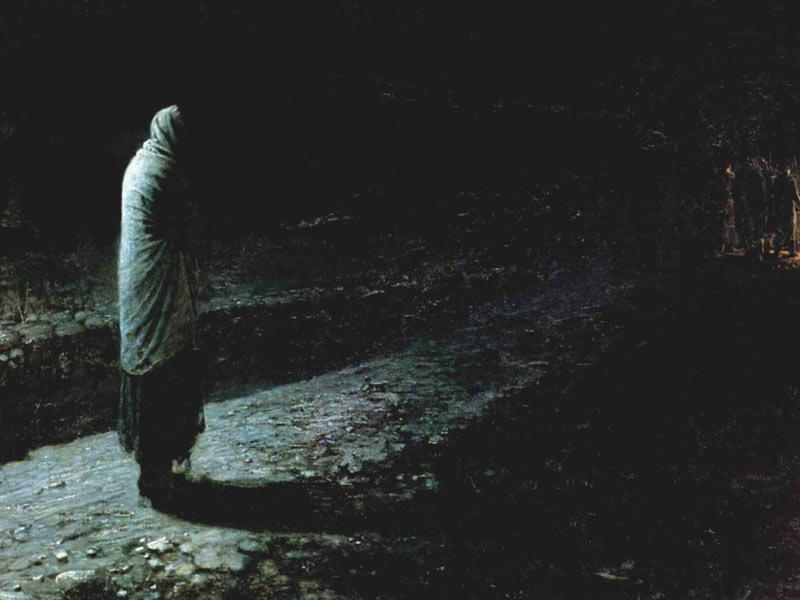
在 尼古拉·盖 留下的所有原作中,最著名的当属收藏于 莫斯科 特列季亚科夫画廊 的《彼得大帝在彼得霍夫审问皇储阿列克谢·彼得罗维奇 (1871)》。 紧随其后的是 Christ and his disciples entered the Garden of Gethsemane (1888) 和 Harbingers of the Resurrection (1867)。 我们的目录收录了 尼古拉·盖 的 95 件作品;画廊完整保留了 95 件享誉世界的杰作,并为每一件作品详细标注了创作日期、馆藏机构及其背后的故事。
这幅油画描绘了一幕沉重而肃穆的历史场景,背景设定在彼得霍夫宫的蒙普莱西尔宫内部。整个构图聚焦于大理石纹理华丽的宽大桌子两侧的两个身影。在画面的右侧,彼得一世坐在一把镶有红色天鹅绒的软垫椅上,身体略微前倾,目光中透着不容置疑的威严。而在左侧,皇储阿列克谢·彼得罗维奇则笔直地站立着,他低垂着头,神情沮丧。他身着天鹅绒背心,穿着高筒丝绸长袜,脚蹬带有搭扣的黑色皮鞋,轻盈的蕾丝袖口与衬衫领口更加衬托出他那苍白的面容。
Nikolai Ge’s Christ and his disciples entered the Garden of Gethsemane, painted about 1888, captures a pivotal moment from the New Testament. The religious subject matter focuses on the group of figures gathered in the garden. Christ stands prominently with outstretched arms, a gesture suggesting sacrifice and the acceptance of fate. Around him, the disciples are clustered in a solemn assembly. Their somber expressions convey a sense of anxiety and…
In the painting Harbingers of the Resurrection, created by Nikolai Ge about 1867, the central figure is Jesus Christ. He is positioned in the middle of the composition, flanked by two men. These two figures on either side of Christ appear to be angels or messengers. Each of these men holds a staff, an object that may symbolize their functions as protectors or guides. The presence of these figures establishes…
An elderly man sits within the heavy embrace of a patterned armchair. The fabric of his suit carries a palpable weight, rendered in deep blacks and muted earth tones that seem to absorb the surrounding light. His face, pale against the dark void of the background, holds a quiet melancholy. Light falls sharply across his forehead and eyes, catching the texture of skin and the silvered strands of facial hair.…
In the painting Leila and Khaji-Abrek by Nikolai Ge, two figures occupy the central space of the composition. Created about 1852, the work depicts a woman and a man in a specific physical arrangement. The woman is positioned kneeling on the ground, facing the man. He is situated before her, appearing as a soldier or a leader in stature and presence. Both individuals are dressed in traditional clothing that covers…
We are looking at Bridge in Viko, a work from 1858 by the Russian artist Nikolai Ge. This piece belongs to the Realism movement, a period where the focus shifted toward a more direct and unadorned representation of the world. It is a quiet study of landscape and structure, captured during a formative time in the artist's career.
In this quiet composition titled Returning from the burial of Christ, we encounter a profound moment of transition. The work is attributed to the Russian artist Nikolai Ge and dates to 1859. It captures a solemn procession of figures moving through a natural landscape, their presence marked by the heavy folds of their long robes. There is a stillness here that invites a closer look at the gravity of the…
In the quiet, amber-hued atmosphere of a Moscow study, time seems to suspend itself within Nikolai Ge’s 1884 masterpiece, Portrait of Leo Tolstoy. This is not merely a depiction of a man at work; it is an intimate window into the very soul of Russian literature. The painting captures the legendary author seated at his desk, enveloped by the weight of his own profound thoughts. As he leans over his…
This oil painting is a somber and intense psychological portrait of an older man, presented as an oval-shaped bust-length figure. Set against a dark, indistinct background, the subject is illuminated by directional lighting coming from the upper left, which casts one side of his face and much of his clothing into deep shadow. This technique creates a sense of depth and three-dimensionality through dramatic chiaroscuro. The color palette is dominated…
In Catherine II at the Coffin of Empress Elizabeth, Nikolai Ge constructs a grand hall where history feels heavy and crowded. The composition is a dense gathering of figures, a chaotic assembly of dignitaries and attendants that fills the space with ceremonial weight. Amidst this throng, the eye is drawn to Catherine II, positioned slightly off-center. She exists within a shallow perspective that pushes the solemnity of the court toward…
这些原作中反复出现的四个主题,各有一个最杰出的范例。
收藏了本页中大部分画作的 5 家博物馆。
| 博物馆 | 城市 | 尼古拉·盖 的作品 | 此列表中的画作 |
|---|---|---|---|
| 莫斯科 | 5 | 彼得大帝在彼得霍夫审问皇储阿列克谢·彼得罗维奇, Portrait of Leo Tolstoy, What is Truth. Christ and Pilate | |
| 圣彼得堡 | 4 | Portrait of Nikolai Nekrasov, Portrait of Alexander Herzen, Portrait of Princess Olga Volkonskaya (nee Kleinmichel) | |
| 基辅 | 3 | Portrait of the Artist's Wife Anna Ge, Self-Portrait, Christ Head | |
| 明斯克 | 1 | Achilles and the body of Patroclus | |
| 圣彼得堡 | 1 | Last Supper |
选择一个年代,探索定义该时代的原创杰作。
In this 1845 oil on canvas, we find ourselves in a moment of profound stillness. The composition centers on a woman holding a child, a scene that carries an immediate, heavy emotional weight. She is dressed in black, a choice that anchors the figure and lends a certain gravity to her presence. Her gaze is directed outward, meeting the viewer with a steady, unblinking clarity. Beneath her, the child is…
In the painting Leila and Khaji-Abrek by Nikolai Ge, two figures occupy the central space of the composition. Created about 1852, the work depicts a woman and a man in a specific physical arrangement. The woman is positioned kneeling on the ground, facing the man. He is situated before her, appearing as a soldier or a leader in stature and presence. Both individuals are dressed in traditional clothing that covers…
In the painting Harbingers of the Resurrection, created by Nikolai Ge about 1867, the central figure is Jesus Christ. He is positioned in the middle of the composition, flanked by two men. These two figures on either side of Christ appear to be angels or messengers. Each of these men holds a staff, an object that may symbolize their functions as protectors or guides. The presence of these figures establishes…
这幅油画描绘了一幕沉重而肃穆的历史场景,背景设定在彼得霍夫宫的蒙普莱西尔宫内部。整个构图聚焦于大理石纹理华丽的宽大桌子两侧的两个身影。在画面的右侧,彼得一世坐在一把镶有红色天鹅绒的软垫椅上,身体略微前倾,目光中透着不容置疑的威严。而在左侧,皇储阿列克谢·彼得罗维奇则笔直地站立着,他低垂着头,神情沮丧。他身着天鹅绒背心,穿着高筒丝绸长袜,脚蹬带有搭扣的黑色皮鞋,轻盈的蕾丝袖口与衬衫领口更加衬托出他那苍白的面容。
Nikolai Ge’s Christ and his disciples entered the Garden of Gethsemane, painted about 1888, captures a pivotal moment from the New Testament. The religious subject matter focuses on the group of figures gathered in the garden. Christ stands prominently with outstretched arms, a gesture suggesting sacrifice and the acceptance of fate. Around him, the disciples are clustered in a solemn assembly. Their somber expressions convey a sense of anxiety and…
In "Conscience, Judas" by Nikolai Ge, a heavy silence hangs over the scene. Painted about 1891, the work captures a moment of profound isolation. The figure of Judas appears alone, caught in the immediate aftermath of his betrayal of Jesus. He does not move with purpose; instead, his entire being seems to collapse under the weight of his own actions. The darkness surrounding him feels thick, pressing in on a…
彼得大帝在彼得霍夫审问皇储阿列克谢·彼得罗维奇 (1871),特列季亚科夫画廊, 莫斯科。紧随其后的是 Christ and his disciples entered the Garden of Gethsemane (1888) 和 Harbingers of the Resurrection (1867)。
40岁:彼得大帝在彼得霍夫审问皇储阿列克谢·彼得罗维奇创作于1871年,尼古拉·盖出生于1831年。
彼得大帝在彼得霍夫审问皇储阿列克谢·彼得罗维奇, Christ and his disciples entered the Garden of Gethsemane, Harbingers of the Resurrection, Portrait of Nikolai Nekrasov, Leila and Khaji-Abrek, Bridge in Viko, Returning from the burial of Christ, Portrait of Leo Tolstoy, Portrait of Alexander Herzen 及 Catherine II at the Coffin of Empress Elizabeth。上方排名显示了每件作品的创作年份及馆藏机构。
我们的目录收录了 95 件 尼古拉·盖 的作品,创作年代从 1845 年至 1893 年。
多见于 特列季亚科夫画廊 (莫斯科), 冬宫博物馆 (圣彼得堡) 及 基辅国家美术馆 (基辅)。上方的博物馆列表列出了所有相关机构。
在 1860s 期间:本页 95 件作品中有 21 件创作于该时期,其中包含 Harbingers of the Resurrection 件作品。
在本页面中,最早的作品创作于 Portrait of Evdokiya Nikolaevna Kostycheva (1845),最晚的创作于 Old Park (1893)。
Portraits (19), Men (14) 及 Portrait (11),共计 95 件作品。
Oil On Canvas,共计 14 件(本页共有 95 件作品)。
根据本页面的原作,Realism
彼得大帝在彼得霍夫审问皇储阿列克谢·彼得罗维奇, Portrait of Leo Tolstoy 及 What is Truth. Christ and Pilate:特列季亚科夫画廊, 莫斯科收藏了本页中 5 件作品。
尼古拉·尼古拉耶维奇·格(1831-1894)是俄罗斯艺术史上举足轻重的人物。他出生于一个法国贵族家庭,一生致力于智力探索和艺术奉献。最初注定从事科学事业,在基辅大学和圣彼得堡大学学习物理学和数学,但格在1850年戏剧性地改变了方向,前往圣彼得堡的帝国美术学院攻读绘画。这个决定不仅塑造了他自己的命运,也为俄罗斯艺术的发展做出了重要贡献。
格的早期作品展示了精湛的学院派绘画技巧,同时暗示了他后期职业生涯中将要探索的更深刻的哲学思考。他的旅行使他接触到不同的艺术方法,进一步完善了他的技能并塑造了他独特的 vision。
格将摄影融入其艺术创作过程的做法具有开创性,预示着它未来的作用。围绕《最后的晚餐》的争议突出了19世纪俄罗斯不断变化的文化格局以及艺术家突破界限所面临的挑战。
在晚年,格的作品越来越关注宗教和哲学主题,反映了他与托尔斯泰理想的一致。尽管面临审查制度和批评,他仍然致力于探索关于信仰、真理和人性的深刻问题。
尽管经历过一段时间的默默无闻,尼古拉·格的艺术遗产近几年来得到了重新评估。他开创性地使用摄影、探索复杂的哲学主题以及致力于以现实主义和深度描绘人性,至今仍引起观众共鸣。