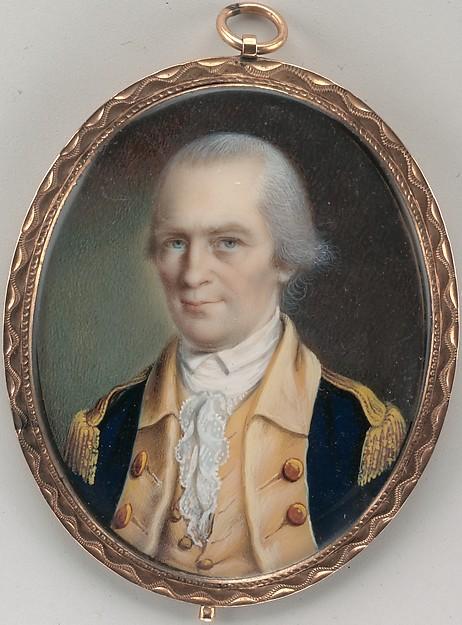
简而言之
在画廊看来,John Ramage 最著名的作品是 Portrait of a Gentleman (1780),其原作现收藏于 纽约 的 大都会艺术博物馆。 Major Greene, B.A (1777) 与 Gilbert Van Cortlandt (1785) 共同构成了那组令人过目不忘的艺术三部曲。 在我们的目录中,John Ramage 共有 23 件作品,画廊为您精选了以下 23 件最著名的原作,并详细列出了每件作品的创作年份、馆藏机构及其独特之处。
画廊中 John Ramage 的十大名画
Theophylact Bache
Theophylact Bache was the father of Elizabeth (2002.476.2) and Sarah (2002.476.1).
John Ramage 的画作,排名第 11 至 23
令 John Ramage 驻足的创作主题
这些原作中反复出现的四个主题,各有一个最杰出的范例。
18th century 4 件作品
Historical figure 4 件作品
Portraiture 3 件作品
Miniature art 3 件作品
收藏有 John Ramage 原作的博物馆
收藏了本页中大部分画作的 5 家博物馆。
| 博物馆 | 城市 | John Ramage 的作品 | 此列表中的画作 |
|---|---|---|---|
| 纽约 | 17 | Portrait of a Gentleman, Major Greene, B.A, Gilbert Van Cortlandt | |
| 斯德哥尔摩 | 1 | Mrs. James Bleecker (Sarah Bache) | |
| 圣彼得堡 | 1 | George Washington | |
| 华盛顿特区 | 1 | Col. Josiah Parker | |
| 芝加哥 | 1 | Portrait of Augustine Taylor |
John Ramage,每十年一件代表作
John Ramage 的画作:画廊解答
哪幅 John Ramage 的画作最为闻名?揭晓答案
Portrait of a Gentleman (1780),大都会艺术博物馆, 纽约。紧随其后的是 Major Greene, B.A (1777) 和 Gilbert Van Cortlandt (1785)。
John Ramage 完成 Portrait of a Gentleman 时多大年纪?揭晓答案
32岁:Portrait of a Gentleman创作于1780年,John Ramage出生于1748年。
John Ramage 最受欢迎的 10 幅画作是哪些?揭晓答案
Portrait of a Gentleman, Major Greene, B.A, Gilbert Van Cortlandt, Governor George Clinton, Mrs. James Bleecker (Sarah Bache), Portrait of a Gentleman, Mrs. William Few (Catherine Nicholson), Mrs. Gulian Ludlow (Maria Ludlow), Thomas Witter 及 Theophylact Bache。上方排名显示了每件作品的创作年份及馆藏机构。
John Ramage 创作了多少件作品?揭晓答案
我们的目录收录了 23 件 John Ramage 的作品,创作年代从 1777 年至 1795 年。
John Ramage 最著名的原作收藏于何处?揭晓答案
多见于 大都会艺术博物馆 (纽约), 国家博物馆 (斯德哥尔摩) 及 冬宫博物馆 (圣彼得堡)。上方的博物馆列表列出了所有相关机构。
John Ramage 是在什么时候创作出最著名的画作的?揭晓答案
在 1780s 期间:本页 23 件作品中有 13 件创作于该时期,其中包含 Portrait of a Gentleman 件作品。
John Ramage 最早和最晚的代表作有哪些?揭晓答案
在本页面中,最早的作品创作于 Major Greene, B.A (1777),最晚的创作于 Mrs. James Bleecker (Sarah Bache) (1795)。
John Ramage 最常创作的主题是什么?揭晓答案
18th century (4), Historical figure (4) 及 Portraiture (3),共计 23 件作品。
John Ramage 属于哪种艺术流派?揭晓答案
根据本页面的原作,Neoclassicism
大都会艺术博物馆收藏了哪些John Ramage的原作?揭晓答案
Portrait of a Gentleman, Major Greene, B.A 及 Gilbert Van Cortlandt:大都会艺术博物馆, 纽约收藏了本页中 17 件作品。
我可以定制一幅 John Ramage 的手绘复刻画吗?揭晓答案
是的,作为复制品:原作仍保存在博物馆中,但您可以通过该画作的专属页面,为您定制任何一幅此页面上的手绘作品,每一件均为您量身打造。
John Ramage:艺术家
A Life Bridging Worlds: The Story of John Ramage
Born in Dublin, Ireland, in 1748, John Ramage’s life was one of remarkable transition and artistic dedication, a journey that carried him from the refined world of Irish goldsmithing to the burgeoning art scene of colonial America. Details surrounding his early family life remain elusive, yet it is known he received formal training at the Dublin Society of Artists in 1763, laying a foundation in drawing and painting techniques that would serve as the bedrock for his future endeavors. Ramage’s initial career path was notably versatile; he skillfully combined the precision of a goldsmith with the delicate artistry of a miniaturist—a testament to his inherent talent for detail and decorative arts. This early period instilled within him not only technical proficiency but also an appreciation for craftsmanship that would distinguish his work throughout his life. In 1772, driven by ambition or perhaps circumstance, Ramage embarked on a new chapter, emigrating to Halifax, Nova Scotia, marking the beginning of his artistic journey in North America and setting the stage for a life intertwined with both art and political upheaval.Loyalty, Love, and Revolution: Navigating Turbulent Times
Ramage’s arrival in North America coincided with a period of immense political tension—the American Revolution. A staunch Loyalist, his allegiance lay firmly with the British Crown, leading him to join “the Loyal Irish Volunteers” in Boston, a military unit dedicated to defending the city. This commitment to the crown deeply impacted his personal life as well. In 1776, he married Victoria Ball, but this union was soon complicated by another marriage to a woman known only as “Mrs. Taylor” while stationed in Halifax. The ensuing legal battles and eventual divorce granted to Ball underscore the complexities of Ramage’s life during wartime—a period marked not only by political strife but also by personal turmoil. Forced to evacuate Boston with British forces in 1776, he relocated back to Halifax before eventually settling in New York City in 1777, seeking refuge and continuing his artistic practice amidst the ongoing conflict. His dedication extended beyond the canvas; Ramage served as a second lieutenant in the City Militia of New York, demonstrating a willingness to actively participate in the defense of the city he had come to call home.The Miniature Master: A Portraitist of an Emerging Nation
Despite the turbulent backdrop of revolution and political division, Ramage flourished as an artist, quickly gaining renown for his exquisite portrait miniatures on ivory. This was a particularly popular art form at the time, prized for its intimacy and portability. His skill lay in the masterful application of delicately shaded cross-hatching and fine linear strokes to model faces with remarkable realism and sensitivity. He didn’t merely replicate likenesses; he captured character, social standing, and a sense of individual presence within each miniature. Ramage's clientele quickly grew to include prominent figures from New York society—the Pintards, Gerrys, Ludlows, Van Rensselaers, and Van Cortlands all sought his services. Beyond his painting prowess, Ramage’s goldsmithing skills were also highly valued; he crafted elegant cases for his miniatures, showcasing a holistic artistic vision that combined artistry with meticulous craftsmanship. However, it was one commission in particular that cemented his place in history: in 1789, he received the honor of painting George Washington while serving as President of the United States—making him the first artist to officially portrait the president in office. Two distinct miniatures of Washington are known to exist today, each a testament to Ramage’s skill and a valuable historical record.A Final Chapter Marked by Hardship and Legacy
The latter years of John Ramage's life were unfortunately marred by financial difficulties and personal hardship. Facing mounting debts in 1794, he fled to Montreal in an attempt to escape his creditors, only to encounter further misfortune upon arrival—imprisonment and a struggle to revive his artistic career. Despite these challenges, he continued to paint, claiming to have produced “extraordinary pictures,” though success proved elusive. On October 24, 1802, John Ramage died in Montreal, receiving a burial that was, sadly, reflective of his isolation and diminished circumstances. Yet, despite the hardships he faced, Ramage’s legacy endures—primarily through his distinction as the first artist to paint George Washington as President, an achievement that holds significant historical and artistic weight. His miniatures offer invaluable insights into the fashion, social circles, and personalities of late 18th-century America. Contemporary artist William R. Dunlap aptly considered him "the best artist in his branch in America," a testament to Ramage’s enduring talent and contribution to the art world.Notable Works
- Portrait of George Washington (1789): The most famous work, marking Ramage as the first artist to officially portray the President.
- John Maunsell (1785): A rare and elegant miniature showcasing a stern figure in a red coat, demonstrating Ramage’s skill in capturing character.
- Miniature Portraits of Prominent New York Families: Works commissioned by the Pintards, Gerrys, Ludlows, Van Rensselaers, and Van Cortlands, offering glimpses into colonial society.