喬治·卡特林 肖像

100 幅最著名的 喬治·卡特林 作品,每一件都独一无二

更新于 November 2026 · 基于我们的流行度评分排名(每件作品的搜索量、访问量及订单量) · 908 件 喬治·卡特林 作品收录于我们的目录中

简而言之

Say-say-gon, Hail Storm, War Chief (1845) 是 喬治·卡特林 最受瞩目的画作;原作收藏于 华盛顿特区 的 史密森尼美国艺术博物馆。 随后,目光会移向 Sky se ró ka, Second Chief of the Tribe (1834) 和 Ee mat lá , King Phillip, Second Chief (1838)。 在 喬治·卡特林 的 908 件作品中,这 100 件最为闻名;每一件都是独一无二的原作,并附有创作年份、馆藏机构及其经久不衰的原因。

1796 – 1872, 威尔克斯-巴里 Romanticism 藏品最多:史密森尼美国艺术博物馆

画廊视角下的 喬治·卡特林 十大名作

1
Say-say-gon, Hail Storm, War Chief (1845) 由 喬治·卡特林

Say-say-gon, Hail Storm, War Chief

1845 · Oil On Canvas · 史密森尼美国艺术博物馆, 华盛顿特区

George Catlin’s arresting oil on canvas, "Say-say-gon, Hail Storm, War Chief," is far more than a mere portrait; it is a profound historical document rendered with the immediacy of a living memory. Created in 1845, this work plunges the viewer directly into the dramatic confluence of cultures at the American frontier. The subject—a Native American man adorned with feathers and bearing an air of solemn authority—commands attention through his unwavering,…

2
Sky se ró ka, Second Chief of the Tribe (1834) 由 喬治·卡特林

Sky se ró ka, Second Chief of the Tribe

1834 · Oil On Canvas · 史密森尼美国艺术博物馆, 华盛顿特区

To stand before this portrait of Sky se ró ka, Second Chief of the Tribe, is to encounter not merely paint on canvas, but a profound echo from a bygone era. George Catlin’s masterful rendering captures more than just a likeness; it arrests a moment in time—a moment steeped in dignity, contemplation, and the quiet weight of history. The subject dominates the composition with an undeniable presence. His gaze, seemingly…

3
Ee mat lá , King Phillip, Second Chief (1838) 由 喬治·卡特林

Ee mat lá , King Phillip, Second Chief

1838 · Oil On Canvas · 史密森尼美国艺术博物馆, 华盛顿特区

Before us rests a profoundly moving portrait, George Catlin’s evocative depiction of Ee mat lá , King Phillip, Second Chief. This 1838 work transcends mere representation; it is a solemn meditation on culture, resilience, and the passing of time. The subject commands attention with an undeniable dignity that seems to emanate from within the very texture of the paint. Catlin has gifted us not just a likeness, but a window…

4
Eeh nís kim, Crystal Stone, Wife of the Chief (1832) 由 喬治·卡特林

Eeh nís kim, Crystal Stone, Wife of the Chief

1832 · Oil On Canvas · 史密森尼美国艺术博物馆, 华盛顿特区

To stand before George Catlin’s portrait, Eeh nís kim, Crystal Stone, Wife of the Chief, is to step across the threshold of time itself. This 1832 oil painting is far more than a mere likeness; it is a profound historical document rendered with the delicate touch of an artist obsessed with preservation. Catlin, whose life spanned the collision of two worlds—the burgeoning American frontier and the ancient cultures of Native…

5
Steeh tcha kó me co, Great King (called Ben Perryman), a Chief (1834) 由 喬治·卡特林

Steeh tcha kó me co, Great King (called Ben Perryman), a Chief

1834 · Oil On Canvas · 史密森尼美国艺术博物馆, 华盛顿特区

To stand before George Catlin’s Steeh tcha kó me co, Great King (called Ben Perryman), a Chief is to step across the threshold of time itself. This arresting portrait, executed in 1834, is far more than a mere likeness; it is a profound historical document rendered with the passionate brushstrokes of Romanticism. Catlin, forever drawn to the edges of civilization, captured here the dignity and complex spirit of an Indigenous…

6
Cáh be múb bee, He Who Sits Everywhere, a Brave (1835) 由 喬治·卡特林

Cáh be múb bee, He Who Sits Everywhere, a Brave

1835 · Oil On Canvas · 史密森尼美国艺术博物馆, 华盛顿特区

To stand before George Catlin’s depiction of Cáh be múb bee, He Who Sits Everywhere, a Brave is to step across the threshold of time and into a world both vividly real and deeply mythic. Painted in 1835, this work transcends mere portraiture; it is an eloquent testament to a vanishing culture, rendered with the passionate intensity characteristic of Romanticism blended seamlessly with meticulous Realism. The central figure commands attention,…

7
Os ce o lá, The Black Drink, a Warrior of Great Distinction (1838) 由 喬治·卡特林

Os ce o lá, The Black Drink, a Warrior of Great Distinction

1838 · Oil On Canvas · 史密森尼美国艺术博物馆, 华盛顿特区

To stand before George Catlin’s Os ce o lá, The Black Drink, a Warrior of Great Distinction is not merely to observe a painting; it is to step across the threshold of time. This arresting portrait, executed in 1838, captures more than just the likeness of an Indigenous man, believed to be from the Shawnee tribe—it arrests the viewer with the profound weight of cultural memory. Catlin, forever positioned as…

8
Stán au pat, Bloody Hand, Chief of the Tribe (1832) 由 喬治·卡特林

Stán au pat, Bloody Hand, Chief of the Tribe

1832 · Oil On Canvas · 史密森尼美国艺术博物馆, 华盛顿特区

To stand before George Catlin’s portrait, Stán au pat, Bloody Hand, Chief of the Tribe, is to step across the threshold of time itself. Painted in 1832, this work transcends mere depiction; it is a profound act of witnessing. Catlin, whose life spanned the tumultuous collision between burgeoning American civilization and the ancient ways of the Native American peoples, captured more than just a likeness on canvas. He immortalized a…

9
Wa kon chásh kaw, He Who Comes on the Thunder (1828) 由 喬治·卡特林

Wa kon chásh kaw, He Who Comes on the Thunder

1828 · Oil On Canvas · 史密森尼美国艺术博物馆, 华盛顿特区

George Catlin’s depiction, *Wa kon chásh kaw, He Who Comes on the Thunder*, is far more than a mere portrait; it is a vibrant, arresting tableau vivant plucked from the heart of a vanishing world. The scene immediately immerses the viewer in the raw energy and profound cultural richness of the American frontier in 1828. At the center stands the principal figure, radiating an almost mythic power. His outstretched arms…

10
Wah chee háhs ka, Man Who Puts All Out of Doors (1835) 由 喬治·卡特林

Wah chee háhs ka, Man Who Puts All Out of Doors

1835 · Painting · 史密森尼美国艺术博物馆, 华盛顿特区

To stand before George Catlin’s depiction of Wah chee háhs ka, Man Who Puts All Out of Doors is to step across the threshold of time itself. This painting, executed in 1835, is far more than a mere portrait; it is a profound ethnographic document imbued with the raw energy of a culture on the precipice of change. Catlin, forever drawn to the mystery and resilience of Native American life,…

喬治·卡特林 的名画,第 11 至 100 幅

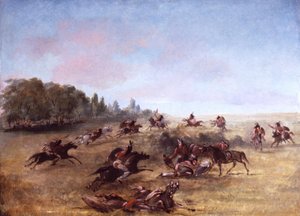
11Né-hee-ó-ee-wóo-tis, Wolf on the Hill, Chief of the Tribe (1832) 由 喬治·卡特林Né-hee-ó-ee-wóo-tis, Wolf on the Hill, Chief of the Tribe1832 · 史密森尼美国艺术博物馆 12Mún ne o ye, a Woman (1832) 由 喬治·卡特林Mún ne o ye, a Woman1832 · 史密森尼美国艺术博物馆 13Mah táhp ta a, Rushes through the Middle, a Brave (1832) 由 喬治·卡特林Mah táhp ta a, Rushes through the Middle, a Brave1832 · 史密森尼美国艺术博物馆 14A'h tee wát o mee, a Woman (1830) 由 喬治·卡特林A'h tee wát o mee, a Woman1830 · 史密森尼美国艺术博物馆 15Chin cha pee, Fire Bug That Creeps, Wife of Pigeon's Egg Head (1832) 由 喬治·卡特林Chin cha pee, Fire Bug That Creeps, Wife of Pigeon's Egg Head1832 · 史密森尼美国艺术博物馆 16A'h sha la cóots ah, Mole in the Forehead, Chief of the Republican Pawnee (1832) 由 喬治·卡特林A'h sha la cóots ah, Mole in the Forehead, Chief of the Republican Pawnee1832 · 史密森尼美国艺术博物馆 17Stu mick o súcks, Buffalo Bull's Back Fat, Head Chief, Blood Tribe (1832) 由 喬治·卡特林Stu mick o súcks, Buffalo Bull's Back Fat, Head Chief, Blood Tribe1832 18Du cór re a, Chief of the Tribe, and His Family (1830) 由 喬治·卡特林Du cór re a, Chief of the Tribe, and His Family1830 · 史密森尼美国艺术博物馆 19Ish a ró yeh, He Who Carries a Wolf, a Distinguished Brave (1834) 由 喬治·卡特林Ish a ró yeh, He Who Carries a Wolf, a Distinguished Brave1834 · 史密森尼美国艺术博物馆 20Mun ne pús kee, He Who Is Not Afraid Ko ha túnk a, Big Crow and Nah cóm ee shee, Man of the Bed, Three Young Warriors (1834) 由 喬治·卡特林Mun ne pús kee, He Who Is Not Afraid Ko ha túnk a, Big Crow and Nah cóm ee shee, Man of the Bed, Three Young Warriors1834 · 史密森尼美国艺术博物馆 21Hidatsa Village, Earth covered Lodges, on the Knife River, 1810 Miles above St. Louis (1832) 由 喬治·卡特林Hidatsa Village, Earth covered Lodges, on the Knife River, 1810 Miles above St. Louis1832 · 史密森尼美国艺术博物馆 22Two Comanche Girls (1834) 由 喬治·卡特林Two Comanche Girls1834 · 史密森尼美国艺术博物馆 23Náh se ús kuk, Whirling Thunder, Eldest Son of Black Hawk (1832) 由 喬治·卡特林Náh se ús kuk, Whirling Thunder, Eldest Son of Black Hawk1832 · 史密森尼美国艺术博物馆 24Le sháw loo láh le hoo, Big Elk, Chief of the Skidi (Wolf) Pawnee (1832) 由 喬治·卡特林Le sháw loo láh le hoo, Big Elk, Chief of the Skidi (Wolf) Pawnee1832 · 史密森尼美国艺术博物馆 25Wash ka mon ya, Fast Dancer, a Warrior (1844) 由 喬治·卡特林Wash ka mon ya, Fast Dancer, a Warrior1844 · 史密森尼美国艺术博物馆 26No ho mun ya, One Who Gives No Attention (1844) 由 喬治·卡特林No ho mun ya, One Who Gives No Attention1844 · 史密森尼美国艺术博物馆 27Shón ka ki he ga, Horse Chief, Grand Pawnee Head Chief (1832) 由 喬治·卡特林Shón ka ki he ga, Horse Chief, Grand Pawnee Head Chief1832 · 史密森尼美国艺术博物馆 28Kid á day, a Distinguished Brave (1834) 由 喬治·卡特林Kid á day, a Distinguished Brave1834 · 史密森尼美国艺术博物馆 29Tchán dee, Tobacco, an Oglala Chief (1832) 由 喬治·卡特林Tchán dee, Tobacco, an Oglala Chief1832 · 史密森尼美国艺术博物馆 30Tóh to wah kón da pee, Blue Medicine, a Medicine Man of the Ting ta to ah Band (1835) 由 喬治·卡特林Tóh to wah kón da pee, Blue Medicine, a Medicine Man of the Ting ta to ah Band1835 · 史密森尼美国艺术博物馆 31Hee láh dee, Pure Fountain, Wife of The Smoke (1832) 由 喬治·卡特林Hee láh dee, Pure Fountain, Wife of The Smoke1832 · 史密森尼美国艺术博物馆 32Lay láw she kaw, Goes Up the River, an Aged Chief (1830) 由 喬治·卡特林Lay láw she kaw, Goes Up the River, an Aged Chief1830 · 史密森尼美国艺术博物馆 33Wá nah de túnk ah, Big Eagle (or Black Dog), Chief of the O hah kas ka toh y an te Band (1835) 由 喬治·卡特林Wá nah de túnk ah, Big Eagle (or Black Dog), Chief of the O hah kas ka toh y an te Band1835 · 史密森尼美国艺术博物馆 34Shon ta yi ga, Little Wolf, a Famous Warrior (1844) 由 喬治·卡特林Shon ta yi ga, Little Wolf, a Famous Warrior1844 · 史密森尼美国艺术博物馆 35Big Bend on the Upper Missouri, 1900 Miles above St. Louis (1832) 由 喬治·卡特林Big Bend on the Upper Missouri, 1900 Miles above St. Louis1832 · 史密森尼美国艺术博物馆 36Battle Between Sioux and Sac and Fox (1848) 由 喬治·卡特林Battle Between Sioux and Sac and Fox1848 · 史密森尼美国艺术博物馆 37H'co a h'co a h'cotes min, No Horns on His Head, a Brave (1832) 由 喬治·卡特林H'co a h'co a h'cotes min, No Horns on His Head, a Brave1832 · 史密森尼美国艺术博物馆 38Eé shah kó nee, Bow and Quiver, First Chief of the Tribe (1834) 由 喬治·卡特林Eé shah kó nee, Bow and Quiver, First Chief of the Tribe1834 · 史密森尼美国艺术博物馆 39Fort Pierre, Mouth of the Teton River, 1200 Miles above Saint Louis (1832) 由 喬治·卡特林Fort Pierre, Mouth of the Teton River, 1200 Miles above Saint Louis1832 · 史密森尼美国艺术博物馆 40Lay lóo ah pee ái shee kaw, Grass, Bush, and Blossom, Semicivilized (1830) 由 喬治·卡特林Lay lóo ah pee ái shee kaw, Grass, Bush, and Blossom, Semicivilized1830 · 史密森尼美国艺术博物馆 41Mah kée mee teuv, Grizzly Bear, Chief of the Tribe (1831) 由 喬治·卡特林Mah kée mee teuv, Grizzly Bear, Chief of the Tribe1831 · 史密森尼美国艺术博物馆 42Ha na tá nu maúk, Wolf Chief, Head Chief of the Tribe (1832) 由 喬治·卡特林Ha na tá nu maúk, Wolf Chief, Head Chief of the Tribe1832 · 史密森尼美国艺术博物馆 43Prairie Bluffs Burning (1832) 由 喬治·卡特林Prairie Bluffs Burning1832 · 史密森尼美国艺术博物馆 44Hard Hickory, an Amiable Man (1831) 由 喬治·卡特林Hard Hickory, an Amiable Man1831 · 史密森尼美国艺术博物馆 45Bread, Chief of the Tribe (1831) 由 喬治·卡特林Bread, Chief of the Tribe1831 · 史密森尼美国艺术博物馆 46On sáw kie, The Sauk, in the Act of Praying (1830) 由 喬治·卡特林On sáw kie, The Sauk, in the Act of Praying1830 · 史密森尼美国艺术博物馆 47Ye hów lo gee, The Cloud, a Chief (1838) 由 喬治·卡特林Ye hów lo gee, The Cloud, a Chief1838 · 史密森尼美国艺术博物馆 48Wá hón ga shee, No Fool, a Great Fop (1832) 由 喬治·卡特林Wá hón ga shee, No Fool, a Great Fop1832 · 史密森尼美国艺术博物馆 49Máh to tóh pa, Four Bears, Second Chief in Mourning (1832) 由 喬治·卡特林Máh to tóh pa, Four Bears, Second Chief in Mourning1832 · 史密森尼美国艺术博物馆 50W'y ee yogh, Man of Sense, a Brave (1832) 由 喬治·卡特林W'y ee yogh, Man of Sense, a Brave1832 · 史密森尼美国艺术博物馆 51Is sa wáh tám ah, Wolf Tied with Hair, a Chief (1834) 由 喬治·卡特林Is sa wáh tám ah, Wolf Tied with Hair, a Chief1834 · 史密森尼美国艺术博物馆 52Ru ton ye wee ma, Strutting Pigeon, Wife of White Cloud (1844) 由 喬治·卡特林Ru ton ye wee ma, Strutting Pigeon, Wife of White Cloud1844 · 史密森尼美国艺术博物馆 53Meach o shín gaw, Little White Bear, a Distinguished Brave (1832) 由 喬治·卡特林Meach o shín gaw, Little White Bear, a Distinguished Brave1832 · 史密森尼美国艺术博物馆 54Mandan Dance (also known as The Last Race, Mandan O-kee-pa Ceremony) (1832) 由 喬治·卡特林Mandan Dance (also known as The Last Race, Mandan O-kee-pa Ceremony)1832 55Tul lock chísh ko, Drinks the Juice of the Stone, in Ball player's Dress (1834) 由 喬治·卡特林Tul lock chísh ko, Drinks the Juice of the Stone, in Ball player's Dress1834 · 史密森尼美国艺术博物馆 56Há-tchoo-túc-knee, Snapping Turtle, a Half-breed (1834) 由 喬治·卡特林Há-tchoo-túc-knee, Snapping Turtle, a Half-breed1834 · 史密森尼美国艺术博物馆 57White Sand Bluffs, on Santa Rosa Island, Near Pensacola (1835) 由 喬治·卡特林White Sand Bluffs, on Santa Rosa Island, Near Pensacola1835 58Little Wolf (Shon-ta-ye-ga) (1846) 由 喬治·卡特林Little Wolf (Shon-ta-ye-ga)1846 59La-dóo-ke-a, Buffalo Bull, a Grand Pawnee Warrior (1832) 由 喬治·卡特林La-dóo-ke-a, Buffalo Bull, a Grand Pawnee Warrior1832 · 史密森尼美国艺术博物馆 60Hón-je-a-pút-o, Wife of Bear-catcher (1832) 由 喬治·卡特林Hón-je-a-pút-o, Wife of Bear-catcher1832 · 史密森尼美国艺术博物馆 61Tuch-ee, A Celebrated War Chief of the Cherokees (1834) 由 喬治·卡特林Tuch-ee, A Celebrated War Chief of the Cherokees1834 · 弗吉尼亚美术馆 62Múk-a-tah-mish-o-káh-kaik, Black Hawk, Prominent Sac Chief (1832) 由 喬治·卡特林Múk-a-tah-mish-o-káh-kaik, Black Hawk, Prominent Sac Chief1832 · 史密森尼美国艺术博物馆 63The White Cloud, Head Chief of the Iowas (1844) 由 喬治·卡特林The White Cloud, Head Chief of the Iowas1844 · 国家美术馆 64Bird (1839) 由 喬治·卡特林Bird1839 · 史密森尼美国艺术博物馆 65Háw che ke súg ga, He Who Kills the Osages, Chief of the Tribe (1832) 由 喬治·卡特林Háw che ke súg ga, He Who Kills the Osages, Chief of the Tribe1832 · 史密森尼美国艺术博物馆 66Mó-sho-la-túb-bee, He Who Puts Out and Kills, Chief of the Tribe (1834) 由 喬治·卡特林Mó-sho-la-túb-bee, He Who Puts Out and Kills, Chief of the Tribe1834 · 史密森尼美国艺术博物馆 67Portrait of a Gentleman (1827) 由 喬治·卡特林Portrait of a Gentleman1827 · 大都会艺术博物馆 68Boy Chief - Ojibbeway (1843) 由 喬治·卡特林Boy Chief - Ojibbeway1843 · 国家美术馆 69Mounted War Party Scouring a Thicket (1848) 由 喬治·卡特林Mounted War Party Scouring a Thicket1848 · 史密森尼美国艺术博物馆 70See-non-ty-a, an Iowa Medicine Man (1844) 由 喬治·卡特林See-non-ty-a, an Iowa Medicine Man1844 · 国家美术馆 71The Cheyenne Brothers Starting on Their Fall Hunt (1861) 由 喬治·卡特林The Cheyenne Brothers Starting on Their Fall Hunt1861 · 国家美术馆 72Tul lock chísh ko, Drinks the Juice of the Stone (1834) 由 喬治·卡特林Tul lock chísh ko, Drinks the Juice of the Stone1834 · 史密森尼美国艺术博物馆 73Wah pón jee a, The Swan, a Warrior (1830) 由 喬治·卡特林Wah pón jee a, The Swan, a Warrior1830 · 史密森尼美国艺术博物馆 74Nóm ba mon nee, Double Walker, a Brave (1832) 由 喬治·卡特林Nóm ba mon nee, Double Walker, a Brave1832 · 史密森尼美国艺术博物馆 75Naugh háigh hee kaw, He Who Moistens the Wood (1828) 由 喬治·卡特林Naugh háigh hee kaw, He Who Moistens the Wood1828 · 史密森尼美国艺术博物馆 76Turtle Hunt (1869) 由 喬治·卡特林Turtle Hunt1869 77Ru-ton-wee-me, Pigeon on the Wing (1844) 由 喬治·卡特林Ru-ton-wee-me, Pigeon on the Wing1844 · 史密森尼美国艺术博物馆 78William Clark (1832) 由 喬治·卡特林William Clark1832 · 国家肖像画廊 79Peh-tó-pe-kiss, Eagle's Ribs, a Piegan Chief (1832) 由 喬治·卡特林Peh-tó-pe-kiss, Eagle's Ribs, a Piegan Chief1832 · 史密森尼美国艺术博物馆 80Canoe Race Near Sault Ste. Marie (1837) 由 喬治·卡特林Canoe Race Near Sault Ste. Marie1837 · 史密森尼美国艺术博物馆 81Elk and Buffalo Grazing among Prairie Flowers, Texas (1848) 由 喬治·卡特林Elk and Buffalo Grazing among Prairie Flowers, Texas1848 · 史密森尼美国艺术博物馆 82Túnk aht óh ye, Thunderer, a Boy, and Wun pán to mee, White Weasel, a Girl (1834) 由 喬治·卡特林Túnk aht óh ye, Thunderer, a Boy, and Wun pán to mee, White Weasel, a Girl1834 · 史密森尼美国艺术博物馆 83An Old Nayas Indian, His Granddaughter, and a Boy (1875) 由 喬治·卡特林An Old Nayas Indian, His Granddaughter, and a Boy1875 · 国家美术馆 84Mrs. George Catlin (Clara Bartlet Gregory) (1830) 由 喬治·卡特林Mrs. George Catlin (Clara Bartlet Gregory)1830 · 大都会艺术博物馆 85Theodore Burr Catlin, in Indian Costume (1840) 由 喬治·卡特林Theodore Burr Catlin, in Indian Costume1840 · 史密森尼美国艺术博物馆 86Háh nee, The Beaver, a Warrior (1834) 由 喬治·卡特林Háh nee, The Beaver, a Warrior1834 · 史密森尼美国艺术博物馆 87Pash ee pa hó, Little Stabbing Chief, the Younger, One of Black Hawk's Braves (1832) 由 喬治·卡特林Pash ee pa hó, Little Stabbing Chief, the Younger, One of Black Hawk's Braves1832 · 史密森尼美国艺术博物馆 88Kotz a tó ah, Smoked Shield, a Distinguished Warrior (1834) 由 喬治·卡特林Kotz a tó ah, Smoked Shield, a Distinguished Warrior1834 · 史密森尼美国艺术博物馆 89Eé hee a duck cée a, He Who Ties His Hair Before (1832) 由 喬治·卡特林Eé hee a duck cée a, He Who Ties His Hair Before1832 · 史密森尼美国艺术博物馆 90Three Blackfoot Men (1862) 由 喬治·卡特林Three Blackfoot Men1862 · 国家美术馆 91Pash ee pa hó, Little Stabbing Chief, a Venerable Sauk Chief (1835) 由 喬治·卡特林Pash ee pa hó, Little Stabbing Chief, a Venerable Sauk Chief1835 · 史密森尼美国艺术博物馆 92View on the Missouri, Alluvial Banks Falling in, 600 Miles above St. Louis (1832) 由 喬治·卡特林View on the Missouri, Alluvial Banks Falling in, 600 Miles above St. Louis1832 · 史密森尼美国艺术博物馆 93Two Apachee Warriors and a Woman (1862) 由 喬治·卡特林Two Apachee Warriors and a Woman1862 · 国家美术馆 94Camanchees Lancing a Buffalo Bull (1865) 由 喬治·卡特林Camanchees Lancing a Buffalo Bull1865 · 国家美术馆 95Lengua Indians Ascending the Rapids of the Rio Uruguay (1861) 由 喬治·卡特林Lengua Indians Ascending the Rapids of the Rio Uruguay1861 · 国家美术馆 96Mauhees Encampment (1869) 由 喬治·卡特林Mauhees Encampment1869 · 国家美术馆 97A Lagoon of the Upper Amazon (1871) 由 喬治·卡特林A Lagoon of the Upper Amazon1871 · 国家美术馆 98The Last Race, Mandan O-Kee-Pa Ceremony (1832) 由 喬治·卡特林The Last Race, Mandan O-Kee-Pa Ceremony1832 · 史密森尼美国艺术博物馆 99Assinneboine Chief before and after Civilization (1869) 由 喬治·卡特林Assinneboine Chief before and after Civilization1869 · 国家美术馆 100Nayas Village at Sunset (1875) 由 喬治·卡特林Nayas Village at Sunset1875 · 国家美术馆

喬治·卡特林 的传世名作,按时期分类

令 喬治·卡特林 驻足的创作主题

这些原作中反复出现的四个主题,各有一个最杰出的范例。

收藏有 喬治·卡特林 原作的博物馆

收藏了本页中大部分画作的 5 家博物馆。

博物馆 城市 喬治·卡特林 的作品 此列表中的画作
史密森尼美国艺术博物馆, 华盛顿特区史密森尼美国艺术博物馆 华盛顿特区 471 Say-say-gon, Hail Storm, War Chief, Sky se ró ka, Second Chief of the Tribe, Ee mat lá , King Phillip, Second Chief
国家美术馆, 华盛顿国家美术馆 华盛顿 345 The White Cloud, Head Chief of the Iowas, Boy Chief - Ojibbeway, See-non-ty-a, an Iowa Medicine Man
大都会艺术博物馆, 纽约大都会艺术博物馆 纽约 4 Portrait of a Gentleman, Mrs. George Catlin (Clara Bartlet Gregory)
弗吉尼亚美术馆, 里士满弗吉尼亚美术馆 里士满 1 Tuch-ee, A Celebrated War Chief of the Cherokees
国家肖像画廊, 华盛顿特区国家肖像画廊 华盛顿特区 1 William Clark

跨越数十载的 喬治·卡特林:每一件皆为独一无二的原作

各年代作品数量

选择一个年代,探索定义该时代的原创杰作。

喬治·卡特林 的画作:画廊常见问题

喬治·卡特林 最著名的代表作是什么?揭晓答案

Say-say-gon, Hail Storm, War Chief (1845),史密森尼美国艺术博物馆, 华盛顿特区。紧随其后的是 Sky se ró ka, Second Chief of the Tribe (1834) 和 Ee mat lá , King Phillip, Second Chief (1838)。

喬治·卡特林 是在多少岁时创作了 Say-say-gon, Hail Storm, War Chief?揭晓答案

49岁:Say-say-gon, Hail Storm, War Chief创作于1845年,喬治·卡特林出生于1796年。

喬治·卡特林 最著名的十幅画作是哪些?揭晓答案

Say-say-gon, Hail Storm, War Chief, Sky se ró ka, Second Chief of the Tribe, Ee mat lá , King Phillip, Second Chief, Eeh nís kim, Crystal Stone, Wife of the Chief, Steeh tcha kó me co, Great King (called Ben Perryman), a Chief, Cáh be múb bee, He Who Sits Everywhere, a Brave, Os ce o lá, The Black Drink, a Warrior of Great Distinction, Stán au pat, Bloody Hand, Chief of the Tribe, Wa kon chásh kaw, He Who Comes on the Thunder 及 Wah chee háhs ka, Man Who Puts All Out of Doors。上方排名显示了每件作品的创作年份及馆藏机构。

已知 喬治·卡特林 有多少件作品?揭晓答案

我们的目录收录了 908 件 喬治·卡特林 的作品,创作年代从 1827 年至 1871 年。

在哪里可以欣赏到最著名的 喬治·卡特林 原作?揭晓答案

多见于 史密森尼美国艺术博物馆 (华盛顿特区), 国家美术馆 (华盛顿) 及 大都会艺术博物馆 (纽约)。上方的博物馆列表列出了所有相关机构。

喬治·卡特林 的代表作创作于哪个时期?揭晓答案

在 1830s 期间:本页 100 件作品中有 72 件创作于该时期,其中包含 Sky se ró ka, Second Chief of the Tribe 件作品。

哪幅 喬治·卡特林 的名作创作年代最早,哪幅最晚?揭晓答案

在本页面中,最早的作品创作于 Portrait of a Gentleman (1827),最晚的创作于 A Lagoon of the Upper Amazon (1871)。

喬治·卡特林 偏好哪些题材?揭晓答案

Native american (58), Indigenous culture (27) 及 Portraiture (27),共计 100 件作品。

喬治·卡特林 最常使用哪些材料进行创作?揭晓答案

Oil On Canvas,共计 69 件(本页共有 100 件作品)。

喬治·卡特林 的作品属于哪种艺术流派?揭晓答案

根据本页面的原作,Romanticism

在 史密森尼美国艺术博物馆 可以看到哪些 喬治·卡特林 的原作?揭晓答案

Say-say-gon, Hail Storm, War Chief, Sky se ró ka, Second Chief of the Tribe 及 Ee mat lá , King Phillip, Second Chief:史密森尼美国艺术博物馆, 华盛顿特区收藏了本页中 78 件作品。

喬治·卡特林:艺术家肖像

早年生活与法律训练

1796年,乔治·卡特林出生于宾夕法尼亚州的威尔克斯-巴里,是十四个孩子中的第五个。他的成长环境深受美国边疆残酷现实的影响,尤其是通过他母亲波莉·萨顿(Polly Sutton)讲述的故事。母亲曾在印第安人的袭击中幸存,这段经历为他日后记录的印第安文化提供了一种持续且深刻的情感纽带。这种家族历史在他拿起画笔从事专业创作之前,就已经在他心中深深扎下了对西部的向往之种。

他最初的志向并非投身于画布。17岁那年,在父母的期望下,他进入利奇菲尔德法学院学习,为从事法律职业做准备。1819年,他正式获得律师执业资格,取得了职业地位。然而,法律界并未能真正吸引他的灵魂。他仅执业了两年,便发现法庭生活远无法替代他内心真正的兴趣。当他最终放下法律书籍时,对艺术研究与远方旅行的渴望,已然成为了他生命中无可撼动的驱动力。

探险之旅与“印第安画廊”

乔治·卡特林作品的厚重感,源于他在美国西部广袤土地上不懈的足迹。在19世纪30年代,他先后进行了五次规模宏大的探险,沿着密苏里河溯流而上,深入曼丹族、苏族、黑脚族和卓克托族的领地。这些旅程绝非寻常的观光游历,而是一场场充满使命感的文化远征。他穿梭于这些土地之间,只为记录下特定部落鲜活的生活图景,不仅用画笔捕捉瞬间,更搜集了大量的实物珍宝。这些视觉影像与物质实体的海量积累,最终汇聚成了他那宏伟的“印第安画廊”——一个包含超过500幅绘画作品的艺术殿堂。

正是这种规模宏大的收藏,赋予了他的艺术创作以无可替代的历史意义。乔治·卡特林并非仅仅凭借记忆在创作,而是将无数次旅途的成果汇集成一个庞大而统一的整体。这种致力于编纂边疆全面记录的宏愿,在他1852年至1857年穿越南美洲和中美洲的旅程中得到了进一步扩展。他的目光始终聚焦于他所邂逅的民族之民族志现实,比起单纯的风景写生,他更倾向于记录那些部落的习俗、仪轨与外貌特征。

艺术风格与文献记录

乔治·卡特林的创作动力源于一种极其迫切的使命感:他坚信自己正在记录一种即将消逝的生活方式。他并未止步于19世纪常见的肤浅刻板印象或漫画式的夸张描绘,而是将目光投向了每一个鲜活的个体,试图捕捉部落首领身上特有的尊严,以及传统仪式中迸发出的生命律动。他的笔触极其细腻,力求在细节上追求极致,确保仪式服饰的纹理与日常生活的琐碎细节都能以民族志般的精准度被记录下来。这不仅是艺术创作,更是一场在西进运动彻底改变这片土地之前,试图挽留文化精髓的自觉行动。

他作品的视觉冲击力,很大程度上得益于对色彩的大胆运用以及对环境细节的深度刻画。在创作中,他很少将主体孤立地呈现,而是将其置于宏大而复杂的背景之中,通过环境来传递至关重要的情境信息。这些背景往往包含特定的自然景观、帐篷或仪式器物,使画中人物能够扎根于真实的生存环境之中。通过这种方式,乔治·卡特林超越了单纯的肖像画范畴,为美国边疆创造了一部全方位的视觉史诗。从草原扬起的尘埃到营地的结构布局,他能够精准地渲染出场景的氛围,这使得他的画作不再仅仅是美学上的练习,而是成为了无可辩驳的历史见证。

  • Mó-sho-la-túb-bee, He Who Puts Out and Kills, Chief of the Tribe (1834)
  • Ball-play of the Choctaw--Ball Up (1850)

核心作品与传世名作

乔治·卡特林的作品并非单纯的肖像写生,它们更像是对特定生命瞬间的视觉记录。在他1834年的杰作《莫-sho-la-túb-bee,灭火者,部落酋长》中,一位领袖那坚定不移的目光跃然纸上,通过一种直接且不加修饰的存在感,散发出威严的气场。同样地,《卓克托族的球赛》也摒弃了僵硬的摆拍,转而捕捉传统竞技中喷薄而出的生命活力。这些作品提供了极其细腻的细节,为我们理解部落的社会结构与集体活动提供了不可或缺的微观视角。

这位艺术家还敏锐地捕捉了人类与自然环境交织的瞬间。《燃烧的草原》记录了一场受控的焚烧场景,伴随着疾驰的骑手,生动地呈现了一种特定的生态与社会习俗。而在他笔下的《石管泉,科托奥大草原》中,则揭示了一个对许多部落都具有深远精神意义的神圣之地。即便是一些更为私密或罕见的题材,也承载着厚重的文化分量;例如约创作于1832年的《Oó-je-en-á-he-a,住在熊里的女人》,为我们窥见了特定的文化叙事;而创作于1846年的《小狼 (Shon-ta-ye-ga)》,则作为他后期文献记录中的重要篇章,至今仍散发着力量。

  • 《莫-sho-la-túb-bee,灭火者,部落酋长》(1834)
  • 《小狼 (Shon-ta-ye-ga)》(1846)

出版著作与巡回展览

为了给他的“印第安画廊”寻找一个永久的归宿,乔治·卡特林所付出的努力远不止于提供视觉证据,更需要通过广泛的社会参与来赢得认可。在19世纪40至50年代期间,他带着自己的珍贵藏品在欧洲各大中心进行巡回展览,足迹遍布伦敦、巴黎和柏林。这些展览并非枯燥的静态展示,他巧妙地将绘画与公开演讲结合在一起,通过讲述自己在美洲原住民部落中生活的亲身回忆,为那些静止的画面赋予了鲜活的口头语境。这种视觉与听觉的交织,是他经过深思熟虑的尝试,旨在让那些远离密苏里河的欧洲观众能够切身感受到边疆生活的真实肌理。

与此同时,他的文字著作为这些视觉记录提供了深厚的思想框架。1841年,他出版了《北美印第安人的风俗习惯与状况》,试图将他在探险过程中收集到的观察成果系统化地编纂成册。随后在1868年,他又推出了《在落基山脉和安第斯山脉中的最后游历》。这些著作绝非简单的游记,它们更像是试图将一种正在消逝的特定社会秩序,永久地定格在历史长河中的尝试。乔治·卡特林利用文字的力量来增强其绘画作品的权威性与真实性,确保即便在个人财务陷入困境时,他的观察与见证也能在历史中永存。

晚年与逝世

财务上的动荡成为了乔治·卡特林生命最后几十年的底色。尽管他竭尽全力试图为自己的收藏争取一份国家级的文化遗产,但这位艺术家在晚年大部分时间里,都在为收回投资而苦苦挣扎。为了在现实中寻求资金回笼,他采取了一种务实的手段,将超过400幅画作重新创作成规模较小的“卡通收藏”。这本是试图将毕生心血转化为经济收益的深思熟虑之举,却未能如愿为他带来维持生计所需的丰厚回报。

这种对生存的挣扎一直持续到他生命的终点。1872年12月23日,乔治·卡特林在纽泽西州的泽西市溘然长逝。他最终被安葬在布鲁克林的格林伍德公墓。他的离世,标志着一段传奇生命的落幕——他曾用一生去记录那片边疆,而那片土地正迅速被他曾预言过的扩张浪潮所取代。

历史意义与文化遗产

乔治·卡特林的伟大之处,在于他作为第一手视觉文献记录者的核心地位。他是首位深入原住民领地、并以写实笔触描绘平原印第安人的白人艺术家,为我们提供了在西进运动全面冲击之前,那段真实生活的直接见证。在19世纪的主流叙事中,这些文化往往被误解、被边缘化或被彻底忽视,而他的画作却如同一扇窗户,让我们得以窥见那些被历史尘烟掩盖的文明精髓。他拒绝依赖二手的传闻,而是通过亲身观察,精准地捕捉到了部落习俗与社会结构的细微之处。

他留下的艺术遗产具有极其坚实的历史价值。通过他的详尽记录,那些原本可能随风而逝的宗教信仰与祭祀传统,得以在画布上获得永生。这种档案级别的记录品质,使他在后世赢得了广泛的认可。乔治·卡特林曾于2001年入选国家河流名人堂,并于2023年入选卢泽恩县艺术与娱乐名人堂。这些殊荣不仅是对他艺术成就的肯定,更是对他为美国历史与文化记录所做出的卓越贡献的最高致敬。

今日何处寻觅这些杰作

乔治·卡特林的视觉记录如今散落在几家主要的艺术机构之中,若想对其艺术成就进行全面的研究,必须前往特定的馆藏进行考察。他作品最集中的存放地位于华盛顿特区。其中,史密森尼美国艺术博物馆收藏有25幅他的画作,为研究他的民族志记录提供了最为详实、厚重的视角。与此同时,位于华盛顿的国家美术馆也将其中的一件作品纳入了馆藏。

除了首都之外,在其他一些持有其单件作品的地区性博物馆中,也能感受到这位艺术家的存在。例如,丹佛艺术博物馆收藏有一件作品,而位于里士满的弗吉尼亚美术馆则珍藏了另一件。这些分散的馆藏,恰恰折射出他最初建立的“印第安画廊”那种碎片化的状态,也印证了他在生前试图为这批珍贵的文化遗产寻找一个永久归宿时所面临的重重困境。

  • 正在祈祷的苏族人 (约1830年)
  • Mó-sho-la-túb-bee, He Who Puts Out and Kills, Chief of the Tribe (1834)
  • Ball-play of the Choctaw--Ball Up (1850)