


1

沐浴后的狄安娜
1742年,弗朗索瓦·布歇创作了这幅《沐浴后的狄安娜》。作品的焦点在于罗马女神狄安娜,她以赤裸的姿态呈现,置身于一片茂密的森林之中。这片自然的怀抱,为她从水中缓缓现身的过程提供了完美的背景。

更新于 November 2026 · 基于我们的流行度评分排名(每件作品的搜索量、访问量及订单量) · 377 件 弗朗索瓦·布歇 作品收录于我们的目录中
简而言之
在 弗朗索瓦·布歇 留下的所有原作中,最著名的作品是 沐浴后的狄安娜 (1742)。 紧随其后的是 布歇的众天使之歌 和 Madame de Pompadour (Jeanne-Antoinette Poisson, 1721 - 1764) (1758)。 我们的目录收录了 弗朗索瓦·布歇 的 377 件作品;画廊完整保留了 100 件享誉世界的杰作,并为每一件作品详细标注了创作日期、馆藏机构及其背后的故事。
1742年,弗朗索瓦·布歇创作了这幅《沐浴后的狄安娜》。作品的焦点在于罗马女神狄安娜,她以赤裸的姿态呈现,置身于一片茂密的森林之中。这片自然的怀抱,为她从水中缓缓现身的过程提供了完美的背景。

在这幅18世纪法国洛可可风格的画作中,空气中仿佛震荡着一种无形的旋律。画面的中心,圣母那静谧的虔诚与圣婴耶稣交相辉映,构成了整个构图的灵魂。在他们周围,一群天界生灵正汇聚在一起,准备奏响乐章。一名天使栖息在左侧,另一名位于中央,还有两名天使伫立在右侧。他们手持里拉琴、长笛和弦乐器,动作精准而优雅。这是天体运行的和谐旋律与母性宁静时刻的完美邂逅。

To gaze upon this portrait of Madame de Pompadour is to step directly into the gilded salons of 18th-century France, a world steeped in exquisite taste and whispered intrigue. Painted around 1758 by the master hand of François Boucher, this work transcends mere likeness; it captures an ephemeral moment of cultivated grace. The subject, Jeanne-Antoinette Poisson, is presented not just as a woman of high standing, but as an embodiment…

François Boucher’s “Madame Bergeret,” completed in 1766, stands as a quintessential exemplar of Rococo artistry—a style synonymous with aristocratic refinement and sensual beauty. More than just a depiction of a woman, it's an immersive experience into the opulent aesthetic sensibilities of Louis XV’s court, capturing not merely likeness but also an idealized vision of feminine grace.

In the heart of the French Rococo era, few works capture the ephemeral magic of a summer afternoon as tenderly as François Boucher’s The Interrupted Sleep. Created in 1750, this masterpiece serves as a window into an idealized world where the rigors of reality are replaced by a soft, melodic dreamscape. The painting invites the viewer to step into a lush, sun-drenched woodland, where the boundaries between music, nature, and…

In the luminous realm of 18th-century French artistry, few works capture the ephemeral magic of twilight as profoundly as François Boucher’s The Setting of the Sun. This masterpiece serves as a breathtaking window into the Rococo era, an age defined by its pursuit of elegance, pleasure, and a certain dreamlike sensuality. As the sun descends, the canvas erupts into a dramatic and opulent spectacle, where the boundaries between the earthly…

François Boucher’s “Pastoral Scene,” painted in 1745, isn't merely a depiction of a rural landscape; it’s a carefully constructed invitation into an idealized world—a sanctuary of innocence and leisure nestled within the heart of France. The painting immediately draws the viewer in with its soft palette of browns, beiges, and muted greens, evoking a sense of gentle warmth and timeless serenity. Two young figures – a boy and girl –…

François Boucher’s “Venus at Vulcan’s Forge,” painted in 1769, isn't merely a depiction of mythological figures; it’s a vibrant embodiment of reconciliation and the potent dance between opposing forces. Rooted firmly within the opulent Rococo style that defined late 18th-century France, the painting transports us to a dramatic tableau inspired by Virgil’s *Aeneid*. Here, Venus, goddess of love and beauty, and Vulcan, god of fire and craftsmanship, find themselves caught…

In the soft, luminous atmosphere of François Boucher’s 1742 masterpiece, La Toilette, we are invited to step into a world of refined grace and quiet domesticity. This exquisite oil on canvas serves as a quintessential window into the Rococo era—a period defined by its celebration of pleasure, light, and the delicate nuances of everyday life. The scene unfolds within a richly appointed room, where the warmth of a fireplace anchors…

François Boucher’s “Boreas Abducting Oreithyia,” completed in 1769, is a captivating distillation of classical mythology rendered with the characteristic exuberance and sensual grace that defined the Rococo style. This painting, measuring an impressive 273 x 205 cm, transports us to a moment of violent disruption – a dramatic retelling of Ovid’s tale from the *Metamorphoses*, where the icy North Wind god, Boreas, forcibly claims the Athenian princess Oreithyia.
 Juno Asking Aeolus to Release the Winds1769 · Kimbell Art Museum
12
 Study for The Bath of Venus1751 · 冬宫博物馆
13
 Painter in his Studio卢浮宫
14
 The Setting of the Sun1752 · 威廉斯收藏馆
15
 Young Woman Sleeping1760 · 冬宫博物馆
16
 The Forest1740 · 卢浮宫
17
 Vertumnus and Pomona巴伐利亚州绘画收藏馆
18
 Madame de Pompadour1754 · 维多利亚州国立美术馆
19
 Mill at Charenton1758 · 托莱多艺术博物馆
20
 Madame de Pompadour1758 · 维多利亚和阿尔伯特博物馆
21
 Young Country Girl Dancing1770 · 安大略美术馆
22
 Blond Odalisque (L'Odalisque Blonde)1752 · 老皮那科特美术馆
23
 The Mill1751 · 卢浮宫
24
 The Afternoon Meal1739 · 卢浮宫
25
 Imaginary Landscape with the Palatine Hill from Campo Vaccino1730 · 大都会艺术博物馆
26
 Pastorale1760 · 卡尔斯鲁厄州立美术馆
27
 Vertumnus and Pomona1757 · 旧金山美术馆
28
 Death of Meleager1727 · 洛杉矶县立艺术博物馆
29
 Venus in the Workshop of Vulcan1757 · 耶鲁大学艺术馆
30
 Standing Nude Girl阿尔贝蒂纳博物馆
31
 Arcadian Nymphs Making Music1770 · 维多利亚和阿尔伯特博物馆
32
 Triumph of Venus冬宫博物馆
33
 Landscape with a Pond1746 · 冬宫博物馆
34
 Washerwomen1768 · 大都会艺术博物馆
35
 The Billet-Doux
36
 Venus and Mercury Instructing Cupid1738 · 洛杉矶县立艺术博物馆
37
 Monument to Mignard1735 · 洛杉矶县立艺术博物馆
38
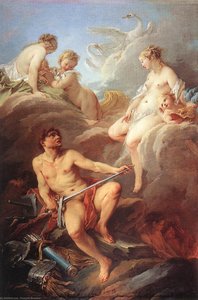 Venus Demanding Arms from Vulcan for Aeneas1732 · 卢浮宫
39
 Young Girl and Eros1750 · 底特律艺术学院
40
 The Rising of the Sun1750 · Plantin-Moretus Museum
41
 Hercules and Omphale1735 · 普希金国家美术馆
42
 Project for a Cartouche: An Allegory of Minerva, Fame, History and Faith Overcoming Ignorance and Time1727 · 洛杉矶县立艺术博物馆
43
 A young lady holding a pug dog1745 · 新南威爾士藝術畫廊
44
 Saint John the Baptist1755 · 明尼阿波利斯艺术学院
45
 Bathing Nymph1747 · 芝加哥艺术学院
46
 River Landscape with an Antique Temple1762 · 提森·博爾涅米薩博物館
47
 The Modiste1746 · 威廉斯收藏馆
48
 Head of a Young Girl1750 · 冬宫博物馆
49
 The Beautiful Country Woman1732 · 诺顿·西蒙博物馆
50
 The Distorted Child1742 · 卡尔斯鲁厄州立美术馆
51
 Breakfast
52
 Diana and Callisto1760 · 斯洛伐克国家美术馆
53
 Cupids. Allegory of Painting1760 · 冬宫博物馆
54
 Pastoral1730 · 沃尔特斯艺术博物馆
55
 A Pastoral Scene ('La Jardiniere Endormie')1762 · 苏格兰国家美术馆
56
 Virgin and Child with the Young Saint John the Baptist and Angels1765 · 大都会艺术博物馆
57
 The Cherry Gatherers1768 · 肯伍德庄园
58
 A Pastoral Scene ('L'Offrande a la Villageoise')1761 · 苏格兰国家美术馆
59
 Allegory of Autumn1753 · 大都会艺术博物馆
60
 The Education of Cupid1742 · 夏洛滕堡宮
61
 The Birth of Venus1740 · 国家博物馆
62
 The Judgement of Susannah1720 · 加拿大国家美术馆
63
 The Sleep of Loves1725
64
 Rebecca Receiving from the Hands of Eliezer the Gifts of Abraham1728
65
 The Sacrifice of Gideon1728
66
 Rest at the Fountain1730 · 巴伐利亚州绘画收藏馆
67
 The Hunting Breakfast, Sketch.1733
68
 "La Fontaine", Rococo Scene at the Fountain1728
69
 Rebecca receives Abraham's gifts from Eliezer1725 · 斯特拉斯堡美术馆
70
 Mercury Confiding the Infant Bacchus to the Nymphs1733 · 威廉斯收藏馆
71
 Bacchus and Erigone1745 · 威廉斯收藏馆
72
 Bird-Catching Cherubs1732 · Rhode Island School of Design Museum of Art
73
 Head of a Young Woman1732 · 克利夫兰艺术博物馆
74
 'La vie champêtre'1728 · Belton House
75
 La Femme au Chat: Les caresses dangereuses1731 · 旧金山美术馆
76
 The Bird Catchers1748 · J·保罗·盖蒂博物馆
77
 Putti with Birds1730 · 檀香山艺术博物馆
78
 sleeping Amor1728
79
 boy playing with a dog1728 · Musée d'Art et d'Histoire de Cholet Native Name
80
 Allegory of Autumn: Putti Playing with a Goat1730
81
 Five Naked Children Playing by a Rocky Pool1732 · National Trust
82
 The Forges of Vulcan1737
83
 Pastoral Subject. The Sleeping Shepherdess1743 · 波旁宫
84
 The Marriage of Cupid and Psyche1744 · 鲁昂美术馆
85
 Stable interior with amorous scene1735 · Musée Cognacq-Jay
86
 Air: Three Putti with Birds1741 · 维多利亚和阿尔伯特博物馆
87
 The Egg Seller1734 · Wadsworth Atheneum
88
 Cupid and the Three Graces1738 · Calouste Gulbenkian Museum
89
 Cupids in Conspiracy1740 · 克利夫兰艺术博物馆
90
 Music and Dance1740 · 克利夫兰艺术博物馆
91
 Mercury Entrusting the Infant Bacchus to the Nymphs of Nysa1734 · 辛辛那提艺术博物馆
92
 Rural idyll1735 · 巴伐利亚州绘画收藏馆
93
 The Nest, also known as the Berger Present1737
94
 Young Lady with a Muff1737
95
 Putti as Fisherman1744 · 休斯顿美术馆
96
 Cupid Wounding Psyche1741 · 洛杉矶县立艺术博物馆
97
 Young Woman with Flowers in Her Hair1734 · 波士顿美术馆
98
 The Rest of the Holy Family during the Flight into Egypt1744 · 斯泰恩斯博物馆艺术馆
99
 Leopard hunt1736 · Musée de Picardie
100
 Crocodile hunt1739 · Musée de Picardie
这些原作中反复出现的四个主题,各有一个最杰出的范例。
收藏了本页中大部分画作的 8 家博物馆。
| 博物馆 | 城市 | 弗朗索瓦·布歇 的作品 | 此列表中的画作 |
|---|---|---|---|
 冬宫博物馆 |
圣彼得堡 | 11 | Study for The Bath of Venus, Young Woman Sleeping, Triumph of Venus |
 大都会艺术博物馆 |
纽约 | 13 | The Interrupted Sleep, Imaginary Landscape with the Palatine Hill from Campo Vaccino, Washerwomen |
 卢浮宫 |
巴黎 | 8 | Painter in his Studio, The Forest, The Mill |
 洛杉矶县立艺术博物馆 |
洛杉矶 | 6 | Death of Meleager, Venus and Mercury Instructing Cupid, Monument to Mignard |
 威廉斯收藏馆 |
伦敦 | 21 | The Setting of the Sun, The Modiste, Mercury Confiding the Infant Bacchus to the Nymphs |
 苏格兰国家美术馆 |
爱丁堡 | 5 | Madame de Pompadour (Jeanne-Antoinette Poisson, 1721 - 1764), A Pastoral Scene ('La Jardiniere Endormie'), A Pastoral Scene ('L'Offrande a la Villageoise') |
 克利夫兰艺术博物馆 |
克利夫兰 | 5 | Head of a Young Woman, Cupids in Conspiracy, Music and Dance |
 Kimbell Art Museum |
沃斯堡 | 4 | Venus at Vulcan, Boreas Abducting Oreithyia, Juno Asking Aeolus to Release the Winds |
选择一个年代,探索定义该时代的原创杰作。

The air in the room feels heavy, thick with the scent of damp earth and the metallic tang of tragedy. At the center of the composition, a body collapses, caught in a pyramidal descent that pulls the eye downward toward the inevitable. The light does not merely illuminate; it strikes. It catches the stark, luminous white of a woman's gown on the right, creating a sharp contrast against the deep,…

The Afternoon Meal by François Boucher captures a quiet, private moment of domesticity. Created in 1739, this oil on canvas presents a scene of refined leisure. The work measures 81 x 65 cm and resides within the Musée du Louvre in Paris, France. One can almost feel the stillness of the room as the figures settle into their midday routine.
To gaze upon this portrait of Madame de Pompadour is to step directly into the gilded salons of 18th-century France, a world steeped in exquisite taste and whispered intrigue. Painted around 1758 by the master hand of François Boucher, this work transcends mere likeness; it captures an ephemeral moment of cultivated grace. The subject, Jeanne-Antoinette Poisson, is presented not just as a woman of high standing, but as an embodiment…
François Boucher’s “Madame Bergeret,” completed in 1766, stands as a quintessential exemplar of Rococo artistry—a style synonymous with aristocratic refinement and sensual beauty. More than just a depiction of a woman, it's an immersive experience into the opulent aesthetic sensibilities of Louis XV’s court, capturing not merely likeness but also an idealized vision of feminine grace.

François Boucher's "Young Country Girl Dancing," painted in 1770, is more than just a depiction of youthful exuberance; it’s a quintessential embodiment of the Rococo aesthetic – a style defined by its delicate beauty, playful subject matter, and an emphasis on sensual pleasure. Measuring a modest 29 x 46 cm, this intimate painting captures a fleeting moment of carefree joy, instantly transporting the viewer to a world of elegant leisure…
沐浴后的狄安娜 (1742)。紧随其后的是 布歇的众天使之歌 和 Madame de Pompadour (Jeanne-Antoinette Poisson, 1721 - 1764) (1758)。
39岁:沐浴后的狄安娜创作于1742年,弗朗索瓦·布歇出生于1703年。
沐浴后的狄安娜, 布歇的众天使之歌, Madame de Pompadour (Jeanne-Antoinette Poisson, 1721 - 1764), Madame Bergeret, The Interrupted Sleep, The Setting of the Sun, Pastoral Scene, Venus at Vulcan, The Toilette 及 Boreas Abducting Oreithyia。上方排名显示了每件作品的创作年份及馆藏机构。
我们的目录收录了 377 件 弗朗索瓦·布歇 的作品,创作年代从 1720 年至 1770 年。
多见于 冬宫博物馆 (圣彼得堡), 大都会艺术博物馆 (纽约) 及 卢浮宫 (巴黎)。上方的博物馆列表列出了所有相关机构。
在 1730s 期间:本页 100 件作品中有 28 件创作于该时期,其中包含 The Afternoon Meal 件作品。
在本页面中,最早的作品创作于 The Judgement of Susannah (1720),最晚的创作于 Young Country Girl Dancing (1770)。
Woman (33), Clouds (23) 及 Trees (21),共计 100 件作品。
Oil On Canvas,共计 73 件(本页共有 100 件作品)。
根据本页面的原作,洛可可风格
Study for The Bath of Venus, Young Woman Sleeping 及 Triumph of Venus:冬宫博物馆, 圣彼得堡收藏了本页中 6 件作品。
在法国巴黎那熙熙攘攘的街道间,弗朗索瓦·布歇的故事始于1703年9月29日。他出生于一个艺术气息浓厚的家庭,其父尼古拉斯·布歇(Nicolas Boucher)是一位靠设计蕾丝为生的手艺人。这种对图案与设计精妙之处的早期接触,或许早在这位少年拿起画笔之前,就已经塑造了他敏锐的细节观察力。父亲为他提供了最初的艺术启蒙,将那些在竞争激烈的艺术圈中立足所需的扎实基础,悄然植入了他的心中。
随着年龄的增长,他的天赋逐渐引起了业内前辈的瞩目。十七岁那年,弗朗索瓦·布歇师从地位显赫的弗朗索瓦·勒莫因(François Lemoyne)学习。然而,这段学习时光十分短暂,这位年轻艺术家的道路在短短三个月后便发生了转向。他离开了勒莫因的教导,转而跟随雕刻家让-弗朗索瓦·卡尔斯(Jean-François Cars)学习,这次转变让他得以掌握线条的精准度以及版画制作的奥秘。
雄心与天赋很快在一次伟大的胜利中交汇。1720年,弗朗索瓦·布歇获得了一项足以改变他人生轨迹的殊荣:他赢得了享誉盛名的罗马大奖(Grand Prix de Rome)。这一成就绝非易事,它标志着他已成为同辈中崭露头角的后起之秀,并为他提供了必要的动力,使他能够跨越巴黎的画室,走向更宏大的欧洲艺术舞台。
在斩获享有盛誉的罗马大奖后,这位年轻艺术家将目光投向了意大利。1728年,他抵达罗马在法国美术学院深造,这段岁月从根本上塑造了他的艺术感官。在意大利明媚的光影与大师杰作的浸润下,他所习得的不仅是技法,更是一种全新的视觉维度。他发现自己深深沉醉于巴洛克大师们那富有表现力的笔触与质朴的绘画风格之中,这种偏好最终使他脱颖而出,与同时代那些恪守严谨学院派传统的同僚们划清了界限。
回到法国后,他在艺术殿堂中的晋升之路可谓迅猛。1731年,他被接纳进入皇家绘画雕塑学院,并于1734年正式取得了学院历史画家的地位。这种官方的认可,为他即将开启的职业生涯奠定了坚实基础——他的足迹很快便从对古典形式的静谧研究,转向了法国宫廷那繁华而奢华的社交生活。他早期的辉煌成就,正是建立在严谨的专业训练与在异国他乡所领悟到的那种灵动、奔放的艺术生命力之结合之上。
在波澜壮阔的法国宫廷中,获得成功往往不仅需要过人的天赋,更需要赢得那些掌握皇室审美话语权的权势人物的青睐。弗朗索瓦·布歇在蓬帕杜夫人身上找到了这样一位强大的盟友,这位夫人是路易十五国王极具影响力的情妇。两人的联系极为深厚,她成为了布歇最显赫的委托人,通过委约各种艺术作品,共同定义了那个时代的视觉语言。在她的鼎力支持下,布歇的名声完成了华丽的蜕变——从一名技艺精湛的画家,跃升为与法国宫廷身份紧密相连的核心人物。
随着艺术造诣的加深,他的影响力逐渐渗透进管理法国艺术的各项机构。1755年,他被任命为皇家戈皮兰挂毯工坊(Royal Gobelins Manufactory)的院长,这一职位让他的艺术视野得以延伸至装饰艺术的广阔领域。此外,他也为博韦(Beauvais)工坊贡献心血,将他的设计转化为精美的织物艺术。布歇的创造力从未局限于画布之上;他在戏剧世界中游刃有余,无论是华丽的服装设计还是宏大的舞台布景,都赋予了戏剧表演鲜活的生命力。这种全方位的艺术造诣,确保了他的审美风格渗透进贵族生活的每一个角落,从宫殿的墙壁一直延伸到戏剧的舞台。
1765年,他迎来了官方认可的巅峰时刻——被授予“国王首席画家”(Premier Peintre du Roi)的殊荣。这一头衔标志着他已攀登至职业生涯的最高峰。此时的弗朗索瓦·布歇,其名字已成为那个时代的代名词,他的作品受到国家最高权力阶层的追捧。他的职业生涯是一场在学院体系内稳步攀升的征程,从教授到院长,最终走上了为皇室效力的神圣殿堂。
在艺术的世界里,弗朗索瓦·布歇始终追逐着光影与美好的事物,常常背离过去那种沉重阴郁的阴影风格。他的笔触细腻灵动,偏爱明亮绚丽的色彩与柔和的粉彩色调。他致力于捕捉一种愉悦与优雅的感官体验,常通过不对称的构图来营造一种灵动且自在的律动感。正是这种独特的艺术处理方式,使他能够将即便最为严肃的神话叙事,也转化为充满激情与亲密情调的场景——在画作中,众神不再是高不可攀的神灵,而更像是嬉戏调情的恋人。
他在审视自然世界时,流露出一种近乎叛逆的姿态。他曾有一句名言,称自然是“trop verte et mal éclairée”——过于翠绿且光线昏暗——这暗示了那种未经雕琢的原始自然,缺乏他所追求的精致感。他并不满足于描绘户外写实的荒野,而是更倾向于构建一个理想化的、田园诗般的梦幻国度。在他的笔下,风景变成了一个供人享受闲暇与美感的舞台,那里的光线似乎永远都恰到好处,温柔地抚慰着画中人物的肌肤。
他的技艺不仅局限于画面的构图,更深入到了对物体质感的极致刻画中。他拥有极其敏锐的细节观察力,尤其在表现高级织物的光泽感或是人类肌肤的细腻触感时,展现得淋漓尽致。这种精湛的技法帮助他定义了法国洛可可艺术的视觉语言,创造出一个与宫廷品味相契合的奢华且精致的世界。他的作品不仅仅是对某一场景的描绘,更是在营造一种优雅且充满高级趣味的艺术氛围。
随着才华在学院的殿堂中愈发绽放,弗朗索瓦·布歇试图通过古典主义的宏大叙事来证明自己的艺术价值。1734年,他以《里纳尔多与阿玛达》作为他的“入会作品”(morceau de réception),这件杰作标志着他正式跻身于那个时代的艺术大师之列。通过这部作品,他展现了对神话戏剧冲突的卓越掌控力,也为他此后那段致力于追求优雅姿态与描绘理想化之美的艺术生涯奠定了基调。
他的画笔在神圣与感官的世界中找到了最频繁的寄托。大约在1740年左右,他完成了《维纳斯的诞生》,在画布上生动地捕捉到了女神从海中泡沫中冉冉升起的瞬间。这种对女性美与神话主题的痴迷一直延续到了19世纪50年代。1751年,他创作了《维纳斯的梳妆》与《维纳斯抚慰爱神》,这些作品强调了皮肤细腻柔和的质感,以及构图中所蕴含的俏皮与亲昵感。这些画作共同勾勒出一个即便神祇也生活在精致闲适之中的梦幻世界。
除了神话世界,弗朗索瓦·布歇的笔触也频繁被用于捕捉那些掌握着法国权势核心人物的容貌。他于1756年创作的《蓬帕杜夫人肖像》,至今仍是记录他最重要的赞助人的重要文献。通过这些肖像画,他将宫廷的优雅转化为一种由柔和色调与高贵仪态交织而成的视觉语言。
若想亲眼见证这位画家的艺术遗产,人们必须跨越重重疆域,因为他的笔触早已远播至法国边境之外。在巴黎,卢浮宫珍藏着他的数幅画布,细致地保存着他笔下那份优雅的宫廷生活神韵。而在美洲大陆,那些渴望感受他艺术触感的观众,可以在纽约的大都会艺术博物馆中寻得许多佳作,他笔下的闲适场景与神话篇章至今仍向公众展示着迷人的魅力。由于他的艺术风格深受追求精致优雅者的青睐,他的身影散落在世界各地的艺术殿堂之中。
弗朗索瓦·布歇的才华跨越了东西方的界限,深入各大艺术收藏体系。在圣彼得堡,冬宫博物馆收藏了他的艺术珍品,让漫步在宏伟展厅中的人们得以领略他的艺术远见。与此同时,在沃斯堡,金贝尔美术馆也珍藏着他的作品,让现代观众能够近距离接触那定义了他艺术生涯的柔和色调与神话主题。他的画作静静地栖息在这些多元的艺术圣地中,等待着每一双充满好奇的眼睛去发现。


