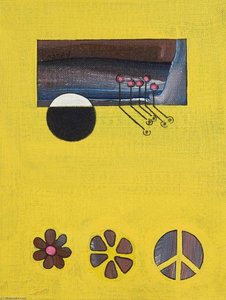
Bernie Casey 肖像

31 幅最著名的 Bernie Casey 作品,每一件都独一无二

更新于 November 2026 · 基于我们的流行度评分排名(每件作品的搜索量、访问量及订单量) · 31 件 Bernie Casey 作品收录于我们的目录中

简而言之

Vulva Love (1968) 是Bernie Casey最受瞩目的画作。 随后,目光会移向 The Casey Trees (1968) 和 The Word Game (1968)。 在 Bernie Casey 的 31 件作品中,这 31 件最为闻名;每一件都是独一无二的原作,并附有创作年份、馆藏机构及其经久不衰的原因。

1939 – 2017 Abstract expressionism

画廊视角下的 Bernie Casey 十大名作

Bernie Casey 的名画,第 11 至 31 幅

令 Bernie Casey 驻足的创作主题

这些原作中反复出现的四个主题,各有一个最杰出的范例。

Bernie Casey 历年佳作:每一件都是独一无二的原作

此处展示的每件 Bernie Casey 原作均创作于 3 年间,即 1968 年至 1970 年:按年份排列如下。

Bernie Casey 的画作:画廊常见问题

Bernie Casey 最著名的代表作是什么?揭晓答案

Vulva Love (1968)。紧随其后的是 The Casey Trees (1968) 和 The Word Game (1968)。

Bernie Casey 是在多少岁时创作了 Vulva Love?揭晓答案

29岁:Vulva Love创作于1968年,Bernie Casey出生于1939年。

Bernie Casey 最著名的十幅画作是哪些?揭晓答案

Vulva Love, The Casey Trees, The Word Game, In Springtime Yesterday, So I Simply Said, If You Feel Up To It, An Excerpt From A Terry Tip, Trees.Precisely, Hommage To Jupiter And Mars 及 Nocturnal Wishings Bloom。上方排名显示了每件作品的创作年份及馆藏机构。

已知 Bernie Casey 有多少件作品?揭晓答案

我们的目录收录了 31 件 Bernie Casey 的作品,创作年代从 1968 年至 1970 年。

Bernie Casey 的代表作创作于哪个时期?揭晓答案

在 1968 期间:本页 31 件作品中有 22 件创作于该时期,其中包含 Vulva Love 件作品。

哪幅 Bernie Casey 的名作创作年代最早,哪幅最晚?揭晓答案

在本页面中,最早的作品创作于 Vulva Love (1968),最晚的创作于 In The Moon's Middle (1970)。

Bernie Casey 偏好哪些题材?揭晓答案

Geometric design (3), Sunset landscape (2) 及 Landscape (2),共计 31 件作品。

Bernie Casey 的作品属于哪种艺术流派?揭晓答案

根据本页面的原作,Abstract expressionism

Bernie Casey:艺术家肖像

A Symphony of Motion and Color

Bernie Casey’s life was a remarkable tapestry woven from the threads of physical prowess and profound creativity. Before he became a celebrated figure in the world of fine art, his presence was felt on the gridiron of the National Football League, where he played with legendary intensity for the Detroit Lions, San Francisco 49ers, and Los Angeles Rams. This early chapter of his life, defined by the rhythmic collision of athletes and the strategic dance of professional football, provided a unique foundation for his later artistic endeavors. The physicality of the sport—the explosive energy, the precision of movement, and the sheer stamina required—deeply informed his approach to the canvas. For Casey, painting was not merely a departure from his athletic career but an evolution of it, translating the kinetic energy of the field into the expressive gestures of Abstract Expressionism.

The Language of the Inner Landscape

As his creative journey unfolded during the mid-to-late 1960s, Casey emerged as a compelling voice within the movements of Abstract Expressionism and Lyrical Abstraction. Drawing inspiration from titans such as Jackson Pollock and Willem de Kooning, he embraced a technique that prioritized raw emotion over representational accuracy. His canvases became vibrant arenas where thick impasto and spontaneous brushstrokes collided with a palette often dominated by striking blues, reds, and yellows. In seminal works like The Afterthought of Dante’s Inferno, one can witness the palpable texture of his process, where layers of paint create a sense of psychological depth and movement. He sought to move beyond the literal, using geometric shapes and swirling forms to map out inner landscapes that spoke to universal human experiences.

His artistic vocabulary was built upon several key elements:
  • Dynamic Texture: The use of heavy impasto to create a three-dimensional, tactile experience on the canvas.
  • Emotional Color Palettes: A deliberate use of high-contrast hues to evoke feelings ranging from tranquility to intense passion.
  • Spontaneous Gesture: A commitment to the improvisational spirit, allowing the movement of the hand to dictate the composition.

Legacy and Social Resonance

Beyond the aesthetic allure of his work lies a profound social significance. Navigating the complexities of the Civil Rights era as an African American icon, Casey utilized his art to explore themes of love, peace, nature, and justice. His paintings served as windows into a broader struggle for human dignity, reflecting the tensions and triumphs of his time. While he simultaneously achieved fame as an actor in the 1970s blaxploitation genre, his commitment to the canvas remained a constant pursuit of truth. Through his ability to transcend the boundaries of race and physicality through abstraction, Bernie Casey left behind a legacy that continues to resonate, reminding us that art is a powerful medium for communicating the unspoken truths of the human spirit.