Robert Smithson 肖像

Robert Smithson 作品:画廊视角下的 4 幅名作

更新于 November 2026 · 基于我们的流行度评分排名(每件作品的搜索量、访问量及订单量) · 6 件 Robert Smithson 作品收录于我们的目录中

简而言之

在画廊看来,Robert Smithson 最著名的作品是 Non Site - Site Uncertain,其原作现收藏于 底特律 的 底特律艺术学院。 Three-Sided Vortex (1966) 与 Ruin of Map of Hipparchus (100 B.C.) in Oswego Lake Quadrangle (1954 55) (1967) 共同构成了那组令人过目不忘的艺术三部曲。 在我们的目录中,Robert Smithson 共有 6 件作品,画廊为您精选了以下 4 件最著名的原作,并详细列出了每件作品的创作年份、馆藏机构及其独特之处。

1938 – 1973, Passaic 藏品最多:底特律艺术学院

画廊中 Robert Smithson 的十大名画

1
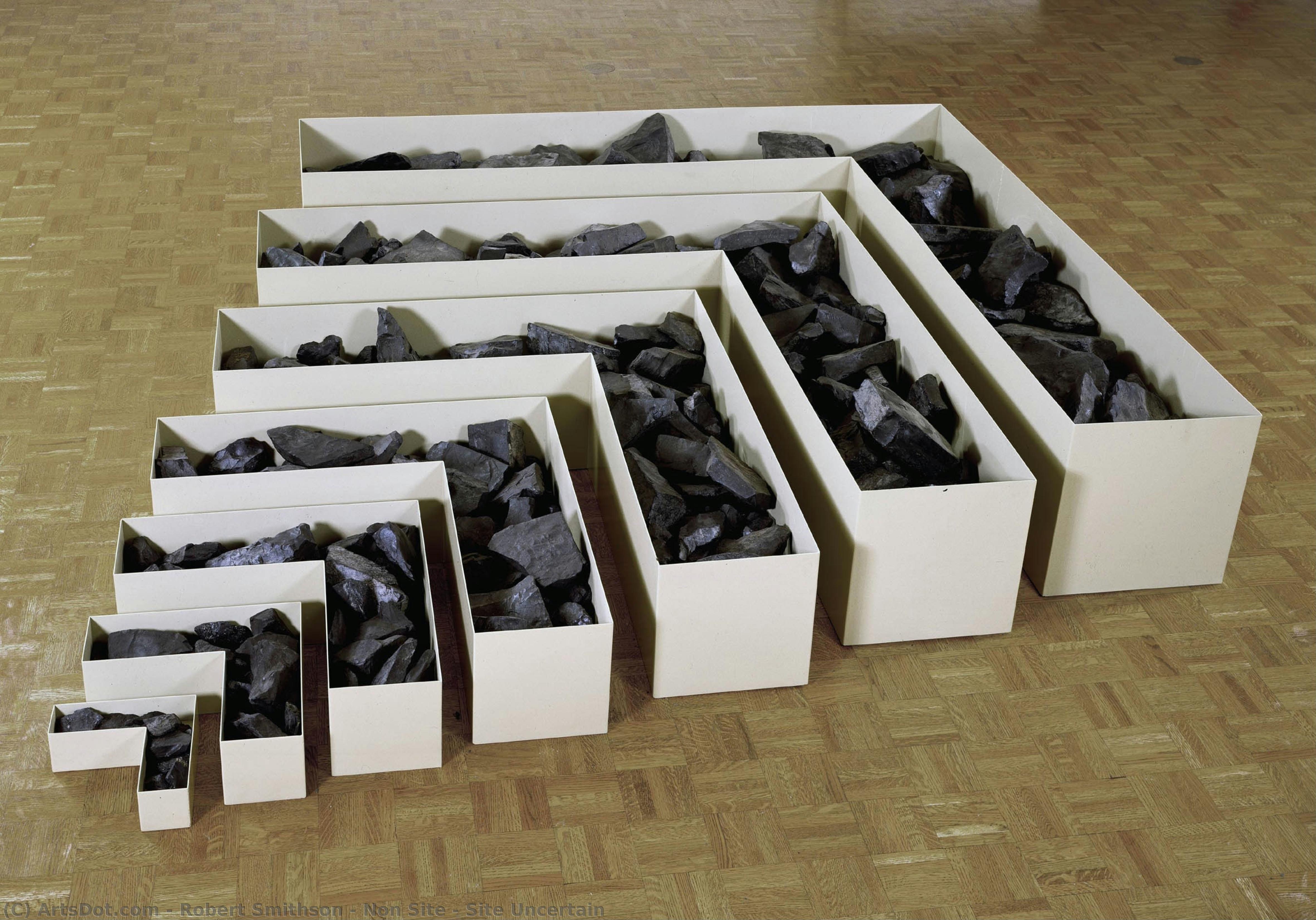
Non Site - Site Uncertain 由 Robert Smithson

Non Site - Site Uncertain

Sculpture · 底特律艺术学院, 底特律

Non Site - Site Uncertain is a sculpture created by the American artist Robert Smithson. The work was produced in 1968. Smithson was born in 1938 and remained active in the art world until his death in 1973 in Tucson, Arizona.

收藏有 Robert Smithson 原作的博物馆

收藏了本页中大部分画作的 2 家博物馆。

博物馆 城市 Robert Smithson 的作品 此列表中的画作
底特律艺术学院, 底特律底特律艺术学院 底特律 1 Non Site - Site Uncertain
克莱斯勒艺术博物馆, 诺福克克莱斯勒艺术博物馆 诺福克 1 Three-Sided Vortex

Robert Smithson,年度代表作

5 年间,从 1966 到 1970,本页面记录了 Robert Smithson 整个艺术生涯的足迹:通过这些最著名的原作,逐年回顾这段精彩历程。

年度作品数量

选择年份以查看原作。

Robert Smithson 的画作:画廊解答

哪幅 Robert Smithson 的画作最为闻名?揭晓答案

Non Site - Site Uncertain,底特律艺术学院, 底特律。紧随其后的是 Three-Sided Vortex (1966) 和 Ruin of Map of Hipparchus (100 B.C.) in Oswego Lake Quadrangle (1954 55) (1967)。

Robert Smithson 创作了多少件作品?揭晓答案

我们的目录收录了 6 件 Robert Smithson 的作品,创作年代从 1966 年至 1970 年。

Robert Smithson 最著名的原作收藏于何处?揭晓答案

多见于 底特律艺术学院 (底特律) 及 克莱斯勒艺术博物馆 (诺福克)。上方的博物馆列表列出了所有相关机构。

Robert Smithson 最早和最晚的代表作有哪些?揭晓答案

在本页面中,最早的作品创作于 Three-Sided Vortex (1966),最晚的创作于 Torn Photograph from the 2nd Stop (Rubble) (2nd Mountain of Six Stops on a Section) from Artists Photographs (1970)。

Robert Smithson:艺术家

Early Life and Artistic Beginnings

  • Born: January 2, 1938, in Passaic, New Jersey
  • Early years spent in Rutherford and Clifton, New Jersey
  • Studied painting and drawing at the Art Students League of New York (1955-1956)
  • Early artwork explored collage influenced by homoerotic themes, science fiction, and pop art. Primarily identified as a painter during this period.
  • Influenced by William Carlos Williams, who was his pediatrician.

The Shift to Minimalism and Conceptual Art

  • After a three-year break from the art world, emerged in 1964 as a proponent of the minimalist movement.
  • Abandoned figurative work, focusing on glass sheet and neon lighting tubes exploring visual refraction and mirroring.
  • Developed interest in entropy (the second law of thermodynamics) – decay, renewal, chaos, order, non-sites, and earthworks. Saw entropy not as a disadvantage but as a form of transformation.
  • Associated with minimalist artists like Nancy Holt (his wife), Robert Morris, and Sol LeWitt.
  • Became a critic for *Arts Magazine* and *Artforum*, gaining recognition as a writer before his art.

Land Art and Earthworks: Spiral Jetty and Beyond

  • Fascination with industrial areas in New Jersey led to the development of "Non-Sites" – sculptures incorporating earth and rocks from specific locations, often combined with mirrors or glass.
  • Spiral Jetty (1970): His most famous work, a massive coil of basalt rock extending into the Great Salt Lake in Utah. A key example of land art, exploring themes of entropy, time, and geological processes.
  • Explored temporary sculptures using mirrors in the Yucatan Peninsula, documented in "Incidents of Mirror-Travel in the Yucatan."
  • Recovered 18th- and 19th-century conceptions of landscape architecture, influencing his later earthwork explorations.

Theoretical Writings and Landscape Perspectives

  • Wrote extensively on art theory, including "A Heap of Language," exploring how writing could become an artwork.
  • Examined Frederick Law Olmsted's design for Central Park in New York City, recovering issues of site specificity, human intervention, and the picturesque landscape.
  • His writings demonstrate a deep engagement with history, philosophy, geology, and cultural theory.

Legacy and Historical Significance

  • Died: July 20, 1973, in Tucson, Arizona (due to a heart attack while hiking).
  • Considered a pivotal figure in Land Art and Earthworks movements.
  • His work expanded the definition of art, blurring boundaries between sculpture, landscape, and natural processes.
  • Influenced generations of artists with his conceptual approach, exploration of entropy, and engagement with geological time scales.
  • The Holt/Smithson Foundation continues to preserve and promote his legacy.
