


1


更新于 October 2026 · 基于我们的流行度评分排名(每件作品的搜索量、访问量及订单量) · 44 件 Robert Hope 作品收录于我们的目录中
简而言之
在画廊看来,Robert Hope 最著名的作品是 The Presentation by King James III and Queen Margaret of the Banner Known as the Blue Blanket to the Craftsmen in the Year 1482 (1912)。 Kilmeny 与 Edinburgh from Craiglockhart 共同构成了那组令人过目不忘的艺术三部曲。 在我们的目录中,Robert Hope 共有 44 件作品,画廊为您精选了以下 40 件最著名的原作,并详细列出了每件作品的创作年份、馆藏机构及其独特之处。


In the quiet intimacy of 1924, Robert Hope captured a scene of profound serenity that transcends the mere depiction of a person. Glints of Gold (Miss Dorothy Salvesen) is more than a portrait; it is an invitation into a private sanctuary of thought and repose. The painting presents a woman draped in a luminous yellow dress, reclining gracefully upon a bed with her head resting softly against a pillow. As…


 Portrait of a Lady with a Motoring Veil1915 · Harris Museum - Art Gallery
12
 A Victorian Debutante1922
13
 A Pageant of the Sea1929
14
 Alderman Eaton1944
15
 Lord Leverhulme and Alderman R. Williams, Mayor of Bebington1945
16
 Melrose
17
 Idle Hours
18
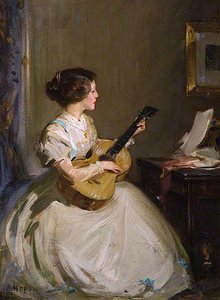 The Guitar Lesson
19
 The Fountain, Princes Street Gardens, EdinburghMcmanus: Dundee's Art Galleries And Museums
20
 A Quiet Pool, Evening
21
 Edinburgh from the ArboretumCity Art Centre
22
 Melrose
23
 The Guitar Lesson
24
 The Blue Veil
25
 Stream in Galloway
26
 An Old Herd
27
 No.8 Howard Place, Edinburgh, 1914
28
 Back of Standing Female Nude爱丁堡艺术学院
29
 The Silken Gown
30
 The Glee Maiden
31
 Willows, East LintonJohn Muir House
32
 The Charm
33
 Before the Looking GlassThe Stirling Smith Art Gallery - Museum
34
 The Vanity GlassThe National Trust For Scotland
35
 The Return of the Sardine Fishers, Concarneau
36
 Swanston Cottage, Edinburgh
37
 The Green Door, CulrossThe Stewartry Museum
38
 The Remnant Stall
39
 Woman with BasketJohn Muir House
40
 Workers in a Hay FieldThe Stewartry Museum
这些原作中反复出现的四个主题,各有一个最杰出的范例。
收藏了本页中大部分画作的 8 家博物馆。
| 博物馆 | 城市 | Robert Hope 的作品 | 此列表中的画作 |
|---|---|---|---|
 City Art Centre |
Edinburgh | 2 | Edinburgh from Craiglockhart, Edinburgh from the Arboretum |
 John Muir House |
Haddington | 2 | Willows, East Linton, Woman with Basket |
 The Stewartry Museum |
Cairns | 2 | The Green Door, Culross, Workers in a Hay Field |
 Borders Textile Townhouse |
Hawick | 1 | Kilmeny |
 皇家苏格兰学院艺术与建筑展 |
爱丁堡 | 1 | Glints of Gold (Miss Dorothy Salvesen) |
 Paisley Art Institute Collection |
Paisley | 1 | The Golden Apple |
 Harris Museum - Art Gallery |
普雷斯顿 | 1 | Portrait of a Lady with a Motoring Veil |
 Mcmanus: Dundee's Art Galleries And Museums |
Dundee | 1 | The Fountain, Princes Street Gardens, Edinburgh |
选择一个年代,探索定义该时代的原创杰作。
In the quiet intimacy of 1924, Robert Hope captured a scene of profound serenity that transcends the mere depiction of a person. Glints of Gold (Miss Dorothy Salvesen) is more than a portrait; it is an invitation into a private sanctuary of thought and repose. The painting presents a woman draped in a luminous yellow dress, reclining gracefully upon a bed with her head resting softly against a pillow. As…
The Presentation by King James III and Queen Margaret of the Banner Known as the Blue Blanket to the Craftsmen in the Year 1482 (1912)。紧随其后的是 Kilmeny 和 Edinburgh from Craiglockhart。
43岁:The Presentation by King James III and Queen Margaret of the Banner Known as the Blue Blanket to the Craftsmen in the Year 1482创作于1912年,Robert Hope出生于1869年。
The Presentation by King James III and Queen Margaret of the Banner Known as the Blue Blanket to the Craftsmen in the Year 1482, Kilmeny, Edinburgh from Craiglockhart, Glints of Gold (Miss Dorothy Salvesen), Inverkeithing, Inverkeithing, The Fountain, Princes Street Gardens, Edinburgh, The Glee Maiden, The Golden Apple 及 Swanston Farm, Edinburgh。上方排名显示了每件作品的创作年份及馆藏机构。
我们的目录收录了 44 件 Robert Hope 的作品,创作年代从 1905 年至 1929 年。
多见于 City Art Centre (Edinburgh), John Muir House (Haddington) 及 The Stewartry Museum (Cairns)。上方的博物馆列表列出了所有相关机构。
在 1910s 期间:本页 40 件作品中有 3 件创作于该时期,其中包含 The Presentation by King James III and Queen Margaret of the Banner Known as the Blue Blanket to the Craftsmen in the Year 1482 件作品。
在本页面中,最早的作品创作于 Inverkeithing (1905),最晚的创作于 A Pageant of the Sea (1929)。
Elegant woman (3), Victorian era (3) 及 Scottish landscape (2),共计 40 件作品。
根据本页面的原作,Academic realism 及 Impressionism
Edinburgh from Craiglockhart 及 Edinburgh from the Arboretum:City Art Centre, Edinburgh收藏了本页中 2 件作品。

