1


更新于 November 2026 · 基于我们的流行度评分排名(每件作品的搜索量、访问量及订单量) · 15 件 Ralph Nicholas Chubb 作品收录于我们的目录中
简而言之
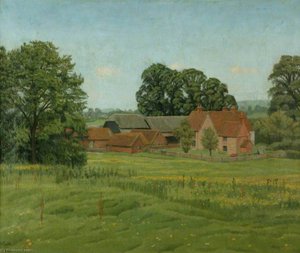
在 Ralph Nicholas Chubb 留下的所有原作中,最著名的当属收藏于 普雷斯顿 Harris Museum - Art Gallery 的《A Berkshire Valley (1920)》。 紧随其后的是 The Bathers (1924) 和 The Enchanted Valley (1925)。 我们的目录收录了 Ralph Nicholas Chubb 的 15 件作品;画廊完整保留了 15 件享誉世界的杰作,并为每一件作品详细标注了创作日期、馆藏机构及其背后的故事。


The Ralph Nicholas Chubb painting, The Enchanted Valley, is a stunning oil on canvas artwork that showcases the beauty of nature and the human form. Created in 1925, this piece is a prime example of British art from the early 20th century. The painting is currently housed at the Ferens Art Gallery in Kingston Upon Hull, United Kingdom. Composition and Style The composition of The Enchanted Valley features a group…


收藏了本页中大部分画作的 4 家博物馆。
| 博物馆 | 城市 | Ralph Nicholas Chubb 的作品 | 此列表中的画作 |
|---|---|---|---|
 Reading Museum - Town Hall |
Reading | 2 | Portrait of a Seated Female Nude (verso), Ganymede (recto) |
 Harris Museum - Art Gallery |
普雷斯顿 | 1 | A Berkshire Valley |
 Ferens Art Gallery |
赫尔 | 1 | The Enchanted Valley |
 The Hepworth Wakefield |
韦克菲尔德 | 1 | The Well |
仅仅十年间,从 1919 到 1927,这一系列作品涵盖了每一件带有年份标记的 Ralph Nicholas Chubb 原作:在此按年份为您呈现。
选择年份以查看原作。
The Ralph Nicholas Chubb painting, The Enchanted Valley, is a stunning oil on canvas artwork that showcases the beauty of nature and the human form. Created in 1925, this piece is a prime example of British art from the early 20th century. The painting is currently housed at the Ferens Art Gallery in Kingston Upon Hull, United Kingdom. Composition and Style The composition of The Enchanted Valley features a group…
更多来自 1925

A Berkshire Valley (1920),Harris Museum - Art Gallery, 普雷斯顿。紧随其后的是 The Bathers (1924) 和 The Enchanted Valley (1925)。
28岁:A Berkshire Valley创作于1920年,Ralph Nicholas Chubb出生于1892年。
A Berkshire Valley, The Bathers, The Enchanted Valley, Portrait of a Seated Female Nude (verso), Male Figure Standing, Unfettered Joy, Landscape with a Farm Building and a Field Gate, Ganymede (recto), Nicholas Drew Chubb 及 Contemplation。上方排名显示了每件作品的创作年份及馆藏机构。
我们的目录收录了 15 件 Ralph Nicholas Chubb 的作品,创作年代从 1919 年至 1927 年。
多见于 Reading Museum - Town Hall (Reading), Harris Museum - Art Gallery (普雷斯顿) 及 Ferens Art Gallery (赫尔)。上方的博物馆列表列出了所有相关机构。
在 1925 期间:本页 15 件作品中有 4 件创作于该时期,其中包含 The Enchanted Valley 件作品。
在本页面中,最早的作品创作于 Male Figure Standing (1919),最晚的创作于 Landscape with a Farm Building and a Field Gate (1927)。
Portrait of a Seated Female Nude (verso) 及 Ganymede (recto):Reading Museum - Town Hall, Reading收藏了本页中 2 件作品。
Ralph Nicholas Chubb (1892–1960) remains one of the most enigmatic figures in the tapestry of early 20th-century British art, a creator whose work breathed with the intensity of a private, sacred mythology. Born in Harpenden, Hertfordshire, and raised amidst the historic surroundings of St Albans, Chubb’s early life was steeped in an intellectual curiosity that would later define his multifaceted career as a poet, printer, and artist. His creative essence was not merely a product of aesthetic training but a profound response to the turbulent era in which he lived. The shadows of the First World War and the subsequent interwar years left an indelible mark on his psyche; while serving with distinction as an officer, he contracted neurasthenia, a condition that, though physically limiting, perhaps deepened his inward gaze and fueled his preoccupation with themes of vulnerability, innocence, and the ephemeral nature of youth.
The development of Chubb’s artistic language was profoundly shaped by his time at the Slade School of Art in London. It was here that he encountered the influential Leon Underwood, a connection that would tether him to the avant-garde movements of the day through publications like The Island. His work emerged as a striking synthesis of disparate influences, drawing heavily from the visionary Romanticism of William Blake and the expansive, democratic spirit of Walt Whitman. This fusion allowed him to construct an anti-materialist universe—a personal mythos that sought to transcend the industrial grit of his age. Through his exquisite woodcuts and evocative oil paintings, Chubb explored a landscape of the soul, where the boundaries between the natural world and human desire became beautifully blurred.
To encounter a work by Ralph Nicholas Chubb is to step into a realm where technique serves the higher purpose of myth-making. His mastery of the woodcut medium allowed for a stark, rhythmic precision, capturing the "whisper" of his poetic sensibilities through bold lines and intricate textures. In his paintings, however, the artist embraced a more lush and atmospheric approach. Works such as The Enchanted Valley (1925) demonstrate his ability to use oil on canvas to evoke a sense of primordial peace. In this piece, the composition of naked figures nestled within a verdant, mountainous landscape serves as a testament to his fascination with the purity of the human form and the serenity of nature.
Chubb’s aesthetic was often characterized by a tension between the serene and the revolutionary. While much of his imagery evokes a sense of pastoral tranquility, there exists an underlying current of radical thought. His art was imbued with revolutionary impulses regarding sexuality and a persistent fascination with the adolescent male, themes that were both deeply personal and socially provocative for his time. This preoccupation with innocence and the delicate balance of power and vulnerability gave his work a psychological depth that set him apart from his contemporaries. Even in pieces like The Well (1920), where he depicts figures engaged in communal activity amidst trees and chairs, there is a meticulous attention to detail and a use of bold color that suggests a world vibrating with hidden significance.
Though Ralph Nicholas Chubb did not achieve widespread commercial fame during his lifetime—his paintings often remaining largely unseen by the broader public—his historical significance lies in his refusal to conform to the prevailing artistic norms of his era. He was a true polymath, weaving together the disciplines of literature and visual art to create a cohesive, albeit private, universe. His legacy is found in the quiet strength of his craftsmanship and the courage of his thematic explorations.
Today, the importance of Chubb’s contribution to British art is recognized through the preservation of his works in esteemed institutions such as:
Ultimately, Chubb stands as a singular voice—a poet of the printed line and a painter of mythic landscapes. His life’s work remains a hauntingly beautiful reminder of the power of art to construct a sanctuary of meaning in an ever-changing world.