1

耶稣下葬
在1525年至1528年间,艺术家 蓬托莫 创作了这幅震撼人心的杰作《耶稣下葬》。这件作品受洛多维科·卡波尼(Lodovico Capponi)于1526年的委托,现存于佛罗伦萨圣费利切教堂(Church of Santa Felicita)内的卡波尼小堂。画作的主题聚焦于基督被钉上十字架后,其身体被取下的神圣时刻。

更新于 October 2026 · 基于我们的流行度评分排名(每件作品的搜索量、访问量及订单量) · 176 件 蓬托莫 作品收录于我们的目录中
简而言之
在 蓬托莫 留下的所有原作中,最著名的作品是 耶稣下葬。 紧随其后的是 谒见 (1528) 和 长戟卫兵 (1520)。 我们的目录收录了 蓬托莫 的 176 件作品;画廊完整保留了 100 件享誉世界的杰作,并为每一件作品详细标注了创作日期、馆藏机构及其背后的故事。
在1525年至1528年间,艺术家 蓬托莫 创作了这幅震撼人心的杰作《耶稣下葬》。这件作品受洛多维科·卡波尼(Lodovico Capponi)于1526年的委托,现存于佛罗伦萨圣费利切教堂(Church of Santa Felicita)内的卡波尼小堂。画作的主题聚焦于基督被钉上十字架后,其身体被取下的神圣时刻。

1528年,雅各·卡鲁奇(Jacopo Carucci),更为人所知的名字是庞托莫(Pontormo),创作了这幅令人惊叹的壁画《亲访》,以其标志性的晚期文艺复兴风格,捕捉了一个深刻的宗教时刻。 这幅作品不仅展现了庞托莫在构图、色彩和情感深度方面的精湛技艺,更使其成为艺术爱好者和收藏家们竞相追逐的作品。

力量与个性的迷人肖像 这件令人震撼的艺术杰作捕捉了一位威严的人物,体现了坚韧、自信与文化自豪感。画中主角是一位身着传统服饰、手持长戟的年轻人,周身散发着一种权威与尊严的气息。他那直视前方的目光瞬间便能抓住观众的视线,引导人们进入一段内省与赞叹的时刻。艺术家精湛的描绘强调了主体存在的物理存在感及其情感深度,使其成为任何收藏或室内空间中引人注目的核心之作。 大师级的风格与技法 这件作品创作于1520年左右,是盛期文艺复兴与风格主义艺术特征中精致现实主义的典范。艺术家运用细腻的笔触和层叠的油彩,实现了明亮且具有三维立体感的视觉效果。他对纹理的细致关注——从皮肤的平滑到木质长戟的粗糙——充分展示了高超的技术造诣。肤色中柔和、融合的过渡与衣物及饰品更为锐利的轮廓形成鲜明对比,营造出生动的深度感与体积感。明暗对照法(chiaroscuro)的使用增强了光影之间戏剧性的交织,进一步突显了人物在深色、极简背景下的显著地位。 历史背景与象征意义 这幅肖像诞生于艺术创新的时期,反映了文艺复兴时期意大利不断演变的个人主义与力量理想。主体的服饰与武器暗示了坚韧、警觉以及文化认同的主题——这些价值观在16世纪初动荡的社会格局中备受推崇。他腰间的链条与佩剑可能象征着地位、荣誉或武勇,为作品增添了叙事深度与象征分量。作为一件植根于深厚意大利肖像画传统的作品,它为观众提供了一个窥见那个充满活力的时代所颂扬的社会理想与个人美德的窗口。 情感冲击与艺术传承 除了技术上的精湛表现,这幅肖像还唤起了一种深刻的情感共鸣。主体那冷静而坚定的表情传递出内在的力量与情感的韧性,激励着观众去思考自豪与毅力这一主题。均衡的构图与写实的描绘培养了一种连接感,使其成为激发沉思或赞赏的理想之作。作为一件高品质的复制品,它为艺术爱好者和收藏家提供了一个拥有兼具艺术卓越性与历史重要性作品的机会,以其永恒的存在感丰富着任何空间。

The painting presents an intimate, oval-shaped arrangement of two figures set against a dark, indeterminate background. The Virgin Mary occupies the upper portion of the frame, her head tilted slightly as she looks toward the Christ Child. Her skin possesses a smooth, porcelain-like texture, illuminated by a focused light source that creates a sharp contrast against the shadows. She wears a deep crimson red garment, while a dark, midnight blue…

To gaze upon this study of a woman is to step directly into the charged atmosphere of mid-sixteenth-century Florence. It is not merely a portrait, but an intimate psychological excavation, capturing the ephemeral grace and profound introspection characteristic of the Italian Mannerist period. The subject, rendered with exquisite delicacy, possesses a serene yet enigmatic quality; her direct gaze seems to meet the viewer's own, inviting a silent communion across the…

Jacopo Pontormo's "Ten Thousand Martyrs," painted in 1529, is not merely a depiction of historical suffering; it’s a visceral plunge into the heart of religious trauma and defiant resistance. This monumental fresco, now rendered in exquisite detail as a hand-painted reproduction by WahooArt.com, captures a pivotal moment from early Christian history – the brutal execution of ten thousand soldiers who had converted to Christianity during the reign of Emperor Decius.…

The work before us is Supper at Emmaus, a significant oil on canvas painted by Pontormo in 1525. This piece captures the specific biblical moment of the apparition of Christ to the Apostles, a narrative drawn from the Gospel of Luke, specifically chapter 24, verses 13 through 35. It is a scene of profound recognition, documenting the instant the disciples realize the identity of the man they are dining with…

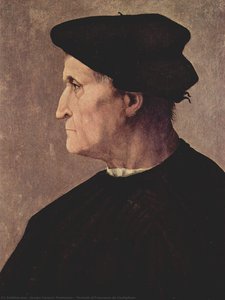
The year is 1520, and within the bustling artistic landscape of Florence, Jacopo Carucci Pontormo—a name now inextricably linked with both innovation and melancholy—crafted a portrait that transcends mere likeness. “Portrait of Francesco da Castiglione” isn’t simply a depiction of an elderly man; it's a carefully constructed meditation on age, wisdom, and the quiet dignity of a life well-lived. The painting immediately draws the eye with its rich, earthy palette…

Cupid and Apollo is a painting by the Italian Mannerist painter Pontormo. The work depicts a mythological encounter between the figures of Apollo and Cupid. This composition centers on the interaction between a standing male figure in classical armor on the left and a winged youth on the right. The scene is set against a dark, void-like background that isolates the two subjects.

In this dramatic scene by Pontormo, the air crackles with the sudden, frantic energy of a chase reaching its breaking point. The painting, created about 1513, captures the very moment of metamorphosis from Ovid's myth. Apollo reaches out, his fingers straining to grasp the nymph, but his pursuit is met with a terrifying transformation. Daphne is no longer merely a fleeing woman; she is caught in the midst of becoming…
 Two Male Figures Looking in a Mirror and a Putto.1518
12
 Visitation1515
13
 Saint Francis1517
14
 Study of a seated man1518
15
 Study of nude1518
16
 Archangel Michael1519 · St Andreas Picture Gallery
17
 St. Matthew the Evangelist1525
18
 Annunciation1527
19
 Portrait of a Young Man (Alessandro de Medici )1526
20
 The Holy Family1525
21
 Noli me tangere1531 · 卡萨·博纳罗蒂 (Casa Buonarroti)
22
 Portrait of Niccolò Ardinghelli1542
23
 Porträt des Giovanni della Casa (1503-1556)1550
24
 Christ seated, as a nude figure
25
 Alessandro de' Medici1535 · 芝加哥艺术学院
26
 Noli Me Tangere
27
 Portrait of Two Friends
28
 Madonna and Child1532 · Museum of John Paul II Collection
29
 Portrait of Alessandro de' Medici1550 · 国立古美术馆
30
 St. Sebastian1515 · Musée des Beaux-Arts de Dijon
31
 Reclining Male Nude1540 · 加拿大国家美术馆
32
 Birth of John the Baptist1526 · 乌菲兹美术馆
33
 Volta1515
34
 Volta1515
35
 Volta1515
36
 Volta1515
37
 Volta1515
38
 Scene with cherubs on papal coat of arms1515
39
 Study of a Boy Turning His Head1529 · 乌菲兹美术馆
40
 VillaMedici - Salon1521
41
 VillaMedici - Vertumnus and Pomona (detail)1521
42
 Alessandro de' Medici1520 · 费城艺术博物馆
43
 Madonna and Child with Two Saints1520
44
 Madonna and Child with the Young St John1520
45
 Christ before Pilate1520
46
 Supper at Emmaus1520
47
 Supper at Emmaus1525 · 乌菲兹美术馆
48
 Cosimo I de' Medici1537 · 皮蒂宫
49
 View on the Louvre and the Tour de Nesle form the Île de la Cité1662
50
 Madonna with St. Francis and St. Jerome1522 · 乌菲兹美术馆
51
 portrait of Francesca Capponi as Saint Mary Magdalene
52
 autoportrait of Giovanni Antonio Lappoli
53
 Bust of the Virgin哈佛艺术博物馆
54
 Two nudes
55
 Four Evangelists
56
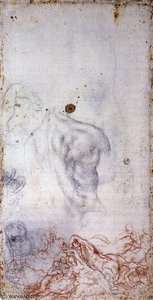 Study for the Deluge
57
 Christ the Judge with the Creation of Eve
58
 Moses Receiving the Tables
59
 Seated Male Nule
60
 Compositional study for Moses Receiving the Tables of the Law
61
 View of the Capponi Chapel
62
 Study for Deluge
63
 Male Nude
64
 Figure study 1
65
 Halberdier 1
66
 Salon
67
 Kicking player
68
 Three Graces
69
 Visitation 2
70
 Annunciation 2
71
 Venus and Cupid皇家收藏馆
72
 Leda and the Swan
73
 Figure study
74
 Joseph's Broders beg for Help
75
 Deposition (detail)3
76
 Seated Nude with Raised Arm
77
 Compositional study for Christ the Judge with the Creation of Eve
78
 Joseph Revealing Himself to his Brothers
79
 Adoration of the Magi
80
 Salon 1
81
 Saint Agustine
82
 Adam and Eve at Work
83
 Joseph Revealing Himself to his Brothers 1
84
 Annunciation (detail)
85
 Joseph with Jacob in Egypt
86
 Portrait of Niccolò Ardinghelli
87
 Madonna and Child with St. Anne and the Saints
88
 Sacra Conversazione
89
 Portrait of a Lady with Dog
90
 The Resurrection of Christ
91
 Saint Julian
92
 St. Quentin
93
 Annunciation 1
94
 Madonna and Child with Angels
95
 Portrait of Maria Salviati with little Cosimo de Medici沃尔特斯艺术博物馆
96
 The Penitence of St. Jerome
97
 Annunciation (detail)2
98
 Female nude 2
99
 Crucifixion with the virgin and St. John
100
 St Luke
这些原作中反复出现的四个主题,各有一个最杰出的范例。
收藏了本页中大部分画作的 8 家博物馆。
| 博物馆 | 城市 | 蓬托莫 的作品 | 此列表中的画作 |
|---|---|---|---|
 乌菲兹美术馆 |
佛罗伦萨 | 10 | Study of a Woman, possibly Maria Salviati, Ten thousand martyrs, Birth of John the Baptist |
 皮蒂宫 |
佛罗伦萨 | 3 | Portrait of Francesco da Castiglione, Cosimo I de' Medici |
 J·保罗·盖蒂博物馆 |
洛杉矶 | 1 | 长戟卫兵 |
 耶鲁大学艺术馆 |
纽黑文 | 1 | Virgin and Child, known as the Madonna del Libro |
 St Andreas Picture Gallery |
Empoli | 1 | Archangel Michael |
 卡萨·博纳罗蒂 (Casa Buonarroti) |
佛罗伦萨 | 1 | Noli me tangere |
 芝加哥艺术学院 |
芝加哥 | 1 | Alessandro de' Medici |
 Museum of John Paul II Collection |
Warsaw | 1 | Madonna and Child |
选择一个年代,探索定义该时代的原创杰作。
Cupid and Apollo is a painting by the Italian Mannerist painter Pontormo. The work depicts a mythological encounter between the figures of Apollo and Cupid. This composition centers on the interaction between a standing male figure in classical armor on the left and a winged youth on the right. The scene is set against a dark, void-like background that isolates the two subjects.

The scene captures the moment of recognition between the resurrected Christ and Mary Magdalene. Set against a hazy, atmospheric landscape, the two figures occupy a space that feels both physical and spiritual. A diagonal line of steps directs the viewer's gaze toward the central interaction, where the tension of the encounter is held in the hands of the subjects. Mary reaches out in a gesture of longing and devotion, while…
The painting presents an intimate, oval-shaped arrangement of two figures set against a dark, indeterminate background. The Virgin Mary occupies the upper portion of the frame, her head tilted slightly as she looks toward the Christ Child. Her skin possesses a smooth, porcelain-like texture, illuminated by a focused light source that creates a sharp contrast against the shadows. She wears a deep crimson red garment, while a dark, midnight blue…

The man sits in a quiet, heavy stillness, his gaze meeting the observer with a weight that feels both intellectual and deeply personal. He is positioned in a three-quarter view, his body angled slightly away while his eyes remain fixed upon us, creating an immediate, silent dialogue. The light does not merely illuminate him; it carves him out of the darkness. A sharp, dramatic light strikes the side of his…
耶稣下葬。紧随其后的是 谒见 (1528) 和 长戟卫兵 (1520)。
耶稣下葬, 谒见, 长戟卫兵, Virgin and Child, known as the Madonna del Libro, Study of a Woman, possibly Maria Salviati, Ten thousand martyrs, Supper at Emmaus, Portrait of Francesco da Castiglione, Cupid and Apollo 及 Apollo and Daphne。上方排名显示了每件作品的创作年份及馆藏机构。
我们的目录收录了 176 件 蓬托莫 的作品,创作年代从 1513 年至 1550 年。
多见于 乌菲兹美术馆 (佛罗伦萨), 皮蒂宫 (佛罗伦萨) 及 J·保罗·盖蒂博物馆 (洛杉矶)。上方的博物馆列表列出了所有相关机构。
在 1520s 期间:本页 100 件作品中有 19 件创作于该时期,其中包含 谒见 件作品。
在本页面中,最早的作品创作于 Cupid and Apollo (1513),最晚的创作于 Porträt des Giovanni della Casa (1503-1556) (1550)。
Man (12), Renaissance (10) 及 Saints (9),共计 100 件作品。
Oil On Panel,共计 12 件(本页共有 100 件作品)。
根据本页面的原作,矫饰主义
Study of a Woman, possibly Maria Salviati, Ten thousand martyrs 及 Birth of John the Baptist:乌菲兹美术馆, 佛罗伦萨收藏了本页中 6 件作品。