Eugène Henri Paul Gauguin: A Revolutionary Post-Impressionist Painter
Paul Gauguin, a name synonymous with bold color and defiant individualism, stands as one of the most influential figures in the transition from Impressionism to modern art—a movement that irrevocably altered the course of artistic history. Born June 7, 1848, in Paris, France, his life unfolded far from the conventional paths expected of a young man of his time, marked by an upbringing steeped in intellectual curiosity and shaped by encounters with cultures radically different from those of Europe. His father, a journalist, instilled in him a passion for storytelling and observation—traits that would prove invaluable to Gauguin’s artistic endeavors—while his mother descended from Peruvian aristocracy, carrying within her lineage the spirit of exploration and questioning established norms. This heritage profoundly impacted Gauguin's worldview, fostering an unwavering belief in the importance of authenticity and fueling his lifelong quest to capture the essence of human experience through art.
Early Years & Influences
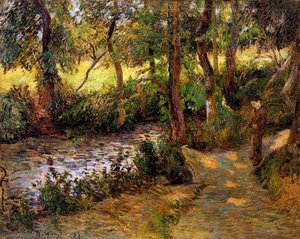
Gauguin’s formative years were spent absorbing the intellectual currents of Parisian society—a city buzzing with artistic ferment—yet he harbored a deep yearning for something beyond the confines of academic convention. He received a formal education, mastering mathematics and drawing skills, but his true vocation lay in painting—a pursuit that demanded an uncompromising commitment to personal vision. The burgeoning Impressionist movement captivated him initially, drawn to Monet’s luminous landscapes and Renoir’s sensual depictions of Parisian life. Gauguin embraced the techniques of capturing fleeting moments of light and color, experimenting with brushstrokes and palettes that sought to convey emotion rather than mere visual representation. However, he soon recognized the limitations of Impressionism's preoccupation with optical perception—its insistence on faithfully reproducing what the eye sees—and felt compelled to forge his own path toward artistic expression. This dissatisfaction stemmed partly from a fascination with Japanese prints—Japonisme—which exerted a powerful influence on Gauguin’s aesthetic sensibilities. The flattened perspectives, bold outlines, and decorative patterns of Japanese woodblock prints captivated him, inspiring him to simplify forms and embrace stylistic choices that defied traditional Western conventions.
From Finance to Artistic Passion
Despite pursuing a respectable career as a stockbroker—a profession deemed acceptable by the standards of his era—Gauguin’s artistic inclinations remained stubbornly persistent. He secretly nurtured his passion for painting during his leisure hours, honing his skills and developing his distinctive style in solitude. The financial crisis of 1882 served as a catalyst for this transformation, forcing him to abandon his lucrative profession and dedicate himself entirely to his artistic vocation. This wasn’t merely a change in occupation; it represented a fundamental recalibration of priorities—a conscious decision to prioritize creative fulfillment over material success. Gauguin sought guidance from Camille Pissarro, who encouraged his experimentation with color and technique and introduced him to the avant-garde circles of Paris—circles that embraced radical ideas about art and perception. Yet, Gauguin swiftly distanced himself from Impressionistic dogma, yearning for a more profound connection to nature and to the spiritual realm. He believed that true artistic expression required an immersion in experience—a willingness to abandon conventional notions of beauty and truth in favor of conveying emotion and intuition.
Tahiti & The Symbolist Vision
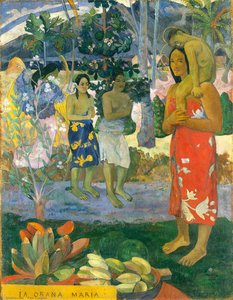
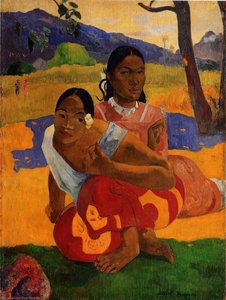
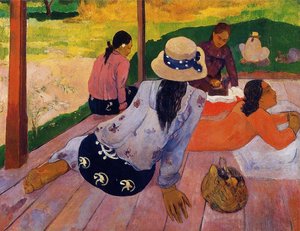
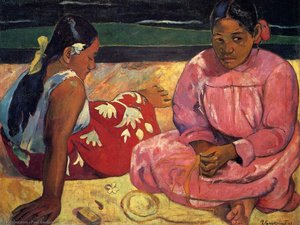
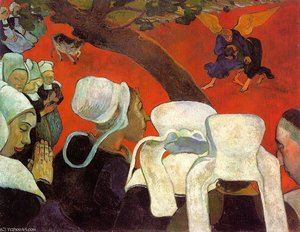
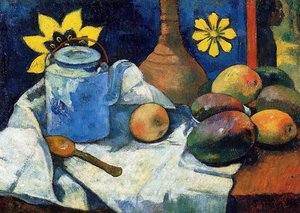
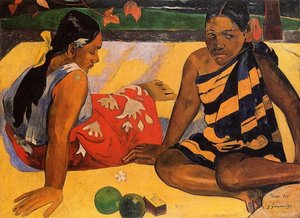
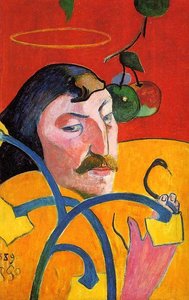
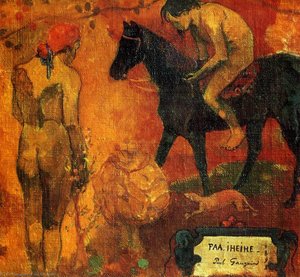
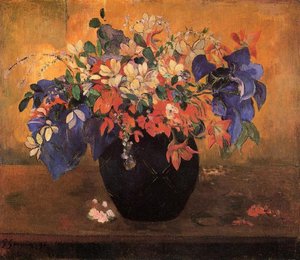
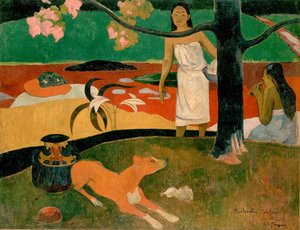
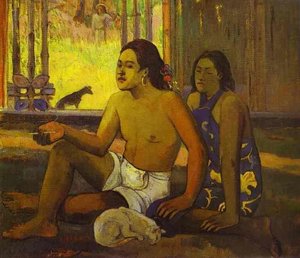
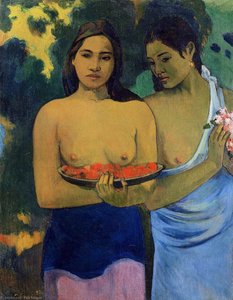
The turning point in Gauguin’s artistic journey arrived with his decision to embark on a voyage to Tahiti in 1891—a move that would propel him into the forefront of the burgeoning Symbolist movement. Driven by an irresistible desire to escape the pressures of European society and to reconnect with primal instincts, he sought inspiration in Polynesian culture—believing it possessed a purity lost in Western civilization. Tahiti became his artistic sanctuary—a place where he could liberate himself from societal constraints and explore themes of spirituality, mythology, and human emotion through his unique lens. He meticulously documented the landscapes and rituals of Tahiti, employing bold colors and simplified forms to convey not just what he saw but what he *felt*. Influenced by medieval art—particularly Byzantine iconography—Gauguin adopted a stylistic approach characterized by flattened perspectives, stylized figures, and symbolic imagery—techniques that reflected his conviction that art should transcend mere representation and communicate deeper truths about the human condition. Iconic paintings like “Vahine no te miti” (Woman with Mango) and “The Vision After The Sermon” emerged from this period, solidifying Gauguin’s reputation as a visionary artist—a pioneer who dared to challenge conventions and forge his own path toward artistic expression.
Legacy & Influence
Paul Gauguin died May 8, 1903, on Hiva Oa, a remote island in the Marquesas archipelago—leaving behind a legacy that continues to inspire artists and art lovers worldwide. His uncompromising commitment to personal vision—his rejection of academic dogma—and his embrace of Symbolist principles profoundly impacted subsequent generations of painters. Artists such as Pablo Picasso, Henri Matisse, and Edvard Munch acknowledged Gauguin’s influence on their own work, recognizing the transformative power of stylistic innovation and emotional intensity. Gauguin's bold use of color, simplified forms, and symbolic imagery remains a cornerstone of modern art—a testament to his enduring genius and his unwavering belief in the importance of artistic freedom. He stands as an unforgettable figure—a rebel who dared to defy expectations and forge his own path toward creative fulfillment—leaving behind a body of work that continues to captivate audiences and provoke contemplation centuries after its creation.